
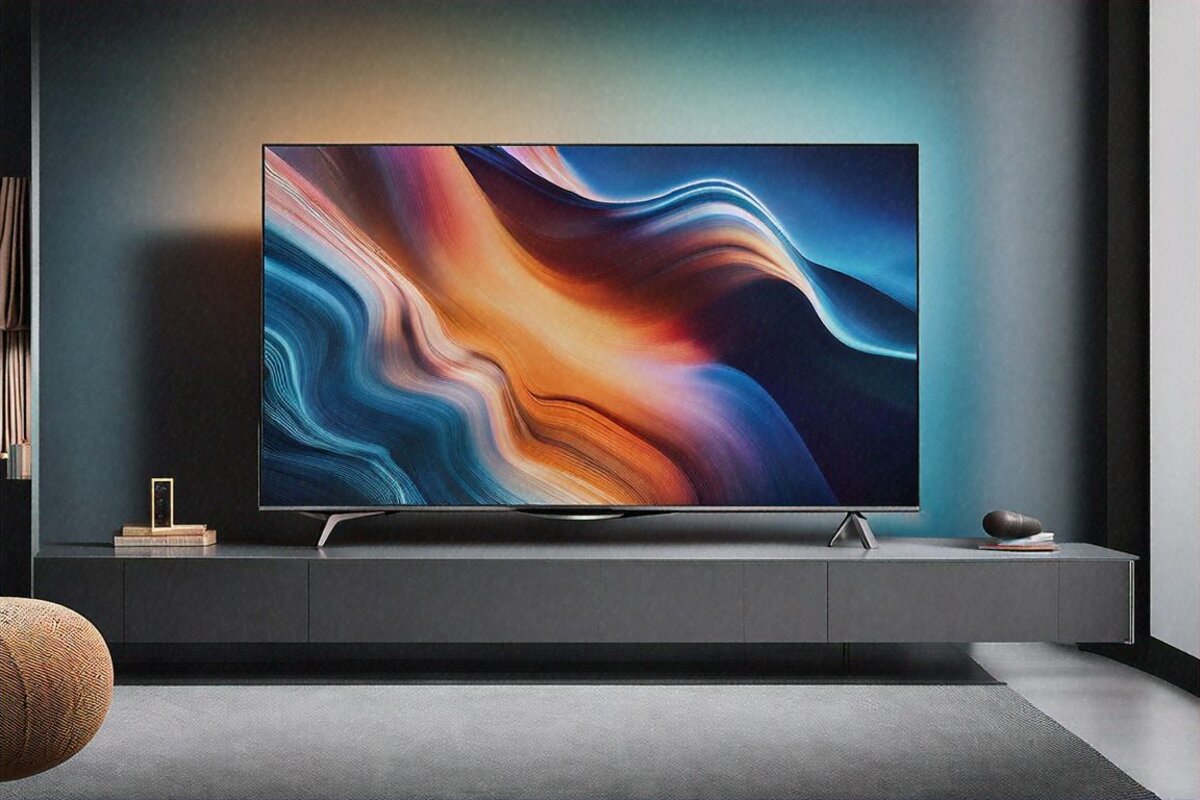
We Bought This TV for Diwali and the Whole Family Hasn’t Stopped Fighting Over It
Diwali shopping follows a script in our house. New clothes all round. Sweets from the proper mithai shop, not the corner one. Maybe new curtains if Amma’s feeling it. And last October — after years of Papa squinting at our ancient 32-inch LED with its dead pixel cluster in one corner and colours that looked like they’d been through the wash one time too many — we finally said it out loud. New TV. About time.
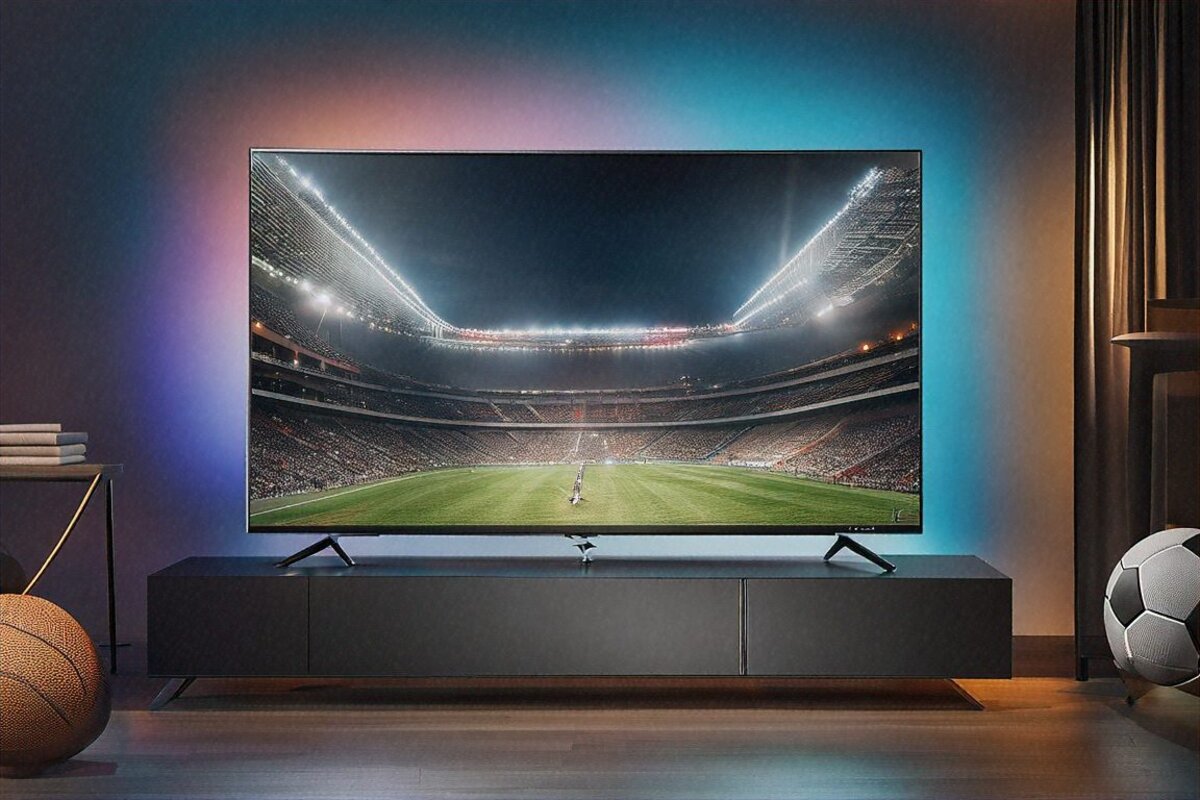
The budget wasn’t up for debate: under ₹40,000. We’d already drifted around Croma, gone back and forth on Samsung versus LG versus the brands Papa had never heard of, and then a salesperson steered us toward the Xiaomi Smart TV X Pro 55-inch at ₹34,999. “55 inches, 4K, Dolby Vision, Dolby Atmos, Google TV. Under thirty-five.” My mother looked at my father. My father looked at the screen, which happened to be running a nature documentary — a tiger padding through tall grass, every blade sharp. “Pack it,” Papa said.
Five months on, that TV is the most-used object in the house. Beats the fridge. Beats the washing machine. Easily beats Papa’s reading glasses, which now live permanently on the coffee table because he’s forever in front of something.
55 Inches at ₹34,999 — What India’s Budget TV Market Looks Like Now
I can remember when a 55-inch 4K TV cost a lakh. Maybe five, six years back. So a 55-inch 4K panel with Dolby Vision, Dolby Atmos, and the whole Google TV stack landing at ₹34,999 is either proof of how far panel manufacturing has come, or a quiet admission of how badly we were getting fleeced before. Bit of both, probably.
Xiaomi’s been running this disruption play in India for ages — phones, earbuds, power banks, air purifiers — and the TVs follow the same script. Take features that used to sit behind a premium price and shove them into something the mass market can actually afford. The Smart TV X Pro 55 is roughly that idea pushed as far as it’ll go in 2026.
Let me be plain about what it is and isn’t. It’s not Mini LED. It’s not OLED. It’s a plain LED panel, IPS, running at 60 Hz. No local dimming. Brightness is decent but won’t trade blows with Mini LED or QLED. Step down to this from a ₹1,89,999 LG OLED and it’ll feel like a downgrade — as it should, costing about a fifth as much.
But coming off a five-year-old HD Ready set, or an old Full HD panel, or — like us — a decrepit 32-incher that should’ve been retired during the first Modi government? The leap to the X Pro is like trading a Maruti 800 for a Hyundai Creta. Not the flashiest thing on the road, but a massive, instant, every-single-day improvement.
The Picture — Surprisingly Good for the Money
4K across 55 inches gives you enough pixel density that the picture looks genuinely crisp from a normal 6-to-8-foot couch distance. Text is sharp. Landscapes hold their detail. Faces in close-up show the fine stuff. Coming off anything below 4K, the jump hits you immediately.
Dolby Vision is the headline trick, and it’s the one that fights well above its weight. Put on Dolby Vision content on Netflix or Hotstar and the TV flips into Dolby Vision mode on its own — the dynamic range visibly tightens up. Bright areas brighten, dark areas deepen, colours get more shaded. It won’t do what a ₹2,00,000 OLED does with the same scene, but it’s a clear notch above the same content played without Dolby Vision on a similarly priced set.
HDR10+ is here too, which covers Prime Video’s format. HLG handles broadcast HDR. Between Dolby Vision, HDR10+, and HLG, just about every HDR format you’ll run into in India is covered. At ₹34,999. I keep circling back to the price because it keeps catching me off guard.
Black levels are the soft spot. With no local dimming, the backlight is all-on or all-off for the whole panel, so dark scenes ride a bit high — dark grey instead of black, with shadow detail going missing. Watch a lot of murky, moody stuff (Mindhunter, dark thrillers) and you’ll spot it. For bright, busy content — cricket, Bollywood, travel docs, cooking shows — it barely comes up.
MEMC (Motion Estimation Motion Compensation) is on board, smoothing motion by inventing in-between frames. For sport, that’s a real plus — a fast ball and quick players track cleaner with it on. For films, I’d switch it off, because it brings on that “soap opera” look that makes a movie feel shot on a camcorder. Papa loves it for cricket, hates it for films. We just flip it depending on what’s playing.
Google TV — The Best Part of This Television
If I had to point at the single thing that makes the X Pro worth buying over other budget sets, it’s Google TV. Not the panel. Not the speakers. The software.
This is the same smart platform that runs on Sony Bravia sets going for three to five lakh. It pulls all your streaming services into one front end. JioCinema, Disney+ Hotstar, SonyLIV, ZEE5, Prime Video, Netflix, YouTube — all here, all with their own apps, all loading at a reasonable clip. The recommendation engine figures out what the family watches and floats relevant stuff up top. Search runs across every service at once.
The Play Store opens up thousands more apps — games, fitness, news, music. Chromecast is built in, so casting off any Android phone or iPhone is a one-tap job. Screen mirroring works without drama.
Then there’s Google Assistant. The TV’s got far-field mics in the body, so you can say “OK Google, play today’s IPL highlights on YouTube” from the other side of the room without grabbing the remote. Works in Hindi and English. My mother, who’d never touched voice control in her life, now changes channels by talking to the telly and rates it the finest invention since the pressure cooker.
The remote is simple — basic navigation, a Google Assistant key, and dedicated hotkeys for Netflix, Prime, and Hotstar. Small, light, easy. My parents had it figured out inside a day, which is the only usability test that counts in my house.
Audio — Dolby Atmos at This Price
The 30W speaker setup handles Dolby Atmos decoding. Now, expectations. 30 watts through two down-firing speakers isn’t going to recreate a Dolby Atmos cinema. What it does is give you reasonably clear dialogue, decent stereo width, and a processing trick that conjures a mild sense of space on Atmos-encoded material.
For news, YouTube, cooking shows, and the daily serials, the built-in sound is fine — perfectly watchable without extra speakers. For films and cricket, where you’d like a bit of immersion, a budget soundbar in the ₹5,000 to ₹10,000 range would earn its place. Papa flatly refuses to get one because “the sound is already so good compared to the old TV,” which tells you everything about the bar someone sets when they’re coming off a decade-old set.
Volume goes plenty loud for a medium room. Our living-dining area is open-plan and the TV fills it fine at around 60%. Push past 80% and distortion creeps in, so don’t bank on party levels without help.
The 60 Hz Question — Does It Matter?
The panel’s 60 Hz. Not 120, not 144. Some people will bin it on that line alone. For the buyer this TV is actually aimed at, I think that reaction’s just wrong.
Here’s who genuinely needs 120+ Hz: gamers chasing high frame rates in fast competitive titles, and people who are unusually sensitive to motion blur during sport. If that’s you, go look at the TCL C855 at ₹54,999 with its 144 Hz panel.
Here’s who’s totally fine at 60 Hz: pretty much everyone else. Netflix tops out at 60 fps for streaming. Most Hotstar content is 25 or 30 fps. YouTube’s mostly 30 or 60. Cable runs 25 to 30. For all of that — call it 95% of what a normal Indian family watches — 60 Hz is enough. And the MEMC processing smooths motion within that 60 Hz ceiling, especially for sport.
Gaming’s the real ceiling. The HDMI ports are all 2.0, so 4K at 60 fps is the cap. A PS5 or Xbox Series X will be held to 60 instead of the 120 those consoles can manage. VRR and ALLM are supported, mind, which help with frame timing and latency. For casual gaming — and by casual I mean “my nephew lugs his PS5 over once a month” — 4K at 60 is thoroughly enjoyable. For dedicated gamers who want every frame their console can squeeze out, this isn’t your TV.
Build Quality and Design
Clean, minimal look. Slim bezels that read pricier than ₹34,999. The stand is plain and stable — two feet, nothing clever, holds the set securely. The plastic frame is, predictably, plastic, but the finish is good enough that it doesn’t shout “budget” across the room.
Wall mounting’s straightforward on the standard VESA pattern, and the set’s thin enough to sit fairly flush once it’s up. Cable management is basic — no built-in routing — but a couple of stick-on cable clips off Amazon for ₹200 sorted that for us.
Three HDMI 2.0 ports cover most needs: set-top box, a streaming stick (though with Google TV built in you likely won’t bother), and a console or laptop. Two USB ports take flash drives and external hard drives. Wi-Fi handles streaming, Bluetooth handles wireless audio.
Reliability and Software Updates
In five months, one issue. Exactly one. The TV froze mid-way through a Google TV update and needed a power cycle to come back. That’s the whole list. One hiccup across five months of daily use by four people who treat gadgets with, let’s say, varying degrees of care. For a ₹34,999 product running a fairly involved smart OS, that’s a strong record.
Xiaomi keeps the Google TV updates coming — we’ve taken at least three system updates since we bought it. Each one nudged something forward: apps loading a touch quicker, a couple of new ones showing up in the store, home-screen recommendations getting sharper. The TV feels more polished now than it did out of the box, which is the sign of decent ongoing support.
One thing prospective buyers should know: the far-field mics are always listening for “OK Google” when they’re enabled. If that bothers you, you can switch them off in settings, though you’ll lose the hands-free voice control my mother now leans on. There’s a physical light that shows when the mics are live, which is some reassurance. Xiaomi hasn’t had any real privacy blow-ups with its TVs in India, but it’s worth knowing what’s listening in your living room.
Specifications
| Specification | Details |
|---|---|
| Panel | LED, IPS |
| Resolution | 4K UHD, 3840×2160 |
| HDR | Dolby Vision, HDR10+, HLG |
| Refresh Rate | 60 Hz |
| MEMC | Yes (motion smoothing) |
| Gaming | VRR, ALLM (4K @ 60 fps max) |
| HDMI | 3x HDMI 2.0 |
| Audio | 30W, Dolby Atmos |
| Microphone | Far-field mic for hands-free Google Assistant |
| OS | Google TV |
| Connectivity | Wi-Fi (dual band), Bluetooth, Chromecast built-in |
| Size | 55 inches |
Pros
- Dolby Vision and Dolby Atmos at ₹34,999 is extraordinary value
- Google TV with every major Indian streaming app — same platform as Sony flagships
- Far-field microphone for hands-free voice control in Hindi and English
- MEMC motion compensation genuinely improves sports viewing
- Clean, slim-bezel design that looks more premium than the price
- Simple remote that older family members can use immediately
Cons
- 60 Hz panel limits gaming to 60 fps and affects motion clarity
- Standard LED with no local dimming — dark scenes look grey, not black
- HDMI 2.0 only — no 4K 120 fps for next-gen console gaming
- Brightness is adequate, not exceptional — struggles against direct sunlight
- 30W speakers need a soundbar for serious movie or music listening
Five Months of Family Use — What We’ve Discovered
Some things you only learn after months with a product, not days.
My mother watches her morning shows on SonyLIV and Hotstar. She does it all by voice now and hasn’t touched the directional pad in months. The Google TV interface learned her tastes inside two weeks and floats her shows onto the home screen before she even searches. She’s sure the TV is “intelligent,” and honestly she’s not entirely off.
My father watches cricket. Every match. The MEMC mode makes a clear difference for him — he reckons the ball’s easier to follow. Tech or placebo, who knows, but he’s happy, and a happy father watching cricket means a peaceful house.
My nephew games on it now and then and grumbles about the 60 Hz cap, which is fair enough. But when he stops comparing it to his friend’s 144 Hz monitor and just plays, he has a good time. FIFA on a 55-inch display is a group sport that no monitor can pull off — four people on the sofa shouting at the screen is what gaming was invented for.
I watch films and shows. The Dolby Vision content on Netflix looks good — genuinely good. Not reference-grade, not “I forgot this was a budget TV” good, but good enough that I’ve sat through several full films without once thinking about the panel. When a TV lets you sink into the content instead of picking apart the picture, it’s doing its job.
My Recommendation — And I’m Being Very Specific Here
If you’re a family buying your first 55-inch 4K TV, or moving up from an older HD Ready or Full HD set, and you’ve got under ₹40,000 to spend — get the Xiaomi Smart TV X Pro 55. Don’t overthink it. Don’t pit its specs against sets that cost twice as much. Don’t lose sleep over 60 Hz versus 120 Hz unless gaming’s your main thing.
This TV does exactly what a family TV needs to. It streams every Indian OTT platform at the best quality those platforms allow. It shows cricket with smooth motion. It plays Dolby Vision films with a visible HDR lift. It answers voice commands from across the room. It looks good on the wall. It doesn’t break.
If your budget can stretch to ₹55,000 and you want a better picture, get the TCL C855 Mini LED — it’s a clear step up with 1500 nits and 1000 dimming zones. And if gaming matters, that’s the one you want anyway, for the 144 Hz panel.
But if ₹34,999 is the number, this is the TV. No contest. Our Diwali buy turned into the gift that keeps on giving, day after day. My only regret is not buying it sooner.
Price in India
The Xiaomi Smart TV X Pro 55-inch is ₹34,999 in India, sold on Mi.com, Amazon India, and Flipkart. Festive sales routinely knock it down to ₹29,999 to ₹31,999 — if you’re reading this around Diwali, Big Billion Days, or Great Indian Festival, wait for the sale price. It’s discounted during pretty much every major event.
Full Specifications
| Panel | LED IPS |
|---|---|
| Resolution | 4K UHD 3840×2160 |
| HDR | Dolby Vision HDR10+ HLG |
| Refresh Rate | 60Hz |
| HDMI | 3x HDMI 2.0 |
| Audio | 30W Dolby Atmos |
| OS | Google TV |
| Size | 55 inches |
Pros
- Dolby Vision and Atmos at ₹34,999 outstanding value
- Google TV all Indian streaming
- Far-field hands-free microphone
- MEMC motion compensation
- Best budget 55-inch
Cons
- 60Hz panel max gaming
- No local dimming zones
- HDMI 2.0 only no 4K 120fps
- Lower contrast than Mini LED
Our Rating: 8/10 · Price: ₹34,999
0 Comments