
I used to think wireless charging was a gimmick. Three months with this thing changed my mind.
Let me rewind. For years I was the guy who rolled his eyes at wireless chargers. “Just plug it in,” I’d say whenever someone showed off their charging pad. “It’s faster, it’s cheaper, and you can actually use the phone while it charges.” All fair points. All still sort of true. And yet here I am, three months into living with the Belkin BoostCharge Pro 3-in-1 MagSafe Charger, and I haven’t slid a Lightning — sorry, USB-C — cable into my iPhone at home in weeks. Not once. The cable’s still in the drawer. I don’t miss it.
So what shifted? I think it’s less about the technology and more about the ritual. But I’m getting ahead of myself.
First, the dull bit. At ₹14,999, the Belkin BoostCharge Pro 3-in-1 is not cheap. Let me just sit with that for a second. Fifteen thousand rupees. For a charger. I winced when I ordered it, and I’m fairly sure my wife thought I’d lost it. “You spent HOW much on something that charges your phone slower than a cable?” Her exact words. They stung, because she wasn’t wrong about the speed part.
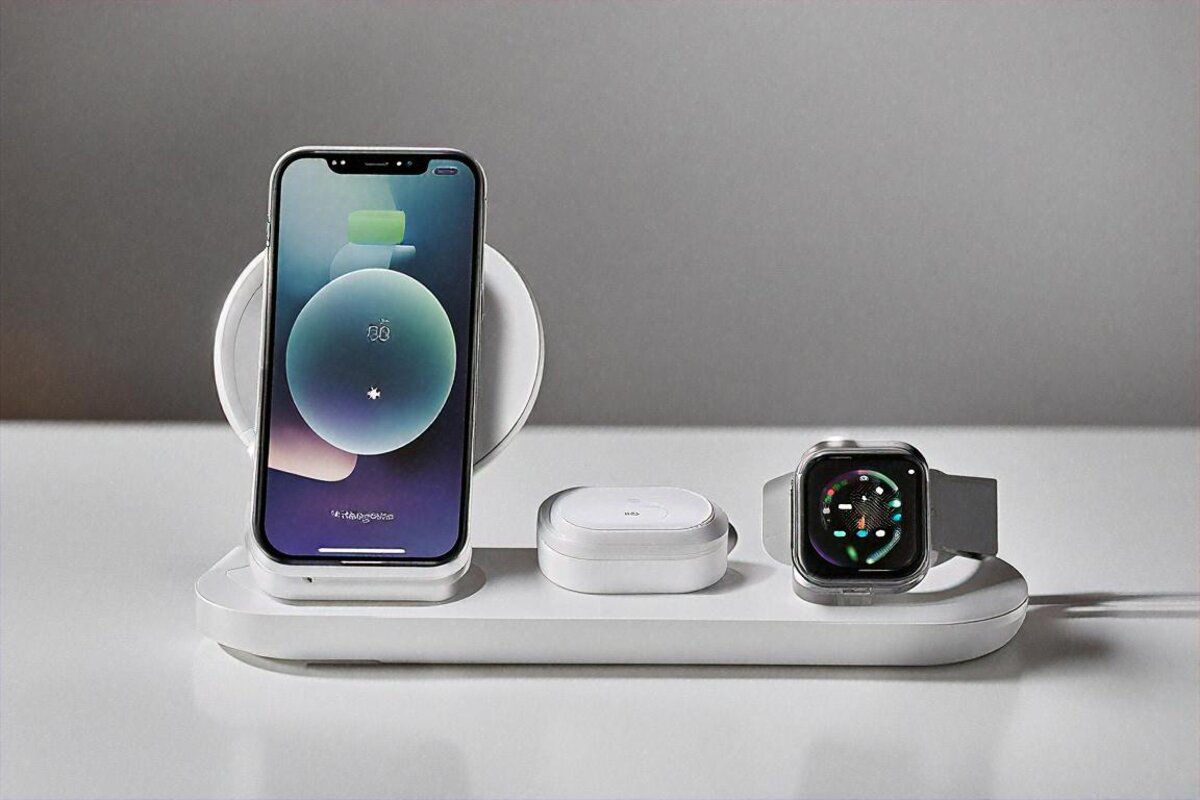
But here’s what she didn’t get, and what I didn’t fully clock myself until a few weeks in: this isn’t just a phone charger. It charges three devices at once — iPhone, Apple Watch, AirPods — on a single, surprisingly elegant stand that eats less desk space than a coffee mug. One cable to the wall. One object on your desk. Three things charging. That simplicity adds up to something real over time, even if it’s a nightmare to defend on a spreadsheet.
Build and Design
Belkin went with a chrome and matte white finish that wouldn’t look out of place in an Apple Store. No accident — Belkin is one of Apple’s tightest third-party partners, and their gear tends to share that same pared-back DNA. The base is weighted, heavier than you’d expect, so it doesn’t tip or skid when you yank your phone off. I’ve used cheaper MagSafe stands that practically lift off the desk with the phone. Not this one. It stays put.
The build genuinely impresses. Three months on, zero scratches on the chrome arm, zero scuffs on the white base, zero wobble in the joint where the arm meets the base. The MagSafe puck sits at the top of a curved chrome arm that holds the phone at a slight angle — ideal for glancing at notifications on your desk without lifting it. Below that, a small Apple Watch puck on a second arm, and right at the base, a flat Qi pad for AirPods or any other Qi device.
Everything feels deliberate. Considered. No wasted surfaces, no awkward proportions. It’s roughly the size and shape of a desk lamp, and honestly, squint and it could pass for a bit of modern sculpture. My mother visited from Lucknow last month and took it for a decorative piece until she watched me drop my phone onto it. “That’s a charger?” Yes, Ma. That’s a charger.
Let me talk MagSafe charging speed, because here’s where you need to manage your expectations. The BoostCharge Pro pushes 15W to iPhones over MagSafe — the most Apple currently permits for MagSafe charging. Reads well on paper. In practice, 15W wireless is clearly slower than 20W wired over USB-C.
Real numbers from my testing with an iPhone 17 Pro (starting at 20% battery):
| Charging Method | 20% to 50% | 20% to 80% | 20% to 100% |
|---|---|---|---|
| Belkin MagSafe (15W) | 28 minutes | 62 minutes | 108 minutes |
| Apple 20W USB-C wired | 18 minutes | 42 minutes | 84 minutes |
| Apple 30W USB-C wired | 14 minutes | 36 minutes | 78 minutes |
So yes, it’s slower. Roughly 25-30% behind the standard 20W brick. If you need a quick top-up before running out the door, plug in a cable — no shame in that. But for overnight charging, or charging through a workday while the phone’s parked on your desk anyway? The speed gap stops mattering. You set it down, you grab it hours later, it’s full. The whole idea is that you don’t think about it.
Apple Watch charging is where the Belkin actually keeps pace with wired, since the Watch has always charged wirelessly anyway. Mine went from dead to 80% in about 45 minutes, in line with what I got off Apple’s own magnetic cable. No grumbles there.
AirPods Pro 2 on the base Qi pad charge at 5W, which is standard and perfectly fine for something you drop on the pad overnight. 30% to full took about 70 minutes. Nothing remarkable, exactly what you’d expect.
The MagSafe Experience
Here’s where I have to talk about the thing that actually won me over. The magnet alignment.
With a plain wireless pad, you set the phone down and then start wondering: is it lined up right? Is it even charging? You check the screen. Maybe it’s off-centre. You nudge it. Check again. That tiny friction sounds trivial, but it nagged at me every single time, and it’s probably why I bailed on wireless charging pads twice before.
MagSafe wipes all of that away. Bring the phone within a couple of centimetres of the puck, the magnets grab, and it snaps into perfect alignment with a satisfying little click. Every time. No adjusting, no checking, no nudging. Snap and walk off. Three months on, the move has gone so automatic that I don’t even look anymore. Phone comes off at the start of the day, goes back at lunch, off again, back at the end of the workday. Muscle memory now.
And I think that’s the real product here. Belkin isn’t selling you a charger. They’re selling you a docking station — a home base for your daily carry. Phone, watch, earbuds. All three, one spot, every night. Wake up, everything’s full. That predictability has genuinely shaved off a small but stubborn bit of daily friction. I never wonder if I forgot to charge the Watch anymore. I never crawl into bed with 12% on my phone. It just happens.
Now the elephant in the room: heat. Wireless charging throws off more heat than wired — that’s just physics, no way around it. MagSafe at 15W gets warm. In an Indian summer, “warm” can creep toward “hot,” and too much heat is bad news for battery life.
My experience over three months in Delhi (where indoor summer temperatures regularly hit 45 degrees Celsius without AC): the phone gets clearly warm while charging but never uncomfortably hot. I put an IR thermometer on the back during peak summer — it topped out around 38 degrees Celsius during MagSafe charging in a 32-degree room. Warm, sure, but well inside the safe band for lithium-ion.
With the AC running (room at 24-25 degrees), the phone barely warms at all. Maybe 30-31 degrees on the back. Completely fine. If you charge overnight, your AC is probably on anyway, so heat shouldn’t worry most people. But if you live somewhere without AC and your room routinely climbs past 35 degrees, I’d lean on wired charging through the peak summer months. Just to play it safe with battery health.
For what it’s worth, I haven’t spotted any odd battery degradation on my 17 Pro after three months of almost entirely MagSafe charging. Battery health still reads 100% in Settings. Short sample, obviously, and I’ll update this if that changes, but so far the heat worry feels more theoretical than real for an AC-cooled room.
Cable management. A small thing that lands big. The Belkin ships with one 1.5-metre cable that ends in a proprietary connector at the charger and a normal wall plug at the other end. One cable. Set that against charging three devices separately: iPhone USB-C cable, Apple Watch magnetic cable, AirPods USB-C or Lightning cable. Three cables, three plugs, three outlets gone on your power strip. The BoostCharge Pro swaps all of that for one cable and one socket. My bedside table went from a tangle to a clean surface with one stand and a barely-visible cable routed behind the nightstand.
The power adapter is built into the cable — a small brick about the size of a standard MacBook charger, maybe a touch smaller. Not the most graceful solution (I wish it were a slimmer plug), but it works and stays cool in use. The 1.5-metre length is fine for a nightstand, but it could get tight if your wall outlet sits a long way from where you want the charger. No extension included, which would’ve been a nice touch at this price.
Comparing to Alternatives
At ₹14,999, the Belkin is the priciest 3-in-1 MagSafe charger you can buy from a mainstream brand in India. But it’s not the only option. Here’s how it lines up against what else is around right now:
| Charger | Price | iPhone Speed | Build Quality | MFi Certified |
|---|---|---|---|---|
| Belkin BoostCharge Pro 3-in-1 | ₹14,999 | 15W MagSafe | Premium chrome + matte | Yes |
| Anker MagGo 3-in-1 | ₹7,999 | 15W MagSafe | Good, mostly plastic | Yes |
| Spigen ArcField 3-in-1 | ₹9,499 | 15W MagSafe | Good, clean design | Yes |
| ESR HaloLock 3-in-1 | ₹5,499 | 7.5W (not MagSafe) | Decent, budget feel | No |
| Generic Amazon 3-in-1 | ₹1,999-2,999 | 7.5W (not MagSafe) | Variable, often flimsy | No |
The Anker MagGo at nearly half the price is the obvious rival. It also charges at 15W MagSafe and carries MFi certification. What you give up is the premium build — Anker leans on plastic where Belkin uses chrome and weighted materials. You also lose the desk-lamp form; the Anker folds flat, which is better for travel and less elegant on a desk. If budget matters (and it should — this is an accessory, not a life-or-death buy), the Anker is probably the smarter pick for most people. I genuinely mean that.
The ESR and generic options I’d steer clear of entirely. Without proper MagSafe certification you’re stuck at 7.5W — literally half the MagSafe speed. And the alignment isn’t as precise, which drags back the “is it centred?” problem that defeats the whole purpose of wireless charging. Save a bit more and get at least the Anker.
There are some annoyances I want to be straight about. Sideways viewing doesn’t really work. The MagSafe puck holds the phone upright in portrait, and while you can technically stick it on horizontally, it’s precarious and the weight balance goes odd. If you want to watch videos on the phone while it charges, this isn’t the rig for it. I end up pulling the phone off to watch anything turned on its side.
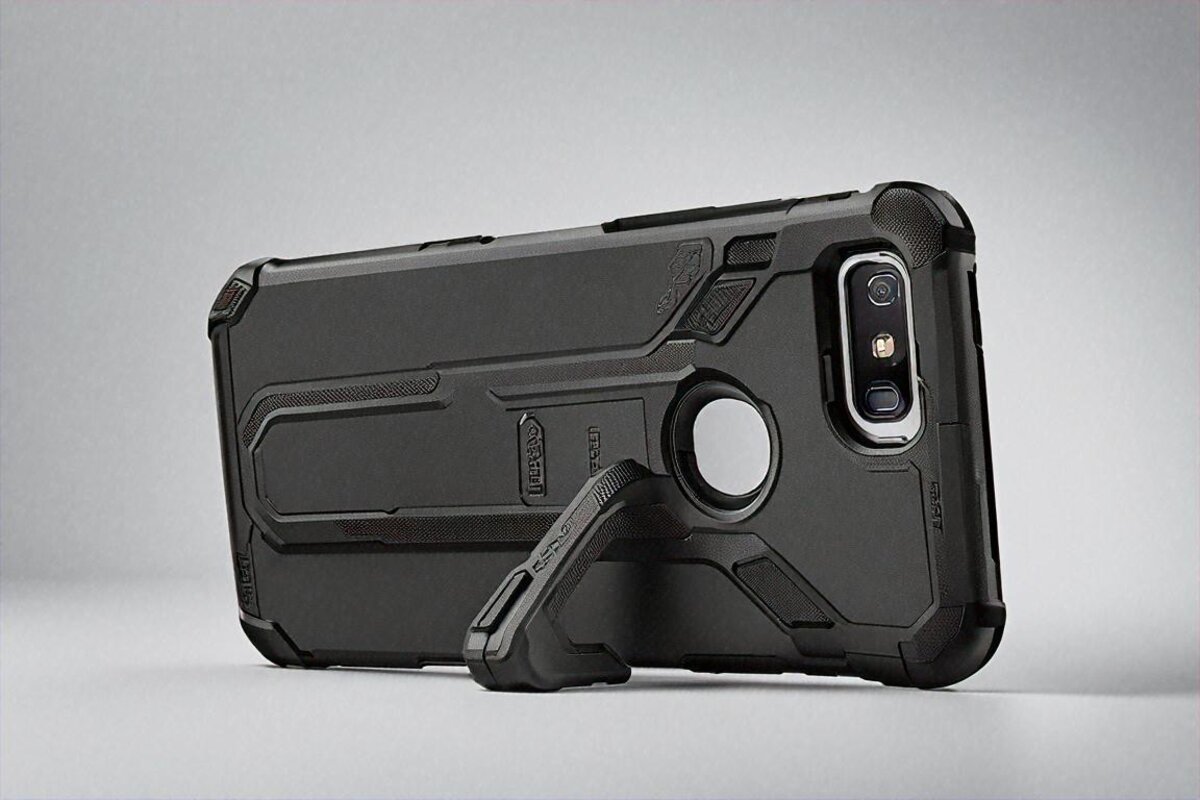
Case compatibility is another thing to weigh. With my Spigen Tough Armor case (yes, the one from the other review), the magnetic hold is weaker, and the phone sometimes won’t start charging on the first go. I have to reposition it once. Maybe twice. It’s a five-second irritation, not a dealbreaker, but it chips at the “just snap and forget” feel that makes this product special. Thinner cases with MagSafe magnets do much better. Apple’s own silicone case is near-flawless on this charger.
The Apple Watch arm sits at a fixed height and angle, which works if your band and wrist are roughly average. With my Sport Band it fits perfectly. A friend with a chunkier third-party metal band said his Watch sat a little awkwardly and occasionally didn’t start charging straight away. Your mileage will vary with the band.
No StandBy mode either. On iOS 17 and later, iPhones can show a smart clock face or widgets in StandBy while charging on their side. Since this stand holds the phone upright in portrait, you don’t get that. Feels like an oversight from Belkin, or maybe a deliberate trade for the upright design. Either way, if StandBy matters to you, look for a charger that holds the phone sideways — the Anker MagGo has a version that does.
Something I didn’t see coming: the psychological shift. This sounds ridiculous, and I know it, but stay with me. Having one designated spot for all three devices changed how I deal with my stuff at day’s end. Phone, watch, earbuds — they all go on the Belkin stand. It’s become a ritual, like hanging your keys on the hook by the door. Before this, my AirPods would wander into jacket pockets, couch cushions, kitchen counters — anywhere. My Watch charged on whatever random cable happened to be nearby. My phone sometimes went to bed uncharged because I’d forgotten to plug it in.
Now everything has a place. Everything charges overnight. Everything’s ready in the morning. It sounds small, and it is. But enough small improvements to your daily routine stack into something that feels genuinely nice. I probably sound like I’m overselling a charger, and maybe I am. But three months of steady use has me convinced the convenience premium here is real, even if it’s hard to put a rupee figure on.
India-specific notes. Power fluctuations are a genuine concern, and I tested the Belkin through a couple of minor brownouts in my area (Gurgaon, because of course Gurgaon). No drama. The charger stopped and restarted cleanly when power came back. No harm to any device, no weird behaviour. It seems to have decent voltage protection baked in, though Belkin doesn’t spell that out.
I’d still plug it into a good surge protector rather than straight into the wall, especially if your area’s power is dodgy. A ₹500 surge strip is cheap cover for a ₹14,999 charger and the ₹2-lakh-plus of Apple kit sitting on it. Common sense, but worth saying out loud.
Dust is a minor issue. Delhi’s dust gets into everything, but the Belkin’s smooth surfaces wipe clean easily. The only spot that gathers any is the flat Qi pad at the base, and a quick pass with a microfibre cloth sorts that. Humidity hasn’t caused anything either — no corrosion or discoloration on the chrome after three months across a Delhi winter and the start of summer.
Availability in India is decent. Amazon keeps it in stock reliably. Flipkart is patchier. You’ll also find it at Apple Premium Reseller stores like iStore and Aptronix at the same ₹14,999. I haven’t seen meaningful discounts during sales — Belkin tends to hold its pricing firmer than other accessory brands — but you might shave ₹500-1,000 during the Great Indian Festival if you’re patient.
Verdict
What We Liked
- Charges iPhone, Apple Watch, and AirPods simultaneously from one outlet
- Premium build quality that still looks and feels new after three months
- 15W MagSafe speed with instant magnetic alignment — no fiddling
- Replaces three cables and three plugs with one clean setup
- Weighted base prevents tipping when removing phone
- Handles Indian power fluctuations without issues
What Could Be Better
- ₹14,999 is genuinely expensive for a charging accessory
- No landscape mode support — kills StandBy mode functionality
- Thicker phone cases weaken the MagSafe connection
- 25-30% slower than wired USB-C charging for quick top-ups
- Fixed Watch charging arm can be finicky with third-party bands
- 1.5m cable length may be too short for some desk setups
So. Was I wrong about wireless charging being a gimmick? Partly. Wireless charging on a flat pad you have to carefully centre your phone on? Still kind of a gimmick, honestly. MagSafe charging on a well-built stand that cradles your phone, watch, and earbuds in one spot and tops them all up overnight without you thinking about it? That’s not a gimmick. That’s just a better system for keeping your stuff charged, and I’m honestly taken aback by how fast I went from skeptic to convert.
The price is the price. ₹14,999 is a lot. You’re paying for the Belkin name, MFi certification, premium materials, and a design that doesn’t clash with the rest of your Apple stuff. If that maths works for you, I don’t think you’ll regret it. If it doesn’t, the Anker MagGo at half the price gets you 85% of the experience. No shame in that call — it’s probably the more sensible one.
But if you’d told me a year ago I’d drop fifteen grand on a charger and feel good about it? I’d have laughed. That gimmick I dismissed? Turns out it was just waiting for the right execution. Funny how that works.
Pros
- Charges iPhone, Apple Watch, and AirPods simultaneously from one outlet
- Premium build quality that still looks and feels new after three months
- 15W MagSafe speed with instant magnetic alignment — no fiddling
- Replaces three cables and three plugs with one clean setup
- Weighted base prevents tipping when removing phone
- Handles Indian power fluctuations without issues
Cons
- ₹14,999 is genuinely expensive for a charging accessory
- No landscape mode support — kills StandBy mode functionality
- Thicker phone cases weaken the MagSafe connection
- 25-30% slower than wired USB-C charging for quick top-ups
- Fixed Watch charging arm can be finicky with third-party bands
- 1.5m cable length may be too short for some desk setups
Our Rating: 8.8/10 · Price: ₹14,999


0 Comments