
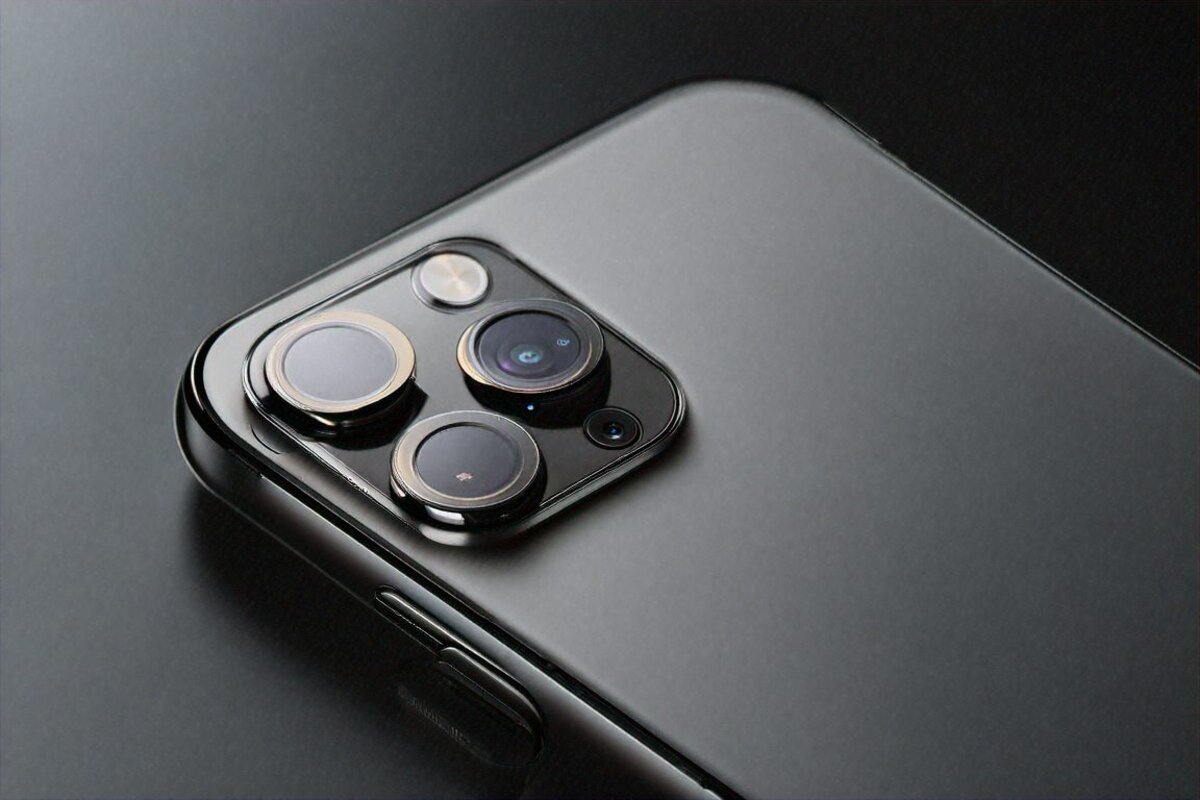
Rs 1,59,900. That’s Apple’s asking price for the iPhone 17 Pro Max in India, and after the better part of three weeks with it, I still couldn’t tell you cleanly whether it’s the best phone going or just the priciest one wearing a very good costume. Annoyingly, I think both can be true at once.
What muddies it is that the upgrades are real. A 10x optical zoom that does what it says. The A19 Pro on TSMC’s 2nm node, which makes everything else look ordinary in benchmarks. MagSafe wired charging that’s finally crept up to 45W. But the old gripes haven’t gone anywhere either. No charger. The walled garden. A battery smaller than what Android phones at half the money carry around. This is a phone that wants to be judged on its own terms — and Apple’s quietly confident you’ll let it.
What’s new this year
Three changes jump out next to the 16 Pro Max. The dual periscope camera, for one — two telephoto lenses now, giving you genuine 5x and 10x optical. The A19 Pro on 2nm, which is a full step ahead of every Android chip currently shipping. And 45W MagSafe wired charging, the quickest Apple’s ever managed.
Everything else is refinement, not reinvention. Brighter screen. Smoother titanium. Face ID is still Face ID. iOS 19 piled on more AI. If you came hoping for a ground-up redesign, this isn’t it — Apple aimed its changes squarely at the spots where it had actually fallen behind.
Build and design
Grade 5 titanium. Aerospace-grade, as Apple won’t stop telling you — the stuff in satellites and aircraft. The frame’s been machined to a softer contour than the 16 Pro Max, and your hand notices right away. Less of a hard ridge where metal meets glass, more of an easy curve that settles into your palm.
It weighs 221 grams. Not light, but well balanced — it doesn’t lean to tip out of your grip either way up. Ceramic Shield up front, Apple’s toughened glass on the back. I didn’t drop-test this one (it’s Rs 1,59,900; I’m not insane), but Ceramic Shield iPhones have shrugged off accidental falls fine in my experience.
Colours: Black Titanium, White Titanium, Natural Titanium, Desert Titanium. I had the Natural, which has a muted silvery look that doesn’t beg for attention. Professional, basically. And it hides fingerprints better than a glass back has any right to.
The one genuinely new bit of hardware is the Capture Control button on the right edge. It’s a capacitive slider rather than a normal button, and it hands you fine control over zoom and exposure while you shoot. There’s a day or two of muscle memory to build, but once it clicks, it’s quicker than pinch-zooming on the glass. Light press to focus, hard press to shoot. Slide for zoom or exposure. At a family thing over the weekend I caught myself using it constantly — it makes the phone feel like a camera rather than a phone doing an impression of one.
IP68 water and dust resistance, same as the Pro Max models before it. Apple doesn’t publish exact depth or time figures beyond the rating, but in real life that covers a drop in the sink, a caught-in-the-rain commute, and the general indignities of an Indian monsoon. I wouldn’t swim with it. I also wouldn’t have a heart attack if it got splashed.
The display
Apple’s pushed peak brightness to 3000 nits on the 6.9-inch Super Retina XDR ProMotion OLED — the brightest panel they’ve ever shipped. What that buys you is real outdoor legibility in an Indian summer. I tested it on a genuinely vicious Hyderabad afternoon, 40-something degrees, sun straight overhead, and had no bother reading text or lining up a shot.
The LTPO panel slides its refresh anywhere from 1Hz to 120Hz. A static reading app drops to 1Hz to sip power; scrolling jumps to 120Hz for smoothness. You never see the handover happen, which is rather the point.
Resolution is 2868 x 1320. Text is knife-sharp. HDR on Netflix and Apple TV+ looks superb — wide gamut, the deep blacks OLED does so well, highlights that hit without blowing out. Editing in Lightroom Mobile on this thing is about as close to a calibrated monitor as a phone gets, with accurate P3 colour straight from the box. No fiddling needed.
Dynamic Island’s still up there doing its job, and Apple’s added more Live Activities — ride-share trips, scores, delivery tracking, music all surface in that little pill. Useful? More than I’d admit. Once you’re leaning on it for the Uber countdown and a running timer, a phone without it feels weirdly bare.
The camera, which is where your money goes
Let me sit on this a while, because the dual periscope rig is the biggest camera hardware story of the year, full stop. No other mainstream phone gives you both a 5x and a 10x true optical lens. Samsung tops out at 5x. So does Google. Apple went further, and the photos make the case.
Start with the main camera: 48MP, f/1.6, a chunky 1/1.3-inch sensor. Big for a phone. It drinks in light, so images stay clean even when the conditions aren’t. Dynamic range is wide — blown highlights are rare, and shadows pull back forgivingly in editing. Colours lean natural over punchy, which has always been Apple’s way and suits anyone who can’t be bothered colour-correcting every frame.
The 48MP ultrawide gains autofocus, which finally makes its macro mode worth using. Close-ups of texture, food, little objects — sharp where it counts. Edge distortion’s kept in check too, which isn’t a given on ultrawides.
Then the telephoto pair. The 12MP 5x periscope covers mid-range zoom with lovely detail; portraits at 5x have a natural compression that flatters faces, backgrounds melting away as the subject pops. But the 10x is the headline. At 10x optical you’re getting reach that used to mean carrying a proper camera with a long lens. At a family event last weekend I grabbed candids of relatives clear across a big hall — faces crisp, expressions caught, nobody clocking that I was shooting them. That kind of distance rewires how you photograph.
Is the 10x perfect every time? No. The narrow f/4.2 aperture means it wants steady hands and a bit of light — shots at 10x in a dim restaurant came out softer than I’d like. But outdoors, or anywhere decently lit, it’s remarkable.
Video is best-in-class and I don’t think anyone serious would argue. ProRes 8K at 30fps for pro workflows. 4K at 120fps for slow-mo that looks cinematic with zero effort. Stabilisation is rock solid. And spatial audio gives the footage a real three-dimensional sound when you play it back on the right speakers or buds.
A19 Pro and what it’s actually like
TSMC’s 2nm process puts the A19 Pro a generation ahead of anything on Android. That’s not a take, it’s a manufacturing fact — Snapdragon 8 Gen 5 is on 3nm, and Apple’s already at 2nm. Whether you feel that gap day to day is the more interesting question.
For ordinary stuff — opening apps, browsing, scrolling, texting — you won’t tell this apart from a well-sorted Android flagship. Both feel immediate. Where the A19 Pro stretches its legs is the heavy lifting: video exports wrap up sooner, Lightroom applies fiddly edits with less waiting, big files decompress faster. Genuine wins, but only if your day involves any of that.
Gaming’s top-drawer. Genshin Impact maxed out runs smooth with barely a dropped frame, Apple Arcade titles look gorgeous. Heat’s handled well — the titanium spreads and sheds it, and I never hit a point where it visibly throttled over a long session.
Apple Intelligence 2.0 is where the 16-core Neural Engine pays its way. Transcription, translation, writing help, photo cleanup — all done on-device, nothing shipped off to a server. Real-time translation through a Hindi-English conversation worked better than I expected; not flawless, but usable. Photo suggestions tend to nail the adjustment a shot needs. The writing tools for email are hit-or-miss — better at trimming something down than building it from nothing.
Battery: fine, just not generous
The 4685mAh cell is smaller than what Samsung (5500mAh), OnePlus (6000mAh), and basically every Chinese flagship ships these days. Apple’s always papered over a small battery with tight hardware-software tuning, and that still holds — but the gap’s getting harder to wave away.
In practice it cleared a full, demanding day. By demanding I mean constant messaging, an hour of photos, half an hour of video, some streaming, a bit of gaming, the usual social-media churn. Off the charger at 7am, and by 11-ish at bedtime I’d usually have 15-20% left. Enough. Not luxurious. Enough.
The 45W MagSafe wired charging is a real step up from Apple’s past efforts. 50% in roughly 28 minutes makes a quick pre-outing top-up actually doable now. A full charge runs a touch over an hour. MagSafe wireless hits 25W, fine for a desk or a nightstand.
My problem isn’t that the battery’s bad — it isn’t. It’s that at Rs 1,59,900, a phone shouldn’t merely “last the day.” It should last with margin to spare. Phones Rs 70,000 cheaper hand you bigger cells and faster fills. Apple’s efficiency edge is real; it just doesn’t fully erase the capacity gap anymore.
iOS 19, with the usual asterisks
iOS 19 is iOS. If you’re already in Apple’s world you know the deal — a polished, joined-up experience where iPhone, iPad, Mac, Watch and AirPods all play nicely. Handoff between devices is slick. AirDrop just works. iMessage is still the best messaging going if your people are on iPhones too (and in India that “if” is shrinking by the year).
The locked ecosystem is the price of admission. You can finally swap default apps, but the real payoff lands when you stay inside the garden. No sideloading in India yet. File handling’s still clunkier than Android. Notification grouping’s improved but still doesn’t touch the fine control Android gives you.
For someone deep in Apple — a MacBook, an iPad, AirPods Pro — the 17 Pro Max drops in like the last missing piece. For someone who prizes flexibility and tinkering, the fences will chafe no matter how smooth it all feels.
Speakers, haptics, the little things
Apple’s stereo speakers are still the bar for phones. Loud without breaking up, with a warmth and clarity that flatters everything from a podcast voice to a track on something this thin. I ended up watching YouTube without headphones more than usual just because they sound good enough. Bass is capped by physics — only so much a tiny driver can do — but inside that limit, this is the best phone speaker setup around.
The Taptic Engine’s haptics remain the standard. Every tap, alert and long-press fires a precise, controlled buzz that feels mechanical rather than cheap. Typing is honestly pleasant. Others have closed in — Samsung and OnePlus have both improved lately — but Apple’s still got a clear nose ahead.
Face ID is fast and dependable. Works across lighting, at a slight angle, even through sunglasses most of the time. A full face mask still defeats it, which occasionally matters. It’s quicker than older generations too — the unlock animation kicks off almost the moment you glance at it.
Calls are excellent. Clean both ends on Jio and Airtel 5G. The earpiece is loud and natural; speakerphone holds up from across a room. Wi-Fi calling stepped in reliably whenever the cellular signal sagged indoors.
Specifications
| Specification | Details |
|---|---|
| Processor | Apple A19 Pro (2nm TSMC) |
| RAM | 8GB |
| Storage | 256GB / 512GB / 1TB |
| Display | 6.9-inch LTPO OLED, 2868×1320, 1-120Hz ProMotion |
| Main Camera | 48MP f/1.6, 1/1.3-inch sensor |
| Ultrawide | 48MP f/2.2 with AF and macro |
| Telephoto 1 | 12MP 5x periscope f/2.8 |
| Telephoto 2 | 12MP 10x periscope f/4.2 |
| Front Camera | 24MP TrueDepth with Face ID |
| Battery | 4685mAh |
| Charging | 45W MagSafe wired, 25W MagSafe wireless |
| OS | iOS 19 with Apple Intelligence 2.0 |
| IP Rating | IP68 |
| Weight | 221g |
Pros and Cons
Pros
- A19 Pro on 2nm is the fastest mobile chip — nothing else comes close in sustained performance
- 10x true optical zoom is genuinely useful and unmatched on any other mainstream phone
- Aerospace-grade titanium build feels and looks premium
- Video recording capabilities (8K ProRes, 4K 120fps) are best-in-class by a wide margin
- Longest software support — you’ll get iOS updates for 7+ years
Cons
- Rs 1,59,900 makes this the most expensive mainstream smartphone in India
- No charger in the box — add another Rs 2,500 for a 45W adapter
- Ecosystem lock-in is real; leaving Apple later means losing integrations you’ve grown dependent on
- Battery capacity trails Android flagships costing half as much
Where to buy
The iPhone 17 Pro Max starts at Rs 1,59,900 for the 256GB. You’ll find it through Apple’s India site, the Apple Store app, Amazon India, Flipkart, and authorised resellers like Imagine and iWorld. Bank offers and exchange deals can knock off Rs 5,000-10,000 depending on timing, so it’s worth waiting for a sale window if you can.
So is it worth it?
I’ve gone back and forth on this more than I’d like to admit. On hardware alone, there’s a case. The 10x zoom isn’t on any other phone. The video is genuinely pro-grade. The chip’s a generation ahead. The build is flawless.
On value, though? The Galaxy S26 Ultra hands you a fuller package — S Pen, bigger battery, 65W charging — for Rs 25,000 less. The OnePlus 14 Pro gets you 90% of the daily experience for under half the price. What you’re paying the premium for is the ecosystem, the 10x, and the A19 Pro — and whether those three are worth Rs 90,000 over a brilliant Android alternative is about as personal as a buying decision gets.
Here’s the question I keep washing up on: strip off the Apple logo and the ecosystem pull, judge it purely as a piece of tech at Rs 1,59,900 — would you still buy it? If your answer’s yes, for the camera or because your whole digital life runs through Apple, then this is the best iPhone they’ve built and you’ll love it. But if you hesitated even a beat, there are phones that match the daily feel for dramatically less. Which side of that you land on probably says more about what you want from a phone than any review ever could.
Full Specifications
| Processor | Apple A19 Pro (2nm) |
|---|---|
| RAM | 8GB |
| Storage | 256GB/512GB/1TB |
| Display | 6.9" LTPO OLED 120Hz ProMotion |
| Main Camera | 48MP f/1.6 |
| Battery | 4685mAh |
| Charging | 45W MagSafe wired |
| OS | iOS 19 |
| IP Rating | IP68 |
| Weight | 221g |
Pros
- World's fastest A19 Pro chip
- Industry-first 10x optical zoom
- Premium titanium build
- Best video recording capabilities
- Longest software support
Cons
- Most expensive at ₹1,59,900
- No charger in box
- Locked Apple ecosystem
- Smaller battery than Android rivals
Our Rating: 9.4/10 · Price: ₹1,59,900
iPhone 17 Pro Max looks insane. The titanium build and A19 Bionic chip make it a must-buy for iOS loyalists. Preordered mine already!