
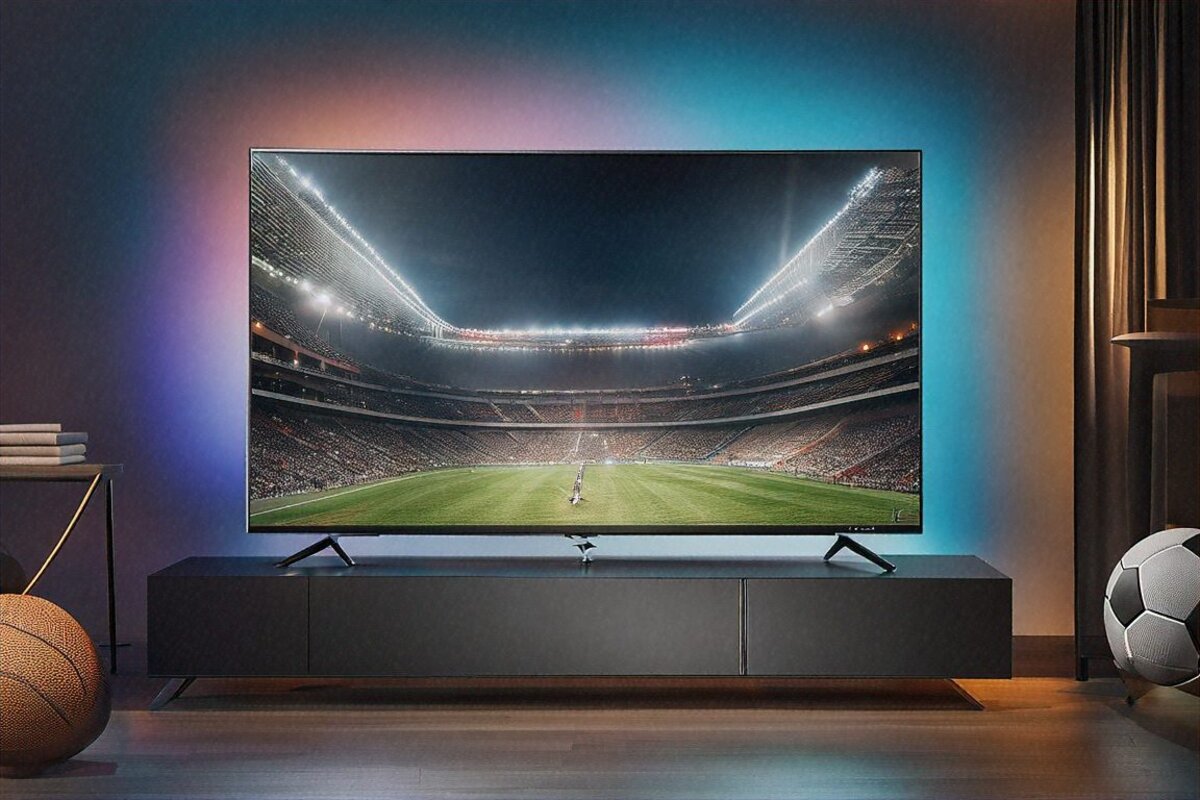
The ₹55,000 TV That Made Me Question Why Anyone Spends Two Lakhs
Let me be honest about where I’m coming from. I’ve reviewed TVs that cost three lakh, five lakh, even seven and a half. OLED panels with that bottomless, switch-off-pixels black. QD-OLED sets doing things with colour that genuinely look like magic. 8K screens you could press your nose against and still not find a pixel. All of them stunning. No argument from me there.
Then the TCL C855 Mini LED 55-inch showed up at ₹54,999, and it threw me into a bit of a spiral. This thing does maybe 80% of what those flagships do, for a sliver of the money. Which left me chewing on a question: for a normal Indian household — the family that puts cricket on every weekend, streams a film after dinner, games now and then — does that missing 20% actually change anything?
I’ve had the C855 in my living room for a month, mostly to settle that one argument with myself.
Mini LED — The Technology That Closed the Gap
Quick detour into what Mini LED is, because it’s the whole reason this set punches so far above its price.
A normal LED TV has maybe a few dozen backlight zones. Throw a scene at it that’s part bright, part dark, and it flounders — it can’t light one zone up without spilling glow into the dark one next door. That’s why night scenes on cheap LEDs look like someone smeared grey over them. Hardware can only do so much.
Mini LED takes those LEDs, shrinks them way down, and crams thousands behind the panel. The C855 runs 1000 local dimming zones. A thousand. Each one does its own thing — bright where the picture calls for it, off where it doesn’t. You don’t get OLED’s perfect black, since even a tiny LED still leaks a little light, but you get a lot closer than any regular LED has a prayer of reaching.
And you notice it right away. A dark scene with one bright source in it — a candle in a black room, a torch down a tunnel, stars over a field at night — the C855 nails the contrast in a way budget sets just can’t. The bright bit jumps out, the dark stays properly dark. Not OLED-dark, but dark enough that you quit noticing and get on with the film.
1500 Nits — Brighter Than Some Flagships
Here’s a figure that genuinely stopped me. The C855 peaks at 1500 nits. For context, the LG C4 OLED — which runs ₹1,89,999 — tops out around 800 to 900. So this ₹54,999 TV is close to twice as bright as an OLED costing three and a half times more.
Brightness earns its keep two ways. First, HDR. The whole point of High Dynamic Range is bright highlights that punch and shadows that still hold detail, and the brighter your panel, the more that pops. At 1500 nits, HDR10+ and Dolby Vision content on the C855 looks vivid and a little thrilling. Sunlight in a scene feels like sunlight. Explosions land. A neon-soaked city street actually glows.
Second — and this is the big one for Indian homes — daytime viewing. Hardly anyone here has a blacked-out theatre room. We watch in living rooms with windows, balcony doors, a tube light or two overhead. A brighter panel just shrugs off ambient light better. At 1500 nits the C855 is genuinely fine to watch on a bright afternoon, which I cannot say for any OLED at any price. Sunday cricket with the curtains wide open? It doesn’t flinch.
144 Hz and Gaming — A Pleasant Surprise
I went in with low gaming expectations. Decent gaming TVs are usually flagships with flagship price tags. But TCL put 4K at 144 Hz, VRR, and ALLM on the C855 — a gaming spec list you’d normally find on sets costing two or three times this.
The catch — there’s always one at this price — is that only one of the four HDMI ports is HDMI 2.1. The other three are HDMI 2.0, stuck at 4K 60 Hz. So if you’ve somehow got a PS5 Pro, an Xbox Series X, and a gaming PC, they’ll be squabbling over that one good port. Most gamers I know in India own a single console, tops, so this probably won’t bite the people this TV is actually for. Still, you should know going in.
Input lag in game mode came in around 10 milliseconds. That’s not the near-instant response of the LG C4 OLED, and the hardcore online crowd will feel the gap. For everyone else — single-player stuff, racing, sports games — 10 ms is plenty quick. I ran God of War Ragnarök on a PS5 through it and had a brilliant time. No lag I could see, no tearing, motion stayed clean. For the money, that surprised me.
TCL’s AiPQ Engine — Processing That Mostly Works
TCL’s image processing won’t be taking any trophies off Sony’s Cognitive Processor XR, or even LG’s Alpha9. But the AiPQ Engine handles scene detection and auto-tuning competently enough. Sports mode keeps cricket smooth without going overboard. Movie mode leaves cinematic frame rates alone. Standard mode is a fine jack-of-all-trades for everyday telly.
Colour out of the box is good rather than great. The default temperature leans a touch warm, and greens come across slightly punchy. Ten minutes poking around the white-balance and colour-temp settings tidies that up nicely. Most families will never crack open that menu, and honestly the defaults are perfectly watchable. You only really clock the shortfalls if you line it up beside a properly calibrated panel.
The IPS panel holds up at an angle better than VA panels do — those wash out the second you slide off-centre. In a family room where people are scattered around the sofa and floor, the C855 keeps its colour and contrast respectably from the sides. Not OLED-level, but a clear step past the budget VA crowd.
Google TV — The Best Smart TV Platform
The C855 runs Google TV, and that’s one of its quiet advantages over rivals at this price. Plenty of cheap TVs ship some in-house OS with a thin app store and a sluggish menu. Google TV gives you the same software you’d get on a Sony or Hisense flagship — the full Play Store, recommendations pulled from across your services, Google Assistant baked in.
Every Indian streaming app is here: JioCinema, Disney+ Hotstar, SonyLIV, ZEE5, Amazon Prime Video, Netflix, YouTube. They all work, they all open fast. Chromecast is built in for flinging stuff over from an Android phone. The remote’s got dedicated keys for Netflix, YouTube, and a couple of others.
Assistant takes Hindi and English commands. “OK Google, play highlights from today’s IPL match on YouTube” — lands maybe nine times in ten. The interface is snappy, the app store covers anything you’d want, and the cross-service recommendations are actually handy when it’s 9 PM and you’re staring at the screen with no clue what to put on.
Onkyo Audio — Better Than the Name Suggests at This Level
TCL tied up with Onkyo for the speakers, and the 40W output with Dolby Atmos decoding sits above the bar for this price band. Dialogue’s clear, there’s a sensible bit of stereo width, and the Atmos processing adds a faint sense of height on the content that supports it. Bass is weak, as you’d expect — no 55-inch TV does bass properly — but the overall sound is clean enough for news, YouTube, and casual watching without bolting on a speaker.
For films and cricket, where you actually want some weight to the sound, you’ll reach for a soundbar. But you’d do that with any TV at any price, so I won’t dock the C855 for it. At ₹54,999, the fact that the built-in audio is even pleasant to listen to puts it ahead of a lot of rivals I’d be reaching past on day one.
Build Quality — The Premium Tax Shows Here
The corner-cutting shows its face here. The frame is plastic, not metal. Nicely done plastic — smooth, even colour, no sharp edges — but plastic all the same. The stand does its job without the dense, premium heft of LG’s or Samsung’s. The back panel is plain. The remote feels light and a little hollow in the hand.
None of which registers once the screen’s on. And that’s the value-buyer logic I happen to agree with: every rupee TCL didn’t spend on the frame and stand went straight into the panel and the processing. Give me a plastic frame wrapped around a 1500-nit Mini LED over a metal frame hiding a dim, zone-less backlight. Every time, no hesitation.
Specifications
| Specification | Details |
|---|---|
| Panel | Mini LED, IPS |
| Resolution | 4K UHD, 3840×2160 |
| Local Dimming | 1000 zones |
| Peak Brightness | 1500 nits |
| HDR | HDR10+, Dolby Vision |
| Refresh Rate | 4K @ 144 Hz |
| HDMI | 1x HDMI 2.1 + 3x HDMI 2.0 |
| Gaming | VRR, ALLM, Game Mode (10 ms input lag) |
| Audio | 40W Onkyo, Dolby Atmos |
| OS | Google TV |
| Connectivity | Wi-Fi 6 (dual band), Bluetooth, Chromecast |
| Size | 55 inches |
Pros
- 1500 nits peak brightness outshines OLED TVs costing three times as much
- 1000-zone Mini LED delivers near-OLED contrast at a budget price
- 4K 144 Hz with VRR and ALLM — serious gaming features at this price point
- Google TV with every Indian streaming app and Chromecast built in
- Daylight performance is outstanding for bright Indian living rooms
- Dolby Vision and HDR10+ support for premium content
Cons
- Only one HDMI 2.1 port — multi-device gamers will struggle
- Plastic frame feels budget compared to LG and Sony build quality
- IPS viewing angles are good but not OLED-good
- Colour accuracy needs manual calibration for best results
- Can’t match OLED for black levels in dark room viewing
The Competition at This Price
Below ₹60,000 in India, the field thins out fast. Most rivals hand you a plain LED panel, edge-lit, no local dimming, maybe 400 to 600 nits if you’re lucky. The Xiaomi Smart TV X Pro 55 at ₹34,999 is a fine budget choice, but it’s a standard LED running at 60 Hz — a different league entirely. Hisense and Vu have a few sets in this bracket, none of them packing 1000-zone Mini LED.
Which leaves the C855 more or less alone in this price slot for anyone after proper display tech. It’s the cheapest Mini LED TV with this many dimming zones you can buy in India right now, and the 144 Hz gaming is a freebie nobody else here matches.
Practical Details After a Month
A few things only turned up after living with it. The set runs cool — no worrying heat off the back panel even after a marathon session. Power draw is moderate, roughly in line with any other 55-inch LED, since Mini LED backlighting is fairly efficient about spreading load across zones.
Google TV keeps getting updates, and TCL’s customisation layer sitting on top is thin, which I like. No pushy bloatware, no promo junk crowding the home screen beyond whatever Google itself surfaces. TCL hands the software to Google and sticks to the hardware — sensible division of labour for a company that’s genuinely good at making panels.
Connectivity’s been solid. Wi-Fi 6 dual-band hasn’t dropped once mid-stream. Bluetooth pairs with my headphones in seconds for late-night watching. The HDMI eARC port plays nice with my soundbar and passes Dolby Atmos without a fuss. I plugged in a USB drive loaded with 4K HDR test files and the built-in player chewed through them smoothly — handy if you keep a local media stash.
One thing I genuinely wish TCL had bothered with: a backlit remote. The buttons are fine by daylight, but groping for the right one in a pitch-dark room halfway through a film gets old quick. Small gripe, sure, but it’s exactly the kind of daily-use detail that separates good from great. I’ll probably grab a third-party universal remote at some point, or just keep barking commands at the thing like a normal person in 2026.
Who Shouldn’t Buy This
Fair’s fair, so let me name who this isn’t for. If you’re a hardcore cinephile who watches mostly in a dark room and cares deeply about black levels, the C855’s Mini LED panel will wear on you. Dark scenes show faint halos around bright objects — that’s just how zone-based backlighting behaves, and 1000 zones, impressive as it is, isn’t pixel-level control. You want an OLED, and the cheapest decent one (LG B4 or C4) starts higher. That’s the deal.
Multi-device gamers needing more than one HDMI 2.1 port should look elsewhere too. One port won’t cut it if you own a PS5, an Xbox, and a gaming PC all at once. The LG C4, with four HDMI 2.1 ports, is the connectivity king there — though you’ll pay north of three times the C855’s price for the privilege.
And if badge value matters — if you want to tell people you bought a Sony or an LG — TCL doesn’t carry the same weight in India yet. It shouldn’t matter. The electrons hitting the panel couldn’t care less about the logo underneath. But I know it does matter to some folks, and that’s fair enough. Buy what makes you happy.
One Month Later — Circling Back to My Opening Question
I started by asking whether the 20% gap between a ₹55,000 TV and a ₹2,00,000 one actually matters for a normal household. A month in, I’ve got my answer, and it’s going to irritate the videophile crowd.
For most Indian families? No. It doesn’t.
The C855 throws up a picture that makes people walk in and go “wah, bahut achhi picture hai.” It does cricket beautifully. Films look vivid and detailed. HDR content on Netflix and Hotstar looks properly premium. Gaming’s smooth and responsive. Google TV gives you every app you’ll ever need. It gets bright enough for afternoon viewing with the curtains open. And it costs less than a half-decent phone in 2026.
Will an OLED give you blacker blacks? Yes. Will a QD-OLED give you more accurate colour? Absolutely. Will an 8K QLED resolve more detail up close on a huge screen? For sure. Those TVs are better — I’m not pretending otherwise. Side by side in a controlled room, the gap is real and visible.
But in your actual living room, on a Saturday night, family piled on the sofa, popcorn and chai going round — the C855 gives you an experience good enough to forget it only cost ₹54,999. And “good enough to forget the price” is about the nicest thing I can say about a budget product.
So that’s where I land. Right back where I started. The cheap TV that made me question flagship pricing. It hasn’t talked me out of believing flagships are worth it — they are, for the people who care about the differences. But it’s convinced me that for most Indian households, the smart money’s sitting right here. ₹54,999. Mini LED. 1500 nits. Google TV. Sorted.
Price in India
The TCL C855 55-inch Mini LED is ₹54,999 in India, sold on Amazon India, Flipkart, and TCL India’s own site. Prices tend to slide during Amazon Great Indian Festival and Flipkart Big Billion Days — hold out for a sale and you might land it around ₹47,000 to ₹49,000.
Full Specifications
| Panel | Mini LED IPS |
|---|---|
| Resolution | 4K UHD 3840×2160 |
| Local Dimming | 1000 zones |
| Peak Brightness | 1500 nits |
| Refresh Rate | 4K 144Hz |
| HDR | HDR10+ Dolby Vision |
| HDMI | 1x HDMI 2.1 + 3x HDMI 2.0 |
| Audio | 40W Onkyo Dolby Atmos |
| OS | Google TV |
| Size | 55 inches |
Pros
- 1500 nits exceptional brightness for price
- 1000-zone Mini LED local dimming
- 144Hz gaming refresh
- Google TV Indian streaming
- Best value under ₹60,000
Cons
- Only 1 HDMI 2.1 port
- IPS viewing angles vs OLED
- Limited Dolby Vision app support
- Plastic frame
Our Rating: 8.2/10 · Price: ₹54,999
0 Comments