
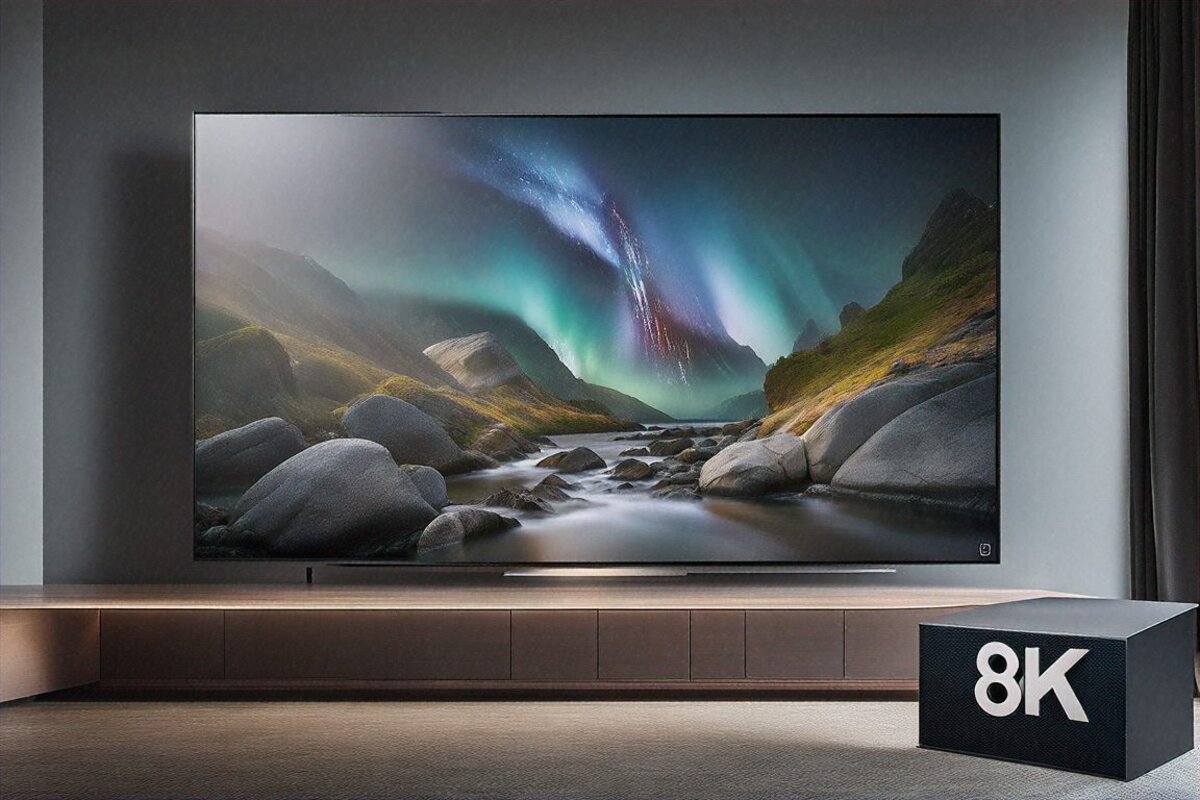
I Watched a Cricket Final on an 85-Inch 8K TV and Mine Quietly Died That Day
It wasn’t the match that finished off my old TV. It was the comedown afterward. A friend had just put the Samsung QN900D — the 85-inch 8K QLED — in his drawing room and called a few of us over for the final. I walked in, clocked the screen, and my honest first thought was “that’s not a television, that’s a window.” The image was so sharp that the grass on the pitch looked like you could reach in and run your hand across it. Individual blades. On a cricket pitch. From a regular HD broadcast.
I got home, switched on my 50-inch 4K set, and it looked like someone had wiped vaseline across it. Not literally — but the gulf between the two was that stark. A fortnight later I had the QN900D in my own living room for testing.
At ₹7,49,999, this isn’t a TV for most people. It’s not even a TV for most well-off people. It’s for a very particular sort of buyer who wants the absolute ceiling of what television can do right now, today, in India. So here’s what that money actually gets you.
85 Inches of “Where on Earth Does This Go”
Start with the practical reality, because it’s a big one. Eighty-five inches is enormous. My living room runs roughly 18 by 14 feet, which isn’t small, and this set still dominates the wall it’s on. Samsung suggests sitting 7 to 10 feet back from an 85-inch 8K panel, and that lines up with what I found. Too close and you’re scanning the screen like reading a newspaper. Hit the sweet spot and it fills your peripheral vision in a way a smaller TV just can’t.
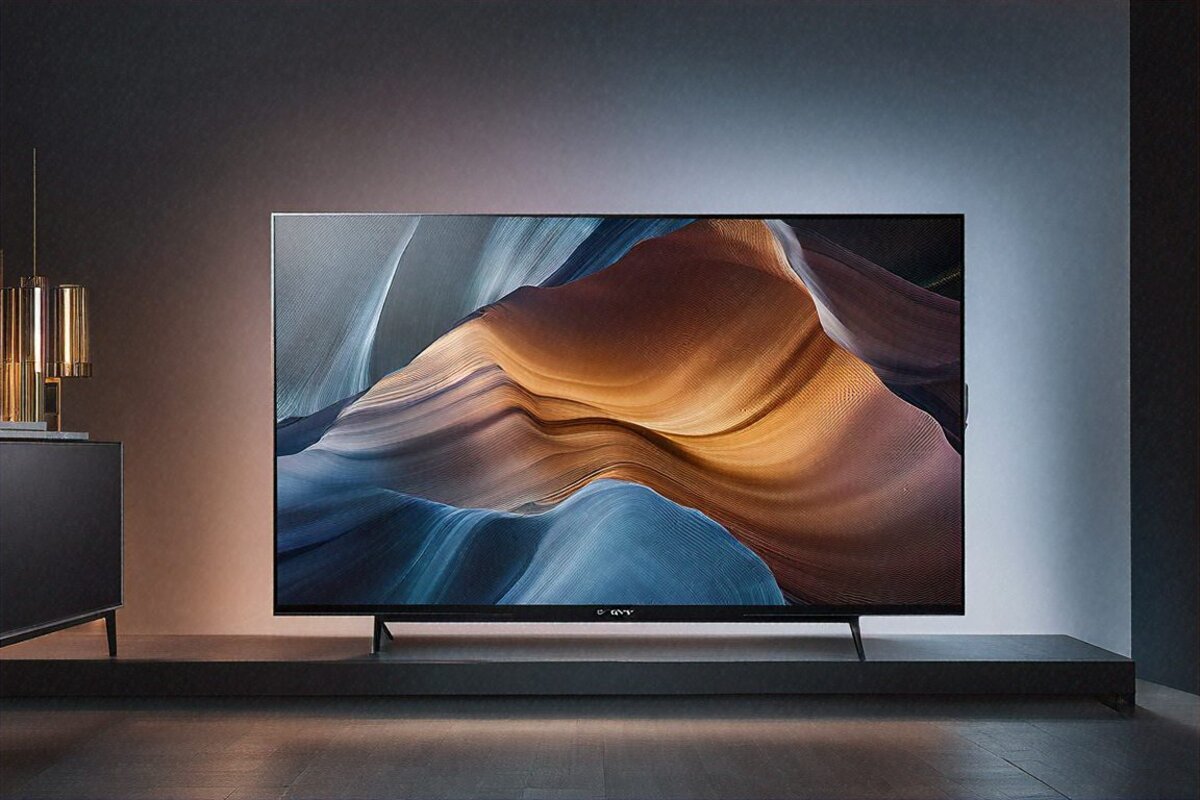
Installation needs professionals, full stop. It’s heavy, and wall-mounting it solo would be asking for trouble. Samsung’s No-Gap Wall Mount presses it almost flush to the wall, and with the Infinity Screen design — bezels so thin they barely register — the mounted result is genuinely striking. It looks like someone projected the picture straight onto the plaster.
The One Connect Box is Samsung’s fix for cable clutter. Every HDMI cable, the power, the ethernet — all of it plugs into a separate box you tuck behind the stand or inside a cabinet. One thin optical cable runs from the box to the screen. So your wall-mounted TV has a single skinny wire dropping down to wherever you’ve stashed the box. As someone who’s lost years to cable spaghetti behind home theatre setups, I could’ve wept with relief.
The brushed aluminium stand is solid and premium. The remote’s been pared right down — Samsung’s been slimming these for years and this one hits the sweet spot, enough buttons without feeling stripped. It charges off solar and ambient light, so I haven’t put batteries in a TV remote in two years and I’m not going back.
8K Resolution — Let’s Have the Argument
Right, the obvious objection first. Is there enough 8K content to justify an 8K TV? In India, in 2026? Honestly? Not really. JioCinema caps at 4K. Hotstar tops out at 4K. Netflix has some 4K Dolby Vision and exactly zero 8K. YouTube has a scattering of 8K travel and nature clips. Samsung’s got a few 8K streaming tie-ins, but the library’s thin.
So why buy one at all? Two reasons.
First, the upscaling. Samsung’s Neural Quantum Processor 8K takes whatever you throw at it — 4K, 1080p, even bog-standard SD cable — and upscales it with AI. And the results are, I’ll word this carefully, surprisingly convincing. Not “looks like native 8K” convincing, but “this 4K looks clearly better than on my friend’s 4K TV” convincing. The AI fills in detail, knocks down noise, sharpens edges, and rebuilds textures in a way that genuinely lifts the picture. Remember that cricket match? A plain HD broadcast. On this set, with the upscaling doing its thing, it looked better than most 4K I’ve seen elsewhere.
Second, future-proofing. At ₹7,49,999, this is a TV you buy to keep for a decade or more. The 8K content will come — cameras already shoot it, and streaming bandwidth in India keeps climbing. When 8K streaming finally goes mainstream, and one day it will, you’ll already have the panel sitting there waiting.
Whether those two reasons justify the premium over a top-tier 4K OLED or QLED is a question only your bank balance can settle. I’ll give you my take at the end.
Picture Quality — Properly Jaw-Dropping
33 million pixels. That’s what 7680 by 4320 buys you, and stretched across 85 inches the effect edges into something almost three-dimensional. Sit at the recommended distance and the screen seems to have a depth that flat panels usually don’t. Hard to describe without sounding like I’m laying it on thick, but 8K at this scale has a quality that 4K doesn’t match, even from the exact same source.
Peak brightness hits 4000 nits. Four thousand. For context, most OLEDs — even the very best — run out of road somewhere between 800 and 1300 nits. This thing is three to five times brighter. Why does that matter? HDR. High dynamic range needs bright highlights to land properly, and this set delivers them with a force that makes on-screen sunlight genuinely blinding and explosions actually luminous.
The anti-reflection coating is the best I’ve come across on any TV, period. My living room has two big windows and a balcony door, so daylight floods in most of the day. On my old set, afternoon viewing meant drawing the curtains or giving up. The QN900D shrugs it off — reflections drop to the point where I can watch comfortably with the sun pouring in. For Indian living rooms, which tend to be bright, that’s a properly meaningful feature.
Colour volume on QLED is excellent. Samsung’s quantum dots throw out vivid, punchy colour that pops — OLED purists like me would mutter “a touch oversaturated,” but most normal viewers would just call it beautiful. It’s a livelier picture than you’d get off a Sony or LG OLED — less “cinematic accuracy,” more “crikey, that looks amazing on my wall.”
Where does QLED still lose? Black levels. QLED runs a backlight behind the panel, so its blacks are very dark grey rather than true black. OLED wins this one and always will, because self-emissive pixels just switch off for proper black. In a dark room with a film full of shadowy scenes, you’ll spot the difference. In a normally lit Indian living room with cricket, films, and daytime YouTube? You probably won’t give it a second thought.
Audio — Better Than I Expected, Still Not Enough
The Object Tracking Sound Pro+ system pushes 60 watts through speakers dotted around the frame. The clever bit is that the sound tracks the action — a car driving left to right will have its engine note pan left to right through the speakers. It’s a neat trick and it works. As built-in TV audio goes, this is among the best I’ve heard.
But built-in TV audio is what it remains. On a ₹7,49,999 television you’ll want a proper soundbar at minimum, ideally a full home theatre setup. I ran it with a Samsung HW-Q990D soundbar and the pairing is superb — Atmos content fills the room and wraps around you. What I’d never do is drop seven and a half lakhs on a TV and then lean on its built-in speakers as the main event. That’s buying a Ferrari and running it on regular petrol.
Smart TV Platform — Tizen Gets the Job Done
Tizen OS 9 runs things, and it’s fine. Every Indian streaming app you’d want is here — JioCinema, Disney+ Hotstar, SonyLIV, ZEE5, Amazon Prime Video, Netflix, YouTube. Apps launch quickly. The Universal Guide pulls content from across your services into one recommendations feed, handy when you can’t decide what to put on.
Bixby and Alexa both handle voice. I use Alexa because the house is already wired with Echo speakers and the integration’s decent. “Alexa, turn on the TV and play cricket highlights on Hotstar” works maybe 80% of the time. The other 20% it mishears something and serves up cooking videos, which is about standard for voice assistants.
Ambient Mode turns the screen into a photo frame or art canvas when the TV’s off. On an 85-inch panel that genuinely impresses — a painting or family photos at that scale changes the whole room. I’d written it off as a gimmick on smaller sets, but at this size I actually appreciate it.
Multi View splits the screen across two sources at once. Useful in cricket season when two matches clash. The 85-inch panel’s big enough that each half is still basically a 42-inch TV, which is perfectly watchable.
Gaming — Four HDMI 2.1 Ports
All four HDMI ports are 2.1 at the full 48 Gbps, so you get 4K at 120 fps with VRR, ALLM, and a game mode across every input. PS5 Pro and Xbox Series X both connect and run flat out. Input lag in game mode is low enough for competitive play, though the truly hardcore will still lean toward smaller, higher-refresh monitors.
There’s no native 8K gaming from consoles yet. The PS5 Pro can technically output 8K but almost nothing supports it. When that changes, the TV’s ready. More future-proofing.
For casual and mid-core players, the experience is incredible. Playing Spider-Man 2 on a screen this size with HDR lighting pushing 4000 nits makes you forget you’re holding a controller — it feels more like standing inside the game. I know how that reads. But it really is that immersive at this scale.
Specifications
| Specification | Details |
|---|---|
| Resolution | 8K QLED, 7680×4320 (33 million pixels) |
| Processor | Neural Quantum Processor 8K |
| HDR | HDR10+ Adaptive, HLG |
| Peak Brightness | 4000 nits |
| Panel Type | QLED VA |
| Anti-Reflection | Samsung Anti-Reflection coating |
| Audio | 60W Object Tracking Sound Pro+, Dolby Atmos |
| HDMI | 4x HDMI 2.1 (48 Gbps, 8K capable) |
| OS | Tizen OS 9 |
| Smart Features | Bixby, Alexa, Ambient Mode, Multi View |
| Connectivity | Wi-Fi 6E, Bluetooth 5.2, Ethernet |
| Size | 85 inches |
| Special | One Connect Box, No-Gap Wall Mount |
Pros
- 8K resolution with genuinely impressive AI upscaling
- 4000 nits peak brightness crushes everything else for HDR
- Best anti-reflection coating in the TV market
- One Connect Box solves cable management beautifully
- Infinity Screen design looks spectacular wall-mounted
- Four HDMI 2.1 ports with full 48 Gbps bandwidth
Cons
- ₹7,49,999 puts it out of reach for almost everyone
- Native 8K content is still extremely limited in India
- QLED black levels can’t match OLED — dark room viewing loses to LG and Sony
- Requires professional installation due to size and weight
- Built-in audio, while good, needs supplementing with a soundbar for this price class
Streaming Apps and Smart Home
Everything you’d want is here. JioCinema for IPL, Hotstar for Disney and the Star network, Netflix and Prime for the international stuff, YouTube for the rest. SonyLIV and ZEE5 fill out the Indian side. The apps launch fast and stream cleanly.
AirPlay 2 covers screen mirroring from iPhones and iPads. Chromecast is built in for Android. SmartThings turns the TV into a hub for compatible smart home gear — lights, cameras, thermostats. If you’re already living inside Samsung’s ecosystem, it all knits together nicely.
Living With an 85-Inch TV — the Bits Nobody Mentions
Nobody talks about the day-to-day reality of owning a TV this big, so here’s a few things I worked out after it went up.
Power draw is real. An 85-inch 8K panel pulls noticeably more than a 55 or 65-inch set. My electricity bill climbed by somewhere between ₹800 and ₹1,200 a month depending on how much I watched — not ruinous, but worth knowing if you’re budgeting for the long haul. Eco mode helps, dimming the panel and easing off the processing for lighter content, but eco mode on a ₹7,49,999 TV feels a bit like fitting a speed limiter to a sports car.
Then there’s the furniture. We had to shift the sofa back about two feet to land the right viewing distance. The coffee table moved. A side table got rehomed. An 85-inch TV doesn’t just go on the wall — it reorganises the whole room around itself, which is worth thinking about before you buy. Measure your room. Measure the wall. Measure the gap from wall to your main seat. Do the sums first.
And cleaning. The panel’s huge and pulls in dust like everything else in an Indian home. I wipe it down with a microfibre cloth once a week. The anti-reflection coating’s tough and hasn’t worn at all from regular cleaning. But it’s a lot more surface to keep on top of, and a smudge you’d never clock on a 55-inch screen becomes a glaring eyesore at 85 inches.
So — Is 8K Worth It? The Honest Answer
And here’s the part where I’m meant to hand you a verdict. Buy it or don’t. Thumbs up, thumbs down.
I can’t. Because the answer hangs on a question nobody can fully settle yet: how fast does 8K content actually arrive in India?
If you reckon 8K streaming goes common within the next three to five years — JioCinema broadcasting IPL in 8K, Netflix offering 8K films, YouTube creators shooting it routinely — then the QN900D is future-proofing done right. You’ll be ready ahead of everyone, and in the meantime the AI upscaling makes your current 4K look noticeably better than it would on a 4K set.
If you think 8K stays niche for the foreseeable future — streaming services pouring effort into better 4K HDR rather than leaping to 8K, India’s bandwidth keeping 8K streaming impractical for most homes — then you’re paying a hefty premium for resolution you can’t fully use. In that case the LG C4 OLED at ₹1,89,999 or the Sony A95L QD-OLED at ₹2,99,999 give you arguably better 4K picture with perfect blacks, and you keep lakhs in your pocket.
I’ve been going back and forth on this for weeks. The upscaling is good enough that I genuinely enjoy the QN900D as a 4K-into-8K set every single day. The brightness and anti-reflection make it the best daytime living room TV I’ve ever used. The size and resolution make cricket, films, and gaming more immersive than any display I’ve tested.
But is it ₹7,49,999 good? Is it four-times-the-price-of-an-LG-C4 good?
I genuinely don’t know. And I’d rather hand you that honestly than fake a confident verdict.
Price in India
The Samsung QN900D 85-inch 8K QLED is priced at ₹7,49,999 in India. You’ll find it on Samsung.com, Amazon India, Flipkart, and premium electronics retailers like Croma and Reliance Digital. Professional installation is strongly recommended.
Full Specifications
| Resolution | 8K QLED 7680×4320 |
|---|---|
| Processor | Neural Quantum Processor 8K |
| Peak Brightness | 4000 nits |
| HDR | HDR10+ Adaptive HLG |
| Audio | 60W Object Tracking Sound Pro+ |
| OS | Tizen OS 9 |
| HDMI | 4x HDMI 2.1 48Gbps |
| Size | 85 inches |
Pros
- 8K with exceptional AI upscaling
- Minimal infinity screen bezel
- 4000 nits HDR
- One Connect Box clean installation
- Best anti-reflection coating
Cons
- Extremely expensive ₹7,49,999
- Limited native 8K content India
- QLED vs OLED black levels
- Requires professional installation
Our Rating: 9.1/10 · Price: ₹7,49,999
0 Comments