
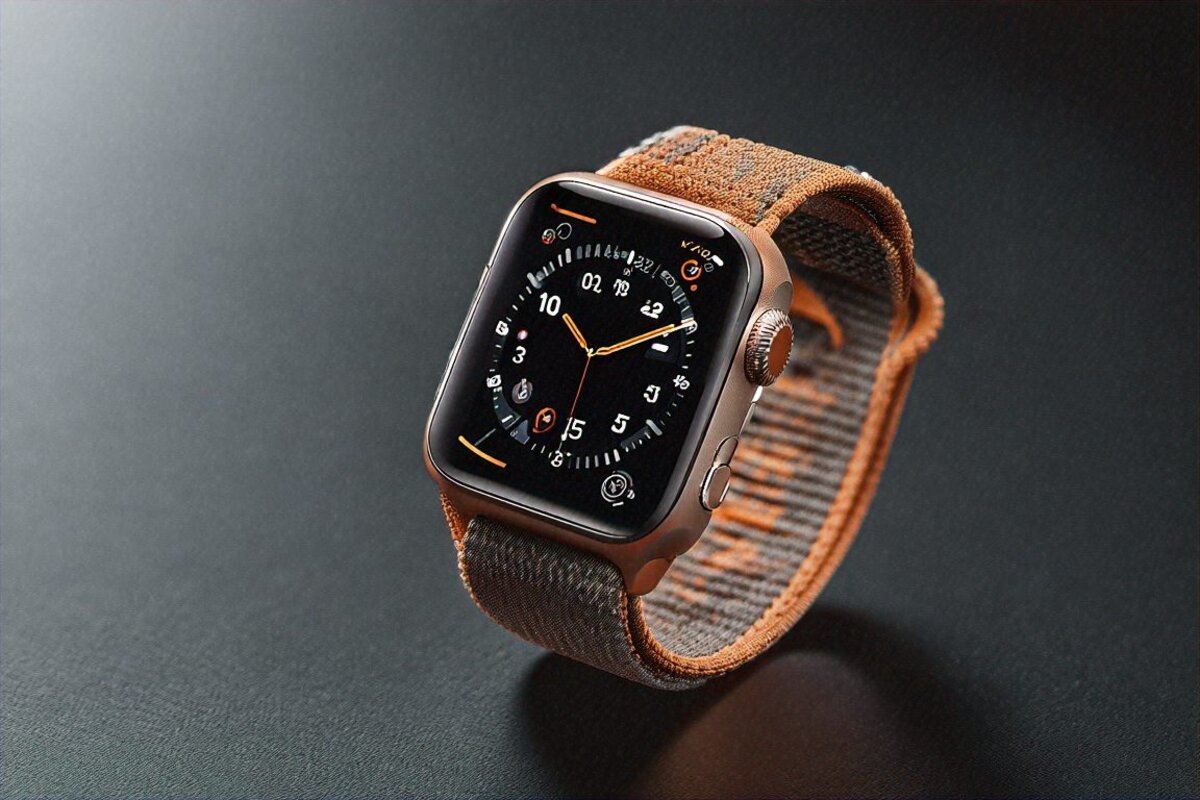
That Time in Uttarakhand When My Regular Watch Died
Picture this: I’m somewhere between Kedarnath and Tungnath, around 3,800 metres up, watching my old Apple Watch Series 9 wheeze out at 2 PM on day two of a three-day trek. Battery dead. GPS gone. No emergency anything. Just a black rectangle strapped to my wrist doing a very expensive impression of a bracelet. My trekking buddy glanced at his Garmin, shrugged, and said, “Should’ve gotten a proper adventure watch, bhai.”
That stuck with me. It’s genuinely why I grabbed the Apple Watch Ultra 3 the moment it hit India at Rs 89,900. Yes, the price made me wince. But after wearing it every day for over six weeks — including a redo of that exact Uttarakhand route — I’ve got opinions. A lot of them.
First Impressions: This Thing Means Business
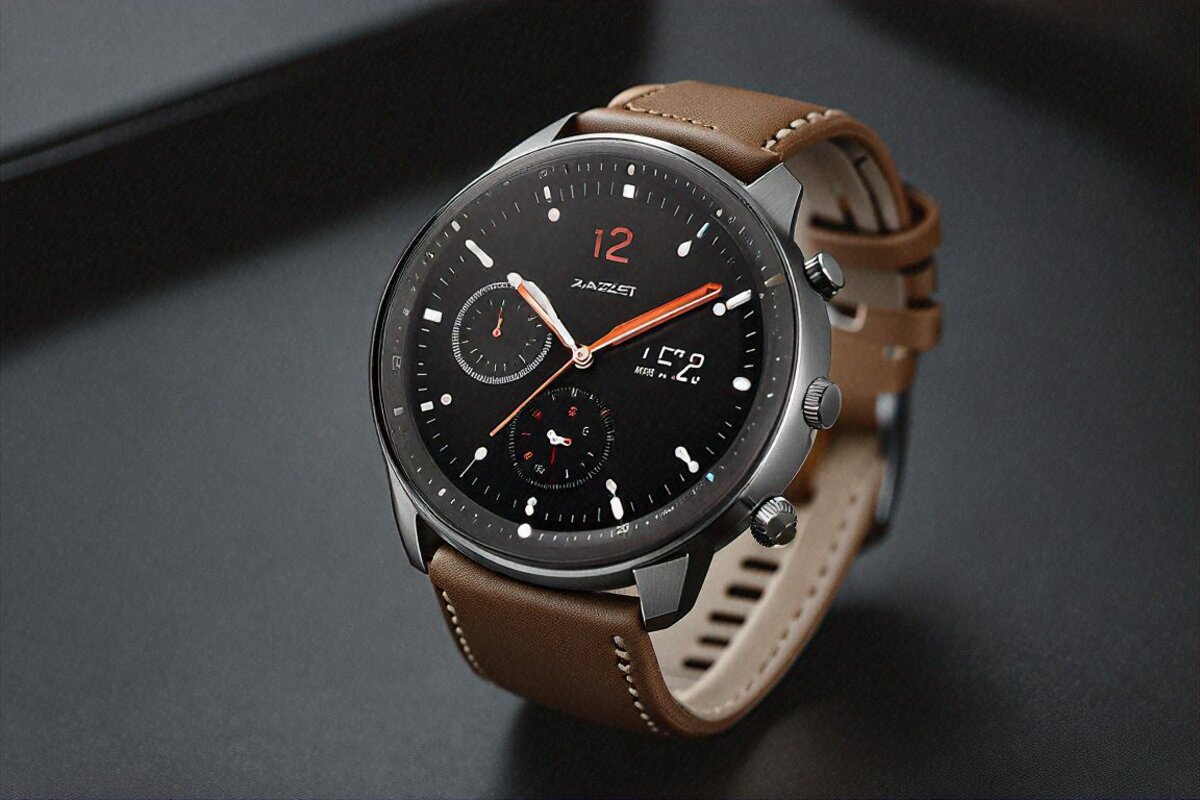
Unboxing the Ultra 3 doesn’t feel like unboxing other Apple gear. There’s no fussy delicacy to it. The 49mm titanium case — aerospace-grade, Grade 5, if the marketing words do it for you — sits on your wrist with a bit of swagger. It’s big. I won’t pretend otherwise. If your wrist is under 160mm around, this is going to look like you’ve buckled on a small shield.
But the weight reads as deliberate, not clumsy. The flat sapphire crystal on the front just won’t scratch. I’ve cracked it against door frames, rock, metal railings — nothing. Not a hairline mark after six weeks of properly careless use. The corner bumpers around the display help too; they’re raised enough that the screen never actually touches a flat surface when you set the watch down face-first.
Two finishes: Natural Titanium and Black Titanium. I had the Natural, which picks up a soft patina over time that I’ve grown to like. Makes it feel lived-in rather than showroom-fresh.
The three physical buttons — the Action Button (the bright orange one), the Digital Crown, and the Side Button — are oversized on purpose. I wore thick winter gloves on the Uttarakhand trek and could still work all of them. Can’t say that about most smartwatches.
The Display: Readable in Literally Any Light
3,100 nits. That number kept turning up in Apple’s marketing, and I honestly wrote it off as overkill. Then I tried reading my GPS coordinates at noon in May, standing on an exposed ridge with the sun coming straight down. Crystal clear. Every digit, every map marker, dead legible.
The LTPO OLED panel at 49mm gives you a lot of screen to play with. Data-heavy watch faces that feel cramped on a 41mm or 45mm Apple Watch turn genuinely usable here. I ran a face with heart rate, altitude, compass bearing, and temperature all on screen at once. Four readings at a glance, all readable at arm’s length.
Night Mode deserves a shout. Flick your wrist in the dark and the whole UI shifts to a deep red. Sounds like a gimmick until you’re camping and need the time without blinding yourself or summoning every insect within two kilometres. Divers apparently use it too, though I can’t speak to that personally.
The Always-On Display works well — key metrics shown dimly without trashing the battery. And the jump from dimmed to full brightness when you raise your wrist is instant, no clumsy fade.
Health Sensors: A Medical Lab on Your Wrist (Almost)
Apple has crammed a ridiculous number of sensors into this thing. Here’s what’s actually measuring something on the back: an electrical heart sensor for ECG, an optical heart rate sensor, a blood oxygen (SpO2) monitor, a skin temperature sensor, and a depth gauge plus water temperature sensor for diving. Plus an accelerometer, gyroscope, compass, altimeter, and ambient light sensor.
The ECG app works. And I mean it works well. It gave me a sinus rhythm reading that matched the portable ECG at my doctor’s clinic during a routine check. Apple’s disclaimers say it isn’t a medical device, and they’re right to. But as an early-warning nudge? Genuinely useful. My 67-year-old father-in-law has caught irregular-rhythm alerts on his Ultra 2 twice, both later confirmed by his cardiologist.
Blood oxygen runs in the background all day. I saw some interesting patterns on the high-altitude trek — my SpO2 dropped to 89% at 4,200 metres, and the watch flagged it. It didn’t tell me what to do about it (it’s not a doctor, obviously), but just knowing was useful.
Temperature sensing tracks wrist temperature shifts overnight. Apple pitches it mostly for menstrual cycle and ovulation tracking, but even as a male user I found the trend data worth glancing at — I could clearly see a spike while I was fighting off a cold last month.
watchOS 12 added blood pressure trending and sleep apnoea detection. The blood pressure feature won’t hand you a number like 120/80 — it watches the trend and pings you if something’s drifting hard. Sleep apnoea detection uses the accelerometer to spot breathing disturbances. Both feel like “version 1.0” — promising, not yet polished enough to stand in for proper medical monitoring.
GPS: The Reason Adventure Folks Should Care
Dual-frequency GPS, L1 plus L5 bands. I know eyes glaze over at satellite-frequency talk, so here’s the plain version: this watch pins your position to within about 2 metres, even in nasty conditions.
I tested it hard. In dense forest near Chakrata, where single-band watches usually wander 10 to 15 metres off-trail, the Ultra 3 stayed locked. Same in a tight canyon stretch near Har Ki Dun — the track it recorded matched the actual trail almost exactly when I laid it over satellite imagery later.
For runners and cyclists who care about accurate distance, that matters enormously. My Strava splits off the Ultra 3 stayed within 1 to 2% of a dedicated Garmin Forerunner, which is wild for a smartwatch.
The Backtrack feature already bailed me out once. I got turned around on an unfamiliar trail in fog, fired up Backtrack, and the watch walked me turn-by-turn back to my last known point. Would I have eventually sorted it with a paper map? Probably. But having it right there on my wrist took all the stress out of the moment.
Battery Life: The Big One
Apple claims 72 hours in standard mode, 60 in Low Power Mode with GPS expedition tracking running. Optimistic, as ever. But this time they’re not lying.
My real-world numbers: AOD on, continuous heart rate, a 45-minute GPS-tracked workout daily, maybe 30 notifications an hour, the odd call — I got a steady 62 to 65 hours. That’s roughly two and a half days of properly heavy use. Ease off, skip the daily workout tracking, and three full days is on the table.
The real test was the trek. Three days, GPS running 6 to 8 hours daily during the hiking stretches, heart rate and altitude going non-stop. It lasted 58 hours before dropping to 10% — basically the whole trek with a little margin. This is the exact scenario where my Series 9 had folded after 18 hours of the same. Night and day.
Charging’s decent. Roughly an hour to 80%, around 90 minutes to full. Not the quickest going, but fine when you’re only plugging in every two or three days.
Water and Diving: EN13319 Certification Is No Joke
100 metres water resistance, EN13319 certified for recreational diving down to 40 metres. I’m not a diver, so I handed it to a friend who dives regularly off the Andaman coast and let him take it for a weekend.
His take: the depth sensor’s accurate, the water temperature reading is handy, and the Oceanic+ dive computer app (subscription required, which is irritating) turns it into a legitimate recreational dive computer. He wouldn’t swap his dedicated Suunto for technical dives, but for casual recreational diving, he reckoned it was more than enough.
For the rest of us non-divers: I’ve swum with it, worn it through heavy monsoon rain, and once left it submerged in a bucket for 20 minutes while washing the car. No issues. The speaker clears water out after a dunk, and the microphone bounces back quickly too.
The S10 Chip and Software
The S10 chip handles everything without a stutter. Apps launch fast. Complications refresh in real time. Siri answers quickly, though her answers are as hit-or-miss as ever. The Double Tap gesture — pinch index finger and thumb to take calls, kill alarms, that sort of thing — lands about 80% of the time. When it works, it’s brilliant. When it doesn’t register, you stand there pinching the air feeling a bit daft.
watchOS 12 is mature software now. The app ecosystem is the best of any smartwatch platform by a wide margin. Every major Indian app — Paytm, Swiggy, Google Maps — has a Watch app or at least solid notification support. Apple Pay works at contactless terminals, though NFC payment adoption in India is still patchy outside the big metros.
Crash Detection and Fall Detection are features I’m hoping never to actually use. But knowing they’re there — especially the satellite SOS that works with no cellular coverage at all — is genuine peace of mind when you’re 30 km from the nearest tower.
Specs at a Glance
| Specification | Details |
|---|---|
| Case Size | 49mm, Titanium Grade 5 |
| Display | LTPO OLED, up to 3,100 nits |
| Chip | Apple S10 |
| Battery | Up to 72 hrs standard; 60 hrs expedition |
| Water Resistance | 100m, EN13319 dive certified |
| GPS | Dual-frequency L1 + L5 |
| Sensors | ECG, SpO2, temperature, depth gauge |
| OS | watchOS 12 |
| Compatibility | iPhone only (no Android) |
| Price | Rs 89,900 |
What Actually Annoyed Me
The size. I’ve got average Indian male wrists, around 170mm, and the 49mm case sits fine on me. But on friends with thinner wrists it looks comically huge. There’s no 45mm Ultra, no smaller version with the same toughness. You take the size or you walk away.
iPhone lock-in is the big one. On Android? Stop reading now. This watch flat-out won’t work with your phone — not partly, not with a workaround. It won’t even finish initial setup without an iPhone. In a country where Android runs the show, that knocks out a massive slice of would-be buyers right away.
The Action Button takes some getting used to. It’s customisable — start a workout, toggle the torch, open a specific app, whatever you like. But for the first week I kept jabbing it by accident, because it sits exactly where my wrist rests against a desk. I eventually trained myself off it, but the learning curve’s real.
And honestly? Rs 89,900 is a lot of money. More than plenty of people earn in a month. You could grab a perfectly good Apple Watch SE for Rs 29,900 and a dedicated Garmin Instinct 2 for another Rs 30,000 and arguably cover more ground for less. The Ultra 3 only adds up financially if you genuinely need everything it does, all on one wrist.
Pros
- 72-hour battery life actually holds up in real-world testing
- 3,100-nit display readable in the harshest direct sunlight
- 100m water resistance with proper dive certification
- Dual-frequency GPS accuracy is best-in-class for any smartwatch
- Most complete health sensor suite available on a wrist
- Titanium build genuinely withstands rough use
Cons
- Rs 89,900 is eye-wateringly expensive
- 49mm case is simply too large for smaller wrists
- Zero Android compatibility — iPhone or nothing
- Action Button has a learning curve and accidental press issues
- Oceanic+ dive app requires a separate subscription
Daily Life With the Ultra 3: Beyond Adventure
Here’s the bit nobody covers in Ultra reviews. Most of the time you’re not scaling peaks or diving reefs. You’re stuck in traffic on the Outer Ring Road, queuing at More Supermarket, or quietly checking out of a Teams call. So how does a Rs 89,900 adventure watch handle the boring stuff?
Honestly, well. The big display makes notifications a treat to read — full WhatsApp messages with no scrolling, email subjects and opening lines at a glance. The always-on screen means no awkward wrist-flick in meetings. Set up an eSIM with Jio or Airtel and the cellular connectivity lets you leave the phone at your desk and still catch calls and texts on a coffee run.
Apple Pay works at Starbucks, Croma, and a slowly growing list of POS terminals in Bangalore and Mumbai. Still patchy elsewhere. UPI on the watch would change everything — but we’re not there yet.
Sleep tracking is solid without being a standout. The watch’s bulk makes it uncomfortable to sleep in for some — it’s a large thing to have on your wrist at night. I got used to it inside a week, but my partner tried it once and refused to wear it to bed again. “It’s like sleeping with a hockey puck” were her exact words.
Comparing It to What Else Exists
The obvious rivals are the Samsung Galaxy Watch 7 Ultra at Rs 44,999 and Garmin’s Fenix 8 at roughly Rs 85,000. Samsung gives you most of the smartwatch features at half the price, but on Wear OS rather than watchOS, and with GPS that’s less accurate in my experience. Garmin gives you far better battery (weeks, not days) and arguably better fitness tracking, but the smartwatch side is basic by comparison — bare-bones notifications, no real app ecosystem, and a MIP display instead of OLED.
The Ultra 3 sits at the crossroads. It’s the only one that nails premium smartwatch AND serious adventure tool without major give in either direction. Whether that crossroads justifies Rs 89,900 comes down entirely to whether you need both halves of it.
So Who Actually Needs This?
If you’re a weekend trekker who also wants a fully loaded smartwatch through the week — this is your watch. If you dive recreationally and would rather not lug a separate dive computer alongside your daily watch — this is it. If you’re a serious runner or cyclist who’s done with inaccurate GPS on cheaper watches but still wants to reply to WhatsApp from your wrist — yep, this one.
But if you’re a casual user who hits the gym three times a week and mostly wants notifications and health tracking? The regular Apple Watch Series 10 at Rs 46,900 covers 90% of that. And if you’re not on iPhone at all, the Samsung Galaxy Watch 7 Ultra is genuinely excellent for half the money.
The Ultra 3 isn’t for everyone. It isn’t even for most people. It’s for the narrow group who’ll actually use the 100m water resistance, the dual-frequency GPS in thick forest, the three-day battery on a multi-day expedition. For those people — and over six weeks I found myself becoming one of them — nothing else does what this watch does. Not at any price.
Price in India
The Apple Watch Ultra 3 is Rs 89,900. You’ll find it on Apple.com/in, Amazon India, Flipkart, and at authorised resellers like Imagine and iStore. No real discounts spotted during sale events so far — Apple rarely cuts the price on its newest gear in India.
Full Specifications
| Case | 49mm Titanium Grade 5 |
|---|---|
| Display | LTPO OLED 3100 nits |
| Chip | Apple S10 |
| Battery | 72 hours standard |
| Water | 100m EN13319 |
| GPS | Dual-frequency L1+L5 |
| OS | watchOS 12 |
Pros
- 72-hour battery
- 3100 nits sunlight visible
- 100m water resistance scuba
- Dual-frequency GPS
- Comprehensive health sensors
Cons
- Very expensive ₹89,900
- Large 49mm not all wrists
- iPhone only
- Action Button learning curve
Our Rating: 9.2/10 · Price: ₹89,900
Apple Watch Ultra 3 is a serious tool for athletes. The 96-hour battery life is game changing for ultra marathon runners like me. The dual-frequency GPS is extremely accurate.