
Amazfit Promised 14 Days. I Counted Them, One by One.
Battery claims from watch makers are basically fiction. Not lies exactly — they’re just measured in a lab nobody actually lives in. Brightness pinned at 40%. Always-on off. Heart rate sampled every ten minutes instead of all the time. Notifications switched off. What they’re really testing is a watch that’s mostly asleep and occasionally remembers it’s a watch.
So when Amazfit said 14 days on one charge for the GTR 5 Pro, I ran my own version of the test. Full brightness outdoors, auto indoors. Heart rate on continuously. Always-on off, because that’s the condition the 14-day claim assumes anyway. Three GPS workouts a week. A busy phone firing notifications all day. Sleep tracked every night.
Day 1, 100%. Day 7, 51%. Day 12, 18%. On day 13 around 2 PM the battery saver tripped at 10%, and it was dead by evening. Call it twelve and a half to thirteen days under conditions I’d describe as realistic but not punishing. Not 14. Close enough that I won’t call it dishonest, though. And thirteen days for an AMOLED watch with GPS in 2026 is still slightly mad. Let me walk through why that matters, and where the GTR 5 Pro is brilliant and where it falls short, all for Rs 19,999.
Why Battery Is the Spec That Changes the Whole Game
I’ve worn the Pixel Watch 3 (36 hours), the Samsung Galaxy Watch 7 Ultra (54 hours), and a string of Apple Watches (18-72 hours, depending). Every one of them made me think about charging. Build a habit around it, slot it into the day. The Samsung bothered me least, but two and a half days still means topping up three times a week.
The GTR 5 Pro wiped that whole mental chore away. Charge it Sunday evening, then forget it needs electricity at all until the next Saturday. No cradle on the nightstand. No frantic morning top-up because you forgot to plug it in the night before. None of that “do I risk wearing it overnight if I left the charger at home” calculation.
It quietly changes how you treat a wearable. It stops being another gadget squabbling over your one free USB-C port at night and starts behaving like an ordinary watch — strap it on, forget it. If Wear OS or watchOS is all you’ve ever used, you might not even clock how much headspace their battery anxiety quietly eats until it’s gone.
Design: A Round Watch That Actually Looks Like One
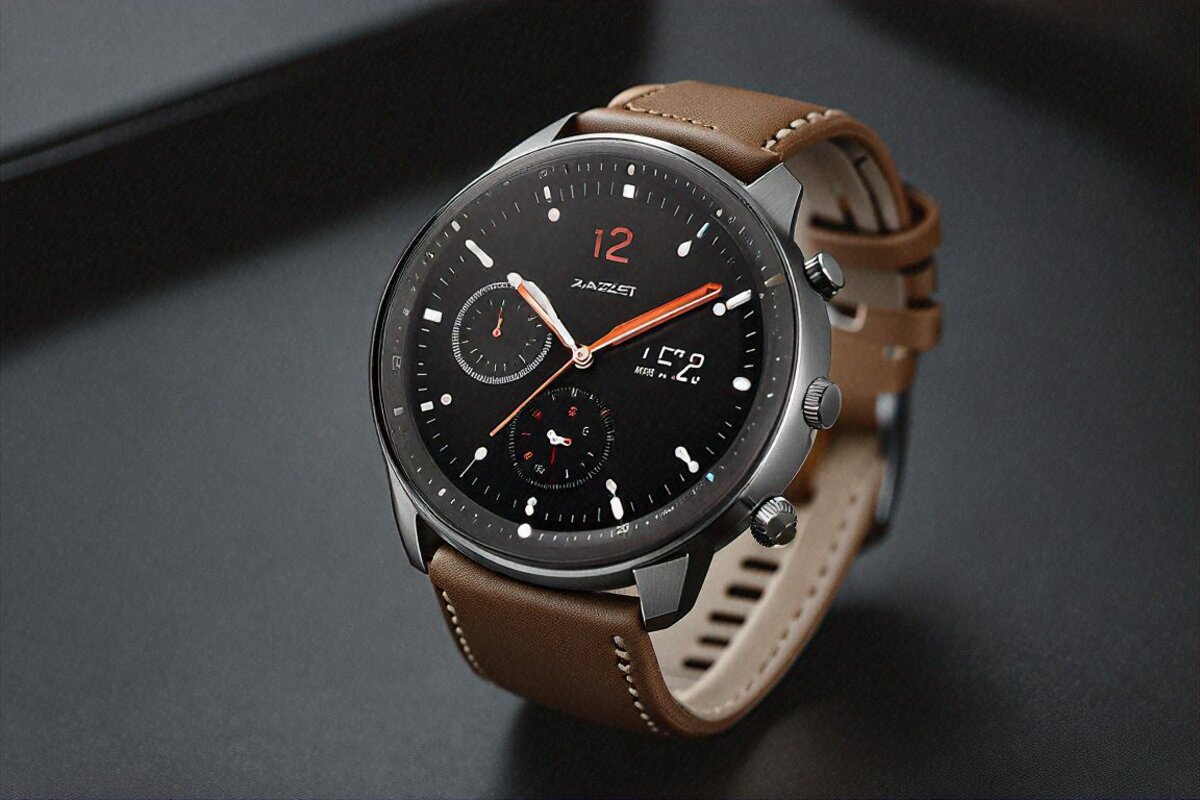
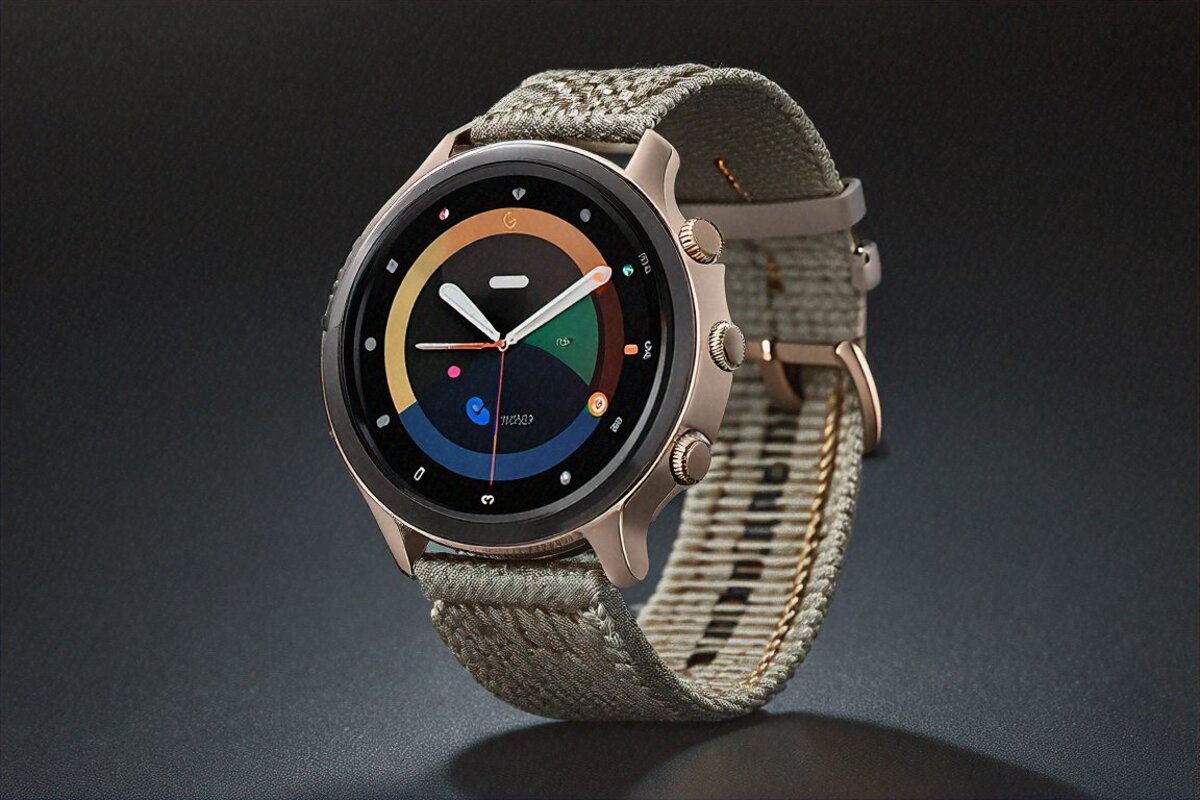
The GTR 5 Pro plays it classic. Round 46mm case, metal frame, flat glass up front. No domed glass like the Pixel — flat, which I prefer, because it picks up fewer stray taps and reflections. Amazfit calls the glass sapphire-coated, which sits a notch below full sapphire crystal for scratch resistance but a fair bit above ordinary mineral glass.
Two finishes: Titanium Grey and Black. I had the Titanium Grey, with a brushed-metal look that works with jeans or a half-decent shirt. The Black leans sportier. Neither screams money — at Rs 19,999 you don’t get the dense heft of a Samsung titanium case — but neither feels cheap either. They sit in a comfortable middle.
The crown on the right edge is tactile and satisfying, scrolling menus with a little haptic nudge. Below it, a function button jumps straight to workouts. Between the two buttons and the touchscreen, finding your way around is easy. After a few days I preferred it to pure touch.
The strap is a standard 22mm quick-release — bless Amazfit for skipping a proprietary fitting. I swapped in a nylon NATO band off Amazon in the first week, Rs 299, and it gave the watch a whole new face. The bundled silicone one is comfy but forgettable.
At 52 grams with the strap, it’s light for its size. Sleeping in it is genuinely fine, which I can’t honestly say about the 49mm Apple Watch Ultra or even the Samsung Watch 7 Ultra’s square slab.
Display: Bright Where It Counts
1.43-inch AMOLED, 1,000 nits peak, 331 PPI. In plain terms: sharp, colourful, and readable outdoors in everything except direct overhead noon glare. Morning and evening, perfect. Under office strip lighting, lovely. Sun catching my wrist through the car window mid-drive, no trouble.
Always-on is there if you want it, but it costs you. With it on, my 13-day figure dropped to 8-9 — still excellent next to most watches, but a real hit. I left it off. The raise-to-wake is quick enough (under 300ms, I’d guess) that I never once wished for a screen that stayed lit.
There’s a big spread of watch faces. Amazfit’s own run from dense sport faces showing four or five readouts at once to clean analogue ones that just tell the time. I rotated through a dozen or so over testing and found at least five I actually liked — better odds than I get with some rivals.
Health and Fitness: Where the Price Catches You Off Guard
The BioTracker 5 sensor — Amazfit’s newest — covers heart rate, SpO2, skin temperature, and stress. Let me give you the actual numbers, because that’s what counts.
I pitted its heart rate against a Polar H10 chest strap across five activities: resting, walking, jogging, intervals, and lifting. Resting and walking landed within 2-3 BPM. Jogging, 4-5 BPM. Intervals threw up spikes of 8-10 BPM whenever my heart rate jumped fast — a wrist sensor simply can’t chase sudden changes the way a chest strap does. Lifting was the wobbliest, reading 10-plus BPM off on moves that crank your wrist.
Those figures sit right alongside the Samsung and Apple watches I’ve used, the one exception being intervals, where the pricier watches’ newer sensors recover quicker. For steady efforts and everyday monitoring, the BioTracker 5 is more than good enough.
Sleep tracking is the standout. Zepp OS 4 breaks down total sleep, light/deep/REM stages, breathing quality, and a sleep score. Run side by side with the Pixel Watch 3’s Fitbit-powered tracking over a week, the stage splits came out similar — not identical, but within sensible variance. The score clearly leans on deep sleep; nights with 90-plus minutes of it scored above 80, while nights under 60 minutes sat in the 60s. That tracked neatly with how rested I actually felt.
Zepp Coach is the AI training bit. Feed it a week of data, tell it a goal (I asked for a faster 5K), and it spits out a multi-week plan with specific daily sessions. The plan I got was sensible — easy runs, tempo runs, rest days in rotation — though nothing a half-decent running coach wouldn’t also tell you. The value is having it on your wrist, telling you exactly what today’s session is the moment you start. Took the dithering out of my running week.
There are 150+ sports modes. I used maybe six: outdoor run, treadmill, free gym training, yoga, walking, cycling. Each logs time, heart rate, calories, and whatever activity-specific metrics apply. The GPS-tracked ones were accurate — more on GPS next.
Dual-Band GPS: Genuinely Good
L1 plus L5 dual-band GPS is something I wouldn’t have expected at Rs 19,999 two years back. It’s table stakes for serious fitness watches now, and the GTR 5 Pro delivers it properly.
I ran my usual loop near Cubbon Park — 5km of open road, tree-lined avenue, and one stretch boxed in by tall buildings. Laid over Google Maps satellite view, the GPS track hugged the real path. It only drifted in that narrow lane between the buildings, by 3-4 metres. In the open it was basically on the tarmac.
Against a Garmin Forerunner 265 on the same loop, the GTR 5 Pro logged 5.04 km to the Garmin’s 5.01 km. Splitting hairs. Lock time outdoors was 10-15 seconds — slower than the Garmin’s near-instant grab, but quick enough that I wasn’t tapping my foot waiting.
For cycling I did a 40km ride out past the edge of Bangalore. The route tracked cleanly through rural roads, a highway stretch, and a couple of underpasses. Total distance matched my bike computer to within 0.3 km. That’ll do me.
Software: Zepp OS 4 Is Fine. Just Fine.
And here’s where the GTR 5 Pro shows its mid-range hand. Zepp OS 4 is proprietary — not Wear OS, not watchOS. No Google Play Store, no Google Maps on the wrist, no real third-party app scene. You get Amazfit’s built-in apps and a few “mini apps” in the Zepp store, most of which are watch faces or simple bits like a calculator or timer.
Notifications come through fine — WhatsApp, Gmail, calls, Instagram, the usual. You can read them in full. You cannot reply. Not by voice, not with canned responses, not at all. The second a notification needs any action beyond reading, out comes the phone. After Wear OS, where I could tap out a quick reply on my wrist, this felt like a real step back.
Alexa is built in. It’ll set timers, check the weather, field basic questions. It will not touch the watch’s settings, start a workout, or do anything that needs on-device action. Honestly, limited use.
Music control works — play, pause, skip, volume — for whatever’s running on your phone. No on-device storage. No offline Spotify. Want to run phone-free with music? You need a different watch.
The Zepp phone app is where you dig into health data, set the watch up, and manage faces. It’s clean and it works. Export options are thin, though — you can’t easily dump raw data into a spreadsheet the way Garmin Connect lets you. Most people won’t care. Data nerds will grind their teeth.
| Specification | Details |
|---|---|
| Display | 1.43-inch AMOLED, 1,000 nits, 331 PPI |
| Battery | 14 days standard; 30 days light use |
| GPS | Dual-band L1 + L5 |
| Water Resistance | 5ATM + IP68 |
| Sports Modes | 150+ |
| Sensors | BioTracker 5 (HR, SpO2, temperature, stress) |
| OS | Zepp OS 4 (proprietary) |
| Connectivity | Bluetooth 5.3, optional Wi-Fi |
| Calling | Not available |
| Price | Rs 19,999 |
What’s Missing, and Whether You’ll Mind
No Bluetooth calling. None. If you’re in the habit of taking quick calls off your wrist, the GTR 5 Pro can’t. Incoming calls show up and you can reject them, but answering means reaching for the phone. Dealbreaker for some, a non-event for others. I take maybe two wrist calls a week, so for me it’s a mild itch rather than a wall.
No WhatsApp reply. Said it already, but it bears repeating, because so much of Indian life runs through WhatsApp. Read-only notifications on a watch feel half-finished in 2026.
No NFC payments. No Google Pay, no Apple Pay, no tap-to-pay anything. Not unusual at this price, but worth flagging.
Notification handling trails Samsung’s and Google’s. Sometimes they land 2-3 seconds after the phone buzzes. Now and then one vanishes entirely — maybe one in fifty — and you need to reconnect Bluetooth to fix it. Small stuff, but you notice it once you’ve lived with premium kit.
Five Weeks With It
I started wearing the GTR 5 Pro as a test. I kept wearing it because I wanted to. The battery rewired how I treated the thing — I stopped babying it and started using it like a tool. Wore it gardening, wore it cooking, wore it through a properly dusty Holi. Water resistance held. Build held. It just got on with it.
Sleep tracking turned into my favourite feature. Something about that Zepp sleep score nudged me to fix my sleep in a way Samsung Health’s more detailed-but-overwhelming version never did. Maybe simple beats complete. Getting a “73” and itching to top it tomorrow is a cleaner loop than squinting at REM percentages and deep-sleep minutes.
Zepp Coach’s plan dragged my 5K time from 34 minutes down to 31 over four weeks. Nothing earth-shattering, just steady improvement with a bit of structure. The watch buzzed when I drifted too fast or too slow off the day’s target pace. Crude next to a Garmin’s running dynamics, but it works for a weekend runner who doesn’t need a lactate-threshold readout.
Pros
- 12-13 day battery life in real-world testing — best-in-class at this price
- Dual-band GPS performs surprisingly well for a Rs 19,999 watch
- Zepp Coach AI training plans are simple but effective
- Premium metal round design with standard 22mm bands
- 1,000-nit AMOLED readable in most outdoor conditions
- Sleep tracking is among the best in the mid-range
Cons
- Zepp OS 4’s third-party app ecosystem is nearly nonexistent
- No Bluetooth calling whatsoever
- Can’t reply to notifications from the watch
- Notification delivery is occasionally delayed or missed
- No on-device music storage or offline Spotify
Women’s Health and the Other Tracking Bits
Cycle tracking with period predictions and fertility-window estimates is in there. My partner ran it through a full cycle in the Zepp app, and the predictions came within 1-2 days of her actual dates. Not medical-grade, but useful for planning. The alerts are discreet too — just a small icon on the face, nothing that broadcasts to the room.
PAI (Personal Activity Intelligence) is Amazfit’s gamified layer. It rolls all your daily movement — steps, workouts, even active standing — into one number you try to keep above 100 per week. The idea comes out of research at the Norwegian University of Science and Technology, and there’s real clinical evidence that holding a PAI above 100 lines up with lower cardiovascular risk. Academic backing aside, the gamification just works. Watching my PAI sag to 85 on a lazy Sunday pushed me out for an evening walk. That’s the whole trick.
Breathing exercises live under “Zepp Aura,” guided sessions you run from the watch with vibration pacing your inhale and exhale. I tried it during one especially grim deadline week. Felt a touch calmer after. Probably placebo. Used it four times, then forgot it existed. Draw your own conclusions.
Who Should Buy the Amazfit GTR 5 Pro
I’ll be blunt, because this watch fits one kind of person beautifully and frustrates everyone else.
Buy it if you run, cycle, or hike regularly and want accurate GPS plus a battery that lasts weekend to weekend. You care about fitness data — steps, heart rate, sleep, workout logs — but you don’t need to fire off a WhatsApp from your wrist. You want a watch that looks like a watch, not a tiny computer. And you’re working with a Rs 20,000 budget and won’t compromise on GPS or battery.
Skip it if you want the full smartwatch deal — apps, payments, message replies. You take calls off your wrist a lot. You’re buried in the Google or Samsung ecosystem and expect tight hooks into those services. Or you’d rather have clever software than long endurance.
My straight recommendation: if you’re an outdoor fitness type in India chasing the best battery and GPS accuracy under Rs 20,000, the GTR 5 Pro is the watch. Not one of the options — the option. Nothing else at this price pulls off the same combination. The OnePlus Watch 3 at Rs 24,999 hands you Wear OS and a richer smartwatch life but a sliver of the battery. The Samsung Galaxy Watch FE around the same money gives you Samsung Health but trails on GPS accuracy and endurance. The GTR 5 Pro owns its corner outright.
Price in India
The Amazfit GTR 5 Pro goes for Rs 19,999. You’ll find it on Amazon India, Flipkart, and Amazfit India’s own site. I’ve watched it dip to Rs 17,499 during festive sales — at that price it’s an absurd deal.
Full Specifications
| Display | 1.43-inch AMOLED 1000 nits |
|---|---|
| Battery | 14 days standard |
| GPS | Dual-band L1+L5 |
| Water | 5ATM IP68 |
| Sports | 150+ modes |
| OS | Zepp OS 4 |
Pros
- 14-day battery best-in-class mid-range
- Dual-band GPS accuracy
- Zepp Coach AI training
- Premium metal design
- 1000 nits AMOLED
Cons
- Limited third-party app ecosystem
- No Bluetooth calling
- Notification management basic
- WhatsApp replies unavailable
Our Rating: 8.3/10 · Price: ₹19,999
0 Comments