
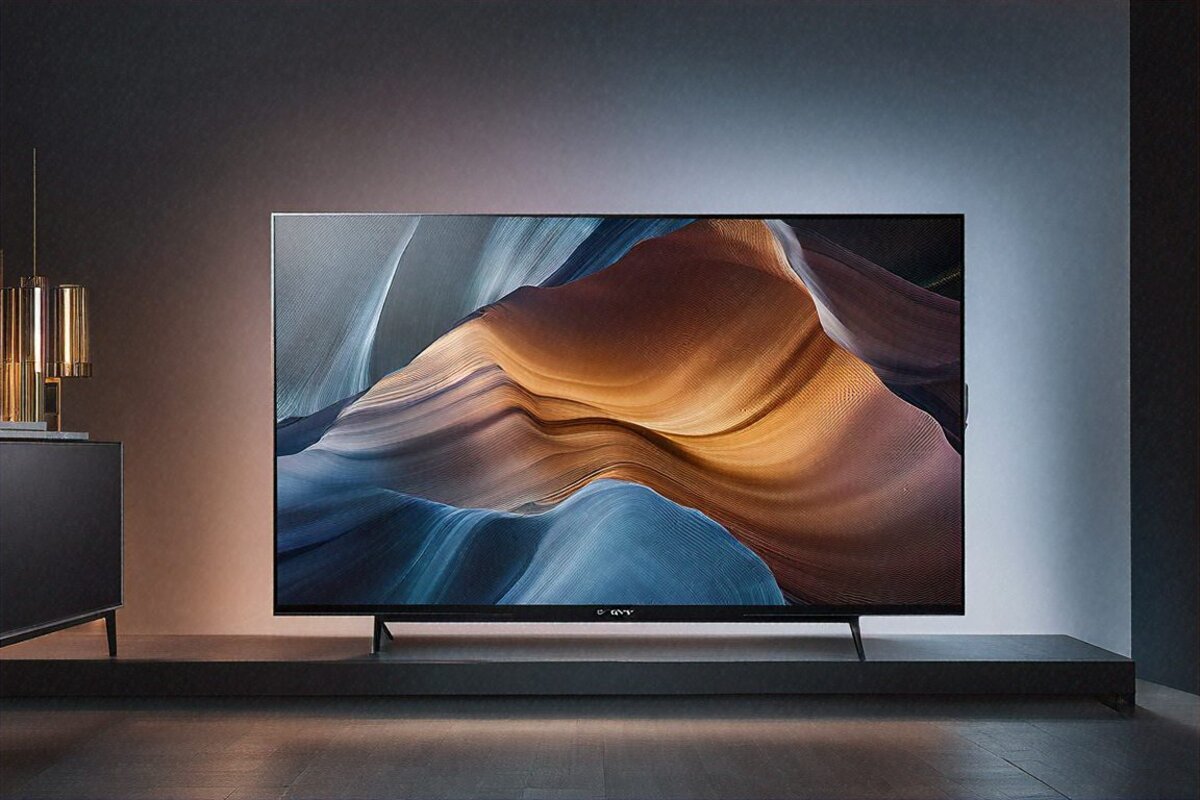
There’s a Particular Anxiety to Unboxing a Three-Lakh TV
Spending ₹2,99,999 on a television does something to your head. The delivery took four days. When the two men carried the box into my flat, I watched them edge through my narrow corridor with the same focus you’d give someone handling a donor organ. “Careful with the corners,” I said. Three times. To two professionals who fit TVs for a living and very clearly didn’t need my input.
The unboxing itself was slow and careful. Layer after layer of protective foam. A panel so thin in places I caught myself worried I’d press too hard. The near-invisible side bezels — Sony’s edge-to-edge design — showed up the second the protective film peeled away. This wasn’t a TV coming out of a box. This was a piece of high-end industrial design being unveiled.
I’d done my homework before buying. Months of it. I’d compared every flagship in India — the LG G4, the Samsung S95D, I even toyed with the QN900D 8K. I kept landing back on the Sony A95L for reasons that are hard to put into words to anyone who hasn’t seen it in person. But I’ll try.
What QD-OLED Is, and Why It Matters
Standard OLED panels — the kind LG drops into the C4 and G4 — use white organic light-emitting diodes paired with colour filters to make red, green, and blue. It works. Works very well, in fact. But those colour filters soak up some of the light, which caps brightness and colour volume.
QD-OLED comes at it differently. It uses blue OLED emitters with quantum dots that convert that blue into precise red and green. No colour filters in the way. The payoff? Brighter highlights, a wider colour gamut, and a saturation in bright scenes that ordinary WOLED can’t reach. Sony reckons its XR OLED Contrast Pro pushes highlights up to 200% brighter than a conventional WOLED panel. In practice you can see it — bright reds and greens especially have an intensity and purity that genuinely jumps off the screen.
The catch? QD-OLED is dear. That’s where the ₹2,99,999 sticker comes from. And it’s not a vast brightness lead over WOLED — we’re talking maybe 100 to 200 nits in peak highlights. For most casual viewers, that gap might not justify the extra lakh over an LG C4. But for someone who’s seen both side by side and can’t un-see the difference — that’s me, regrettably — the QD-OLED panel earned the premium.
Sony’s Image Processing — the Real Reason You Buy This
Panel tech is one thing. What the TV does with the signal landing on that panel is where Sony pulls away from everyone else. The Cognitive Processor XR is Sony’s flagship engine, and what it puts out is something I can only call “natural in a way other TVs aren’t.”
I don’t mean the colours are muted or flat. Quite the reverse — the A95L is vivid and punchy when the content asks for it. What I mean is the image never looks processed. No artificial edge-sharpening that makes everything crunchy. No oversaturated greens turning grass radioactive. No motion interpolation that drags cinematic films down into daytime-soap territory. Sony’s processing adds detail, handles tone mapping, manages motion — all without leaving its fingerprints on the picture.
XR Triluminos Max is the colour engine, hitting 99% DCI-P3 with an accuracy a professional colourist would happily sign off. I calibrated it with a colorimeter out of habit, and the factory settings were already inside a margin most people would never perceive. Custom Filmmaker mode keeps the director’s intent intact — no processing, no enhancement, just the image as it was mastered. That’s the mode I use for serious film nights, and it’s remarkable.
This processing heritage matters because Sony has been building televisions since the 1960s. Six decades of refining how an image looks on a screen. You can feel that pile-up of expertise in every frame the A95L throws out. I’m not saying the rivals look bad — the LG C4 looks excellent, the Samsung S95D looks excellent. But the Sony has a quiet correctness to its picture that, once you’re tuned into it, makes other sets look faintly artificial by comparison.
Acoustic Surface Audio+ — the Screen Is the Speaker
This one earns its own section because it’s genuinely unlike anything else. Rather than conventional speakers firing down or backward off the frame, Sony bolts actuators straight onto the back of the OLED panel. The screen itself vibrates to make sound. The whole display surface is the speaker.
Why does that matter? Sound comes from exactly where the action is on screen. A character speaking on the left produces sound from the left. An explosion in the middle produces sound from the middle. That audio-visual lock-in creates an immersion separate speakers — stuck firing from fixed spots below or beside the screen — simply can’t manage.
The 65W output is respectable. Dialogue clarity is outstanding — the best I’ve heard from any TV’s built-in audio. The Dolby Atmos work through Acoustic Surface adds a real sense of height and space to Atmos content. Bass is lacking, as you’d expect from any TV-based audio, so I’ve propped it up with a Sony HT-A7000 soundbar for films. But for daily watching — news, YouTube, cricket — the built-in Acoustic Surface is good enough that I often forget the soundbar’s even there.
Google TV — the Software Side
Sony runs Google TV across the Bravia line, and it’s arguably the most capable smart platform out there. Content discovery is excellent — Google’s recommendation engine surfaces relevant stuff from across everything you subscribe to. Every Indian streaming app is here: JioCinema, Disney+ Hotstar, SonyLIV, ZEE5, Amazon Prime Video, Netflix, YouTube.
The remote is simple, with fewer buttons than Samsung’s or LG’s. Google Assistant handles voice search in Hindi and English. Chromecast is built in for Android, AirPlay 2 for Apple gear. The interface is responsive and apps open quickly, though I have noticed the odd brief pause when switching between apps — possibly down to memory management. Nothing that breaks the experience, but you’ll catch it if you’re paying attention.
One small gripe: Sony’s firmware schedule has historically run slower than LG’s or Samsung’s. New features and bug fixes sometimes land months after they’re announced. It’s not a dealbreaker — the TV works fine out of the box — but worth flagging for anyone parting with three lakhs.
Gaming — Capable, Not the Headline Act
The A95L does 4K at 120 Hz gaming through its two HDMI 2.1 ports. VRR, ALLM, and a dedicated game mode with roughly 1 ms input lag are all here. The PS5 Pro hits its full stride, and Sony’s bundled some exclusive PlayStation tricks — Auto HDR Tone Mapping that tunes the PS5’s output specifically for this TV, plus console-settings integration where TV and console talk to each other to calibrate the picture automatically.
If you own a PS5 Pro, no other brand gives you this depth of console-to-TV integration. For PlayStation households, that’s a genuine draw.
The snag is that only two of the four HDMI ports are 2.1. The other two are HDMI 2.0, capping out at 4K 60 Hz. If you’ve got several gaming devices — PS5, Xbox, gaming PC — you’ll have to pick which two get the good ports. The LG C4 hands you four HDMI 2.1 ports at a lower price, which is a real edge for multi-device gamers. Sony seems to assume serious gamers mostly run one or two devices, which is probably true for most homes but still feels stingy at this money.
Watching Films — Where the A95L Earns Its Keep
I’ve been saving the best for here. In my considered view, after testing a stack of flagships, the A95L is the finest television in India for watching films. Not the best for gaming — that’s the LG C4. Not the brightest — that’s the Samsung QN900D. But for the single act of sitting in a dark room with a well-mastered film, nothing I’ve tested touches it.
I watched Oppenheimer in 4K Dolby Vision on this panel and it was a revelation. The IMAX sequences with their shifting aspect ratios, the brutal contrast between blinding explosions and intimate dark dialogue, the subtle skin tones in close-up — the A95L handled every frame with a confidence that made me forget I was watching a TV. I felt like I was in a premium cinema, except I was on my sofa in Powai at 11 PM under a blanket.
Hindi films look incredible too. The rich palettes of period dramas, the warm light of a romance, the gritty desaturation of a crime thriller — the A95L adapts to each style without stamping its own on top. It reproduces what the director wanted. That’s the whole trick, and it sounds simple, but apparently it takes sixty years of making televisions to nail it.
OTT from JioCinema, Netflix, and Hotstar in 4K Dolby Vision is consistently excellent. Even 1080p gets upscaled with enough intelligence that it doesn’t look obviously soft or processed. I put on old Star Trek episodes from the 1990s and they looked cleaner than I remember them looking on an actual CRT back in the 1990s.
Design and Installation
The A95L has an understated elegance. No flashy flourishes, no attention-seeking logos. Just clean lines, minimal bezels, and a frame-like border that makes the panel look like art when it’s off. The central stand is solid and sits the TV at a comfortable height. Wall mounting makes it look better still — flush to the wall with barely any visible hardware.
Sony’s Bravia Cam, sold separately, perches on top and adds gesture control, video calling, and presence detection — the TV nudges its brightness based on how far away you’re sitting. A nice extra for the tech enthusiast, but not something I’d call essential.
Day-to-Day With a Three-Lakh TV
There’s an odd psychological effect to owning a television this expensive. You get protective of it. I catch myself telling guests not to touch the screen. I wipe it down with a microfibre cloth more often than it strictly needs. When there’s a power cut and the inverter takes over, I check the TV powered down cleanly. It’s absurd behaviour, I know it’s absurd, but ₹2,99,999 does that to a person.
Practically, the TV’s been rock solid through my testing. No crashes, no glitches, no weird colour artifacts. Google TV occasionally wants a restart when it gets sluggish after running for days without being switched off, but that’s a Google TV thing across all brands, not a Sony-specific fault. Standby draw is minimal — the TV uses almost nothing when off, which I noticed because it’s plugged into a smart plug tracking energy.
I did clock that the QD-OLED panel warms up during long high-brightness sessions. It’s not hot to the touch, but there’s a clear warmth if you hold your hand near the back. Sony’s internal cooling keeps it in check — no throttling or brightness dips through my movie marathons — but it’s worth leaving decent airflow behind the set if you’re wall mounting into a recessed alcove.
HDR from different streaming services looks surprisingly varied. Netflix’s Dolby Vision looks different from Hotstar’s, which looks different from Prime’s HDR10+. The A95L handles them all well, but I found Netflix consistently delivers the best picture on this panel, likely because its encoding and mastering pipeline is the most mature. JioCinema’s 4K streams have improved a lot over the past year and look genuinely good now, especially for cricket and Bollywood.
Specifications
| Specification | Details |
|---|---|
| Panel | QD-OLED |
| Resolution | 4K UHD, 3840×2160 |
| Processor | Cognitive Processor XR |
| HDR | Dolby Vision, HDR10, HLG |
| Colour | XR Triluminos Max, 99% DCI-P3 |
| Refresh Rate | 4K @ 120 Hz |
| HDMI | 2x HDMI 2.1 + 2x HDMI 2.0 |
| Audio | 65W Acoustic Surface Audio+, Dolby Atmos |
| OS | Google TV |
| Connectivity | Wi-Fi 6, Bluetooth 5.2, AirPlay 2, Chromecast |
| Size | 65 inches |
| PS5 Features | Auto HDR Tone Mapping, Perfect for PS5 |
Pros
- QD-OLED delivers OLED’s perfect blacks with brighter, more saturated highlights
- Sony’s Cognitive Processor XR produces the most natural, film-like image quality available
- Acoustic Surface Audio+ creates genuinely unique audio-visual alignment
- 99% DCI-P3 colour accuracy is near-reference grade
- PS5 Pro exclusive features for PlayStation gamers
- Google TV is the most capable and content-rich smart TV platform
Cons
- ₹2,99,999 is firmly in enthusiast territory
- Only two HDMI 2.1 ports — half what LG offers at a lower price
- Firmware updates have historically been slower than competitors
- Bravia Cam sold separately for features that feel like they should be included
- Bass response from Acoustic Surface still needs a subwoofer or soundbar supplement
Burn-In on QD-OLED
Like every OLED panel, QD-OLED carries a theoretical burn-in risk from static images left on screen for long stretches. Sony includes the usual mitigations — pixel shift, panel refresh cycles, logo luminance dimming. Samsung Display, which actually makes the QD-OLED panel inside this Sony, has reportedly improved the organic material’s longevity over earlier generations.
In my testing, zero issues. I don’t leave static content up for hours, and I watch a mix — films, cricket, YouTube, news, gaming. For normal varied habits, burn-in shouldn’t worry you. If you’re planning a financial ticker or a news logo on screen 12 hours a day, every day, then yes, give it some thought. For everyone else — watch your content, enjoy the picture, and don’t lose sleep over it.
So Who’s It Actually For?
If you’re reading this trying to choose between the Sony A95L and the LG C4, here’s my honest take. The LG C4 at ₹1,89,999 is the smart buy. It’s 85% of the picture quality at 63% of the price, with better gaming features and more HDMI 2.1 ports. Most people should buy the C4 and put the saved lakh-plus toward a good soundbar.
The Sony A95L is for the person who’s seen both side by side and can’t settle for that 85%. The one who pauses a film to admire the cinematography. The one who cares about colour science and tone mapping and the gap between “good” and “perfect.” The one for whom a TV isn’t an appliance but an investment in how they experience visual art.
That’s a small audience. Sony knows it — which is why they don’t shift anywhere near the volume LG shifts of C4s. But for that specific person, the A95L delivers something no other TV in India can.
One Small Story to Finish
My father visited last weekend. He’s 68, retired, not remotely a tech person. Watches news channels and old Hindi films, mostly. I put on Sholay in 4K remastered. He sat down. Said nothing for twenty minutes. Then, during the Basanti dance sequence, he turned to me: “Itna clear kaise hai? Ye toh theatre jaisa lag raha hai.”
That’s the review. That’s the whole thing. A 68-year-old man who’s watched Sholay maybe a hundred times in his life saw it differently on this television. If that’s not worth three lakhs, I don’t know what is.
Price in India
The Sony Bravia XR A95L 65-inch QD-OLED is priced at ₹2,99,999 in India. You’ll find it on Sony India’s website, Amazon India, Flipkart, Croma, and premium electronics retailers. Sony runs the occasional bank cashback and exchange bonus during festive sales — worth holding out for if you’re not in a hurry.
Full Specifications
| Panel | QD-OLED |
|---|---|
| Resolution | 4K UHD 3840×2160 |
| Processor | Cognitive Processor XR |
| HDR | Dolby Vision HDR10 HLG |
| Refresh Rate | 4K 120Hz |
| HDMI | 2x HDMI 2.1 + 2x HDMI 2.0 |
| Audio | 65W Acoustic Surface Dolby Atmos |
| OS | Google TV |
| Size | 65 inches |
Pros
- QD-OLED higher brightness with OLED blacks
- Sony Cognitive XR natural processing
- Acoustic Surface Audio+ exceptional sound
- PS5 exclusive integration
- Google TV streaming
Cons
- Very expensive ₹2,99,999
- Only 2 HDMI 2.1 ports
- Slow firmware updates
- Netflix DV regional issues
Our Rating: 9.4/10 · Price: ₹2,99,999
0 Comments