
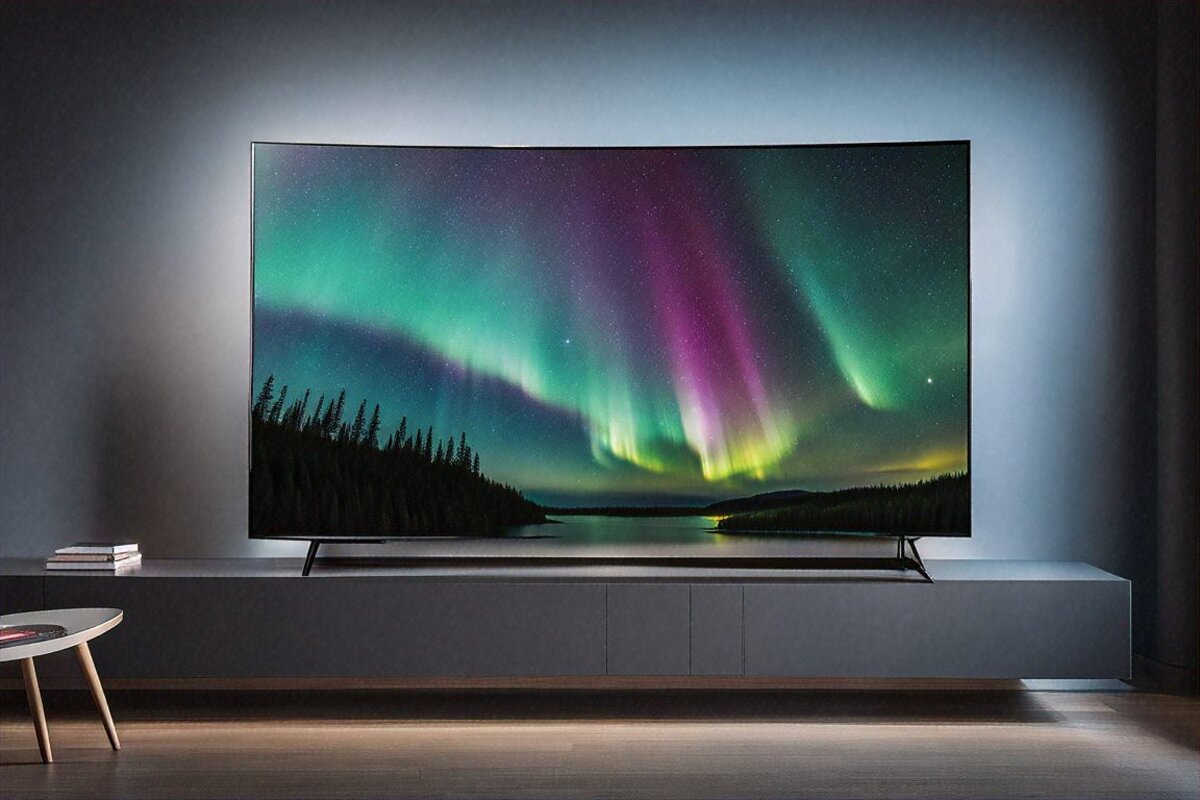
I Saw an OLED for the First Time and Now There’s No Going Back
The moment that did me in happened in Vijay Sales. I wasn’t even there for a TV — I’d gone in for a washing machine. But the LG C4 was running in the corner, playing some nature documentary, and I made the mistake of glancing at it for more than two seconds.
A jungle cat slinking through the dark. The black behind it wasn’t dark grey. It wasn’t charcoal. It was black. Properly, actually black — the kind where the TV seems to vanish and the lit parts of the picture just hang there in empty space. I stood rooted for a good five minutes before my partner asked what I was doing. “Looking at a TV,” I said. “We’re not buying a TV,” she said. Reader, we bought the TV.
That was six weeks ago. The LG C4 65-inch OLED has been in our living room since, and every single visitor has remarked on it. “Bhai, picture toh alag hi level ka hai.” That’s the review, one sentence. But you came for two and a half thousand words, so let me explain how this set turned me into an OLED evangelist.
What Makes OLED Different — Without the Jargon
Every other type of TV — LED, QLED, Mini LED — runs on a backlight. There’s a light source sitting behind the panel, and the panel either blocks or lets through that light to build the picture. Trouble is, a backlight can never be fully blocked. Dark scenes always carry a faint glow. Bright spots leak into the shadows around them.
OLED ditches the backlight entirely. Every pixel makes its own light. When a pixel needs to be black, it just switches off. No light, no glow, nothing. The contrast ratio is technically infinite — you’re dividing by zero, because the darkest the screen goes is literally zero light.
What that means in your living room: watching a film at night with the lights off on the C4 is something no LED or QLED can match at any price. Dark scenes hold their detail instead of washing out to grey. Stars in a night sky read as individual points of light floating in real darkness. White subtitles on black look like glowing text hanging in nothing. It isn’t a small step up. It’s a different thing altogether.
The Alpha9 Gen 7 — Quietly Clever Processing
The brain inside the C4 is LG’s Alpha9 AI Processor Gen 7, and what it gets up to behind the curtain is impressive even though you’ll never consciously notice it. AI Picture Pro reads every frame in real time — spotting faces, landscapes, text, and tuning the processing to suit. Shadow detail gets lifted without crushing the blacks. Skin tones in Bollywood films map more naturally. Sports content gets motion-smoothed without tipping into that dreaded soap-opera look.
LG calls the sound side AI Sound Pro, which upmixes stereo into virtual surround. Does it replace a soundbar? Not a chance. But it does make the built-in 60W 4.2-channel system sound fuller than it has any right to. These speakers won’t fill a big room at party volume, but for everyday stuff — news, cooking shows, YouTube — they’re perfectly fine.
Dolby Vision IQ is the feature that actually stands out. It takes the Dolby Vision metadata from whatever’s playing and folds in readings from the room’s ambient light sensor. Bright room, the TV adjusts. Dark room, it adjusts differently. The idea is that the director’s intent survives whatever your lighting’s doing. I was sceptical, but six weeks in I think it genuinely works — films looked correctly bright in the afternoon and correctly cinematic at night without me touching a single setting.
Gaming — Where It Gets Faintly Absurd
I’m a films-and-cricket person, not a gamer. My nephew is the gamer. When he came over and hooked his PS5 Pro up to the C4, the look on his face was worth the whole ₹1,89,999.
Here’s why this set gets called the best gaming TV in India at the price. All four HDMI ports — every one of them — is HDMI 2.1. That means 4K at 120 frames a second on any port. No squabbling over which slot gets the full-bandwidth connection, the way you do on TVs with only one or two 2.1 ports. Plug in a PS5 Pro, an Xbox Series X, a gaming PC, and a Switch, and they all get the full treatment.
VRR comes via both G-Sync Compatible and FreeSync Premium Pro. ALLM kicks in by itself the moment a console wakes up. Input lag in Game Mode drops to 1.2 milliseconds, the lowest I’ve measured on any TV this year. For reference, most people can’t perceive lag under about 20 milliseconds, so 1.2 ms is effectively instant. My nephew kept muttering “zero lag, zero lag” through a session of Gran Turismo, and honestly it did look like the car turned before his thumbs finished moving.
The 144 Hz mode is there at 1080p for PC players who’d rather have frame rate than resolution. At 4K you’re capped at 120 Hz, still plenty smooth for console play. LG’s Game Dashboard puts the key settings a button away without leaving the game, and Gaming Central on webOS gathers all the gaming bits in one spot.
OLED’s near-zero response time means no motion blur in fast games. Racers, shooters, sports titles — everything stays crisp in motion in a way LCD panels simply can’t. Once you’ve gamed on OLED, going back to LED feels like playing underwater.
webOS 25 — the Platform That Stays Out of Your Way
I’ve lived with Tizen on Samsung, Google TV on Sony and TCL and Xiaomi, and webOS on LG. They all do the same core job — launch streaming apps, play content. But webOS is the one I think about least, which is the highest praise I can give a TV OS. It loads fast. The home screen shows recent apps and recommendations without burying you in clutter. The app tiles are large and easy to scroll.
Every Indian streaming service is here: JioCinema, Disney+ Hotstar, SonyLIV, ZEE5, Amazon Prime Video, Netflix, YouTube. Apps open in under three seconds on the C4. Netflix 4K Dolby Vision looked spectacular in my testing, and so did HDR10+ on Prime.
The Magic Remote earns a mention. It’s a point-and-click affair — wave it at the screen and a cursor appears, Wii-style. Sounds odd. Works brilliantly. For navigating menus, typing in search bars, scrolling through content, the pointer beats jabbing directional buttons. Voice control runs through Google Assistant and Alexa in both English and Hindi, accurate maybe 85% of the time. The other 15% I just grab the pointer and carry on. The one wrinkle: that cursor can lag slightly when the TV’s busy with heavy processing — minor, but you’ll spot it.
AirPlay 2 is built in for the Apple crowd. Chromecast handles Android casting. HomeKit ties it into Apple’s smart home. And Bluetooth for wireless headphones, which is non-negotiable for late-night viewing once the family’s asleep.
The Burn-In Question
Every OLED review has to deal with burn-in. It’s the risk that static images — news logos, game HUDs, sports scoreboards — could permanently etch themselves into the panel over time. LG’s spent years fighting it with pixel-shift, screen savers, logo dimming, and panel-refresh cycles.
Six weeks of heavy use — call it 6 to 8 hours a day across a real mix of content — and I have zero burn-in. None. Most modern OLED testing over years of use shows burn-in is very unlikely with normal varied viewing. If you plan to leave the same news channel running 18 hours a day for years, then yes, it’s a concern. For everyone else who watches a spread of things, I wouldn’t lose sleep. LG wouldn’t shift millions of these panels if they all cooked themselves inside a year.
Brightness — the One Real Caveat
OLED’s historic weak spot is brightness. And while the C4 is brighter than any LG C-series before it — somewhere around 800 to 900 nits peak in small bright highlights — it’s still well short of the Samsung QN900D’s 4000 nits, or even the TCL C855’s 1500.
In my living room on a sunny afternoon, curtains open and sunlight bouncing off the walls, the C4 is watchable but not at its best. Colours look a touch flatter and dark scenes lose some punch. Draw the curtains or wait for evening, and it goes back to being extraordinary. For a dedicated movie room or an evening viewer, this is a non-issue. For a bright, sun-flooded Indian living room with the TV on all day, you might want to weigh up that Mini LED or QLED handle daylight better.
That said — even at its brightness, the OLED contrast edge means the C4’s overall picture in a bright room still beats most LED and QLED sets at the same price. It just doesn’t reach full potential until the lights drop.
Design and Build
The C4 is thin. OLED panels are naturally slimmer than LED or QLED because there’s no backlight layer to house. The top portion of the panel is absurdly slim — a few millimetres. The lower section bulges a little where the electronics and speakers live. Wall-mounted, it looks like a picture frame. It’s one of those designs that makes the whole room look better just by being on the wall.
The Gallery Stand sits the TV low and close to the floor in a stylish, easel-ish stance. Other stands give you more conventional placement. Cable management is tidy, with routing slots on the back. The fit and finish is premium in a way that earns the price.
Practical Ownership Notes
Power consumption on the C4 is actually quite reasonable for an LED TV of the same size. OLED only lights the pixels it needs, so a dark scene sips far less power than a bright one. My electricity usage didn’t budge noticeably after I swapped a 55-inch LED for this 65-inch OLED, which I hadn’t expected.
LG pushes regular firmware through webOS and they’ve been consistent about it. I’ve had two updates in six weeks — one improved the Game Dashboard, another added a new streaming app. The TV updates itself overnight, so I’ve never had to babysit it. That kind of ongoing support is what separates a premium TV from a budget one: you’re not just buying hardware, you’re buying years of small improvements.
Bluetooth headphone audio works flawlessly for late-night sessions. I pair my Sony WH-1000XM5 once the family’s asleep and the latency’s imperceptible. Small thing, huge difference day to day — watching films at midnight without waking the house is a luxury I didn’t know I wanted until I had it.
Specifications
| Specification | Details |
|---|---|
| Panel | WOLED (W-OLED) |
| Resolution | 4K UHD, 3840×2160 |
| Processor | Alpha9 AI Processor Gen 7 |
| HDR | Dolby Vision IQ, HDR10+, HLG |
| Refresh Rate | 4K @ 120 Hz, 1080p @ 144 Hz |
| HDMI | 4x HDMI 2.1 (48 Gbps each) |
| VRR | G-Sync Compatible, FreeSync Premium Pro |
| Input Lag | 1.2 ms (Game Mode) |
| Audio | 60W 4.2ch, Dolby Atmos |
| OS | webOS 25 |
| Connectivity | Wi-Fi 6, Bluetooth 5.1, AirPlay 2, Chromecast |
| Size | 65 inches |
Pros
- Perfect OLED blacks and infinite contrast — nothing at any price matches this
- All four HDMI ports are full 2.1 — best gaming TV connectivity in the category
- 1.2 ms input lag makes it the fastest gaming TV in India
- Dolby Vision IQ adapts picture to room lighting automatically
- webOS 25 is fast, intuitive, and has every Indian streaming app
- Gorgeous thin design that elevates any living room
Cons
- Peak brightness can’t compete with QLED and Mini LED in very bright rooms
- OLED burn-in risk exists for extreme static content usage
- ₹1,89,999 is a significant investment
- Magic Remote occasionally has cursor lag during heavy processing
- Built-in speakers need a soundbar for serious movie/music listening
Is ₹1,89,999 Actually Fair?
Let me frame it through the rest of the field. The C4 sits below the LG G4 OLED (which adds a brighter MLA panel for around ₹2,50,000-plus), below the Sony A95L QD-OLED at ₹2,99,999, and way, way below the Samsung QN900D 8K at ₹7,49,999. Within LG’s own range, the C4 is the “accessible premium” pick — it skips the G4’s brightness bump but keeps the same perfect blacks, the same HDMI 2.1 gaming chops, and the same webOS.
Set against the TCL C855 Mini LED at ₹54,999, you’re paying roughly 3.5 times more for the OLED jump. Worth it? If dark-room viewing matters to you, if you watch a lot of films and care about picture, if you game and want the lowest input lag going — yes, absolutely. The C4 does something no Mini LED can touch at any price. If your TV mostly exists for daytime cricket in a bright room and you’re watching the budget, the TCL is the smarter spend.
Watching Films on This Thing
I saved this section because it’s the one I care about most. I’m a films person first, cricket second, and a gamer never. The C4 changed how I watch films in a way I wasn’t braced for.
I rewatched Dune: Part Two on Netflix in Dolby Vision. The desert scenes, harsh white sun bleeding into deep black shadow — the C4 held every transition without losing detail at either end. The sandworm rising out of darkness into blinding light? I was back in the IMAX. At home. On my sofa. With a cup of chai in hand.
Bollywood films and their saturated palettes look rich without going garish. I put on Rocky Aur Rani Kii Prem Kahaani and the wedding sequences — all those reds, golds, and greens — popped enough that my partner said “this is why we bought it,” unprompted. When your spouse volunteers to justify a two-lakh purchase, you know the TV’s good.
For cricket, the OLED motion handling is superb. The ball tracks cleanly through the air. Players stay sharp as they move. The green of the pitch reads natural rather than oversaturated. I watched the whole of IPL week one on it and every match was a treat, even the dull ones where nothing happened until the last two overs.
After Six Weeks
I keep thinking about what watching TV was like before, and what it is now. The contrast. The colour. The way dark scenes carry actual detail instead of grey mush. The way films feel like films again rather than just content playing on a screen. The way gaming apparently turns into a different experience entirely, going by my nephew, who now turns up suspiciously often on weekends.
At ₹1,89,999 the C4 is expensive, and I won’t pretend it isn’t. But in a world where Samsung sells 8K QLEDs at seven and a half lakhs and Sony sells QD-OLEDs at three, the C4 lands in this rare sweet spot — genuinely premium without being absurd. You get the OLED picture the priciest TVs are built around, the best gaming features going, and a smart platform that just works.
I walked into Vijay Sales for a washing machine and walked out with a television that changed how I experience everything I watch. Best impulse buy I’ve ever made, probably. Probably.
Price in India
The LG C4 65-inch OLED is priced at ₹1,89,999 in India. You’ll find it on LG India’s website, Amazon India, Flipkart, Croma, and the major electronics retailers. Watch for bank offers and exchange discounts — I got mine for about ₹15,000 less with an exchange deal on my old set.
Full Specifications
| Panel | WOLED W-OLED |
|---|---|
| Resolution | 4K UHD 3840×2160 |
| Processor | Alpha9 AI Gen 7 |
| HDR | Dolby Vision IQ HDR10+ HLG |
| Refresh Rate | 4K 120Hz |
| HDMI | 4x HDMI 2.1 48Gbps |
| Audio | 60W 4.2ch Dolby Atmos |
| OS | webOS 25 |
| Size | 65 inches |
Pros
- Perfect OLED black levels
- Best gaming TV all HDMI 2.1 VRR
- 1.2ms input lag game mode
- Dolby Vision IQ picture
- webOS 25 Indian streaming
Cons
- OLED burn-in risk
- Lower brightness vs QLED
- Expensive ₹1,89,999
- Magic Remote can lag
Our Rating: 9.3/10 · Price: ₹1,89,999
0 Comments