
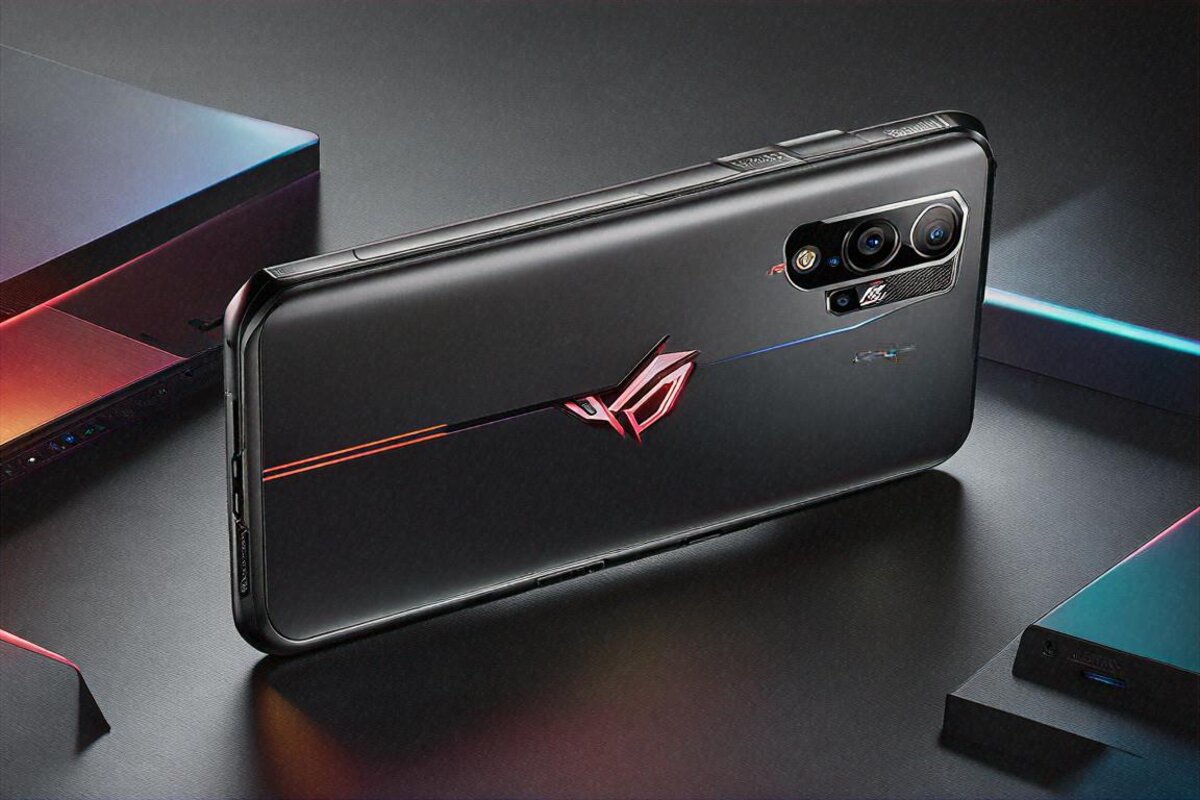
Everyone keeps telling me gaming phones are dead. I stopped buying that the second I picked up the ASUS ROG Phone 9 Pro.
I do get where the doubt comes from. Flagships from Samsung and Apple game so well now that a dedicated gaming phone can feel like strapping on a racing helmet to ride a scooter. But here’s the thing — those phones game the way a Swiss Army knife slices bread. It works. You won’t enjoy it. The ROG Phone 9 Pro at ₹79,999 doesn’t merely game well. ASUS’s Republic of Gamers team built it with a single-minded fixation almost nobody else still seems to have, and after three weeks running it as my daily phone across Mumbai and Pune, I think the people writing eulogies for gaming phones simply haven’t held a recent one.
Design & Build Quality
Heavy. That’s the opening note. Around 227 grams, and the phone makes no apology for it. You lift it and your hand instantly clocks that this thing means business. People grumble about the weight on Reddit and Twitter, and I won’t argue with them — if you want a phone that melts into your pocket, buy something else. But for gaming? Mass equals stability. Your hands cramp slower because you’re not death-gripping a thin sheet of glass that feels one sneeze away from slipping out.
The back has that unmistakable ROG look — angular lines, a little secondary panel called the AniMe Vision LED matrix, and a finish that reads aggressive without tipping into “teenager’s first gaming rig.” ASUS has genuinely matured the design since the ROG Phone 7. It’s still clearly a gaming phone. But it’s one you could carry into a work meeting without drawing stares. Probably.
Build is where ASUS refuses to skimp. Gorilla Glass Victus 2 front and back. An aluminium frame so rigid there’s zero flex when you twist it. And IP68 dust and water resistance, which is still fairly new for ROG phones — I’m glad they finally committed. You can use this through Indian monsoon season without your pulse spiking every time it drizzles.
The side triggers — ASUS calls them AirTriggers — earn their own paragraph, because they reshape mobile gaming. They’re ultrasonic shoulder buttons mapped into the frame, reading taps, swipes, even pressure. I bound them to aim-down-sights and fire in BGMI and suddenly I wasn’t wrestling with on-screen controls anymore. The haptic kick on each press is tight. Not mushy, not over-clicky. Just right. Going back to a regular phone for gaming after AirTriggers feels like typing on T9 again.
One complaint. The camera bump. It’s not huge by 2026 standards, but it still rocks on a flat surface. Since plenty of gamers play with the phone flat on a desk — strategy titles especially — ASUS could’ve done better, or just included the AeroActive cooler in the box so the phone always sits level. More on the cooler shortly.
That Display Though
185Hz. Sit with that number for a beat.
Most flagships stop at 120Hz. Samsung’s newest Galaxy S phones do 120. iPhones? 120. OnePlus reached 144Hz on a couple of models and behaved like they’d split the atom. ASUS just quietly bolted a 185Hz LTPO AMOLED to this thing and walked off.
Can you genuinely tell 144Hz from 185Hz? Honestly — not sure. Put them side by side scrolling Twitter and I doubt most people would. But in twitch games, and I mean specifically the Apex Legends Mobile and COD Mobile kind where milliseconds decide things, it’s there. Swipes feel instant. In-game camera pans get this buttery quality that’s hard to put into words until you’ve felt it and then dropped back to 60Hz. Then you wonder how you tolerated 60.
Brightness peaks near 2500 nits, which is frankly excessive most of the time but becomes a saviour when you’re gaming outdoors in raw sun. I ran a Genshin Impact session at Marine Drive in Mumbai around 2 PM — harsh light, no shade. Screen stayed perfectly readable. Colours held. That wasn’t true of many phones even two years ago.
The 6.78-inch panel runs Samsung’s E7 AMOLED tech. Deep blacks, punchy colours, and HDR10+ that makes Netflix and Prime Video look properly cinematic. Touch sampling climbs to 720Hz, which is daft-fast. Your finger lands and the phone responds like it read your mind. In competitive shooters that turns straight into quicker reactions, and it isn’t marketing fluff — I could feel it in ranked.
My one gripe: the screen’s flat. No curve. Some people want flat for gaming because there’s no accidental edge touch, and I get that. But a flat panel in 2026 looks a touch dated on pure aesthetics. ASUS clearly chose function over form, and for a gaming phone that’s the right call. Just don’t expect it to feel as plush as a Galaxy S26 Ultra side by side.
Performance — The Snapdragon 8 Elite Goes Hard
This is the bit where I’d normally reel off benchmarks. I will. But first, what this phone feels like in practice: everything’s instant. Opening apps, flipping through twelve in the recents tray, loading Genshin Impact’s open world, pulling Chrome with forty tabs — none of it so much as hiccups. The Snapdragon 8 Elite, paired with what I reckon is 16GB of LPDDR5X RAM, just chews through it all.
AnTuTu sat around 23,00,000 across repeat runs. Geekbench 6 gave me roughly 2950 single-core and about 8700 multi-core. Bonkers numbers, putting it mildly. The OnePlus 13 on the same Snapdragon 8 Elite scores a shade lower, probably because ASUS tunes thermals harder in favour of sustained output.
About those thermals. The ROG Phone 9 Pro packs a vapor chamber about 40% bigger than the ROG Phone 8 Pro’s. Across a 45-minute Genshin Impact run at max settings, the back went warm but never hot — I clocked the surface at roughly 41 degrees Celsius with a thermal gun. Genuinely impressive for an Indian summer afternoon in a room with no AC. Most phones hit 44-46 under the same load and start throttling inside 20 minutes.
The real trick, though, is the AeroActive Cooler X — it clips onto the back and uses a tiny Peltier element plus a fan to actively chill the surface. With it attached, surface temp fell to about 36 degrees during the same session. The phone didn’t throttle once. Not once. I ran it over an hour at max and the frame rate stayed pinned — a locked 60fps in Genshin, 90fps in BGMI.
Now the irritating part — the AeroActive Cooler X is a separate purchase. At ₹79,999, ASUS should put it in the box. The cooler runs around ₹5,999 more, pushing the full experience to roughly ₹86,000. That’s a hard swallow when you’re already sitting in iQOO, OnePlus, and Samsung flagship territory. It’s probably the biggest stumble in the pricing. The cooler isn’t a nice-to-have — they designed the phone around it.
Storage is 512GB UFS 4.0 on the Pro I tested. Load times are absurd. Genshin Impact reaches the main screen in about 6 seconds from cold. Call of Duty Mobile in under 4. Real Racing 3, an older game, loads so fast the splash screen barely registers. This phone treats waiting like a personal insult.
Gaming Features That Actually Earn Their Keep
ASUS bakes in something called Game Genie, and unlike the bloated gaming modes on a lot of Chinese phones, this one’s actually useful. Swipe in from the edge mid-game and you get a floating panel: live CPU/GPU usage, a frame counter, temperatures, network latency, plus quick toggles for blocking notifications, locking brightness, and recording macros.
Macro recording. Let me explain why it matters. In gacha games and grind-heavy RPGs — wildly popular in India — you often repeat the same tap sequence hundreds of times. Game Genie records a sequence and loops it. I used it for Genshin daily commissions and burning resin. Saved me maybe 15 minutes a day of mindless tapping. Some would call it cheating. I call it respecting my time.
Bypass charging is the other feature I didn’t know I wanted until I had it. Gaming while plugged in, the phone can route power straight to the system and skip the battery. So your cell isn’t being charged and drained at the same time — which makes heat and slowly wrecks battery health. During long plugged-in sessions the phone runs cooler and your battery ages slower. I genuinely wish every phone did this.
Battery & Charging
6000mAh. A big battery by any yardstick, and the real-world numbers back it up.
A normal day for me: about two hours of gaming (Genshin and BGMI mixed), another hour of YouTube, near-constant WhatsApp and Instagram, some Spotify over Bluetooth, maybe 30 minutes of calls. End of the day I’d have 25-30% left. Reliably. That’s a full day of fairly heavy use with no dash to the charger. On lighter days — mostly social, browsing, calls — it pushed well into a second day.
Charging is 65W wired via the bundled HyperCharge brick. Empty to full takes about 50 minutes. Empty to half, around 18. Not the fastest going — Xiaomi and iQOO are pushing past 100W — but 65W is plenty quick for most people, and there’s a fair case that slower charging is kinder to long-term battery health. ASUS leans into that with care features that cap charging at 80% or 90% to preserve longevity.
No wireless charging. On a ₹79,999 phone, that smarts. I don’t use wireless daily, but on the days I reach for it, missing it stings. ASUS’s reasoning is probably that the space went to the bigger battery and vapor chamber. Fair enough, I suppose. But rivals fit wireless charging into similarly specced phones, so it lands as an oversight.
Cameras
Plainly: nobody’s buying this phone to shoot photos. But ASUS fitted decent cameras anyway, and they deserve some credit for it.
The main sensor is a 50MP Sony IMX890 with OIS. Ultrawide’s 13MP. Macro’s 5MP. No telephoto. In daylight the main camera takes good shots — sharp, well exposed, colours leaning slightly warm but flattering on social. Night mode is okay. Not Pixel-level, not Samsung-level, but the kind of night shot you’d post without cringing. The ultrawide’s fine for wide scenes but loses edge detail. Macro’s there for the spec sheet, as ever.
Video maxes at 8K 24fps or 4K 60fps with decent stabilisation. For quick Reels and Shorts, more than enough. Portrait mode handles edges well. The selfie cam is 32MP and copes nicely on video calls.
Here’s what counts: for a gaming phone, these cameras sit well above average. The ROG Phone 5 had embarrassing cameras. The ROG Phone 7’s were mediocre. The 9 Pro’s I’d call genuinely good. Not class-leading, but good — and that’s a real shift for this line.
Software
Android 15 under ASUS’s fairly light skin. It’s close to stock, which I prefer. No ugly ads in the notification shade (yes, looking at you, Xiaomi). No duplicate apps you can’t remove. Clean, fast — and ASUS promises two years of major OS updates with four years of security patches.
That update promise is… rough. Samsung does seven years. Google does seven. Even OnePlus is on four years of OS updates now. Two years of OS updates on a ₹79,999 phone is honestly hard to defend. By 2028 this phone would be stuck on Android 16 while rivals run Android 19. For Indian buyers who tend to hold phones 3-4 years, that’s a legitimate worry.
The Armoury Crate app — effectively the command centre for the gaming features — works well. You can build per-game profiles with custom performance settings, refresh rates, AirTrigger maps, and network preferences. It’s intuitive enough that I never needed a tutorial, which says a lot for software this dense. I spent a good 20 minutes just tweaking settings for my five most-played games and actually enjoyed it. Like tuning a car before a race.
Audio & Haptics
Dual front-firing speakers. Loud, clear, with stereo separation you can actually feel while gaming. Most phones give you a bottom-firing speaker and an earpiece pretending to be one. ASUS gave the 9 Pro proper dual speakers and it tells. Explosions in COD Mobile have real bass. Music sounds full enough to skip earphones for a casual listen. Not saying it replaces good headphones — it doesn’t — but these are among the best phone speakers I’ve used.
3.5mm headphone jack. Still here. Still glorious. In a world where even budget phones ditch the jack, ASUS keeps it alive for gamers who won’t tolerate Bluetooth latency in competitive play. I plugged in my Sennheiser IE 100 Pro and the built-in DAC drove them effortlessly — clean audio, no hiss, good volume headroom. Not audiophile-grade, but well ahead of most phone outputs.
Haptics come from dual linear motors and they’re exceptional. Any game with haptic support feels more immersive here. Recoil in shooters, engine rumble in racers, even the soft buzz of grabbing loot in RPGs — it all comes through with precision. After three weeks, the haptics became one of those things I’d genuinely miss on another phone.
Connectivity
Wi-Fi 7 support, forward-looking even though most Indian routers are still on Wi-Fi 5 or 6. Bluetooth 5.4 with LE Audio. 5G works on every major Indian band — I tested Jio and Airtel across multiple cities with zero connectivity trouble. It also handles Wi-Fi calling and VoLTE on both SIMs.
One neat touch: ASUS adds a side-mounted USB-C port alongside the bottom one. That means you can charge while gaming in landscape without the cable jutting out the bottom. Tiny detail. Massive quality-of-life win. I used the side port almost exclusively during gaming, and it felt like ASUS actually plays games on their own phones — which is more than I can say for some rivals.
Who Should Buy This
If you game on your phone more than an hour a day and you care about the best possible experience — not just “good enough” but the actual best — the ROG Phone 9 Pro at ₹79,999 is the only phone I’d point you at right now. Nothing else in India bundles AirTriggers, a 185Hz display, bypass charging, and this level of thermal control in one package.
If you’re a casual gamer dipping into Candy Crush and a bit of weekend BGMI, this is overkill. Grab a OnePlus 13 or a Samsung Galaxy S26 and pocket the difference. They game well enough for 90% of people.
If cameras top your list, look elsewhere — the 9 Pro’s are good, not great. And if long-term software updates matter to you, that two-year OS promise is tough to stomach at this price.
But if you’re a serious mobile gamer in India, this phone isn’t just the best option — it’s basically the only one. Samsung doesn’t make a gaming phone. OnePlus quit. The nubia RedMagic line isn’t officially sold here with proper warranty and service. ASUS ROG is what’s left. And they’ve earned that spot by building a phone that measurably improves how games feel and run on mobile. I think that’s worth ₹79,999. Probably more, if I’m honest.
Specs at a Glance
- Processor: Qualcomm Snapdragon 8 Elite
- RAM: 16GB LPDDR5X
- Storage: 512GB UFS 4.0
- Display: 6.78-inch Samsung E7 AMOLED, 185Hz, 2500 nits peak, 720Hz touch sampling
- Battery: 6000mAh
- Charging: 65W wired (no wireless)
- Rear Cameras: 50MP (Sony IMX890, OIS) + 13MP ultrawide + 5MP macro
- Front Camera: 32MP
- OS: Android 15
- Connectivity: Wi-Fi 7, Bluetooth 5.4, 5G, NFC, dual USB-C
- Water Resistance: IP68
- Weight: ~227g
- Price: ₹79,999
Pros
- Best-in-class gaming performance with Snapdragon 8 Elite and aggressive thermal tuning
- 185Hz AMOLED display is the smoothest screen on any phone right now
- AirTrigger ultrasonic shoulder buttons genuinely change how mobile gaming feels
- 6000mAh battery comfortably lasts a full day of heavy gaming use
- Dual front-firing speakers and 3.5mm jack for low-latency audio
- Bypass charging protects battery health during long gaming sessions
- IP68 water resistance — finally
Cons
- AeroActive Cooler X sold separately despite being part of the intended experience
- Only two years of OS updates — far behind Samsung and Google’s seven-year commitment
- No wireless charging at ₹79,999 is hard to justify
- Heavy at 227g — not for those who want a slim, light phone
- Camera system is good but not flagship-competitive, especially in low light
Verdict — 9.1/10
The ASUS ROG Phone 9 Pro takes a 9.1 out of 10 from us, and that score reflects a phone that’s almost flawless at the job it set itself. It’s the best gaming phone you can buy in India. Full stop. The display, the performance, the thermals, the audio, the AirTriggers — every part was designed around gamers and it shows in every tap. The shortcomings are real (no wireless charging, weak update promise, the cooler you have to buy separately), but they don’t dent the core truth: if you game seriously on your phone, nothing else gets close.
Grab one during a Flipkart sale if you can — that’s your concrete next step. It regularly slides to around ₹74,999 during Big Billion Days and Republic Day sales. At that price, ideally with the cooler bundled into a combo, you’re getting the absolute best mobile gaming experience money buys in India right now.
Full Specifications
| Processor | Qualcomm Snapdragon 8 Elite |
|---|---|
| RAM | 16GB LPDDR5X |
| Storage | 512GB UFS 4.0 |
| Display | 6.78-inch Samsung E7 AMOLED, 185Hz, 2500 nits peak, 720Hz touch sampling |
| Battery | 6000mAh |
| Charging | 65W wired (no wireless) |
| Rear Cameras | 50MP (Sony IMX890, OIS) + 13MP ultrawide + 5MP macro |
| Front Camera | 32MP |
| OS | Android 15 |
| Connectivity | Wi-Fi 7, Bluetooth 5.4, 5G, NFC, dual USB-C |
| Water Resistance | IP68 |
| Weight | ~227g |
| Price | ₹79,999 |
Pros
- Best-in-class gaming performance with Snapdragon 8 Elite and aggressive thermal tuning
- 185Hz AMOLED display is the smoothest screen on any phone right now
- AirTrigger ultrasonic shoulder buttons genuinely change how mobile gaming feels
- 6000mAh battery comfortably lasts a full day of heavy gaming use
- Dual front-firing speakers and 3.5mm jack for low-latency audio
- Bypass charging protects battery health during long gaming sessions
- IP68 water resistance — finally
Cons
- AeroActive Cooler X sold separately despite being part of the intended experience
- Only two years of OS updates — far behind Samsung and Google's seven-year commitment
- No wireless charging at ₹79,999 is hard to justify
- Heavy at 227g — not for those who want a slim, light phone
- Camera system is good but not flagship-competitive, especially in low light
Our Rating: 9.1/10 · Price: ₹79,999


0 Comments