
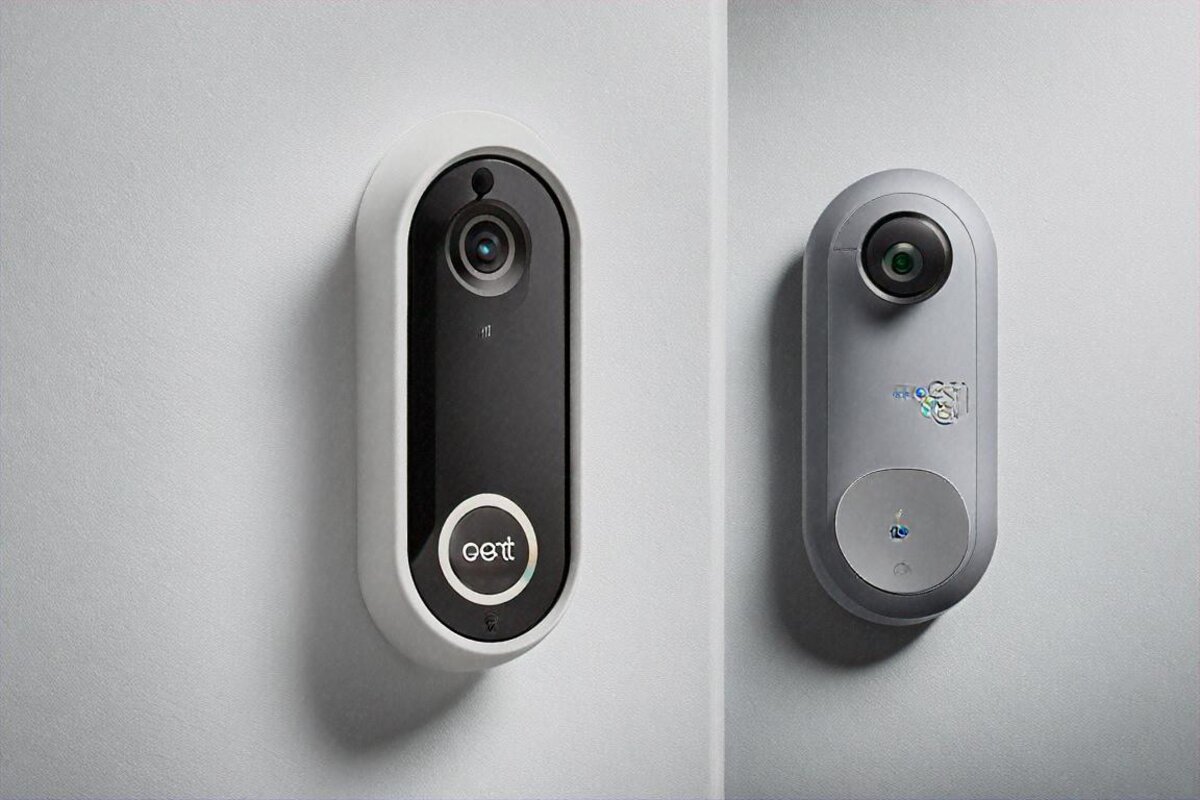
84% of package thefts happen when nobody’s watching the door. That number drifts around the home-security blogs, and I doubt anyone’s nailed it down properly, but it sticks because it feels true. In India the trouble isn’t only parcels vanishing — it’s deliveries dropped at the wrong flat, watchmen who forget to ring up, and the odd mystery visitor leaning on the bell at 2 AM. A smart doorbell ought to fix most of that, in theory. Google’s been making that pitch since the first Nest Hello. So I screwed the Nest Doorbell Wired (2nd Gen) onto my apartment door in Bengaluru and lived with it for six weeks.
At ₹15,999, it has to earn its keep against cheaper Chinese options and the question every Indian homeowner quietly asks: do I actually need a smart doorbell, or is a ₹200 peephole still doing the job?
Setup
Wired. Lean on that word. You need existing doorbell wiring — a low-voltage transformer (16-24V AC) already sitting at your door. Most newer Indian apartments don’t have it. Older ones sometimes do. My 2018-built flat in Whitefield had basic two-wire doorbell wiring, but the voltage ran low — around 12V — and the Nest grumbled through setup. I ended up buying a 16V AC adapter off Amazon for ₹650. Not a big outlay, but it’s exactly the sort of thing Google doesn’t flag clearly on the product page, and it’ll catch out anyone expecting plug-and-play.
Mounting took about 40 minutes. Drill two holes, thread the wires, fix the bracket, click the doorbell in. Google packs an angled wedge mount in the box, which helps if your doorframe sits at an odd angle. I used it. Without the wedge the camera aimed slightly down and to the left, lopping off the tops of taller visitors’ heads.
The Google Home app runs the software side. Pairing went smoothly — scan the QR on the doorbell, join your Wi-Fi, sit through a firmware update, and you’re live. About 12 minutes all in. No trouble on my Jio Fiber line (150 Mbps plan). I’ve heard people on slower broadband complain the initial firmware download times out, and I believe them — this thing pulls a fair chunk of data on first setup.
Video Quality
960 x 1280 resolution. HDR. 30fps. That’s the sheet.
And in practice? Daytime footage is crisp. Faces read clearly from about 3-4 metres, which covers most apartment corridors and porches. Colour’s accurate — my red front door looks red, not orange. The shadows under the corridor overhang don’t collapse into black holes, thanks to the HDR. Google’s computational photography chops carry over here, and you can tell. A delivery person’s face, the text on a courier label, the plate on a bike parked nearby — all readable in decent light.
Night vision is where it gets murky. Literally. The IR mode kicks in automatically in low light, and it’s adequate for telling whether someone’s standing at your door. Adequate. Not great. At roughly 2 metres I can pick my neighbour from a stranger. Past that, faces smear. If your corridor or porch has any ambient light — even a feeble CFL — the HDR mode takes over instead of IR, and the picture leaps in quality. I’d keep a small light near the door. A ₹300 LED bulb fixes what Google’s hardware can’t.
The tall 3:4 aspect ratio is deliberate. Regular security cameras shoot wide. Google went vertical because doorbells need both a face and a package on the floor in frame. It works. I can see a box at my feet and the person holding it in one shot. Horizontal cameras miss the ground entirely, or force you to mount them ridiculously high.
Detection and Alerts
Google’s AI does the heavy lifting here.
The doorbell sorts people, packages, animals, and vehicles. Over six weeks it tagged people correctly about 92-93% of the time. Packages were patchy — flat envelopes often slipped through, chunkier boxes got caught reliably. My neighbour’s cat set off the animal detection exactly twice, which I’ll take as a win. Vehicle detection I couldn’t really test from an apartment corridor, but for anyone with a yard or driveway, it’s there.
Familiar-face detection needs a Nest Aware subscription. Without it you get three hours of event history and basic alerts. With Nest Aware (₹100/month, or roughly ₹1,000/year) you get 30 days of history and the ability to tag familiar faces, so the doorbell tells you “Your brother is at the door” rather than just “Someone is at the door.” I took the trial. Face recognition learned my five most frequent visitors within about a week of them showing up. Accuracy hung around 80% — it muddled my brother and my cousin twice, which, fair enough, so do most humans.
Alert response times varied. On Wi-Fi I got push notifications 2-4 seconds after someone pressed the bell. Motion alerts — someone approaching without pressing — ran 4-8 seconds. Over mobile data on Airtel, tack on another 2-3 seconds. Quick enough most of the time. Not quick enough for ring-and-run — by the time I’d opened the app, the person had already walked out of frame. A wider detection zone would help.
Activity zones earn a mention. You can draw custom zones in the app to limit where detection fires. I drew one over just my doorstep and about a metre in front. Without zones, every person passing in the corridor tripped an alert and my phone buzzed nonstop. With the zone set, I got maybe 8-12 meaningful alerts a day. The zones work well. Set them up right after install or you’ll switch off notifications out of sheer frustration within 48 hours.
Two-Way Audio
Works. Barely clears the bar for “good.”
When someone presses the bell, I can talk back through the Google Home app or any Nest Hub display. The doorbell’s speaker is small, tinny, and not loud. In a quiet corridor, conversation’s fine. Add background noise — construction, traffic, a neighbour’s TV — and the person at my door had to lean in to catch me. Not ideal.
The mic picks up voices clearly enough up close. From about a metre I could make out what the delivery guy was saying. Push to 2-3 metres and speech goes mushy. There’s a slight lag too — maybe half a second — that makes the whole thing feel like a bad phone call. You learn to pause after talking and wait for the reply. Functional, not pleasant.
One thing that pleasantly surprised me: the pre-recorded quick responses. If you can’t answer live, the doorbell plays a line like “We’ll be right there” or “Please leave the package.” These come through clear and loud enough to be useful. I set one for delivery drivers and it worked well enough that I stopped answering most delivery alerts in person.
Indian Wi-Fi Realities
Smart home gear lives and dies on your internet. In India, that’s a loaded sentence.
My Jio Fiber line is steady — 150 Mbps, router about 8 metres from the front door through one wall. The doorbell held its connection reliably. Across six weeks I logged three drops: two during Jio outages that took down everything else in the house, and one random dropout that sorted itself in about 4 minutes. Acceptable.
I briefly moved it to my backup Airtel Xstream line (40 Mbps plan) and the experience was near-identical. Google doesn’t seem to need much bandwidth — the live stream probably eats 1-2 Mbps at most. Latency matters more than raw speed. On a congested network with high ping (I tested by running a torrent in the background, which, yes, I know), live view took 4-5 seconds to load instead of the usual 1-2. Alerts still arrived on time.
Dual-band Wi-Fi matters. The doorbell connects on 2.4GHz only, which gives it better range through walls but means it’s elbowing for spectrum with every other 2.4GHz device in the house. If you’ve got fifteen smart bulbs, a couple of Alexa devices, and three phones all camped on 2.4GHz, congestion will drag performance down. Shift your other gear to 5GHz where you can.
Power cuts are the elephant in the room. Wired means no battery backup. When the power goes — and in India it will go — the doorbell dies with it. My UPS covers the router but not the doorbell transformer. So through a 30-minute load-shedding spell, I had Wi-Fi and no doorbell. If unbroken monitoring matters to you, either put the transformer on a UPS (₹2,000-3,000 for a basic one) or look at Google’s battery-powered Nest Doorbell instead — though that brings its own trade-offs in video quality and recording.
Google Home Ecosystem
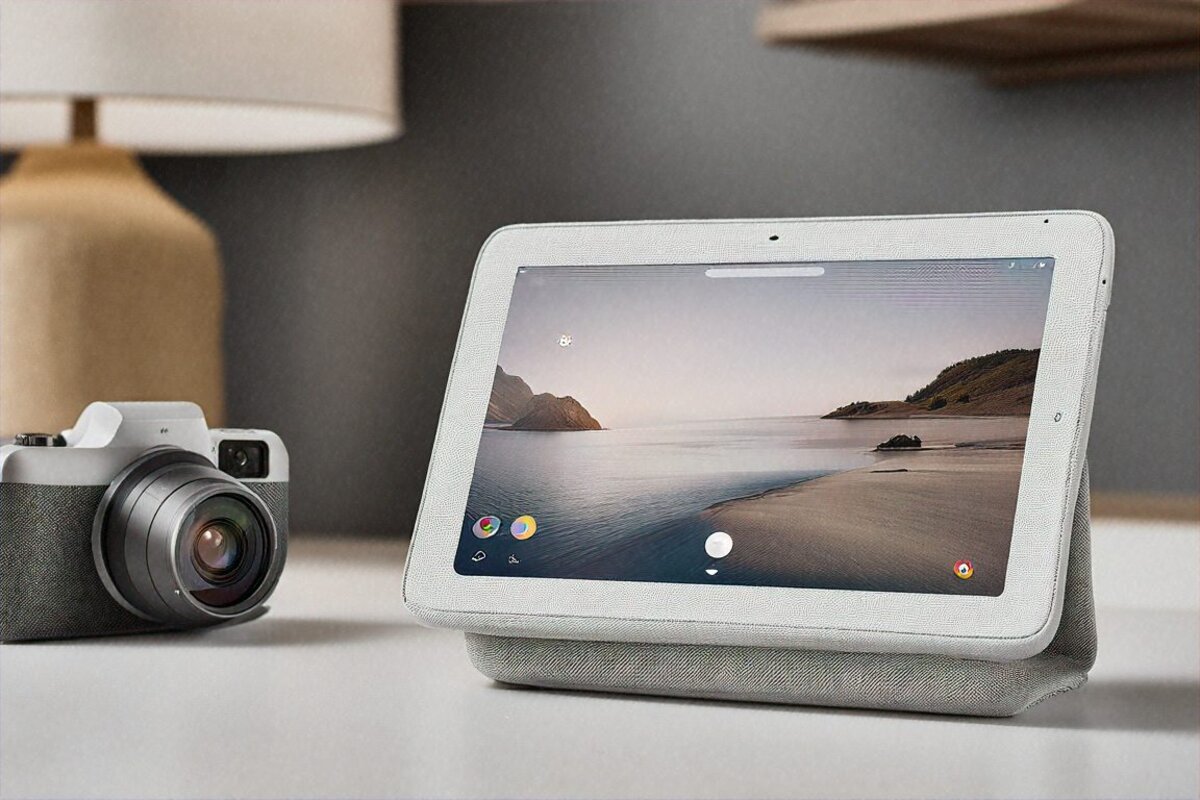
If you already run Google Home gear, the doorbell slots in exactly how you’d hope. Press it and it chimes on every Nest speaker and display in the house. The live feed pops up on Nest Hubs with a voice command. “Hey Google, show me the front door” — and there it is. Latency on the Nest Hub Max was about 2 seconds. On a screenless Nest Mini you just get the announcement.
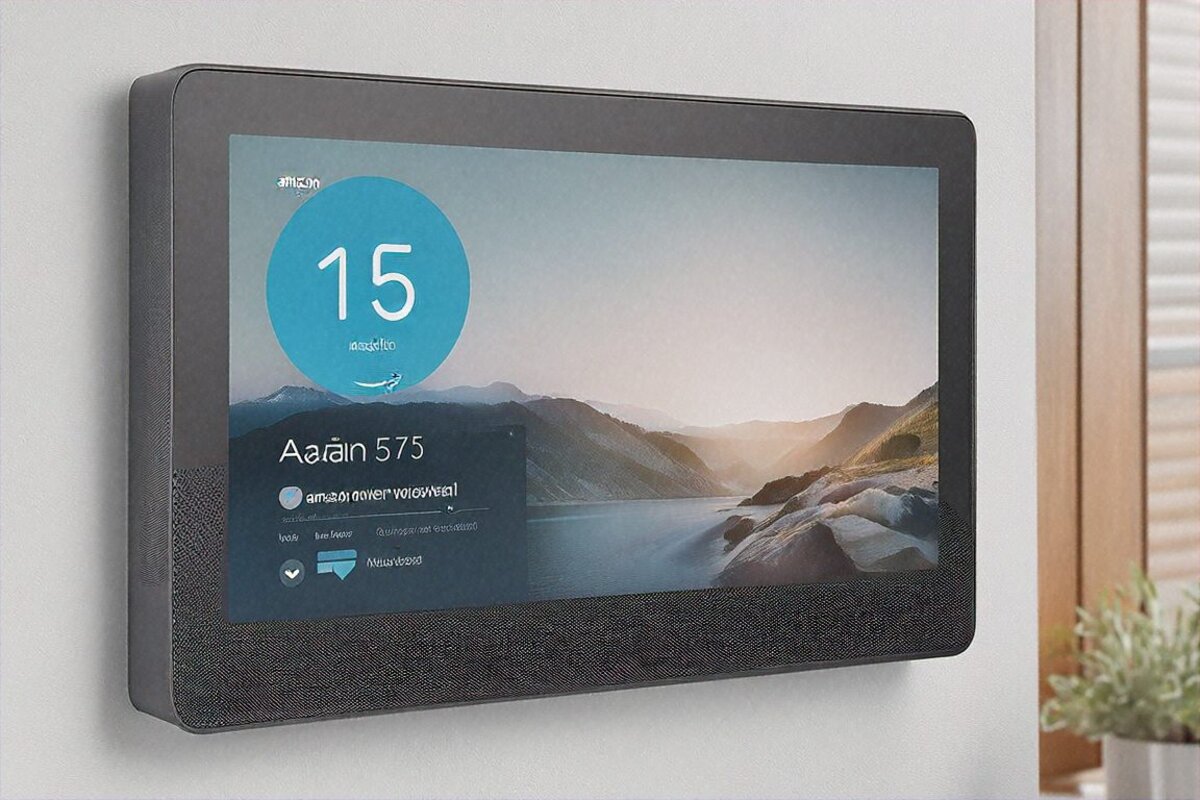
Cross-platform support is thin. No HomeKit, which shuts out Apple households. Amazon Alexa works but feels bolted-on — you can pull the feed onto an Echo Show, but alert routing and smart features are stripped back versus the Google Home experience. If your house runs on Alexa, the Ring Doorbell is the more natural fit. Google builds its best doorbell for Google homes. Obvious, maybe, but worth saying plainly.
Google Assistant routines can fire off doorbell events. I built one: when the bell rings between 9 AM and 6 PM, announce “Someone’s at the door” on all speakers and switch on the porch light. Works reliably. After midnight, it only announces on the bedroom Nest Hub at low volume. Smart enough. I’d love more granular control — different actions for a recognised face versus a stranger, say — but what’s there covers most practical needs.
Build and Weather
IP54 rated. That’s dust-protected and splash-resistant, not waterproof. In my covered apartment corridor, weather’s a non-issue. For homes with open porches or front doors exposed to the elements, IP54 should cope with rain. Monsoon-grade downpours with wind-driven water? Probably fine, but Google only guarantees protection to a point, and Indian monsoons have a habit of testing those points.
Heat is the bigger worry. Bengaluru stays mild, so I can’t tell you how this holds up through 45-degree days in Delhi or Nagpur. Google rates it for operation up to 40 degrees Celsius. Indian summers blow past that in direct sun routinely. If your door catches the afternoon sun, the doorbell could shut down at peak summer. Worth weighing before you mount it.
Build quality feels right for the money. Matte plastic body, compact enough that it doesn’t look daft on a door frame. It doesn’t scream “tech gadget” the way some smart doorbells do. The mounting hardware is metal, not plastic. No gripes on physical durability after six weeks — no fading, no warping, no scratches.
Subscription Economics
This needs its own section, because the subscription changes what the product even is.
Without Nest Aware: 3 hours of event-based video history. Basic person, package, animal, and vehicle detection. No familiar-face recognition. No continuous recording timeline.
With Nest Aware (₹100/month): 30 days of event history. Familiar-face detection. Activity zones work the same either way.
With Nest Aware Plus (₹250/month): 60 days of event history, plus 10 days of 24/7 continuous recording.
With no subscription, the doorbell feels neutered. Three hours of event history means that if something happens while you sleep, the footage might be gone by morning. You’re basically paying ₹15,999 for a live-view camera with fancy motion alerts. Useful? Sure. Worth the price? Debatable.
With the base Nest Aware plan, the product clicks. ₹1,200 a year isn’t painful. Over three years that’s ₹3,600 on top of the ₹15,999 hardware, bringing the total to about ₹19,600. That’s the real price of this doorbell, and Google should probably just print it on the box. Familiar-face detection alone justified the subscription for me — knowing who’s at the door without opening the app is the kind of small convenience you can’t unlearn once you’ve had it.
Nest Aware Plus at ₹3,000 a year is harder to defend unless you specifically need continuous recording for security. Most people don’t. Event-based recording catches what counts.
Privacy and Data
Your doorbell is shipping video to Google’s servers. That’s the bargain. Every motion event, every face, every two-way conversation gets uploaded, processed, and stored on Google’s cloud. For some people that’s a shrug. For others it’s a hard no. I land somewhere in between — mildly uneasy, not uneasy enough to stop using it.
Google lets you review and delete your video history by hand. You can also set auto-deletion intervals. There’s no local storage option, though, which means if Google’s servers fall over or the company rewrites its retention policy, your footage goes with it. Eufy’s local-storage approach feels more honest on this front. With the Nest, you’re renting your security. You don’t own it.
In India specifically, data localisation rules are still shifting. Google stores Nest data on servers that may or may not physically sit in India — the company hasn’t been fully clear about it. If you care where your home surveillance footage lives geographically, that’s worth digging into. Most people won’t care. Some should.
Competition
The Ring Video Doorbell 4 sells for around ₹13,999 and plays best with Alexa. Better app, wider field of view, a battery option. Worse Google Home integration, obviously. If you’re an Alexa household, Ring wins. No contest.
The Eufy Video Doorbell 2K lands around ₹11,999 with local storage — no subscription needed. Comparable video quality. Less clever detection. No ecosystem integration worth naming. For people who hate subscriptions on principle, Eufy makes a strong case.
The TP-Link Tapo D230S1 is the budget pick at around ₹8,000-9,000. Surprisingly capable for the price. No ecosystem depth. Lacks the polish of Google’s software.
Chinese imports on AliExpress start at ₹3,000. I’ve tried two in the past year. Both died inside four months. You get what you pay for.
Across all of these, the Nest Doorbell’s real edge isn’t the hardware — it’s Google’s machine-learning backend chewing through the footage. Person detection, package detection, familiar faces — none of the cheaper rivals match it for accuracy. Whether you value that AI edge enough to pay ₹15,999 plus a subscription is the whole question.
Pros and Cons
Pros:
- Excellent person detection accuracy (92-93% in testing)
- HDR daytime video quality is sharp and color-accurate
- Deep Google Home integration with Nest speakers and displays
- Familiar face recognition works well after learning period
- 3:4 vertical aspect ratio captures both faces and packages
- Activity zones effectively reduce false alerts
- 24/7 continuous recording available with subscription
Cons:
- Requires existing low-voltage doorbell wiring (16-24V AC)
- Night vision only adequate — needs ambient light to perform well
- Two-way audio speaker is tinny and quiet
- No battery backup during power cuts
- Near-useless without Nest Aware subscription (₹100/month)
- No Apple HomeKit support
- 40°C operating limit may be exceeded in Indian summer heat
The Numbers
Rating: 8.3 / 10
Price: ₹15,999
Six weeks in, the Nest Doorbell Wired 2nd Gen has faded into background furniture. I glance at alerts, talk to the occasional delivery person through my phone, and check footage maybe twice a week when I hear a noise and want to confirm it was nothing. It does what Google promised. Not spectacularly, not with the kind of polish that makes you want to show it off — but reliably. Whether that quiet reliability becomes something I’d actually miss if it vanished, I’m honestly not sure yet. Ask me in six months. Smart home gear has this habit of feeling indispensable for a few weeks and then settling into either real utility or expensive background noise. The Nest could land either way. We’ll see.
Pros
- Excellent person detection accuracy (92-93% in testing)
- HDR daytime video quality is sharp and color-accurate
- Deep Google Home integration with Nest speakers and displays
- Familiar face recognition works well after learning period
- 3:4 vertical aspect ratio captures both faces and packages
- Activity zones effectively reduce false alerts
- 24/7 continuous recording available with subscription
Cons
- Requires existing low-voltage doorbell wiring (16-24V AC)
- Night vision only adequate — needs ambient light to perform well
- Two-way audio speaker is tinny and quiet
- No battery backup during power cuts
- Near-useless without Nest Aware subscription (₹100/month)
- No Apple HomeKit support
- 40°C operating limit may be exceeded in Indian summer heat
Our Rating: 8.3/10 · Price: ₹15,999

0 Comments