
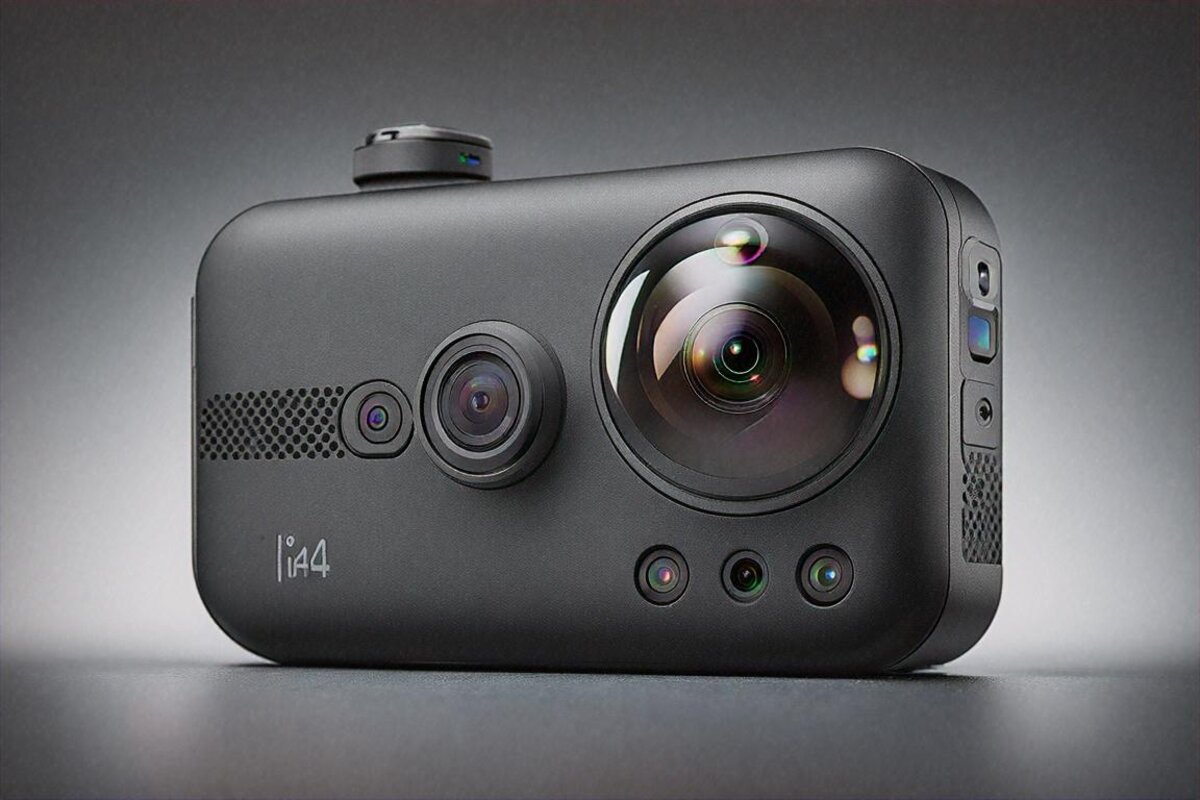
Nobody in 2024 actually needed an 8K action camera. I’ll die on that hill. And yet the Insta360 X4 turns up with 8K 360-degree recording, a 2290mAh battery that finally doesn’t embarrass the lineup, and a sensor upgrade that genuinely shifts what you can pull off in post — all for ₹54,999. Which wrecks my own argument a little, because after six weeks hauling this thing through Ladakh, Rishikesh, and the back lanes of old Delhi, I can’t put it down. I still think 8K 360 is overkill for 90% of the people who’ll buy it. I also haven’t stopped shooting with it.
That tension is the whole story of the X4. It’s a camera built for a future most Indian creators haven’t reached yet. The edit demands patience, a half-decent laptop, and the willingness to actually learn Insta360’s Studio software. Most people who buy a GoPro just want to hit record and forget it exists. A 360 camera asks more of you up front. Then it pays you back. Generously. Whether that trade makes sense rides entirely on what kind of creator you are, and most reviews wave past that question far too fast.
What You’re Actually Holding
Heavier than I expected. First note I scribbled down. At 203 grams the X4 is about 23 grams up on the X3, and you feel each one when it’s hanging off a selfie stick for an hour. Not a dealbreaker. But if you’re coming from a GoPro Hero at 154 grams, that extra heft registers the moment you pick it up.
Body’s 46 x 123.6 x 37.6mm. In hand it feels like gripping an oversized TV remote. Two fisheye lenses jut out on either side, a 2.5-inch touchscreen sits on the front (bigger than the X3’s, and finally usable with wet fingers), and Insta360 mercifully left the button layout mostly alone. Power on the side. Quick-capture button up front. My X3 muscle memory carried straight over, no relearning.
Build’s a mixed bag, though. The polycarbonate shell feels tough — I dropped this camera twice in Ladakh, once from hip height onto gravel, once off a motorcycle handlebar onto packed dirt. Both times it walked away uncracked. Lenses fine. But the lens caps in the box? Flimsy. They pop off way too readily in a backpack, and since exposed fisheye lenses are the single most fragile part of any 360 camera, that’s a bizarre place to save money. I ended up paying about ₹2,500 for the optional premium lens guards. Shouldn’t have had to at this price.
Waterproofing runs to 10 meters with no housing. Add a dive case and you’re good to 50 meters if you need it. I didn’t dive, but I did dunk it on purpose in the Ganges at Rishikesh and ran it through heavy Uttarakhand monsoon rain. Not a hiccup. Water on the touchscreen makes it fiddly, mind you — usable if you’re patient, never something I’d call reliable.
8K, But Why?
Right. The headline feature splashed across all the marketing.
The X4 shoots 8K (7680×3840) 360-degree video at 30fps off two 1/2-inch sensors at f/1.9. Each lens grabs a hemisphere, the camera stitches them on-device or in post, and you end up with a full sphere you can reframe into any aspect ratio you fancy. 8K at 30fps. 5.7K at 60fps. 4K at 100fps for slow-mo 360 action. Numbers that read incredible and, fair enough, look incredible on screen too. But let me be straight about what 8K means day to day.
A single minute of 8K 30fps eats roughly 1GB. I came home from five days in Ladakh with 340GB of footage. Moving that to my laptop over USB-C took over two hours. Editing in Insta360 Studio on a mid-range machine — i7-12th gen, RTX 3060, 16GB RAM — was doable but never smooth. Scrubbing an 8K timeline stays choppy even with proxies on. My laptop fans howled the whole session. And editing on a phone, which loads of Indian creators do exclusively? 8K is basically a no-go. The app technically handles it, but processing a 10-minute 8K clip takes forever.
5.7K at 60fps is the sweet spot. Pretty sure of it. I did maybe 70% of my shooting there and it’s genuinely excellent — enough resolution for crisp reframes at 1080p or even 4K export, smooth enough for action, and file sizes stay sane at around 500MB a minute.
So when does 8K actually earn its keep? Extreme reframes. Say you shoot a 360 clip of yourself riding down Rohtang Pass. In post you want to punch tight on your face for a reaction, then swing wide to reveal the valley behind you. At 5.7K that facial close-up goes mushy, pixelated, like it survived a bad compression pass. At 8K it stays sharp. The extra resolution buys you room to crop hard without the footage falling apart. For that one workflow — shoot wide, reframe tight — 8K pays off. For everything else it’s a storage-hungry flex that’ll mostly devour your microSD and your patience.
FlowState Stabilization Still Leads the Pack
I honestly thought GoPro’s HyperSmooth would’ve caught up by now. Nope.
Insta360’s FlowState on the X4 is — choosing my words here — the best stabilization I’ve used on any consumer camera. I strapped it to a motorcycle handlebar and rode through south Delhi traffic for 45 minutes. Potholes, speed bumps, sudden braking, auto-rickshaws cutting three lanes at once. The footage looked like it came off a steady drone floating six feet behind me. No jello. No wobble. Just impossibly smooth video that makes you look like you hired a gimbal operator for the day.
Some of that magic is the invisible selfie stick trick, which still feels surreal after years of 360 cameras doing it. Because the camera captures a full sphere, the stick linking it to your hand sits in the blind spot between the two lenses and just gets erased. What’s left is a floating-camera effect — drone-like shots where the device seems to hover behind, beside, above you. I took it into Chandni Chowk during evening rush. Narrow lanes, thousands of people, cycle rickshaws, electrical wires dangling overhead. The footage plays like a cinematic travel doc. People on Instagram kept asking what drone I’d used. It’s a ₹55,000 camera on a ₹1,500 selfie stick. That’s the whole trick.
Me-mode and the newer AI auto-framing try to track your face and spit out flat, traditional videos from the 360 footage. Works surprisingly well in good light with a clean background. In a crowd — and I mean Indian crowded, baraat or Chandni Chowk crowded — the tracking sometimes locks onto the wrong person. Call it 80% accuracy. Good enough as a starting point. Not reliable enough to skip manual reframing on anything you actually plan to publish.
Photo Quality and Low Light — Where Doubts Creep In
Photos at 72MP (stitched from both lenses) are genuinely detailed in good light. I shot 360 panoramas at Pangong Lake and printed a couple at 24×36 inches. They hold up. Color leans warm and slightly oversaturated out of the box, which is fine for social — Instagram loves warm, YouTube thumbnails pop with a little extra saturation. Want true-to-life accuracy? Switch to LOG and grade in post. Most people won’t bother, and the default look is pleasing enough that they won’t need to.
Low light, though. Every 360 camera struggles here and the X4 doesn’t escape it. Those 1/2-inch sensors are small. The f/1.9 aperture helps pull in light, but noise creeps in hard above ISO 800 and turns genuinely distracting above ISO 1600. Night timelapses and star shots are possible — I got some decent Milky Way frames in Ladakh, where light pollution barely exists — but that took a tripod, manual exposure, and post noise reduction. Handheld night video? Grainy. Watchable on Instagram Reels, where compression hides the worst of it. Nothing you’d hand a client or use in serious work.
This is the X4’s biggest weakness, I reckon, and it’s been the weakness of every Insta360 360 camera before it. Sensor size is the bottleneck. Until someone cracks how to fit 1-inch sensors into this form factor — which seems physically unlikely — low light on 360 cameras stays mediocre at best. Just go in knowing it.
One bright spot: HDR video. The X4’s Active HDR captures highlight and shadow detail at once, and the dynamic-range gain over the X3 is noticeable. Shooting a Delhi market where harsh sun blasts one side of the lane while deep shadow pools under awnings on the other — the X4 takes that contrast without blowing the sky or crushing the darks into mush. Not perfectly. But respectably. Better than I’d expected given the sensor.
Battery — Finally Not a Joke
2290mAh. Up from 1800mAh on the X3.
Doesn’t read like a huge jump on paper, but the real-world difference is dramatic. Shooting 5.7K at 30fps I consistently got about 75 minutes of continuous recording before the low-battery warning landed. At 8K 30fps that falls to roughly 55 minutes. Timelapses, which sip power, gave me nearly three hours. Bear in mind these are Indian-condition numbers — ambient temps running 32 to 38 degrees Celsius, which drains batteries faster than the climate-controlled lab figures on official spec sheets.
For perspective, the X3 used to die mid-shoot, every time. Forty minutes into a trek and the warning would flash. Maddening. The X4 gives you enough for a real shooting session. Still not spectacular by action-camera standards — a GoPro Hero 12 manages about 80-90 minutes at similar settings — but the gap’s narrowed enough that I no longer feel the need to lug three spares. Two does it. For quick shoot-and-move stuff like street walks, one battery usually covers a full session.
Charging is over USB-C and takes about 55 minutes dead to full with a 30W charger. Quick charge gets you to 80% in roughly 38 minutes, fast enough to top up over a lunch break on a travel day. And the battery’s removable. Can’t overstate it. Drop in a fresh one and you’re shooting in under 10 seconds. At about ₹2,000 per spare from Insta360’s official store, grabbing one is a no-brainer.
Editing — Where the Real Work Lives
Insta360 ships two editing tools: the mobile app and the desktop Insta360 Studio. Both have gotten noticeably better over the past year. Neither’s perfect.
The mobile app connects over WiFi and moves footage faster than before, though “faster” is relative when you’re forcing 8K files through a wireless link. Half the time I just popped the microSD out and used a card reader. Much quicker. The app’s editing is intuitive for basic reframes — drag the viewpoint around the sphere, set keyframes, let it interpolate the camera move between them. Adding music, trimming, exporting up to 4K, it all works, and it works on mid-range Android phones. I tested a Pixel 7a and a Samsung Galaxy A54. Both edited 5.7K footage without crashing, though the A54 dragged noticeably on exports.
Desktop is where the serious work happens. Insta360 Studio’s AI subject tracking, advanced keyframing, barrel-roll effects, tiny-planet transitions, deep stabilization controls — all of it lives there. Learning curve’s maybe two or three evenings of YouTube tutorials before you’re comfortable. Sounds steep until you see the output. I’ve made videos that look like they needed a cinema camera, a drone pilot, and a three-person crew. Reality: me, one extendable selfie stick, this camera on the end of it. That gap between perceived production value and actual effort is what sells 360 cameras. Nothing else in this price range pulls it off.
Storage note: the X4 takes microSD up to 1TB. I’d go at least 256GB if you’re shooting any 8K. I ran a SanDisk Extreme Pro 256GB (around ₹3,500 on Amazon India) and it never missed a beat. You need at least V30 — ideally A2 — or 8K recording stutters and drops frames. Cheap cards from no-name brands won’t cope here.
Who Should Actually Buy This
Here’s where I get honest, and it might not thrill Insta360’s marketing team.
Moto-vloggers and travel creators: yes. No question. The invisible selfie stick effect alone makes content that’d cost ten times as much to fake with traditional gear. Strap it to your bike, ride the Western Ghats or the Manali-Leh Highway, and you’ll come back with footage that stops the scroll. I’ve seen creators with 500 followers land reels at 100K views purely because the look a 360 camera gives you is that striking. It cuts through a feed full of static GoPro clips and shaky phone video.
Travel photographers shooting mostly stills: buy it as a supplement, not a replacement. Photo quality’s good but won’t stand in for a dedicated Sony Alpha or Fuji X-series on serious work. Keep it in the bag beside your main camera for the moments where a 360 perspective tells the story better than a flat frame.
Family-vacation users who just want point-and-shoot: a GoPro Hero is probably the better call. Cheaper. Simpler. Basically no learning curve. The X4 rewards time and creative effort. If you won’t spend an hour editing after a shoot, you’re handing over ₹55,000 for a camera whose best features you’ll never touch. That’s an expensive waste.
On Indian pricing specifically: ₹54,999 is fair, not cheap. It’s a real premium over a GoPro Hero 12 Black at ₹40,000-₹44,000 depending on the variant. During Amazon Great Indian Festival or Flipkart Big Billion Days the X4 has slid to around ₹47,000-₹49,000, which makes the call far easier. If you can wait for a sale, I’d wait.
Against the Competition
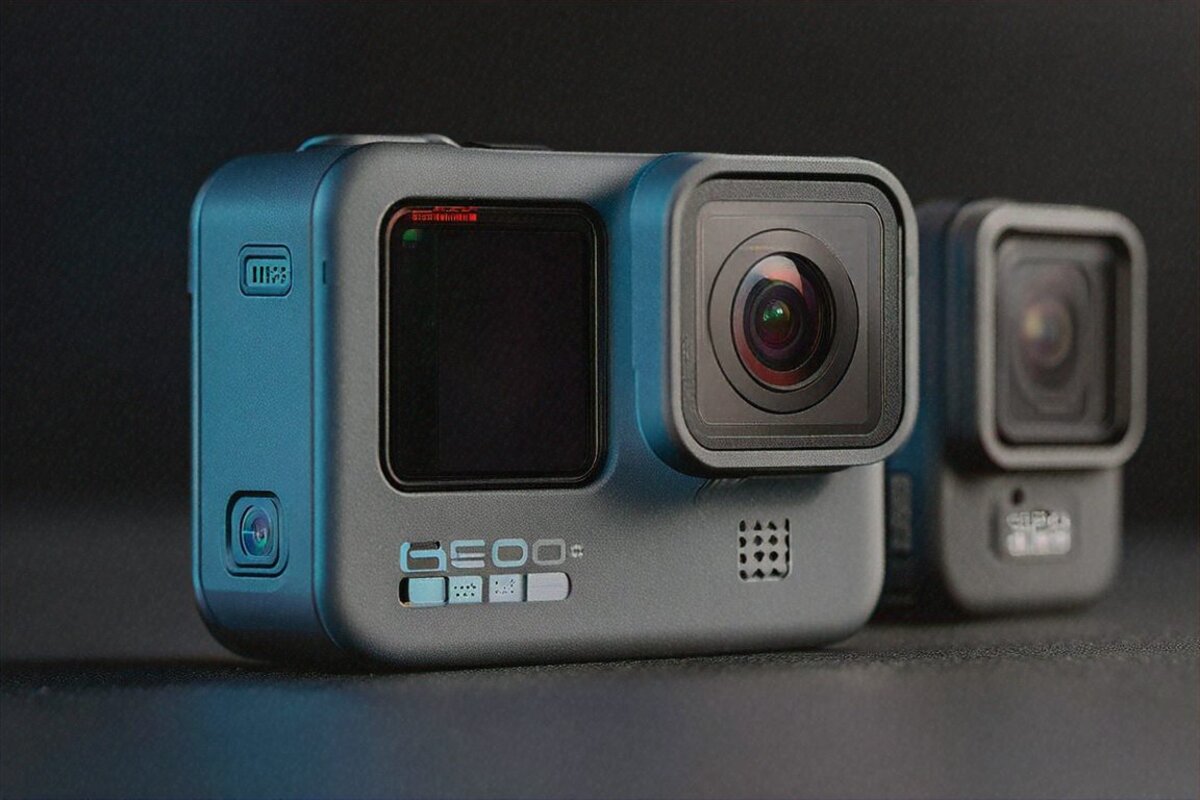
The main rival is the GoPro MAX, older and cheaper but stuck at 5.6K with worse stabilization and a clunkier stitch. There’s also the standard GoPro Hero 12 Black if you don’t want 360 — a different category entirely, but plenty of people cross-shop the two because what they’re really deciding is whether they want 360 at all. DJI’s Osmo Action range doesn’t do 360 either. In the dedicated consumer 360 market, Insta360 basically runs the table right now. The X4 mostly competes with its own predecessor.
Which means Insta360 could get complacent, and in a few areas — low light, those awful lens caps, the still-steep learning curve for newcomers — I’d argue they already have. Some competition would do everyone good. Somebody needs to push Insta360 the way Insta360 pushed GoPro into fixing their stabilization five years back.
Worth flagging the Insta360 Ace Pro 2, since it’s from the same company. Traditional flat-lens action camera. Better in low light, simpler to use, no 360. Different tool, different job. I’ve started carrying the X4 for creative 360 shots and an Ace Pro for quick everyday clips. A two-camera setup most people won’t want to fund, but if you’re a serious creator it covers nearly every scenario.
Verdict
Rating: 8.8/10
Price: ₹54,999
Pros:
- 8K 360-degree video with enough detail for aggressive reframes and cropping
- FlowState stabilization is the best in any consumer action camera, bar none
- Invisible selfie stick trick still produces shots that look impossible
- Battery finally lasts through a genuine shooting session (75 min at 5.7K)
- 10m waterproofing without a case — monsoon and river tested
- Removable battery with reasonable USB-C fast charging
- Powerful desktop and mobile editing software with AI reframing
Cons:
- 8K files are enormous — demanding on storage, transfer times, and editing hardware
- Low light performance still lags behind flat-lens action cameras
- Stock lens caps are cheap plastic that pop off too easily
- 203g weight adds up on long selfie stick sessions
- Price premium over GoPro is hard to justify if you won’t use 360 features
- Editing workflow has a real learning curve for first-time 360 users
The X4 doesn’t make sense for everyone, and I think that’s fine. Not every camera should chase the widest possible audience. For creators who want shots that are physically impossible with any other consumer device — drone-like sweeping angles off a selfie stick, full 360 worlds viewers can look around inside, buttery action footage with stabilization you can’t see — this is still the only real option in its bracket. I’ll keep saying 8K is ahead of its time for most editing workflows. But the camera under that headline number? Genuinely excellent. The best 360 consumer camera you can buy in India right now, and it isn’t close.
I took it to Leh last month braced for a lukewarm review about minor upgrades over the X3. Came back with 40 reels’ worth of footage I’m still sorting through. Haven’t touched my GoPro since.
Pros
- 8K 360-degree video with enough detail for aggressive reframes and cropping
- FlowState stabilization is the best in any consumer action camera, bar none
- Invisible selfie stick trick still produces shots that look impossible
- Battery finally lasts through a genuine shooting session (75 min at 5.7K)
- 10m waterproofing without a case — monsoon and river tested
- Removable battery with reasonable USB-C fast charging
- Powerful desktop and mobile editing software with AI reframing
Cons
- 8K files are enormous — demanding on storage, transfer times, and editing hardware
- Low light performance still lags behind flat-lens action cameras
- Stock lens caps are cheap plastic that pop off too easily
- 203g weight adds up on long selfie stick sessions
- Price premium over GoPro is hard to justify if you won't use 360 features
- Editing workflow has a real learning curve for first-time 360 users
Our Rating: 8.8/10 · Price: ₹54,999


0 Comments