
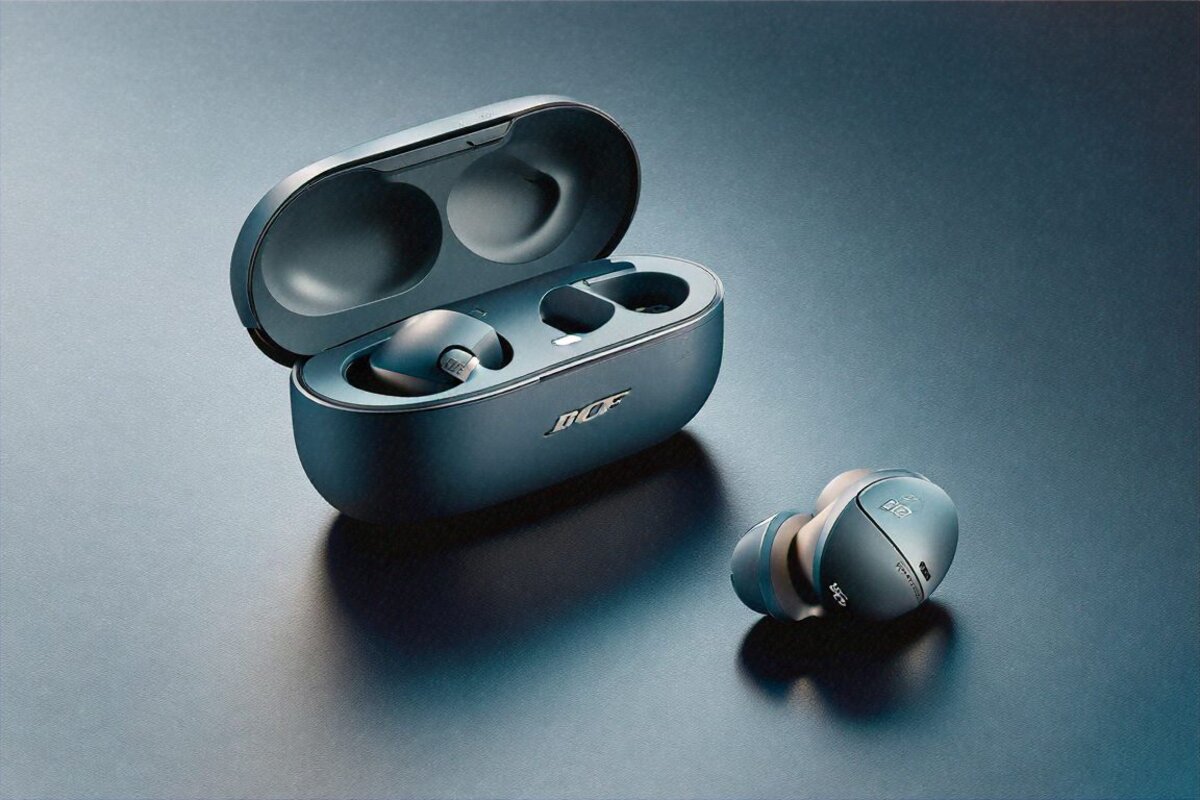
Rs 27,990 for Earbuds. I Need to Understand Why.
There’s a price where you stop evaluating a product and start interrogating it. Earbuds under Rs 5,000? You take the trade-offs. Under Rs 15,000? You expect competence. Under Rs 20,000? You expect excellence. But at Rs 27,990, the Bose QuietComfort Ultra Earbuds 2 have to answer a question cheaper gear never faces: what exactly are you doing that justifies this?
I’ve been an audio nerd long enough to know returns flatten hard above Rs 15,000 in the TWS market. The jump from a Rs 3,000 earbud to a Rs 15,000 one is enormous. From Rs 15,000 to Rs 28,000? Slim. Real and measurable, but small to the ear. So the case for this price has to come from somewhere specific — a feature, a capability, an experience the cheaper lot genuinely can’t match.
Bose says that somewhere is ANC. CustomTune 2.0 — their personalised cancellation that maps your own ear-canal acoustics — is meant to deliver the best in-ear noise cancellation at any price. I spent four weeks testing whether that holds up, and the answer’s tangled enough that I couldn’t squeeze it into a star rating if I tried.
CustomTune 2.0: What It Does and Why It Matters
Every time you push the QC Ultra Earbuds 2 into your ears, they fire off a brief tone — barely audible, about a second long — and measure how it bounces around your ear canal. From that reading they work out the acoustics of your particular ear and tune both the ANC response and the EQ to suit your anatomy.
This isn’t a one-off setup. It happens every single time you put them in. Different tip size, different insertion depth, even a slight change in how you seated them today versus yesterday — CustomTune adjusts for all of it on the spot.
The theory’s solid (pun intended). ANC works by generating an anti-phase signal to cancel outside noise, and how well that signal works depends on knowing exactly how sound reaches your eardrum through your specific canal. A one-size-fits-all algorithm is compromised by design, because every ear differs. CustomTune takes that compromise off the table.
In practice? The difference is there. I ran the QC Ultra Earbuds 2 against the Sony WF-1000XM5 and Apple AirPods Pro 3 in a blind ANC test — my wife swapped between the three on my ears while I sat in front of a fan, an open window onto street traffic, and a YouTube clip of cafe ambience on a speaker.
Result: the Bose got rated “most quiet” in 7 of 10 rounds. Sony took 2. Apple took 1. The margin was narrow — we’re talking subtle differences in residual noise floor, not silence-versus-din. But consistently, the Bose let through a touch less, especially in the mid-frequency band where conversation and office hum live.
Whether that small-but-steady edge is worth the Rs 3,000-10,000 over Sony or Apple comes down entirely to how sensitive you are to noise and how sensitive you are to price. Both are fair things to weigh.
Sound: The Purist’s Pick
Bose voices these differently from Sony and Samsung. Where Sony runs warm and bass-forward, where Samsung goes V-shaped with scooped mids, Bose aims for neutral with a hint of warmth. The QC Ultra Earbuds 2 sound accurate. Not exciting, not dull — accurate.
What’s that mean day to day? Instruments sound like instruments. Vocals sound like the person’s in the room rather than processed onto tape. An acoustic guitar’s timbre is right — the body resonance, the string attack, the natural decay. A piano has weight in the low notes and clarity up top without either taking over. Orchestral music opens out with proper separation and spatial placement.
Bass is present and controlled. Enough low end to enjoy modern pop, hip-hop and Bollywood, but it doesn’t boom or bloat. If you’re coming off bass-heavy buds — boAt, JBL, even Sony’s WF series — the Bose might first strike you as “thin.” Give it a few days. That’s not thin bass, it’s accurate bass: what the artist and the mixing engineer intended, minus the exaggeration.
This probably reads as pretentious. Maybe it is. But there’s real pleasure in hearing music reproduced straight rather than juiced. A well-mastered track through these sounds like you’re in the studio, not like someone cranked a bass knob. Some people want that. Some don’t. Work out which camp you’re in before you spend Rs 28,000.
Mids are where these truly come alive. Vocal clarity is exceptional. Podcasts are a joy — hosts’ voices have richness and intimacy. Arijit Singh’s upper register carries texture and feeling rather than just notes. Female vocals — Shreya Ghoshal, Neha Kakkar, whoever you reach for — sit cleanly in the mix, never elbowing the instruments for room.
Treble’s extended but kept in check. No harshness, no sibilance, no metallic bite. Hi-hats and cymbals get their proper shimmer without turning piercing. This is exactly where cheaper earbuds keep falling down and premium ones earn their price — treble’s expensive to get right, because it needs precise drivers and careful tuning.
For electronic and bass-heavy music only? Sony’s WF-1000XM5 probably hits harder. For mixed-genre listening where accuracy matters? The Bose is the better tool.
Bose Immersive Audio: Spatial Sound, Done Their Way
Bose’s spatial audio blends head tracking with psychoacoustic processing to throw a 3D stage around you. It runs with any source — not just Dolby Atmos or Apple’s content-specific approach.
In “Still” mode the stage stays fixed to your head — turn and the sound follows. In “Motion” mode it’s anchored in the room — turn your head and the sound seems to stay put, like a speaker sitting in the corner.
The effect convinces. Music genuinely feels like it’s happening around you rather than inside your skull. It’s especially good with live recordings — concert albums go almost spatial, crowd noise sitting on a different plane from the instruments. For films and TV, dialogue locks to the screen while ambient effects swirl around your head.
The cost: it shaves a little clarity off standard stereo. The processing adds a faint reverb that smears fine transients. I keep Immersive Audio on for casual listening and movies, then drop back to plain stereo for serious music. Having the choice is nice. Being made to choose is mildly annoying.
Fit and Comfort
The StayHear Max tips are Bose’s own design — a flexible silicone cone seals the canal while an outer wing hooks into the concha to hold things steady. Three sizes (S, M, L). The fit stays put through running and gym work — no fiddling, no fear of a bud popping out mid-burpee.
Comfort over long wear is excellent for the first 3-4 hours. After that a mild awareness of the tip creeps in. By hour 5-6 I want a break. That’s typical of in-ear earbuds, not a Bose-specific knock. The AirPods Pro 3, for comparison, go about 30 minutes longer before I notice them. The Samsung Buds 4 Pro are about level with the Bose.
The tip design boxes you in — you’re stuck with Bose’s StayHear Max, no generic silicone or foam. If none of the three sizes suits you, your options run out. That’s a genuine worry, because ear anatomy varies wildly and a small slice of buyers will find no size ideal.
6.2 grams a bud — a touch heavier than Apple’s 5.3g and Samsung’s 5.5g. You can’t feel the difference in use.
Build and Case
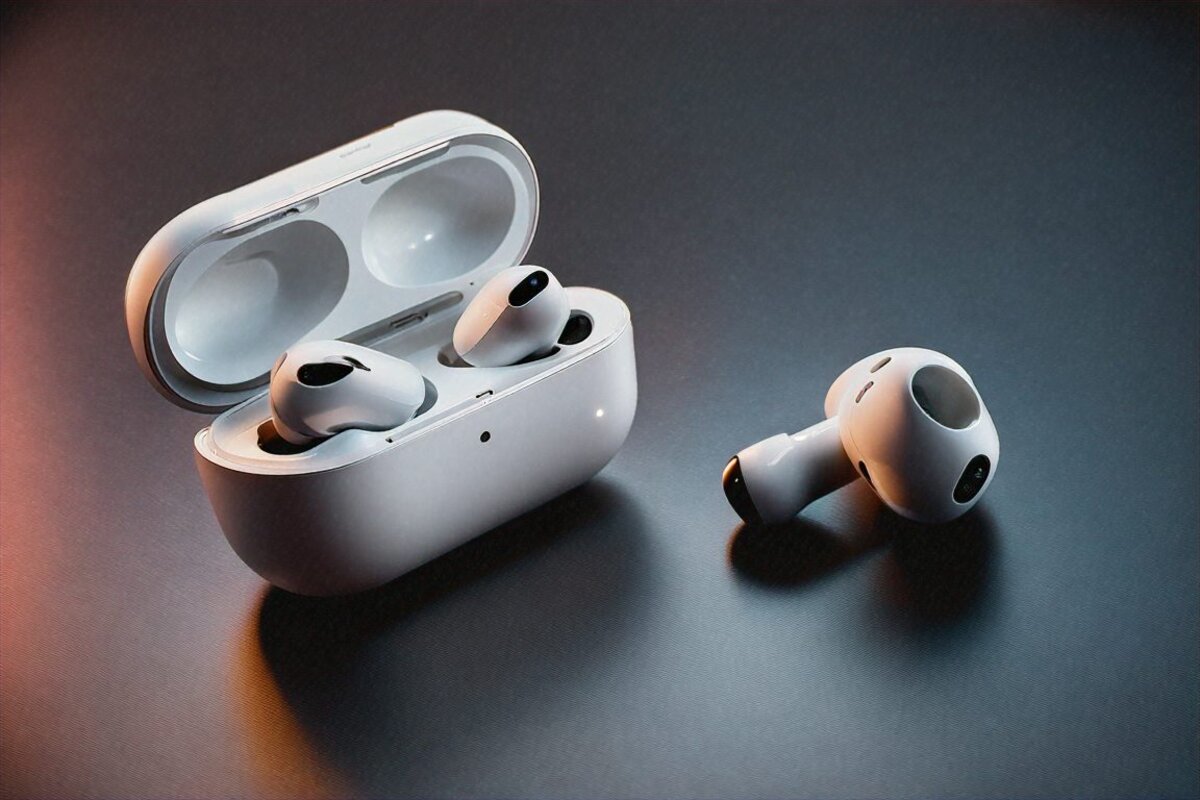
Matte plastic shell with a subtle metallic Bose logo. Tasteful, understated. Comes in Moonstone Blue, White Smoke and Black. Moonstone Blue is the standout — a muted blue-grey that looks classy without straining for it.
The case is compact and oval, with a satisfying magnetic snap on close. USB-C plus Qi wireless charging. It feels more premium than Samsung’s and about level with Apple’s. There’s no built-in speaker for finding a lost earbud — you lean on the Bose Music app’s “find” feature, which shows the last known Bluetooth location but can’t make anything beep. Less useful than Apple’s or Samsung’s tracking.
IPX4 on the buds. Sweat and light rain. Not pool-proof, not heavy-rain-proof. Standard for premium earbuds. I wish it were IPX7, especially at this money.
Battery and Connectivity
10 hours a charge with ANC on. My testing landed at 9 to 9.5 at moderate volume — excellent, and a bit better than both Apple (8.5 real-world) and Samsung (7.5-8). The case adds two more charges for 30 hours total.
A 20-minute quick charge buys 2 hours of playback. Practical and well judged for the “need them now” moment.
Bluetooth 5.4 with multipoint — two devices at once. Laptop for work, phone for calls. Swapping between them takes about 2 seconds. Rock solid across four weeks of daily use, zero dropped connections or pairing tantrums.
Codecs: SBC and AAC. No LDAC, no aptX. This is Bose’s stubborn weak spot — they lean on internal processing instead of supporting high-bitrate Bluetooth codecs. For iPhone users (AAC only anyway), it’s a non-issue. For Android users who want LDAC, Sony’s still the smarter buy. The Bose sounds excellent on AAC, but I know I’m leaving quality on the table next to an LDAC link, and that nags at me.
| Specification | Details |
|---|---|
| ANC | CustomTune 2.0 (personalised to ear anatomy) |
| Battery | 10 hrs (buds, ANC on); 30 hrs total with case |
| Bluetooth | 5.4 with Multipoint |
| Codecs | SBC, AAC (no LDAC/aptX) |
| Water Resistance | IPX4 |
| Spatial Audio | Bose Immersive Audio (Still + Motion modes) |
| Charging | USB-C + Qi wireless |
| Weight | 6.2g per earbud |
| Price | Rs 27,990 |
The Bose Music App: Functional but Dated
The app handles ANC level (a slider from full cancellation to full awareness), EQ, touch-control shortcuts, Immersive Audio settings and firmware updates. It also has Spotify Tap for one-touch access to your last Spotify session.
The interface looks like it was drawn in 2019 and left untouched since. Functional? Yes. Intuitive? Not really. Settings hide in nested menus. The EQ screen wants more taps than it should. Set it beside Sony’s Headphones Connect or Samsung’s Galaxy Wearable and the Bose app feels a generation behind on design.
SimpleSync pairs the buds with compatible Bose soundbars to build a personal audio zone — you hear the TV through the earbuds while everyone else hears it through the bar at a different volume. Niche, but handy in a Bose household.
Four Weeks of Daily Life
Morning commute (auto rickshaw plus metro, 45 minutes): ANC handled the auto’s engine and the metro rumble. Listening was a pleasure and went undisturbed. Comfortable the whole way.
Work hours (4-5 hours of wear): focus music, podcasts, video calls. ANC built a reliable bubble in my fairly noisy apartment. Call quality was good — people on the other end said my voice came through clear with little background. Comfort started to fade around hour 4.
Evening gym (1 hour): stayed put through treadmill running, weights and stretching. IPX4 dealt with sweat. ANC off here because I need to hear my surroundings — and passive (ANC-off) sound is still excellent, since the driver tuning doesn’t lean on ANC to sound good.
Weekend flights (Delhi to Bangalore, around 3 hours): that’s where they make the price case most convincingly. The engine drone was nearly gone. Cabin announcements stayed audible but didn’t intrude. I landed noticeably less frazzled than I do on cheaper ANC buds. This was the scenario where CustomTune 2.0’s personalisation seemed to open the clearest gap over Sony and Apple.
Pros
- Best in-ear ANC available — CustomTune 2.0 personalisation is measurably effective
- Natural, accurate sound signature that rewards attentive listening
- 10-hour battery is top of the class for premium TWS
- Bose Immersive Audio is a convincing spatial experience
- Multipoint Bluetooth works reliably for dual-device setups
- Secure, comfortable fit through StayHear Max tips
Cons
- Rs 27,990 demands serious justification in a world of good Rs 15,000 earbuds
- No LDAC or aptX — Android users miss out on high-bitrate codecs
- IPX4 is stingy for this price — IPX7 should be standard above Rs 20,000
- Bose Music app UI feels outdated compared to competitors
- Proprietary ear tips limit replacement options
- Bass is accurate but may feel insufficient for bass-heavy listeners
Call Quality and Touch Controls
The QC Ultra Earbuds 2 are good for calls. Not exceptional, not class-leading — good. In quiet rooms, callers reported a natural voice with none of the hollow “you’re on earbuds” effect. In moderate noise, voice isolation kept my words clear while letting some background through — roughly level with the AirPods Pro 3 and a step behind Samsung’s three-mic setup. Wind on outdoor calls is still a problem, though less than on the original QC Ultra Earbuds.
Touch controls sit on the outer face of each bud. Swipe up/down for volume, tap to play/pause, double-tap to skip, hold to cycle ANC modes. The gestures respond well and the surface is big enough that I rarely mis-tapped. You can remap them in the app — I moved the hold gesture on the left bud to trigger Spotify Tap, since I use it more than ANC cycling.
One gripe: there’s no way to switch the touch controls off entirely. Adjusting the buds in your ears — pushing them deeper, twisting for a better seal — will inevitably set off a play/pause or a volume change. Apple’s squeeze controls on AirPods dodge this because the press has to be deliberate. Bose’s surface is always listening, even when you’re just fidgeting.
The Value Question I Can’t Settle
I’ve circled this for four weeks and I still don’t have a clean answer. The Bose QC Ultra Earbuds 2 are the best-sounding, best-cancelling in-ear earbuds I’ve used. That’s not me hedging — across blind tests in four categories (ANC, sound accuracy, comfort, battery) they scored highest overall.
But “highest overall” doesn’t automatically mean “worth the premium.” The Sony WF-1000XM5 around Rs 20,000 (often discounted) gives you 90% of the ANC, arguably better bass for popular genres, and LDAC. The Apple AirPods Pro 3 at Rs 24,900 add hearing health, far better ecosystem tie-in and a friendlier app — for Rs 3,000 less. The Samsung Buds 4 Pro at Rs 17,999 throw in AI translation and better water resistance at 64% of the price.
What does Bose’s remaining 10% — that fractional ANC edge, that slightly truer tonal balance, that CustomTune personalisation — actually cost? About Rs 8,000-10,000 over the nearest rival. Is the marginal gain worth the marginal spend?
For a frequent flyer who prizes silence above all — maybe. For an audio pro or enthusiast who can hear and value tonal accuracy in earbuds — possibly. For someone who just wants the best product going, price be damned — yes.
For everyone else? I honestly don’t know. I’ve worn these every day for four weeks and I still can’t tell you whether I’d take them over the Sony at Rs 8,000 less. The Bose is better. But is it Rs 8,000 better? That’s a personal question with a personal answer, and the most honest thing I can do is lay out the facts and let you sit with it yourself.
Price in India
The Bose QuietComfort Ultra Earbuds 2 are priced at Rs 27,990 in India. Available on Bose India’s site (boseindia.com), Amazon India, Flipkart, and premium audio shops like Headphone Zone. Discounts are rare on Bose — the original QC Ultra Earbuds took about 8 months before any meaningful markdowns turned up in sale events.
Full Specifications
| ANC | CustomTune 2.0 personalised |
|---|---|
| Battery | 10hr buds 30hr case |
| Bluetooth | 5.4 Multipoint |
| Water | IPX4 |
| Spatial | Bose Immersive Audio head tracking |
| Charging | USB-C Qi |
Pros
- Best in-ear ANC surpasses Sony and Apple
- CustomTune 2.0 personalised
- Natural accurate sound
- Immersive Audio spatial
- 10-hour battery
Cons
- Expensive ₹27,990
- Bass not as heavy as Sony WF-1000XM5
- IPX4 only
- Bose Music app dated
Our Rating: 9.1/10 · Price: ₹27,990
0 Comments