
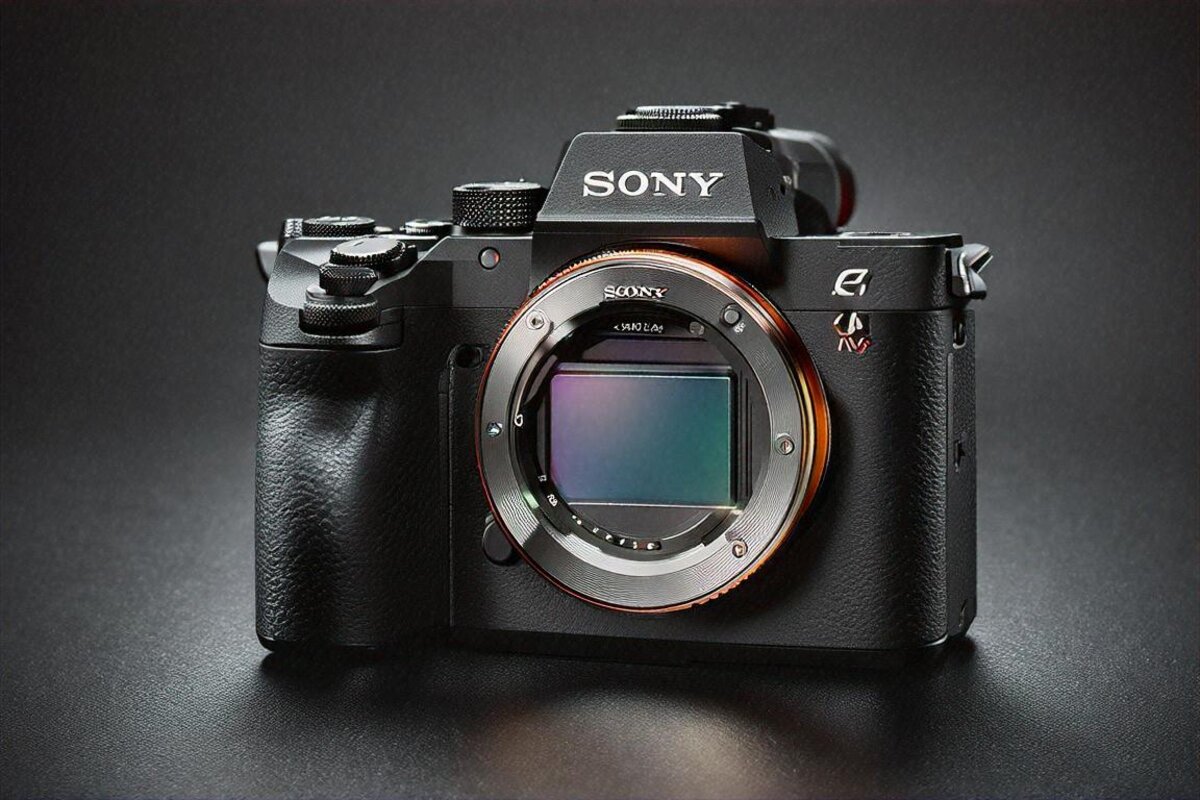
Three years into shooting Sony, I’ve turned into the kind of person who checks firmware notes before coffee. Started on an a6400, jumped to the a7 III, never looked back. So when the A7 IV showed up at my door — body only, no kit lens, ₹1,89,990 on Amazon India — I didn’t get butterflies. Just a low hum of curiosity. Had Sony actually patched the stuff that annoyed me about the III, or was this another tick-tock upgrade dressed up to empty wallets?
Four months on, I’ve got an answer. It’s complicated. Mostly good, though.
First Impressions and Build
It’s heavier than the a7 III. Barely — maybe 20-odd grams — but handhold a 70-200mm f/2.8 GM for two hours at an outdoor wedding in Jaipur and every gram files a complaint. Sony added that bulk on purpose, I think. The body feels sturdier. The grip’s deeper and chunkier, with a texture that doesn’t go slick when your palms sweat. And they will. A March wedding in India isn’t an air-conditioned event.
Weather sealing’s better. There’s no official IP rating, which bugs me, but I shot through a surprise downpour in Goa with no rain cover and the camera just got on with it. Dust resistance seems improved too. A full day at Pushkar — camels, sand, general mayhem — and a quick wipe sorted it. No grit in the dials. No sticky buttons.
The rear screen finally tilts and flips. Full vari-angle, the sort of thing Canon’s been putting on its mirrorless bodies for ages. To the Sony holdouts who swore the old tilt-only screen was fine: I was one of you, and I was wrong. Shooting low at the street markets in Old Delhi, flipping the screen out while the camera hangs at my hip, framing vertical video for reels — the vari-angle changes how you move with this thing. It slows you down in the right way. You compose more carefully because you can finally see what you’re doing from an awkward angle.
The button layout cribs from the a7S III and a1. There’s a dedicated photo/video/S&Q switch on the back, which sounds trivial until you count the times you’ve dug through menus mid-shoot to jump from stills to 4K. Saved me thirty seconds at every event, probably. Across a five-hour wedding that stacks up. Custom buttons everywhere. I put Eye AF toggle on C1, my go-to picture profile on C2, focus magnifier on C3, and the muscle memory locked in within a week.
One thing that might rattle people switching brands: the menu. Sony rebuilt it for the a7 IV, and it’s genuinely better than the old nested mess — touch-enabled, tabbed, with search. But “better than Sony’s old menus” is a floor, not a ceiling. Canon’s is still more intuitive. So’s Nikon’s. Sony’s reached “acceptable.” I’ll take it.
The 33 Megapixel Sensor
Now we get to the interesting part.
Sony pushed resolution from 24.2MP on the a7 III to 33MP. On paper, a modest bump. In the field, the difference turns up in ways I didn’t see coming. Crop latitude’s the big one. At 33MP I can punch into a frame by 30-40% and still hand over a file that prints beautifully at A3. Wedding shooters will love that. So will wildlife folks who can’t always close the distance, and street photographers who frame loose and crop later.
Dynamic range sits around 15 stops, give or take depending on who’s measuring and how. What I actually care about: can I claw back blown highlights in a brutal scene and lift shadows without the file dissolving into noise? Yes. Easily. I shot a reception at a Delhi farmhouse where the decorator had pointed roughly forty thousand fairy lights straight at the mandap and left the guest seating in near-dark. Exposed for the highlights, pulled shadows up three stops in Lightroom, and it held clean. A little luminance noise in the deepest shadows at ISO 3200, nothing destructive. Nothing a pixel-peeping client would catch in a delivered album.
Low light’s where the a7 III’s sensor started showing its years, and the a7 IV doesn’t sprint ahead the way I’d hoped. ISO 6400 stays very usable. ISO 12800 brings visible grain but still works for event shooting where nothing’s getting blown up past screen size. Past that, you’re in emergency-only land. The a7S III still beats this camera in the dark, which is expected — different sensor, different job. Against Canon’s R6 Mark II at a similar price, I’d call it roughly even. Maybe a hair behind on shadow noise at the extreme ISOs.
Color science is worth a word. Sony’s caught flak for years over clinical, almost sterile files — skin tones especially, that waxy, faintly yellow cast every Sony shooter knows. The a7 IV walks that back. Skin leans warmer, more natural. I wouldn’t claim Canon-level warmth (Canon still owns the skin-tone fight, and I don’t think that’s a hot take), but the gap’s closed enough that I’ve stopped slapping a custom color profile on every portrait. Auto white balance copes with mixed lighting better too. Tungsten-plus-daylight at Indian weddings used to demand manual WB every single time. Now auto gets it right maybe 70% of the time. Not perfect. But real progress.
Autofocus — The Real Story
Sony’s autofocus has led the field for a few generations, and the a7 IV keeps the streak going. 759 phase-detection points across roughly 94% of the frame. Real-time tracking that grabs a subject and won’t let go. Eye AF for humans, animals, and birds.
Let me get specific. Human Eye AF is spectacular. I shot a dancer performing Bharatanatyam at a cultural event in Chennai — quick movements, lighting lurching about, the subject flipping between sharp profile turns and full face. The a7 IV held focus on the near eye in about 85-90% of frames at 10fps continuous. That’s with an 85mm f/1.4 GM wide open, so depth of field was razor-thin. Miss by a centimeter and the whole shot’s soft. It rarely missed.
Animal Eye AF is good, not bulletproof. I tried it on my neighbor’s German Shepherd — a dog that physically cannot hold still — and tracking stuck well in decent light. Drop under about 200 lux and the camera hunts more. Bird Eye AF is the weakest of the three, in my hands. Small birds at distance, particularly against busy foliage, throw it off. I’d put bird-eye detection at maybe 60-65%, which isn’t terrible, but committed bird shooters should look at the a1 or a9 III instead.
AF speed leans hard on the lens. Native Sony G Master glass? Near-instant. Old A-mount lenses on an adapter? Visibly slower. Third-party options like Tamron’s 28-75mm f/2.8 perform well but sometimes trail native glass when tracking erratic motion. If you’re buying this body, budget for at least one good native lens. It’s only as quick as the glass up front.
One AF feature I figured I’d ignore but ended up leaning on: Focus Map. It’s a live overlay that color-codes depth of field — red for in front of focus, blue for behind. For product and macro work it’s phenomenal. I shot a run of miniature figurines for a client’s e-commerce store and Focus Map let me nail the focus plane without chimping after every frame. Small feature. Massive time-saver.
Video Capabilities
4K at 60fps. 10-bit 4:2:2 internal. S-Log3 and S-Cinetone profiles. On paper the a7 IV is a genuinely capable hybrid for video, and in practice it mostly makes good on that.
S-Cinetone is the standout for me. It’s lifted from Sony’s cinema line — the FX3, FX6 — and it hands you this lovely, slightly desaturated look with smooth skin tones straight off the card. For wedding videographers and creators who’d rather not lose hours to grading, S-Cinetone is a gift. I shot a whole reel at a cafe in Koramangala, Bengaluru — natural window light, no extra lamps — and the footage looked polished with zero grading. A nudge of exposure in DaVinci Resolve and it was ready to ship.
4K 60fps does come with a crop, mind you. About 1.5x, which is a lot. Your 24mm effectively turns into a 36mm. Wide establishing shots at 4K60 need an ultra-wide. At 4K 30fps the crop vanishes — full sensor readout, gorgeous detail, no tax. Most of my work lives at 4K30 for exactly that reason. The 60fps mode’s there for slow-mo and specific moments, not the daily grind.
Rolling shutter shows up but it’s not awful. Fast pans wobble a bit. Quick whip-pans go to jelly. This isn’t a global shutter camera (that’s the a9 III’s turf), so you work around it. Slower, deliberate moves look cinematic. Handheld walking shots with the in-body stabilization on — IBIS is rated for 5.5 stops — come out surprisingly steady. I wouldn’t pit it against a gimbal. But for casual run-and-gun, it holds up.
Recording limits: none. It’ll roll until the card fills or the battery quits. Heat shutdowns? In my testing I ran 4K30 for 90 minutes straight in a room at about 30 degrees Celsius and it never overheated. 4K60 asks more — I hit a thermal warning around 35 minutes when it was 34 degrees ambient, though it didn’t actually cut out. For Indian summers, especially shooting outdoors with no shade, 4K60 will push the camera’s patience. Pack a small battery-powered fan if you’re planning long high-frame-rate days.
Audio? There’s a 3.5mm mic input and a headphone jack, both behaving as you’d expect. The built-in mics are bad. Don’t deliver anything recorded on them. Grab a Rode VideoMicro or similar. Even a ₹2,000 lav will trounce what’s onboard.
Battery and Day-to-Day Realities
The NP-FZ100 is one of Sony’s smarter calls. It’s the same cell across most of their full-frame lineup, so if you’re already in the system, you’ve likely got spares lying around. CIPA rates the a7 IV at about 580 shots through the viewfinder, around 610 on the rear screen. My real numbers came in lower — roughly 450-500 with a photo-and-video mix, GPS off, Wi-Fi off, screen at medium.
Sounds underwhelming, but context counts. I shoot in bursts at events. AF-C tracking running constantly. Plenty of chimping. All of that empties the cell faster than CIPA’s tidy lab routine. Two batteries carry me through a full 8-hour wedding with about 15% left on the second. Three would wipe out any anxiety entirely.
USB-C charging works with the camera off. You can top up from a power bank between sessions, which genuinely helps on long days. Empty to full over USB-C is roughly 2.5 hours. Not quick, but fine if you plan around it.
Card slots: one CFexpress Type A, one standard SD UHS-II. I run CFexpress in Slot 1 for raw and spill over to SD in Slot 2. Write speeds on CFexpress are blistering — the buffer clears in under two seconds after a full 10fps burst. SD’s noticeably slower to clear the buffer but perfectly happy with video and casual shooting.
Here’s a running list of the smaller stuff that shaped my daily experience, because reviews that skip the mundane bits aren’t much use:
- The EVF is 3.69 million dots, OLED, 120fps refresh. Sharp, bright, with minimal lag. Noticeably better than the a7 III’s viewfinder.
- Start-up time is roughly one second. Fast enough that you won’t miss a moment if the camera was sleeping.
- The shutter sound is quieter than previous generations. Electronic shutter is fully silent, which I used exclusively during a classical music concert recording.
- Wi-Fi transfer via Sony’s Imaging Edge app is still mediocre. The app crashes on my Pixel 8, works fine on my old Samsung. Your mileage may vary wildly.
- The body cap and included strap are cheap. Budget ₹1,500-2,000 for a decent Peak Design strap or equivalent.
- No charger in the box for the Indian market variant I received. Just a USB-C cable. You need your own adapter or a separate charger for the NP-FZ100.
Who Is This Camera Actually For?
Wedding photographers. That’s the first and most obvious one. Indian wedding work is its own animal — twelve-hour days, lighting that shifts every twenty minutes, subjects who won’t pose, uncles who plant themselves in your shot, and a client wanting stills and video by Tuesday. The a7 IV takes that load without grumbling. Fast AF, a good buffer, reliable battery with spares, and image quality that survives the fussiest Lightroom edits.
Content creators needing one body for stills and video. If you’re shooting product photos for your e-commerce brand by day and filming YouTube by night, a single camera that does both well saves you buying a dedicated video rig. S-Cinetone alone makes the hybrid path worth it.
Enthusiasts moving up from APS-C Sony bodies. If you’ve been on an a6000-series camera and gathered a few E-mount lenses, the a7 IV is the natural full-frame next step. Your lenses work (APS-C glass crops the sensor, but it mounts and functions). Your accessories work. Your workflow doesn’t change. Just better files.
Outdoor and travel shooters who don’t need monster resolution. If 33MP covers your work — and for most people it does — this camera turns out beautiful files with enough range for golden-hour drama and harsh midday Indian sun alike. The weather sealing builds confidence when you’re hiking the Sahyadris through monsoon or shooting Spiti Valley, where dust finds its way into everything.
Who it’s not for: pro sports shooters (get the a9 III), dedicated low-light video specialists (get the a7S III), and anyone needing more than 33MP for commercial print (get the a7R V). And if you’re on an a7 III and content with it, think hard before upgrading. The gains are real but not dramatic enough to justify ₹1,89,990 when your current body still does the job.
The Indian Market Reality
At ₹1,89,990 body only, the a7 IV lands in an odd spot. It’s not cheap. Body-only means you still need glass, and Sony’s G Master lenses don’t come cheap either. A basic kit — body plus the 28-75mm f/2.8 Tamron — runs close to ₹2,50,000. Add a 70-200mm for events and you’re north of ₹4,00,000 before batteries, cards, and bags.
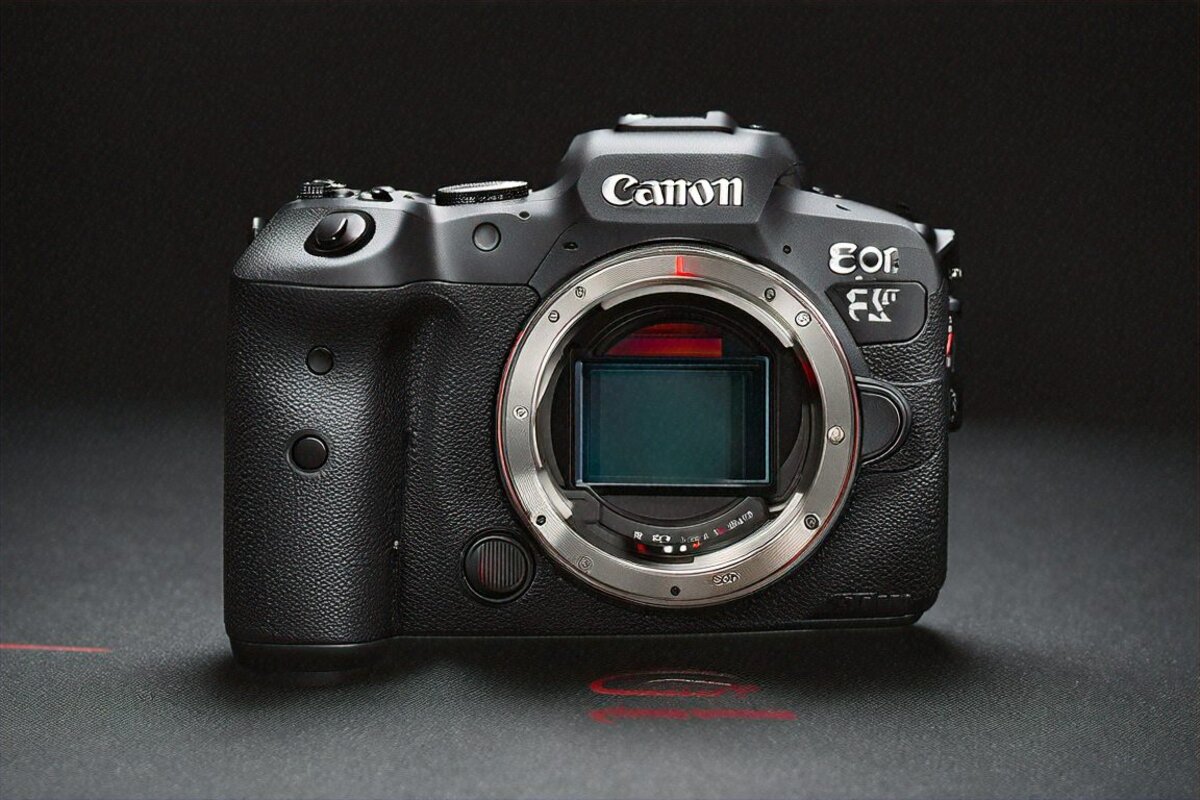
Canon’s EOS R6 Mark II goes head-to-head at roughly the same body-only price, with arguably better video autofocus, nicer skin tones, and a friendlier menu. Nikon’s Z6 III runs a touch cheaper with its own merits. Both are fair alternatives. I’d still lean Sony because the lens ecosystem runs deeper and third-party support (Tamron, Sigma) is stronger on E-mount than on RF or Z right now. But it’s no blowout.
Flipkart and Amazon run periodic discounts, especially around Diwali, Republic Day, and Big Billion Days. I’ve watched the a7 IV body dip near ₹1,65,000 with bank-card offers and exchange bonuses. If you can hold out, those sales shave a real chunk off. Grey-market imports from Dubai are the other route — much cheaper, but you forfeit the India warranty, and Sony India’s service centers won’t touch grey bodies. I wouldn’t gamble it on a ₹1.9 lakh purchase.
Local camera shops in places like Chandni Chowk (Delhi), Lamington Road (Mumbai), and SP Road (Bengaluru) sometimes beat the online bundle deals. Worth a look. I grabbed my FZ100 batteries at a Chandni Chowk shop for ₹3,200 each — about ₹800 under Amazon’s price at the time.
Pros and Cons
Pros:
- 33MP sensor delivers excellent detail with generous cropping headroom
- Real-time Eye AF tracking is class-leading for people and animals
- S-Cinetone picture profile produces gorgeous, grade-ready video
- 4K 60fps and 10-bit 4:2:2 internal recording
- Vari-angle touchscreen — finally
- Dual card slots (CFexpress Type A + SD)
- Reliable NP-FZ100 battery with USB-C charging
- Deep E-mount lens ecosystem with strong third-party support
Cons:
- 1.5x crop at 4K 60fps limits wide-angle video
- No charger included in the box (Indian market)
- Sony’s Imaging Edge mobile app remains unreliable
- Menu system improved but still trails Canon and Nikon
- ₹1,89,990 body-only price demands significant additional lens investment
- Low light performance doesn’t dramatically outpace the older a7 III
The Rating
Rating: 9.2 / 10
Price: ₹1,89,990 (body only)
A photographer friend told me years ago that the best camera is the one that gets out of your way. Four months in, I think that’s exactly what Sony built. It isn’t flashy. It doesn’t have the highest resolution, the fastest burst, or the loudest video specs in its class. What it does is take almost anything you throw at it with a quiet competence that earns your trust over time. You stop thinking about the camera and start thinking about the shot. That might not read like a ringing endorsement, but for working photographers it’s about the highest compliment I’ve got. Whether that trust is worth ₹1,89,990 to you comes down to where you are in your photography — and honestly, I’m still working out where I am in mine.
Pros
- 33MP sensor delivers excellent detail with generous cropping headroom
- Real-time Eye AF tracking is class-leading for people and animals
- S-Cinetone picture profile produces gorgeous, grade-ready video
- 4K 60fps and 10-bit 4:2:2 internal recording
- Vari-angle touchscreen — finally
- Dual card slots (CFexpress Type A + SD)
- Reliable NP-FZ100 battery with USB-C charging
- Deep E-mount lens ecosystem with strong third-party support
Cons
- 1.5x crop at 4K 60fps limits wide-angle video
- No charger included in the box (Indian market)
- Sony's Imaging Edge mobile app remains unreliable
- Menu system improved but still trails Canon and Nikon
- ₹1,89,990 body-only price demands significant additional lens investment
- Low light performance doesn't dramatically outpace the older a7 III
Our Rating: 9.2/10 · Price: ₹1,89,990


0 Comments