
Three of us, four days, and one fairly daft plan: Bangalore to Goa on Royal Enfields in the monsoon shoulder season. We’d done the run before — twice — but this time I wanted it documented properly. Not earthquake-grade phone clips. Real footage, the kind you’d happily rewatch six months on without reaching for the motion-sickness pills. So I picked up the GoPro Hero 13 Black a fortnight before we left, stuck it on my helmet, and let it run for four days straight.
What came back genuinely floored me. Not because the footage was rough — because it was so absurdly smooth it looked like a crew had been trailing us on a stabilised rig. A mate watched the raw clips and went, “bhai, gimbal use kiya kya?” Nope. Just a tiny black box glued to my lid with a sticky mount.
That’s HyperSmooth 7.0 doing things it has no business doing at this size and price. But I’m jumping ahead. Top of the page first.
What GoPro Changed
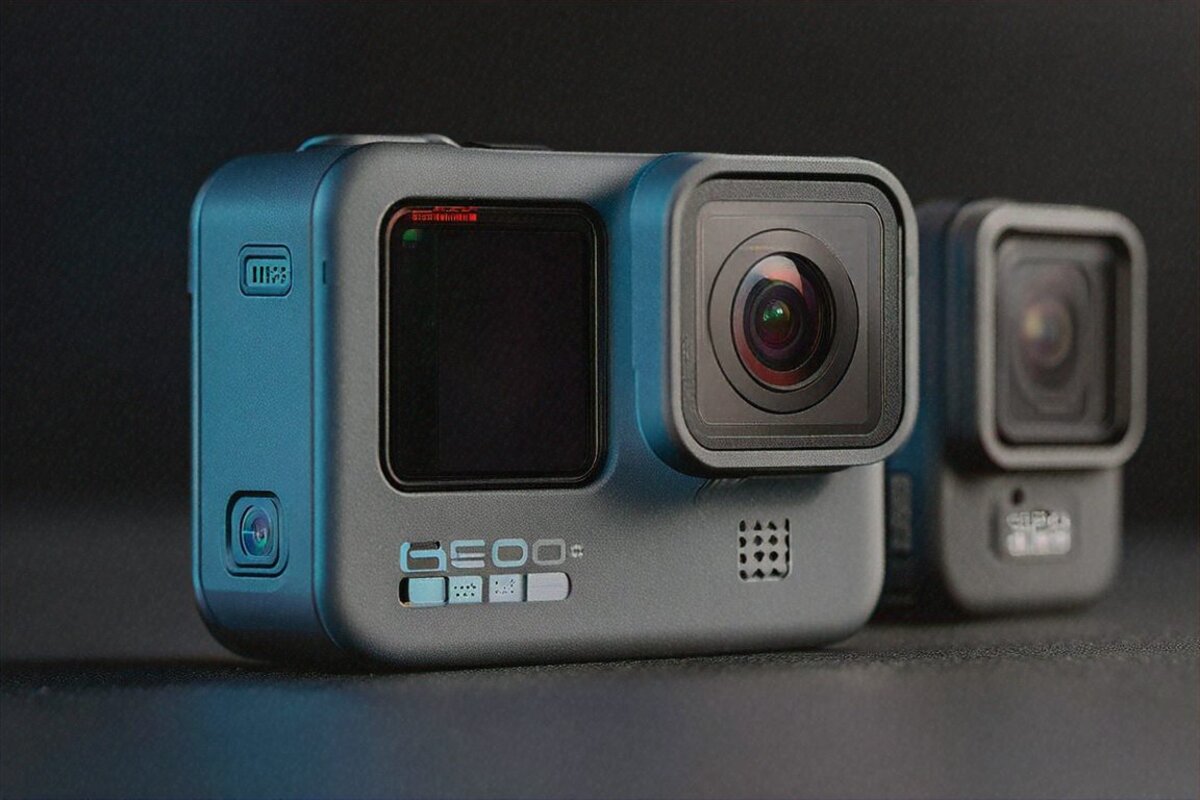
The Hero 13 Black shoots 5.3K at 60fps with HDR and RAW capture. It carries HyperSmooth 7.0 — GoPro’s newest stabilisation, with 360-degree Horizon Lock. There’s a fresh Magnetic Swappable Lens System that clicks on different lenses — ultra wide, max lens, macro — with no tools and no threading. The battery’s 30% bigger than the Hero 12’s, at 1900mAh. Waterproof to 10 metres with no extra housing. And 27MP stills with burst up to 60fps in RAW.
On paper, those gains over the Hero 12 could read as small steps. In the hand? The stabilisation and the magnetic lens system alone make it feel like a proper generational jump.
Design — Small Box, Big Reach
GoPro hasn’t messed much with the basic shape. Still that compact rectangle. Palm-sized. Pocketable. The mounting fingers underneath fit every GoPro mount ever made, which is brilliant, because the aftermarket is enormous — you’ll find a GoPro mount for nearly any situation on Amazon India for a few hundred rupees.
The big physical change sits up front: the magnetic lens port. Where old GoPros had a fixed glass cover, the Hero 13 has a recessed magnetic ring, and lens modules click onto it with a satisfying snap. I was sceptical about magnets holding a lens on through action sports — wouldn’t it just fly off? — but the grip is seriously strong. On the Goa highway at 100-110 km/h, helmet-mounted and straight into the wind, the standard lens never shifted. Not once. I tried it again on a borrowed superbike during a track day at the Madras Motor Race Track, same outcome. Rock solid.
The rubberised body shrugs off drops. I dropped the Hero 13 onto asphalt from about waist height at a fuel stop in Hubli. Small scuff on a corner. Camera didn’t even restart. Still going. The rear touchscreen is responsive enough for nudging through settings, reviewing clips, swapping modes. It’s small, and you’ll fumble it with wet fingers or gloves on — but that’s every action camera that’s ever existed.
Video Quality — Where It Earns Its Money
Right, so. 5.3K at 60fps. Here’s why that resolution matters if you make content. At 5.3K you’ve got so many pixels that you can crop into a shot hard for different social formats and still keep it clean. Shot a wide scenic? Crop it vertical for a Reel and there’s plenty left. Want to punch into a detail — a road sign, a temple, a friend’s reaction — and it still holds up at 1080p out. That flexibility is worth more than the resolution number on its own suggests.
HyperSmooth 7.0, though. That’s the headline. I’ve used action cameras for years — old GoPros, the DJI Osmo Action, Insta360. This is another level. The Goa run threw some genuinely awful road surfaces at us. The Yellapur-to-Karwar stretch has potholes you could lose a small dog in. On the Hero 12 I’d have come away with jittery, bouncing footage. On the Hero 13? Silk. It’s almost eerie how steady it looks when you know how brutal the actual ride was.
The 360-degree Horizon Lock is the other headline. Even if the camera spins a full 360 — say you’re mountain biking and you go over the bars (don’t ask) — the footage stays level. The horizon holds. It’s like a gyro-stabilised gimbal living inside the software. For handlebar mounts where the bike leans into corners, it’s worth its weight in gold. All my cornering footage from Goa has the horizon dead level while the bike tilts under it. Looks properly cinematic.
Slow motion’s worth flagging too. 4K at 120fps and 1080p at 240fps gives you serious slow-mo. I shot waves breaking at Palolem Beach at 1080p 240fps and the slowed footage is beautiful — droplets hung in the air, foam forming and melting away. That used to mean a dedicated slow-motion camera. Now a box the size of a matchbox handles it.
Low light isn’t its strong suit. It’s an action camera with a tiny sensor — physics is physics. But GoPro’s nudged the night performance up over past generations. Footage from our evening ride back after dinner in Panjim was usable, if a touch noisy. Street lights, headlights, neon all looked fine. Deep shadows turned to grain. That’s expected. Shoot mostly in good light — outdoor sport, beach, daytime riding — and you’ll rarely be let down.
Photography — Better Than You’d Guess
I’ll admit I don’t buy a GoPro for stills. It’s a video tool first. But the 27MP sensor does a surprisingly tidy job when you want a photo. Wide-angle scenery with the ultra-wide lens has real scope and depth. Colours come out punchy and contrasty in a way that plays well on social with barely any editing.
Burst mode at 60fps in RAW is genuinely handy for action stills. On the ride I rattled off bursts of my friends crossing a water section near Dandeli. Out of a 60-frame burst, maybe 15-20 frames caught the splash perfectly timed. Plucking that one ideal frame out of a burst beats trying to nail a single shutter press every time.
Night Photo mode copes reasonably with camping and astro situations. I shot some night-sky frames from our campsite near Karwar, and while they’re no DSLR, the Milky Way showed up faintly with a long enough exposure. Good enough for Instagram, which is all most people need.
Live Burst grabs 1.5 seconds before and after each shot, which sounds gimmicky but actually helps when you’re chasing a precise moment in action — the peak of a jump, the exact break of a wave. Saved me a couple of times when my timing was a beat off.
Battery and the Practical Stuff
The 30% bigger battery — the 1900mAh Enduro — gives you roughly 80 minutes of continuous recording at 5.3K 60fps. Is that a lot? Depends how you look at it. For an action camera running flat-out at the top resolution, it’s actually decent. The Hero 12 managed around 60 at the same settings, so the gain is real.
In practice you’re rarely shooting 80 minutes straight unless it’s a time-lapse. On the Goa ride I recorded in 5-10 minute bursts — the interesting stretches, the scenic bits, the sketchy overtakes. One battery comfortably lasted a full morning of on-off shooting. I carried three for the four-day trip and that was more than enough, rotating them through my pocket while the flat ones topped up off a USB-C charger in the tank bag.
The Enduro deserves a specific mention for Indian users heading into cold regions. Shooting in Himachal, Uttarakhand or Ladakh — places where it drops below freezing — the Enduro holds performance far better than standard lithium cells. Cold murders normal battery chemistry. The Enduro’s built for it. I haven’t tested it in extreme cold myself, but GoPro’s claims line up well with what the Ladakh and Spiti shooters I follow online report.
The Magnetic Lens System
This earns its own section, because it changes how you use the camera. Old GoPros gave you one lens — the angle you got was the angle you got. Now there’s choice. The standard lens covers most situations. The Ultra Wide is incredible for POV — helmet, chest mount, anything where you want that immersive wide feel. The Max Lens Mod goes wider still, stabilised. And the Macro lens turns the Hero 13 into a close-up camera for detail — food, insects, texture, whatever.
Swapping takes two seconds, literally. Pull the current one off, the magnet releases, click the new one on. No screwing, no threading, no fretting about cross-threading or dust sneaking in. On the ride I’d swap from Ultra Wide on the helmet to standard for handheld shots at rest stops. Quick, painless, never lost a moment to a lens change.
Connectivity and Software
The GoPro Quik app links over Wi-Fi 6 or Bluetooth 5.2. Transfers over Wi-Fi 6 are noticeably quicker than older GoPros — a 2-minute 5.3K clip moves in maybe 45 seconds to a minute, not the several minutes it used to take. Quik’s auto-edit is surprisingly good — it picks highlights, cuts them to music, and spits out a shareable reel in about thirty seconds. It won’t replace proper editing for serious creators, but for quick Instagram stories? Spot on.
GoPro’s cloud subscription backs footage up automatically when the camera’s charging and on Wi-Fi. It’s a paid thing — around Rs. 500/month if I remember right — which stacks an ongoing cost on top of the camera price. Worth it if you shoot a lot and want cloud backup. Skip it if you’re disciplined about pulling footage onto your computer.
USB-C handles direct transfer to a computer and powers the camera externally for long time-lapses. GPS geotagging embeds location automatically. Voice control starts and stops recording hands-free — “GoPro start recording” — which is a lifesaver with the camera helmet-mounted and your hands on the bars.
Specifications
| Specification | Details |
|---|---|
| Video | 5.3K60, 4K120, 1080p240 |
| Photo | 27MP with RAW |
| Stabilization | HyperSmooth 7.0 + 360-degree Horizon Lock |
| Waterproof | 10 metres without housing |
| Battery | 1900mAh Enduro (~80 min at 5.3K) |
| Lens System | Magnetic Swappable |
| Weight | 154g with battery |
Pros
- HyperSmooth 7.0 produces footage so smooth it looks gimbal-stabilized
- 5.3K60 gives you enormous cropping flexibility for multi-platform content
- Magnetic lens swap is fast, reliable, and genuinely changes how you shoot
- 30% more battery than the Hero 12 makes a practical difference
- 10 metres waterproof without any housing — just grab and go
Cons
- Rs. 44,990 is a lot for a tiny action camera
- 80 minutes at 5.3K60 means you’ll be swapping batteries on long shoot days
- GoPro cloud subscription is an annoying recurring cost on top of a premium camera
- No optical zoom — it’s digital crop only
Accessories and the Modular Ecosystem
One thing I really value about GoPro is the accessory ecosystem that’s grown over a decade. There’s a mount for nearly anything — helmets, chest straps, suction cups for a car dash, handlebar clamps, wrist mounts, even dog rigs if you want a walk from your pet’s point of view. Third-party options on Amazon India start at Rs. 200-300 for the basics. The official GoPro mounts cost more but are built to last.
The Media Mod is worth a mention for serious creators. It bolts on a directional mic, HDMI out, and an extra USB-C port in a cage-style housing. The built-in mic on the Hero 13 is okay for action footage — wind noise is handled reasonably — but the Media Mod lifts it to another tier for vlogging or anything where voice clarity counts. There’s also a Display Mod that adds a front-facing flip screen for vlogging and self-framing, though I’d argue Quik’s live preview on your phone does the same job for most people.
Waterproofing at 10 metres with no housing means snorkelling, swimming, rain — no drama. For deeper water sports or scuba, GoPro sells a housing rated to 60 metres. During the monsoon riding on Goa, the Hero 13 sat on my helmet getting absolutely soaked for hours and never missed a beat.
Against the Competition
The DJI Osmo Action 5 is the main rival. Cheaper, with a decent stabilisation system and a better front screen for vlogging. But HyperSmooth 7.0 beats DJI’s RockSteady noticeably in my side-by-side, especially in high-vibration scenarios like motorcycle riding. The magnetic lens system is also something DJI doesn’t do. If stabilisation tops your list, the GoPro wins.
The Insta360 Ace Pro 2 is another contender, with a larger 1/1.3-inch sensor that does better in low light. If you shoot a lot in dim conditions — indoor sport, evening stuff — the Insta360 might suit you more. For outdoor daytime action, the GoPro’s stabilisation and lens system give it the edge.
Price in India
The GoPro Hero 13 Black is priced at Rs. 44,990 in India. Available on GoPro India’s website, Amazon India, and camera retailers like Flipkart. The extra lens modules are sold separately — the Ultra Wide and Max Lens Mod run around Rs. 5,000-8,000 each. Build those into your budget if you want the full system.
My Recommendation — and a Specific One
If you’re reading this with a Goa bike trip on the calendar, or a Ladakh ride, or a trek to Hampta Pass, or a surf trip to Varkala — buy this camera. Don’t overthink it. Don’t wait for the next one. The Hero 13 Black right now is so good at its job that you’ll kick yourself for every adventure you only caught on a phone. I know because I’ve done dozens of trips on phone footage alone, and looking back at those clips next to what the Hero 13 produced on this one Goa ride… it isn’t even the same universe.
Specifically: helmet for riding, chest strap for trekking, handlebar clamp for cycling. Set it to 5.3K 30fps for maximum quality or 4K 60fps for that buttery look. Turn on Horizon Lock. Hit record. Forget it’s there. Transfer the footage when you get home and you’ll have material that reads like a travel documentary, not a shaky phone clip.
That Goa ride from last month? I cut the footage into a twelve-minute video. My friends have rewatched it maybe fifteen times each. My mom put it on the family WhatsApp group. A cousin in the US messaged asking for “the name of the camera company” because he wants the same for his Yosemite trip. At Rs. 44,990 it isn’t cheap. But for the memories it captures — properly, beautifully, the way they deserve — I reckon it’s worth every paisa.
Full Specifications
| Video | 5.3K60 4K120 1080p240 |
|---|---|
| Photo | 27MP RAW |
| Stabilisation | HyperSmooth 7.0 |
| Waterproof | 10m no housing |
| Battery | 1900mAh ~80min 5.3K |
| Lens | Magnetic Swappable |
| Weight | 154g |
Pros
- HyperSmooth 7.0 best stabilisation
- 5.3K60 video
- Magnetic Swappable Lens
- 30% larger battery
- 10m waterproof
Cons
- Expensive ₹44,990
- 80-minute battery high settings
- Cloud subscription ongoing cost
- No optical zoom
Our Rating: 8.6/10 · Price: ₹44,990


GoPro Hero 13 Black is the ultimate action camera. I shoot surfing content and the new stabilisation is mind-blowing. The 5.3K120fps slo-mo footage looks incredible.