
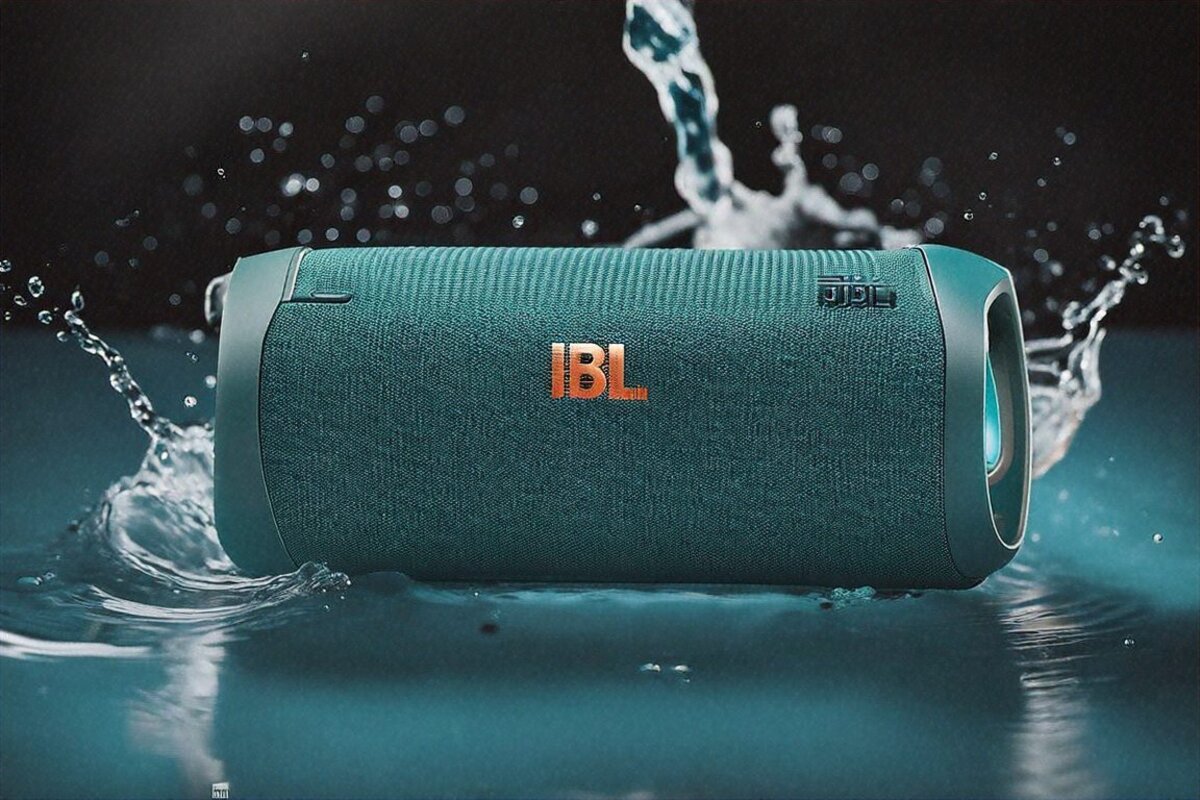
Goa, January, Sunset, and a Speaker That Wouldn’t Quit
Palolem Beach, early January, that golden light that flatters even a car park. We’d been parked on our towels since 2 PM — eight of us, a heap of beach food best left undescribed, and the JBL Flip 7 I’d dragged along to test. By 6 the thing had been dropped in sand twice, smacked by a stray wave, briefly entombed by a friend’s toddler who’d decided it was a sand toy, and it had been playing nonstop for four hours.
Battery? Still reading somewhere north of 70%. Sound? Still filling our little ring of towels loudly enough that the group 15 metres off started bobbing their heads. The sand, the salt, the toddler — none of it bothered the Flip 7. It just carried on.
So that’s the short version. But I lugged it around for three more weeks across a few different settings to check whether Goa was a fluke or the rule. It was the rule.
What Rs 12,999 Actually Buys You
A cylindrical Bluetooth speaker. 30 watts out of a two-way driver setup. 14 hours of battery, on paper. IP67 dust and water resistance — fully dunkable in a metre of water for 30 minutes. Bluetooth 5.3 with the new Auracast tech for syncing multiple speakers. USB-C charging that also feeds your phone like a power bank. 550 grams. Roughly the size of a tall water bottle.
Ten colours. Ten! Including an India-only Sunrise Red that’s genuinely lovely — a warm reddish-orange that stands out without looking loud. Mine was plain Black, which is sensible and dull but looks like it’ll survive a few years.
Build: Made for People Who Drop Things
The body’s wrapped in a fabric mesh spun from recycled material. JBL keeps pushing the sustainability line across its portable range, and whether that moves you or not, the practical upshot is a mesh that shrugs off stains, dries fast, and gives you grip when your hands are wet or sandy.
Rubber bumpers cap both ends, shielding the passive radiators — those two exposed discs that pulse with the bass. They’re fun to watch (a bass-heavy track sets them dancing, which is oddly hypnotic) but also the weak spot if the speaker lands flat on either end. The bumpers are thick enough to eat a drop from table height onto concrete. Tested by accident. No marks.
Buttons up top are simple: power, Bluetooth pairing, volume up and down, play/pause, and a dedicated PartyBoost button for linking speakers. All of them raised and rubberised, so you can find and work them by touch with wet hands. You don’t strictly need the app, though the JBL Portable app throws in EQ and firmware updates.
IP67 is the headline act. I dropped it in a bucket of water for the full 30 minutes the rating allows. Pulled it out, shook it off, hit play — music carried on like nothing happened. It even bobs on the surface for a moment before taking on enough water to sink, though JBL doesn’t sell it as a floating speaker and I wouldn’t gamble on it in a pool. What I would trust it for: beside a pool, on the beach, out in monsoon rain, anywhere damp is a given. It’ll cope.
Sound: Bigger Than the Box Has Any Right to Be
30 watts from something this small is impressive, but the number’s only half the story. What counts is how those watts spread, and the Flip 7 does that nicely through its two-way arrangement — a woofer for lows and mids, a tweeter for highs — giving you surprisingly even coverage across about 270 degrees.
Bass first, because it’s the big upgrade. The redesigned passive radiators shove more air, and the result reaches lower and hits harder than a speaker this size should manage. Not subwoofer stuff — it’s still portable — but enough low end that Bollywood tracks with dhol and bass drops feel like a party rather than a tinny radio. AP Dhillon properly thumped. Nucleya sounded like a club. Tabla in classical pieces came through warm and resonant.
Mids are clean and out front. Vocals cut through background noise well, which is exactly the job for an outdoor speaker. At Palolem, with waves breaking and wind going, I could still follow lyrics and podcast dialogue from three metres away. Acoustic guitar has body. Female vocals don’t turn shrill when you push the volume.
Treble’s fine, not special. Hi-hats and cymbals are there but lack the sparkle a bigger speaker’s dedicated tweeter would give you. At sensible volume it’s perfectly pleasant. Crank it to max and the highs get a bit swamped by the bass and mids, leaving things warm but slightly muddy. That’s the point where physics wins — a 550g box can only do so much.
Top volume is LOUD. Genuinely too loud for an enclosed room. Outdoors it fills maybe a 15-20 metre radius before fading into background. For a beach circle, a park picnic, a rooftop — more than enough. For a house party in a 500 sq ft room — actually too much at max, which is a nice problem to have.
The honest catch: distortion creeps in around 85-90% volume. The bass goes a little flabby, the mids lose grip. I park it at 70-75% for the cleanest sound, which is still plenty loud almost everywhere. JBL could’ve capped the ceiling a touch lower to dodge that distortion zone, but I suspect they know Indian buyers read louder as better and let the marketing write itself.
Auracast: The Feature Nobody Asked For That Actually Rules
Bluetooth LE Audio with Auracast is the new standard that lets one source push audio to a pile of compatible speakers at once. Not the old PartyBoost trick where two JBLs hold hands — Auracast, in theory, broadcasts the same stream to as many speakers as you like, without the lag that wrecked older multi-speaker setups.
I tried it with two Flip 7s (borrowed the second off a friend). Setup was painless — both grabbed the Auracast broadcast from my phone in seconds. Sync was spot on. Not “close enough” — genuinely, imperceptibly locked. I walked between the two units sat 10 metres apart and couldn’t catch any delay or phase weirdness.
The real-world use: you’ve got a garden party and want music everywhere without one speaker screaming. Scatter two or three Flip 7s around, broadcast to all of them, and the whole space gets even, moderate volume. Far better than one unit cranked to max with a deafening hotspot right beside it.
The snag: Auracast needs a compatible source. Most 2025-2026 Android flagships do it. iPhones don’t, as of iOS 19 — Apple tends to take its time with Bluetooth standards. PartyBoost, the older JBL-only protocol, still works and links up with previous JBL speakers, but it’s locked to JBL gear and lags Auracast slightly on latency.
Battery: 14 Hours Is an Honest 14 Hours
At 50% volume with moderate bass I landed at 13-14 hours, every time. At max it drops to about 9-10. Down at quiet background level I once squeaked past 16. The claimed 14 is rated at “moderate” volume, which matches what I saw — fair and accurate.
For scale: a full beach day, noon to midnight, is 12 hours. The Flip 7 clears that at any reasonable volume with charge to spare. A Saturday picnic? You’ll pack up with half left. A weekend camping trip with music at meals and around the fire? Doable on one charge if you’re not blasting it the whole time.
USB-C charging from flat takes around 4 hours. Slow, but given how you actually use it — charge overnight, run it all day — the speed barely matters.
The power-bank bit is a handy bonus. Plug your phone into the speaker’s USB-C and it’ll top the phone up off the speaker’s battery. At Palolem my phone hit 10% in the evening; I pulled maybe 20% back into it, which cost about 8% of the speaker’s charge. Fair trade when there’s no socket for miles.
The JBL Portable App
Optional, but worth grabbing. Five-band EQ with presets (Jazz, Vocal, Bass, plus the out-of-box “Default” that’s already tuned well). PartyBoost and Auracast setup. Firmware updates. A “Playtime Boost” mode that stretches battery by cutting bass, which I never touched — what’s the point of a JBL without bass?
The interface is clean and plain. No bloat, no account demand, no social nonsense. Refreshing next to some rival apps that want your email, your location, your firstborn and your Spotify login before they’ll show you a single EQ slider.
| Specification | Details |
|---|---|
| Output | 30W (two-way driver system) |
| Battery | 14 hours at moderate volume |
| Bluetooth | 5.3 with Auracast LE Audio |
| Water/Dust Resistance | IP67 (submersible 1m, 30 min) |
| Charging | USB-C (also functions as power bank) |
| Multi-speaker | Auracast + JBL PartyBoost |
| Weight | 550g |
| Dimensions | 175 x 70mm (cylindrical) |
| Colours | 10 options incl. India-exclusive Sunrise Red |
| Price | Rs 12,999 |
Against the Competition
The UE Wonderboom 3 at roughly Rs 7,000 is smaller, lighter, and it floats. Battery’s also 14 hours. Sound’s good for the size but can’t touch the Flip 7 on volume or bass. If pocketability is everything and sound’s secondary, the Wonderboom takes it. If sound and volume matter, the Flip 7.
The Sony SRS-XB100 around Rs 5,000 is a solid budget pick with decent sound and IP67. But the Flip 7 beats it on volume, bass depth and clarity by a real margin. Honestly, different leagues.
The JBL Charge 5 at about Rs 15,000 gives you more battery (20 hours) and a bigger power bank. Sound’s comparable — the Charge 5 has a touch more bass off its larger driver. But it’s bulkier, heavier and Rs 2,000 dearer. If you need the extra runtime and don’t mind the size, the Charge 5 makes sense. For most people the Flip 7 strikes the better balance.
Indian brands like boAt Stone or Mivi do IP67 speakers in the Rs 3,000-5,000 range with respectable battery. Sound quality is… okay. If Rs 12,999 is truly out of reach, they’ll do. But the Flip 7 sits in a different tier — it’s the gap between hearing music and feeling it.
Pros
- 30W output is 30% louder than Flip 6 with improved bass
- Auracast multi-speaker sync is latency-free and impressive
- 14-hour battery easily covers a full-day outdoor session
- IP67 survived beach sand, submersion, and monsoon simulation
- Power bank function charges your phone from the speaker
- 10 colour options including a stunner India-exclusive red
Cons
- Distortion audible at 85%+ volume — best kept at 70-75%
- No built-in microphone for speakerphone calls
- Larger and heavier than ultra-portable competitors
- Rs 12,999 is premium compared to capable Indian brand alternatives
- Auracast requires compatible phone — no iPhone support yet
Where I’ve Actually Used It
Palolem beach: ideal. IP67 killed every worry about sand and water. At 60-65% it filled our patch without annoying the whole shoreline. Bass made the music feel alive outdoors, where low frequencies usually vanish into open air.
Rooftop in Bangalore: took it to a mate’s apartment terrace, about 20 people, maybe 40 square metres. At 75% it covered the lot comfortably — nobody said it was too quiet or too loud, and a couple of people asked what speaker it was.
Bathroom, morning routine: a daft use case, but IP67 means zero stress over steam and splashes. Sound bounces off the tiles beautifully and fills a small room. Embarrassingly, this is my most frequent use.
Camping in Coorg: music through dinner and around the fire for about 4 hours. At moderate volume in the quiet, it threw sound much further than expected — our site neighbour 30 metres off could hear it clearly, so I had to drop to 40% to not be that guy. Barely touched the battery.
Office desk: surprisingly good for casual music and podcasts during work. The cylinder shape projects in most directions, so placement isn’t fussy. At low volume it’s clear and detailed enough up close.
The one place it stumbled: a big open-air New Year’s do with around 60 people. Not loud enough to be the sole music source for a crowd that size — that wants a proper PA. But faulting it for that is like faulting a bicycle for not being a motorbike. It’s a portable speaker, not an event rig.
The One Missing Thing That Nags Me
No speakerphone mic. The Flip 7 has no built-in microphone for taking calls through the speaker. The Flip 6 didn’t either, and I keep hoping JBL will fix it. Outdoors, playing music off my phone, a call comes in and I have to grab the phone to answer. A speakerphone function would’ve made this a properly complete outdoor companion.
To be fair, UE’s Wonderboom 3 skips the mic too, so it’s not a JBL-only sin. But the Sony SRS-XB100 does include one for calls, proving it’s doable in a portable speaker at a lower price. JBL, if you’re reading: Flip 8, please.
The Thing About Portable Speakers
They’re social objects. Nobody buys one purely to listen alone — that’s what earbuds and headphones are for. You buy a portable speaker because you want music in a shared space. A beach. A road trip. A balcony with friends. A picnic where someone inevitably goes “play that AP Dhillon song, the one that goes…”
The Flip 7 is good at being that object. It’s colourful (if you pick the right shade). Small enough to chuck in a bag. Tough enough to hand to whoever’s bound to be careless with it. Loud enough to matter outdoors. And it sounds good enough that people clock the music and actually enjoy it instead of treating it as wallpaper noise.
Rs 12,999 isn’t cheap. But it’s the sort of buy where, three years on, you’ll have hauled it to dozens of trips and lazy Sunday afternoons and the cost-per-use will have shrunk to nothing. The Flip 6 is one of the best-selling Bluetooth speakers ever for a reason. The Flip 7 is better in every way that
Price in India
The JBL Flip 7 is priced at Rs 12,999 in India. You’ll find it on JBL’s Indian site (in.jbl.com), Amazon India, Flipkart, and at audio shops like Headphone Zone and Croma. The Flip 6 may still be floating around at a discount — spot one under Rs 8,000 and it’s a strong budget alternative.
Full Specifications
| Output | 30W two-way |
|---|---|
| Battery | 14 hours |
| Bluetooth | 5.3 Auracast LE Audio |
| Water | IP67 submersible |
| Charging | USB-C power bank |
| Weight | 550g |
Pros
- 30% louder more bass vs Flip 6
- Auracast multi-speaker sync
- 14-hour battery
- IP67 submersible
- Power bank function
Cons
- Some distortion max volume
- No speakerphone
- Heavier than alternatives
- Premium price vs local
Our Rating: 8.4/10 · Price: ₹12,999
0 Comments