A Wake-Up Call at 34
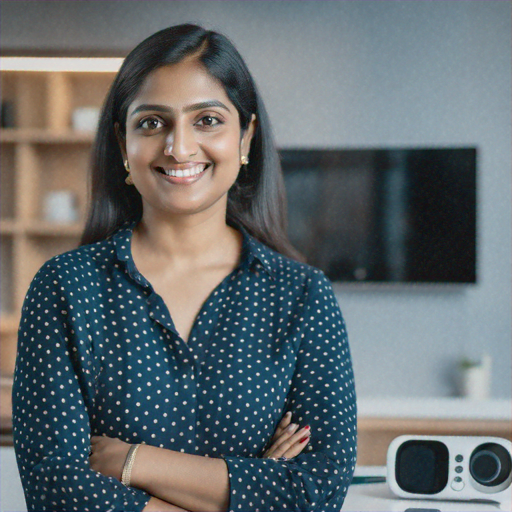
Nobody expects a health scare in their mid-thirties. I certainly didn't. But there I was last November, sitting in a cardiologist's office in Koramangala after a routine health checkup flagged elevated resting heart rate and borderline blood pressure. The doc's advice was predictable — exercise more, stress less, monitor your vitals. What he said next surprised me: "Get a decent smartwatch. Wear it every day. Track the trends."
That conversation is the entire reason I'm writing this review. I bought the Samsung Galaxy Watch Ultra at Rs 44,999 specifically as a health monitoring device. Five weeks later, I've got more data about my body than I've accumulated in the previous 34 years combined. Whether that data is actually helping me is a more complicated question.
The Design That Divides Rooms
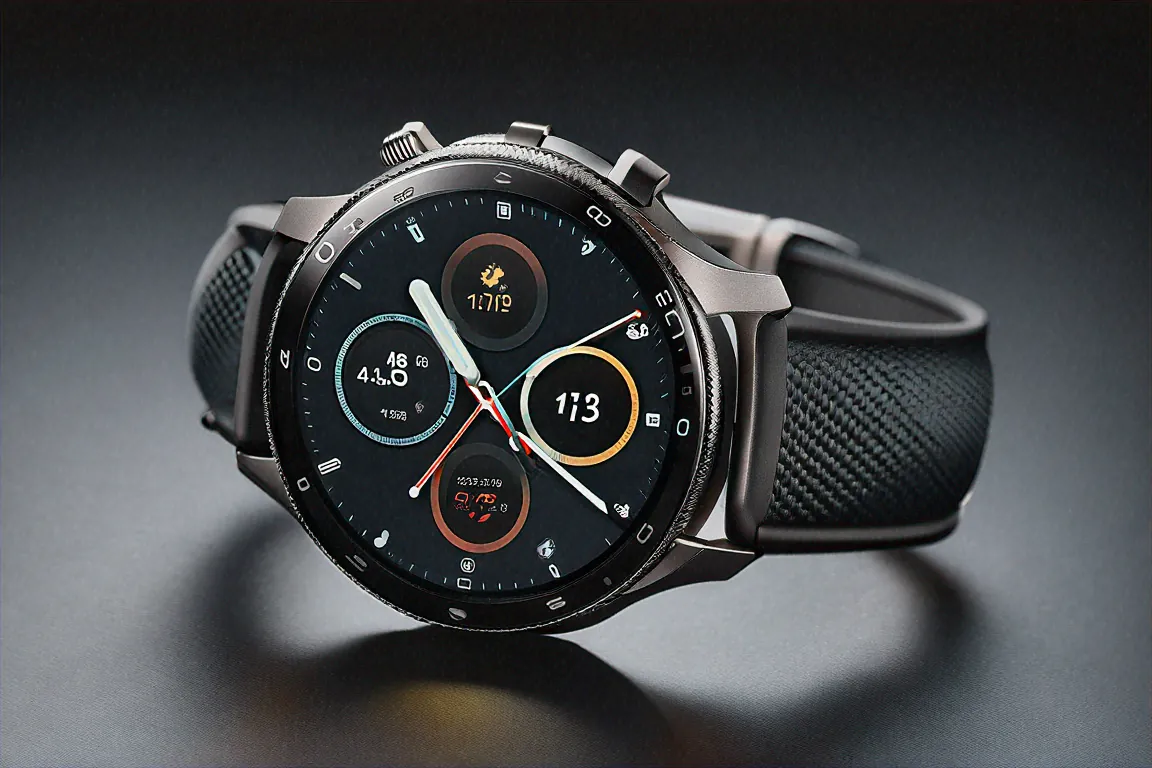
Let's address the elephant immediately. This watch is square. Not rounded-square like an Apple Watch — genuinely, aggressively square. Samsung made a bold call with the 47mm titanium case design, and people either love it or absolutely hate it. There's no middle ground.
I've had colleagues call it "futuristic." My brother called it "ugly." A random uncle at a family function asked if it was a blood pressure monitor. The square shape is polarising in a way that round watches simply aren't, and you should see this thing in person before buying.
That said, the build quality? Impeccable. Titanium frame, sapphire crystal glass, MIL-STD-810H certification. I've worn this through gym sessions, monsoon-like rain in Bangalore, a particularly aggressive game of gully cricket where I dove for a catch. Zero scratches on the display. The titanium has picked up a couple of micro-scuffs that you'd need a magnifying glass to notice.
Two colourways exist: Titanium White and Titanium Grey. I went with Grey, which looks less conspicuous with formal wear. The White version is striking but screams "LOOK AT MY FANCY WATCH" in a way that I personally find a bit much for office settings.
One genuine gripe — the proprietary band connector. Samsung went with a custom attachment system that locks out the massive third-party band market. You're stuck with Samsung's own bands and the handful of licensed third-party options. Given that the Apple Watch Ultra uses a standard-ish lug system and Garmin supports quick-release, this feels unnecessarily restrictive.
That Screen Though
Whatever you think about the square shape, it has one undeniable advantage: screen real estate. The 1.5-inch AMOLED panel with 3,000 nits peak brightness gives you more usable display area than any round watch at the same case size. Data-heavy watch faces with four or five complications? Perfectly readable. Notifications with multiple lines of text? No awkward truncation.
The contextual display thing Samsung's marketing about — where the watch face automatically shifts to show the most relevant info based on time of day and activity — is actually clever. Morning shows sleep score and weather. During a workout, it shifts to heart rate and calories. Late evening, it dims and shows bedtime wind-down info. It took about a week to calibrate properly, but once it did, I stopped manually switching watch faces entirely.
Outdoor visibility at 3,000 nits is excellent. Not quite the Ultra 3's 3,100, but honestly, at that brightness level the difference is theoretical. Both are perfectly readable in direct Indian summer sunlight.
Health Tracking: Where This Watch Earns Its Keep
This is what I bought the watch for, and this is where it delivers. The BioActive Sensor — Samsung's name for their multi-in-one health sensor array — has been notably improved over the Watch 6 generation. Let me break down what actually matters.
Heart rate monitoring is continuous, sampling every few seconds throughout the day. Accuracy against a chest strap during runs was within 2-3 BPM consistently, which is excellent for an optical sensor on a wrist. More importantly for my situation, the resting heart rate trend over five weeks showed a clear downward trajectory as I started exercising regularly. Going from an average of 82 BPM to 74 BPM. My cardiologist was genuinely pleased when I showed him the chart at my follow-up.
Blood oxygen monitoring runs in the background. Useful for sleep, less useful during the day unless you have a specific respiratory concern. The readings are consistent with a fingertip pulse oximeter I keep at home — usually within 1-2% variance.
Body composition analysis via BIA (bioelectrical impedance analysis) is the feature I was most skeptical about and ended up finding most useful. You touch two fingers to the buttons on either side, wait 15 seconds, and get estimates for body fat percentage, skeletal muscle mass, body water percentage, and BMI. Now — these numbers aren't DEXA-scan accurate. My Watch Ultra consistently reads about 2-3% lower on body fat than my gym's InBody machine. But the trend is what matters, and the trend has been reliable. Watching my body fat percentage drop from 28% to 25.4% over five weeks of diet changes has been genuinely motivating.
Skin temperature monitoring tracks nightly fluctuations. Sleep tracking breaks down light sleep, deep sleep, and REM stages. Snoring detection confirmed what my wife has been telling me for years, complete with audio recordings that I could have done without hearing. Samsung Health's sleep coaching — enhanced by Galaxy AI — actually provided actionable suggestions. "Your deep sleep is 40% below optimal. Try reducing screen time 90 minutes before bed and lowering room temperature to 22-24 degrees." I followed the advice. Deep sleep improved. Coincidence? Maybe. But the data made me take it seriously.
Galaxy AI: Marketing Buzzword or Actually Useful?
Samsung's been stamping "Galaxy AI" on everything lately. On this watch, it manifests in a few ways. The sleep coaching I mentioned is AI-driven. Workout recommendations adjust based on your recent activity and recovery metrics. And there's an "Energy Score" each morning that combines sleep quality, activity, and heart rate variability into a single number that's supposed to indicate how ready you are for intense exercise.
Honestly? The Energy Score has been about 70% accurate for me. High score days do correlate with feeling energetic. Low score days after poor sleep do match feeling sluggish. But there've been days I felt great and the score said 45, and days I felt terrible and it said 80. It's a directional indicator, not a diagnostic tool.
The blood glucose monitoring feature exists in marketing materials but isn't available in India yet. Samsung says "select markets" which, for an Indian consumer, basically means "don't count on it." I'd love to test this given my family history of diabetes, but for now it's vaporware in this market.
Battery: Genuinely Impressive
Samsung claims 60 hours. My testing with always-on display OFF, continuous heart rate monitoring, sleep tracking, a 40-minute GPS workout daily, and moderate notification volume: 54 hours. That's comfortably over two full days.
With AOD on, that drops to about 40-42 hours. Still gets you through two full days with careful use, but you'll be anxious on that second evening.
The 10W wireless fast charging is great. Zero to 45% in 30 minutes is enough to get you through a day if you forgot to charge overnight. Full charge takes about 90 minutes. I've settled into a routine of dropping it on the charger during my morning shower and evening wind-down — two 30-minute top-ups keep it perpetually above 50%.
Wear OS 5 and Samsung's One UI Watch
Software experience is layered. Underneath there's Google's Wear OS 5, which gives you access to the Play Store, Google Maps with turn-by-turn on the watch, Google Pay (though UPI isn't supported on-watch yet), and Google Assistant. On top of that sits Samsung's One UI Watch 7, which adds Samsung Health, Samsung Pay, SmartThings integration, and the Galaxy-specific AI features.
The combination works well, mostly. Apps load quickly thanks to the Exynos W1000 — Samsung's first 5-core processor for a watch. Scrolling is smooth. Notifications are well-handled with quick reply options. The rotating digital bezel (touch-based, not physical) is still the most intuitive navigation method on any smartwatch.
Where it gets messy: this watch is optimised for Samsung Galaxy phones. Pair it with a Galaxy S24 or S25 and everything — from call handling to camera remote control to SmartThings smart home management — works flawlessly. Pair it with a non-Samsung Android phone and you lose some features. Pair it with an iPhone and... don't. Seriously, don't.
Full Specifications
| Specification | Details |
|---|---|
| Case | 47mm Titanium, square design |
| Display | 1.5-inch AMOLED, 3,000 nits peak |
| Processor | Exynos W1000 (5-core) |
| Battery Life | Up to 60 hours (claimed) |
| Water Resistance | 10ATM + MIL-STD-810H |
| Charging | 10W wireless |
| Health Sensors | BioActive (HR, SpO2, ECG, BIA, temperature) |
| OS | Wear OS 5 / One UI Watch 7 |
| Compatibility | Android (optimised for Samsung Galaxy) |
| Price | Rs 44,999 |
Fitness Tracking in Practice
Started running three weeks ago on my doctor's advice. Hadn't run since college. The Watch Ultra's running analysis was humbling but useful. It tracks cadence, stride length, ground contact time, and something called "running form index" that basically tells you how inefficient your movement is. My first run scored a 42 out of 100. Ouch.
Three weeks later, I'm at 61. The watch noticed that my cadence was too low and my stride too long, causing excess impact on my knees. The AI coaching nudged me towards shorter, quicker steps. Knee pain I'd been developing after runs has reduced significantly. Whether that's the watch's coaching or just natural adaptation to running, I can't say definitively. But the correlation is strong enough that I trust the data.
GPS accuracy during outdoor runs is good. Not quite dual-frequency L1+L5 like the Apple Watch Ultra 3 or high-end Garmins — Samsung uses standard multi-satellite positioning. In open areas, it's accurate within 3-5 metres. In dense urban environments with tall buildings (looking at you, Whitefield), it drifts occasionally. Acceptable for casual fitness tracking, potentially frustrating for serious runners who obsess over exact splits.
LTE connectivity means I can leave my phone at home during runs and still stream Spotify, receive calls if there's an emergency, and have my GPS track uploaded automatically when I get home. This feature alone has been worth the price premium for me. Running without a phone bouncing around in an armband is liberating.
Pros
- 60-hour battery holds up to around 54 in real use — still excellent
- Galaxy AI health insights are genuinely actionable, not just data dumps
- Titanium build with sapphire glass feels bomb-proof
- BioActive sensor accuracy improved significantly over previous gen
- 10W wireless charging eliminates range anxiety with quick top-ups
- Body composition tracking via BIA is surprisingly motivating
Cons
- Rs 44,999 is steep for a smartwatch, period
- Square design is genuinely love-it-or-hate-it
- Best experience requires Samsung Galaxy phone — others lose features
- Proprietary band connector limits strap options
- Blood glucose monitoring not available in India despite being advertised
Living With It Daily
Five weeks in, this watch has become part of my routine in a way no gadget has before. I check my morning Energy Score before deciding between a run or a rest day. I glance at my real-time heart rate during stressful work calls and force myself to take a breath when it spikes above 100. I review my sleep data every morning and feel a small hit of satisfaction when the deep sleep bar is longer than the previous night.
Has it made me healthier? The data says yes. Resting heart rate down. Body fat percentage down. Sleep quality up. Blood pressure — which I check weekly at a pharmacy — has dropped from borderline to normal range. My cardiologist, at my most recent visit, asked which watch I was wearing. He wrote "Samsung Galaxy Watch Ultra" on his notepad. I imagine his next patient heard about it.
SmartThings integration is a nice bonus I didn't expect to use much. Turns out, controlling my Samsung AC and air purifier from my wrist while lying in bed is the kind of lazy luxury that's hard to give up once you've experienced it. The camera remote — using the watch as a viewfinder and shutter button for your Galaxy phone's camera — is occasionally useful for group photos and tripod shots.
Comparing Notes: Watch Ultra vs the Competition
Against the Apple Watch Ultra 3 at Rs 89,900: Samsung offers roughly 80% of the health tracking capability at half the price. Apple's ECG is more refined, Apple's GPS is more accurate (dual-frequency L1+L5 vs Samsung's standard multi-satellite), and watchOS has a deeper app ecosystem. But Samsung's BIA body composition, Galaxy AI sleep coaching, and the square display's superior data density are genuine advantages. Also, you know, the Samsung actually works with Android phones. The Apple doesn't.
Against the Pixel Watch 3 at Rs 39,999: the Samsung is Rs 5,000 more, which buys you titanium vs aluminium, 54 hours of battery vs 36, and body composition analysis that the Pixel doesn't have. The Pixel wins on software polish and Fitbit integration for health coaching. If battery life matters to you — and it should — the Samsung is the stronger pick.
Against the Amazfit GTR 5 Pro at Rs 19,999: Samsung costs more than double. The Amazfit gets 13 days of battery, which is absurd by comparison. But the Samsung's health sensors are more accurate, the software experience is richer (Wear OS vs Zepp OS), and Galaxy AI coaching provides insights the Amazfit simply can't match. Different products for different priorities.
The Question I Keep Coming Back To
Is a Rs 44,999 smartwatch worth it for health monitoring? Medical-grade wearables like Holter monitors cost more per use and only track one metric. A dedicated fitness tracker like the Fitbit Charge 6 costs Rs 14,999 but has a fraction of the features. The Watch Ultra sits in an uncomfortable middle — too expensive to be impulse-bought, but too feature-rich to dismiss.
For me, the health scare made the decision easy. I needed something that would nag me into better habits, give me data to share with my doctor, and make health tracking so convenient that I'd actually stick with it. Five weeks of consistent daily wear suggests this watch does that.
But I keep wondering: would I have bought this without the doctor's visit? Would I have committed to wearing it every single day, checking the data, adjusting my behaviour based on AI coaching recommendations? Or would it have become another gadget that sits in a drawer after the novelty wears off?
I don't have a clean answer to that. Maybe that's the most honest thing I can say about any health gadget.
What I do know is this: the data became a conversation starter with my doctor that raw symptoms never could. Showing him five weeks of continuous heart rate data, body composition trends, and sleep stage breakdowns gave him a picture of my health between appointments that a twice-yearly blood test never provides. He adjusted my exercise prescription based on the watch data. He told me to stop worrying about one bad night of sleep and focus on the weekly trend instead. The watch became a bridge between my daily life and his clinical expertise, and that bridge has proven genuinely valuable for someone navigating a health scare at 34.
Price in India
The Samsung Galaxy Watch Ultra retails at Rs 44,999. Available through Samsung.com, Amazon India, Flipkart, and Samsung exclusive stores. Occasionally surfaces at Rs 39,999 during Samsung's own sale events.



Comments (0)
Leave a Comment
No comments yet. Be the first to share your thoughts!