
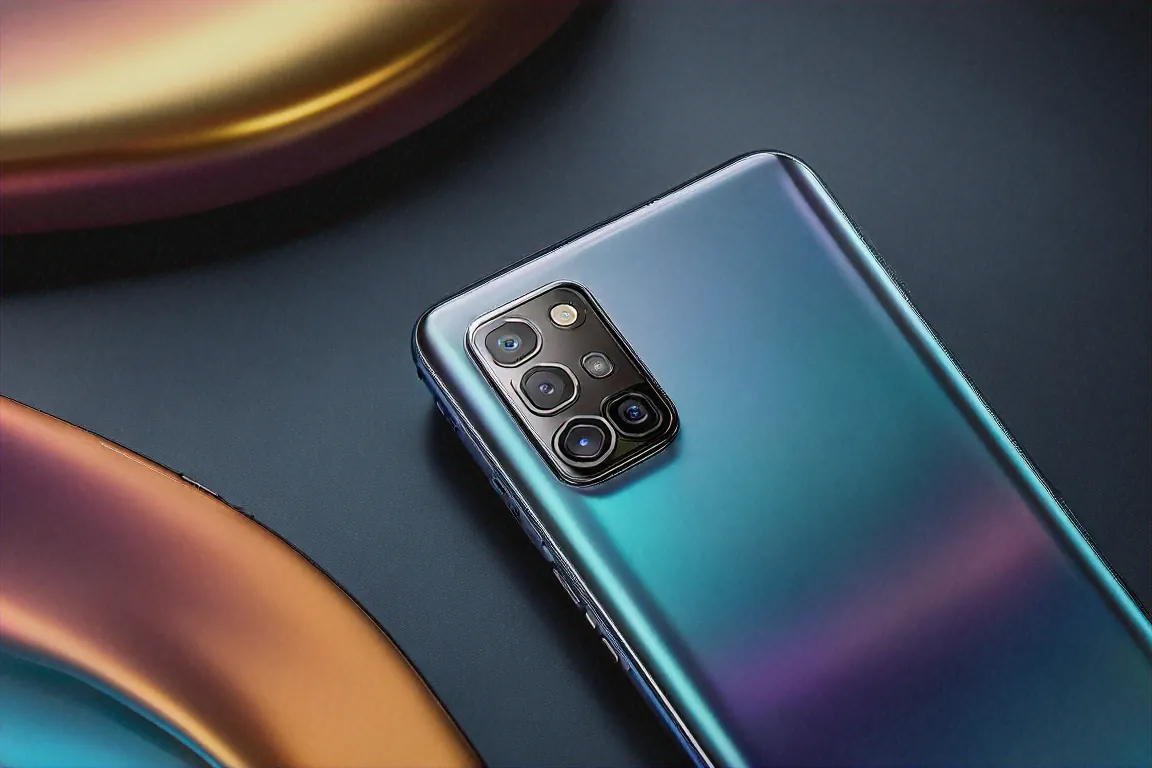
You're standing in a Croma store. Budget's around twenty-eight thousand. The salesperson is showing you a Realme with a faster chip, a Redmi with faster charging, a Vivo with a bigger battery and a better selfie camera. Spec-for-spec, they all look better on paper. But something in the back of your head keeps pulling you towards the Samsung shelf. Maybe it's the brand trust your family has had with Samsung since your dad bought that refrigerator fifteen years ago. Maybe it's the fact that your parents' Samsung TV has been running fine for nine years without a single repair. Maybe it's the Samsung service centre three blocks from your house that you pass every morning on your commute. Whatever the reason, you're wondering: is the Galaxy A55 5G at ₹26,999 worth picking over phones that offer more hardware for less money?
I've spent the last three weeks trying to answer exactly that question from as many angles as I could, and the answer is more nuanced than a simple yes or no. It's a yes for some people and a no for others, and the dividing line isn't about tech knowledge — it's about what you actually value in a device you'll carry every day for the next three to four years.
Full transparency: I've reviewed Samsung A-series phones in the past and I've always respected their approach even when the spec sheets don't compete. This review will try to explain why, while being honest about the areas where Samsung's asking you to accept less hardware in exchange for other kinds of value.
What Samsung's Offering at This Price
- Exynos 1480 processor built on a 3nm process, paired with 8GB RAM
- 6.7-inch Super AMOLED display running at 120Hz
- IP67 water resistance — unusual and genuinely welcome at this price
- 50MP triple camera with OIS on the primary sensor
- One UI 6.1 with a four-year OS update guarantee
- Galaxy AI features including Circle to Search and Live Translate
Design — Samsung DNA at Mid-Range Prices
Samsung has gotten very good at making their cheaper phones look like their expensive ones, and the Galaxy A55 5G is perhaps the best example of this strategy yet. Heavy borrowing from the S26 design language — flat sides, slim bezels, the same general aesthetic and visual proportions — means people assume you're carrying a more expensive phone than you actually are. That visual trickle-down is a deliberate strategy that Samsung has refined over multiple A-series generations, and it works. I handed the phone to a friend without telling them the price and they guessed ₹40,000+. The design does serious heavy lifting for perceived value.
The glass back feels solid without being slippery. I went caseless for several days during testing and never felt like the phone was about to slide off surfaces or slip out of my hand during normal use, which is more than I can say for some glass-backed phones that feel like they've been coated in butter. The frame is technically plastic rather than metal, but Samsung's finishing and paint quality is good enough that you'd need to really look closely — or tap it with your fingernail and listen to the sound — to tell. At 198 grams, it's comfortable for one-handed use even during long phone calls, extended reading sessions, or marathon scrolling through social media before bed.
Awesome Iceblue is the colourway I've been testing, and it's a nice pastel shade that doesn't scream for attention but looks quietly attractive. Navy adds some depth if you want something slightly more "serious." Lilac is the bold choice that'll appeal to younger buyers. Black is Black — safe, inoffensive, invisible in a crowd. Samsung's colour game in the A-series has always been a quiet strength. Nothing too flashy, nothing boring. Just pleasant options that look good in person without the aggressive colour-shift effects some Chinese brands use.
IP67 water resistance at ₹26,999 is genuinely worth highlighting — and I mean properly highlighting, not just mentioning as a bullet point — because most competitors at this price simply don't offer it. Caught in a sudden Mumbai monsoon downpour? Phone slips into the bathroom sink while you're brushing? Your toddler knocks your phone into a glass of water at the dinner table? Chai spill on the dining table that your phone was sitting on? The A55 should survive all of those scenarios without damage. That peace of mind has real value, especially for a phone that's likely going to be used by someone who doesn't baby their devices, doesn't use waterproof cases, and doesn't think about water damage until it happens.
Display — Samsung Doing What Samsung Does Best
If there's one thing Samsung never compromises on, even in their budget and mid-range phones, it's the display. They make the panels themselves, they have decades of expertise, and that advantage trickles down even to ₹26,999 devices. The 6.7-inch Super AMOLED with 120Hz adaptive refresh on the A55 5G is, from what I've seen across a lot of mid-range phones this year, the best screen in this price segment. I'll stand by that claim.
Deep blacks that make the phone bezels disappear when watching dark content — that seamless blend between the screen and the frame is something only OLED displays can achieve, and Samsung's implementation is excellent. Vivid colours that make photos and videos pop without crossing into cartoonish oversaturation. A bright 1000-nit peak that handles outdoor visibility better than most competitors, though it's worth noting this isn't as bright as the 2000+ nit panels on Samsung's more expensive phones.
Vision Booster — borrowed from the flagship S-series — dynamically adjusts contrast and brightness in sunlight, which is genuinely useful when you're trying to navigate Google Maps on a bright Delhi afternoon or read a WhatsApp message while standing at a bus stop in direct sun. It's a small software feature that makes a practical difference in daily use, and I'm glad Samsung has brought it down to the A-series.
Gorilla Glass 5 protects the panel. Not the latest Gorilla Glass Victus 2, but more than sufficient for daily protection against scratches from keys, coins, and other pocket companions. I've gone three weeks without a screen protector and there are no visible scratches under close inspection, which is a decent real-world endorsement of the protection level.
The side-mounted fingerprint sensor embedded in the power button is my preferred type of biometric authentication, and I think it's objectively the best approach for mid-range phones. It's fast — noticeably faster than the under-display optical sensors found on competitors at this price. It's reliable — I'd estimate roughly 98% first-attempt success rate across thousands of unlocks during my testing period. And it works with dry, slightly damp, and even oily fingers more consistently than optical alternatives. Samsung's decision to use a side-mounted sensor here is a smart, practical choice that prioritises daily usability over the "premium" perception of under-display sensors.
Content consumption on this screen is genuinely enjoyable. Watched several episodes of a series on Netflix last week in HDR and the rendering was surprisingly good for a phone at this price. Colours looked rich and accurate, motion was smooth at 120Hz, black bars were truly black, and the speakers — while nothing special in terms of audio quality — were loud enough for bedtime viewing without earphones. For a phone that many buyers will use as their primary entertainment device, the display experience delivers genuine satisfaction.
Camera — Solid for Social, Won't Win Photography Awards
The 50MP main camera with OIS punches above its weight in good lighting conditions. Samsung's image processing philosophy shows here — photos come out looking punchy, vibrant, and ready to share on social media without any editing whatsoever. Skin tones lean slightly warm, which most Indian users seem to prefer based on the reactions I've gotten when sharing sample shots with friends and family during my testing period. Nobody asked me to adjust the colour or apply a filter — the straight-out-of-camera results were consistently well-received.
Dynamic range in daylight is solid for the price. Bright skies don't blow out as aggressively as on some competitors, and shadow detail in mixed-lighting scenes (standing in shade while the background is sunlit, for example) is preserved well. Detail retention at the centre of the frame is good — you can zoom into daylight shots and still find reasonably crisp details. Edge sharpness drops off, which is a limitation of the lens rather than the sensor, and it's typical at this price point.
Portrait mode is surprisingly capable and one of the areas where Samsung's software expertise adds genuine value. Background blur looks gradual and natural rather than the harsh on/off binary effect cheaper phones produce — there's a smooth transition from sharp subject to blurred background that mimics actual lens bokeh convincingly. Edge detection handles hair well (including curly hair, which trips up many algorithms), works reasonably with glasses, and produces clean separation in most indoor and outdoor scenarios. I shot some family portraits during a gathering recently — aunts, cousins, kids running around — and everyone was happy with the results. That's ultimately the test that matters for most people buying this phone.
The 12MP ultrawide covers group shots and architecture without major distortion or dramatic quality drops compared to the main sensor. Colour consistency between the main and ultrawide is good in daylight, which means switching between lenses during the same scene produces photos that look like they belong together. Dynamic range is narrower than the main sensor in challenging light, but for WhatsApp group photos, Instagram stories, and general travel photography, the ultrawide does its job competently.
Note that there's no telephoto camera here. Zoom is entirely digital, which means anything beyond 2x starts looking noticeably soft and degraded. At 5x digital zoom, you're essentially looking at a heavily cropped and upscaled version of the main sensor output, and the quality is poor. If you frequently zoom in on subjects — a child performing on stage at school, signage across the road, animals in a park — this absence will bother you. Samsung reserves telephoto cameras for their S-series and higher-end A-series models, and at this price they've decided you don't get one.
Night photography is decent for the price, with Samsung's AI Night Mode cleaning up indoor shots effectively — restaurants, living rooms, cafes with typical ambient lighting all produce usable, shareable photos. Move outdoors to genuinely dark scenes without street lighting, and quality drops as expected — noise increases, details soften, and colours lose some accuracy. But compared to the competition at ₹28,000, Samsung's night mode holds its own and doesn't embarrass itself. The 12MP selfie camera takes flattering photos with Samsung's signature skin processing — smooth without looking artificial or plastic, which is a balance not every brand manages to achieve in this segment.
Performance — Good Enough, With Honest Caveats
The Exynos 1480 on a 3nm process. Samsung's own chip, for better and worse. Let me explain both sides honestly because Samsung's chipset decisions have historically been a point of contention, and the A55 is no exception.
For typical daily smartphone tasks, the Exynos 1480 handles everything without hesitation. Social media scrolling at full 120Hz — smooth. Messaging apps opening instantly — check. Email, video streaming on Netflix and YouTube, light photo editing in Snapseed, document work in Google Docs — all smooth, all responsive, zero lag or stutter. One UI 6.1 is well-optimised for this hardware, and Samsung deserves credit for making the software feel snappy on a mid-range chip that isn't trying to compete with Snapdragon flagships. App switching between ten to fifteen active apps shows no noticeable delay. For the 90% of phone interactions that involve these basic tasks, the phone feels fast.
Gaming is where the limitations surface clearly. Casual games — Candy Crush, Subway Surfers, Among Us — no problem at all. BGMI at medium settings? Playable, but you'll notice frame drops during intense firefights with smoke grenades and multiple enemies. BGMI at high settings? Stuttery enough to be annoying in competitive play. Genshin Impact at anything above low settings becomes a thermal and performance challenge, with the phone heating up noticeably and frame rates dropping into unplayable territory. If heavy 3D gaming is your primary phone activity, Chinese alternatives with the Snapdragon 8 Gen 3 or even the Gen 5 at similar or slightly higher prices will serve you much, much better.
Battery life is a mixed story that I want to be honest about. The 5000mAh cell should theoretically deliver excellent endurance — it's the same capacity as many phones that achieve seven-plus hours of screen-on time. But the Exynos 1480's power efficiency isn't matching what Qualcomm and MediaTek achieve with their latest chips. I'm getting roughly 5-6 hours of screen-on time on a mixed-use day, which is below what I'd expect from a 5000mAh battery in 2024 and noticeably behind what a Snapdragon phone with the same battery capacity delivers. Not terrible enough to be a dealbreaker for most users, but not impressive either.
Charging speed is the most significant disappointment on this entire phone, and I'm going to be blunt about it. 25W. Twenty-five watts in 2024. Chinese phones at ₹15,000 — half this price — offer 67W charging. Some ₹20,000 phones from Realme and iQOO hit 80W. Samsung's 25W takes approximately 75 minutes from zero to full charge, which means you're looking at well over an hour of charging time just to fill the battery. Compare that to 35-40 minutes on competing phones with 67W+ charging, and the gap is embarrassing. If you're someone who forgets to charge overnight and relies on quick morning top-ups to get through the day, this will frustrate you. Badly. A fifteen-minute emergency charge gives you maybe 20% battery, which might not be enough if you're already running low. Samsung includes 15W wireless charging support, which is nice as a desk-charging option, but it's even slower than the already-slow wired charging.
Technical Specifications
| Specification | Details |
|---|---|
| Processor | Exynos 1480 (3nm) |
| RAM | 8GB/12GB |
| Storage | 128GB/256GB |
| Display | 6.6" Super AMOLED, 2400x1080, 120Hz |
| Main Camera | 50MP f/1.8 OIS |
| Ultrawide | 12MP f/2.2 |
| Front Camera | 12MP f/2.2 |
| Battery | 5000mAh |
| Charging | 25W wired, 15W wireless |
| OS | Android 14, One UI 6.1 |
| IP Rating | IP67 |
| Weight | 213g |
Pros & Cons
Pros
- Samsung's brand trust and extensive service network across India
- Clean One UI 6.1 with four-year OS update commitment
- IP67 water resistance — rare and valuable at this price point
- Best Super AMOLED display in the mid-range segment
- Reliable main camera for everyday social photography
Cons
- Exynos 1480 falls behind Snapdragon competition in gaming
- 25W charging is painfully slow compared to 67W+ Chinese rivals
- Battery life below average despite 5000mAh capacity
- No telephoto camera means digital zoom only
Connectivity, Software, and Why Update Longevity Actually Matters
Four years of major Android updates. Five years of security patches. That means the Galaxy A55 5G will receive Android 17, 18, 19, and 20, staying current, feature-complete, and security-patched through roughly 2030. For a phone at ₹26,999, that's an extraordinary software commitment that fundamentally changes the ownership economics of the device.
Consider this seriously for a moment: a Realme or Redmi at this price typically promises two to three years of updates, and even those promises aren't always kept reliably — I've seen instances where promised updates were delayed by months or quietly dropped for less popular models. Samsung has consistently delivered on their update timelines for the past three to four years across both flagship and mid-range devices. Your phone staying secure and receiving new features and Android version upgrades for four-plus years changes the total cost of ownership calculation significantly. If you keep your phone for three to four years (as the majority of mid-range buyers in India actually do, according to market research), Samsung's update promise means your phone is still receiving the latest Android version when you eventually replace it. That's not just nice to have — it's protection against app compatibility issues, security vulnerabilities, and the general degradation of experience that comes from running outdated software.
The A55 5G supports 13 5G bands covering Jio, Airtel, and Vi networks completely — every band currently deployed for 5G in India is supported. Wi-Fi 6E handles multi-device households without choking, even in my home with fifteen-plus connected devices competing for bandwidth. Bluetooth 5.3 maintains stable connections with wireless earbuds and smartwatches — I paired the A55 with Samsung Galaxy Buds and a non-Samsung fitness band and both worked flawlessly throughout the testing period. NFC for both Google Pay and Samsung Pay gives you flexibility in contactless payments — having two payment apps to choose from is genuinely handy when one service is having an off day or doesn't work at a particular terminal.
Galaxy AI features have trickled down to the A-series for the first time this generation, and they're surprisingly useful rather than being the gimmicky afterthought I expected. Circle to Search works exactly as it does on flagship Samsung phones — circle anything on screen with your finger and get instant Google search results, which is faster than copying text, switching to a browser, and searching manually. Live Translate handles basic Hindi-English and other Indian language pairs for video calls — not perfect, but usable for simple conversations across language barriers. AI photo editing lets you remove unwanted objects from images, enhance lighting, and adjust compositions with tap-and-drag gestures. These aren't gimmicks at this price level; they're features that add genuine daily utility and make the phone feel more capable than its price suggests.
One UI itself remains the most feature-rich Android skin available, and Samsung keeps adding thoughtful touches with each version. Samsung DeX for desktop-mode productivity transforms the phone into a basic computer when connected to a monitor — useful for students, freelancers, or anyone who needs occasional desktop functionality without carrying a laptop. Secure Folder creates a separate, encrypted space for private apps and files behind its own lock screen. Samsung Health integrates fitness tracking, sleep analysis, and health monitoring. The ecosystem integration with Galaxy Watch, Galaxy Buds, and Samsung tablets means shared notifications, seamless device switching, and automatic pairing that just works. That depth of interconnection is unmatched by any other Android manufacturer at any price.
Back to That Croma Store Dilemma
So let's go back to where we started. You're standing there with ₹28,000 to spend, and the spec sheets lined up on the shelf are telling you the Chinese brands offer more bang for your buck. And they're not wrong. On paper, you can get faster processors, much faster charging, sometimes even better cameras, and more RAM for the same money from Realme, Redmi, iQOO, or Vivo.
But spec sheets don't capture everything, and I think that's the single most important point of this entire review. They don't show you which brand's service centre actually has your specific phone model's parts in stock when the screen cracks six months from now. They don't guarantee how many years you'll actually receive software updates versus how many were promised in marketing materials. They don't reflect the peace of mind that comes from IP67 water resistance when your toddler knocks your phone into a glass of water at the dinner table, or when you're caught in an unexpected monsoon shower without an umbrella. They don't account for the Samsung ecosystem you might already be invested in through TVs, tablets, watches, earbuds, and appliances.
The Galaxy A55 5G isn't the best phone at ₹26,999 if you judge purely by specifications on a comparison spreadsheet. It is, I think, the smartest phone at ₹26,999 for a particular kind of buyer — someone who values reliability over raw speed, brand trust over benchmark scores, long-term software support over short-term specification advantages, and after-sales peace of mind over launch-day excitement. The kind of person who buys a Toyota Innova instead of a faster SUV from a brand with fewer service centres and uncertain parts availability. There's real wisdom in that choice, even if it doesn't look as exciting on a comparison chart or generate as many "wow" reactions in YouTube comment sections.
My recommendation: if you're buying this phone for yourself and you're tech-savvy enough to be reading this review, comparing specs, and evaluating alternatives — honestly consider whether the Realme or POCO phones at this price might actually serve your specific needs better for the money. You probably have the technical literacy to handle quirky software, you don't mind faster charging from a lesser-known brand, and you can troubleshoot issues yourself without relying on a service centre.
But if you're buying for parents, grandparents, or family members who just want a phone that works reliably for years without fuss, without software problems they can't solve, without worrying about water damage, and with a service centre they can walk into if something goes wrong? The Galaxy A55 5G is probably the safest, smartest choice you can make at this price. And safe, in this context, isn't boring. It's responsible.
Price in India
The Samsung Galaxy A55 5G starts at ₹26,999 for the 8GB/128GB variant. Available on Samsung.com, Amazon India, Flipkart, and across Samsung's massive retail network — including thousands of offline stores across India, which matters enormously for buyers who want to see and hold the phone before purchasing or who don't trust online delivery for expensive electronics. Bank offers during recent sales have brought the effective price to around ₹25,500 with ICICI and HDFC card discounts, and Samsung's own trade-in deals can knock off another ₹3,000-5,000 if you're exchanging an older Samsung phone.




Comments (0)
Leave a Comment
No comments yet. Be the first to share your thoughts!