
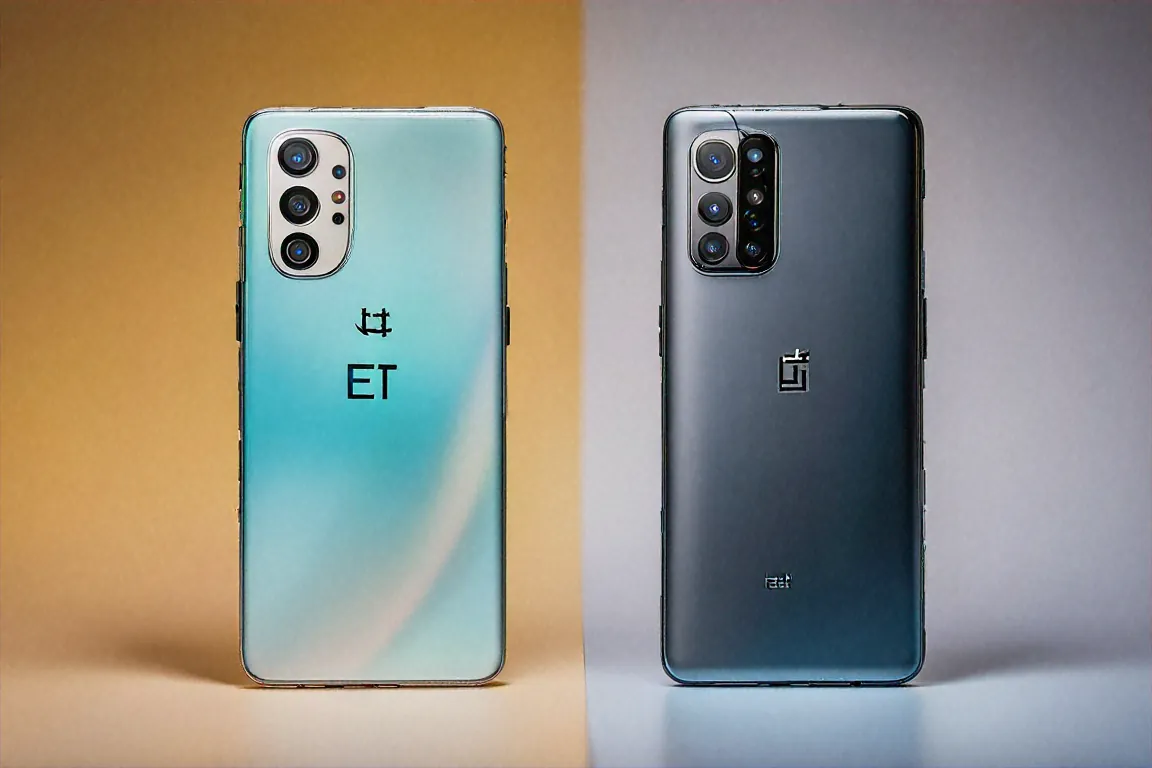
The OnePlus 13 at Rs 69,999 and the POCO F6 Pro at Rs 24,999 represent two radically different approaches to smartphone value in India. The OnePlus offers a genuine premium flagship experience with Hasselblad cameras, IP69 water resistance, and wireless charging. The POCO delivers flagship-tier Snapdragon 8 Gen 2 performance at a price that seems too good to be true — nearly one-third of the OnePlus price. The Rs 45,000 gap between them raises the fundamental question: does the premium experience justify paying nearly three times more?
We used both phones as daily drivers for two weeks each across Delhi, testing them in identical scenarios — the same photography locations, the same gaming sessions, the same work tasks, and the same social situations. This comparison is for the Indian buyer who can afford either phone and wants to make the most informed decision about where their money delivers the most value.
Design and Build Comparison
The OnePlus 13 is a statement of premium craftsmanship. The micro-curved display flows seamlessly into the aluminium frame, the back panel (available in Black Eclipse, Arctic Dawn, and Midnight Ocean — the latter with a vegan leather finish) feels luxurious, and the overall build communicates a level of quality that justifies its flagship positioning. At 210 grams and 8.5mm thick, it is substantial but well-balanced. The IP69 water resistance rating is the highest on any smartphone — it can withstand high-pressure water jets and steam cleaning, meaning Indian monsoon downpours, accidental sink drops, and even running the phone under a tap to clean it are all covered.
The POCO F6 Pro uses a glass front and back with a plastic frame — a cost-cutting measure that is immediately apparent when you hold both phones back to back. The build quality is solid for the price, with no creaks or flex, but it lacks the tactile premium feel of the OnePlus. At 209 grams and 8.2mm thick, the dimensions are similar, but the materials tell a different story. The IP54 rating provides basic splash resistance — adequate for light rain and accidental splashes, but not submersion. Colour options in India are Black, White, and Green.
In social contexts — business meetings, upscale restaurants, professional networking events — the OnePlus 13 looks and feels like a flagship phone that matches other premium devices. The POCO F6 Pro is perfectly presentable but does not communicate the same premium status. Whether this matters depends entirely on your personal values — many people rightfully do not care about perceived phone status, but it is an honest observation worth noting.
Display Comparison
The OnePlus 13 features a 6.82-inch 2K BOE X2 LTPO AMOLED display with 120Hz adaptive refresh rate, 4500 nits peak brightness, and Dolby Vision support. The POCO F6 Pro has a 6.67-inch 1.5K AMOLED display with 120Hz refresh rate, 4000 nits peak brightness, and Dolby Vision support.
Both displays are excellent, but the OnePlus has a noticeable edge in resolution and brightness. The 2K resolution on the OnePlus renders text with visibly sharper edges — noticeable when reading articles, browsing web pages with small text, or examining photo details. The 4500 nits brightness makes the OnePlus perfectly visible in direct Indian afternoon sunlight where the POCO (at 4000 nits) is also very good but marginally less visible.
Colour accuracy is superior on the OnePlus, with delta E under 1 in Natural mode — essentially visually perfect. The POCO's colour accuracy is good but not calibrated to the same standard. For everyday use, both displays are gorgeous and will satisfy any user. For colour-sensitive work (photo editing, design review), the OnePlus has the edge.
Performance Comparison
The OnePlus 13 uses the Qualcomm Snapdragon 8 Elite — the latest and most powerful mobile processor available. The POCO F6 Pro uses the Snapdragon 8 Gen 2 — the flagship chip from two generations prior that remains extremely capable. In benchmark numbers, the Snapdragon 8 Elite scores approximately 2,200,000 on AnTuTu versus the 8 Gen 2's approximately 1,500,000. This is a significant raw performance gap, but real-world impact is nuanced.
For everyday tasks — social media, messaging, email, browsing, video streaming — both phones are essentially identical in perceived speed. Apps launch instantaneously on both, animations are smooth on both, and multitasking is fluid on both. The performance gap is invisible in normal use.
Gaming reveals the difference. BGMI at maximum settings runs at a stable 60fps on both phones. Genshin Impact at highest quality runs at 60fps on the OnePlus and approximately 50 to 55fps on the POCO with occasional dips. After 30 minutes of sustained maximum-settings gaming, the OnePlus maintains closer to 55fps while the POCO drops to around 42 to 45fps due to thermal throttling. The OnePlus's newer chip and better thermal design provide measurably better sustained gaming performance.
For the overwhelming majority of Indian smartphone users who do not push maximum gaming settings for extended periods, the POCO's Snapdragon 8 Gen 2 is more than sufficient. The performance premium of the OnePlus only manifests in specific, demanding scenarios.
Camera Comparison
This is where the Rs 45,000 price gap becomes most visible. The OnePlus 13 features a triple Hasselblad camera system: 50MP Sony LYT-808 main sensor (f/1.6, OIS), 50MP Samsung JN1 ultrawide (f/2.0), and 50MP Sony LYT-600 3x telephoto (f/2.65, OIS). The POCO F6 Pro has a dual camera: 50MP Light Fusion 800 main sensor (f/1.6, OIS) and an 8MP ultrawide (f/2.2).
In daylight, the main cameras of both phones produce good results, but the OnePlus delivers noticeably better photos. Hasselblad colour processing gives the OnePlus images a distinctive warmth and depth — portraits have natural skin tones with pleasant contrast, landscapes have rich warm tones, and food photography has the appetising vibrance that makes social media posts stand out. The POCO's main camera produces clean, sharp images with good dynamic range, but the processing is more generic — perfectly adequate for sharing but lacking the character of the OnePlus.
Night photography is where the gap widens significantly. The OnePlus 13's larger LYT-808 sensor captures substantially more light, producing cleaner night shots with better detail and more accurate colours. Street photography in Delhi's Connaught Place at night showed the OnePlus capturing shop signage, distant text, and face details that the POCO's night mode rendered as smeared blobs. For users who frequently photograph in low light (restaurants, evening events, night markets), the OnePlus is in a different league.
The telephoto camera is entirely missing from the POCO. The OnePlus's 50MP 3x telephoto produces sharp, detailed medium-distance shots that the POCO cannot replicate — its digital zoom beyond 2x degrades rapidly. Portrait mode on the OnePlus uses the telephoto for natural 3x compression and beautiful subject separation. The POCO's portrait mode uses the main camera with computational bokeh that looks artificial in comparison.
Video recording follows the same pattern. The OnePlus records 4K at 60fps with Dolby Vision HDR, excellent stabilisation, and Hasselblad colour processing. The POCO records 4K at 60fps with adequate stabilisation and standard processing. For casual video sharing, both are fine. For content creation with aspirations of quality, the OnePlus is the clear choice.
Battery and Charging Comparison
The OnePlus 13 has a 6,000mAh silicon-carbon battery — the largest in any mainstream flagship. The POCO F6 Pro has a 5,000mAh battery. In our controlled usage test, the OnePlus lasted approximately 8.5 hours of screen-on time while the POCO delivered approximately 7 hours. Both comfortably last a full day of normal use, but the OnePlus provides a meaningful margin for heavy usage days.
Charging speeds are competitive. The OnePlus charges at 100W wired (0 to 100 in 36 minutes) and supports 50W wireless charging. The POCO charges at 120W wired (0 to 100 in 19 minutes) — the POCO actually charges faster wired. However, the POCO lacks wireless charging entirely. For users who value the convenience of dropping their phone on a wireless pad at the bedside, the OnePlus's wireless charging is a lifestyle feature worth noting. The POCO compensates with the fastest wired charging in this comparison.
Software Comparison
OxygenOS 15 on the OnePlus 13 is clean, fast, and well-optimised. The interface is close to stock Android with useful additions — Shelf (a side panel for quick information and tools), Zen Mode (digital detox timer), excellent Always-On Display customisation, and thoughtful notification management. OnePlus promises 4 major Android OS updates and 6 years of security patches, meaning the phone will receive Android 19 and security updates through 2031.
HyperOS on the POCO F6 Pro is functional but cluttered. The interface is responsive and feature-rich, but out of the box it comes with pre-installed apps: GetApps, Mi Browser, Mi Video, ShareMe, and several third-party promotional apps. These can be uninstalled or disabled, but the initial experience is less clean than OxygenOS. Occasional recommendation notifications appear in the Settings app and file manager — an annoyance that has improved over time but has not been fully eliminated.
POCO promises 3 major Android OS updates and 4 years of security patches — shorter than OnePlus's commitment. For buyers planning to use their phone for four or more years, the OnePlus provides meaningfully longer software support.
After-Sales Service in India
OnePlus has expanded its Indian service presence to over 120 exclusive service centres and 1,000+ authorised repair centres. Doorstep repair is available in 50+ Indian cities — a technician comes to your home or office to perform repairs on-site. Screen replacement for the OnePlus 13 costs approximately Rs 12,000 to 15,000 at authorised centres. The service experience is generally well-regarded, with responsive support and reasonable turnaround times.
POCO leverages Xiaomi's massive Indian service network — over 2,000 service centres spanning metros, tier-2, tier-3, and even some tier-4 towns. This is the widest service network of any smartphone brand in India after Samsung. Screen replacement for the POCO F6 Pro costs approximately Rs 5,000 to 7,000 — roughly half the OnePlus repair cost. For buyers in smaller Indian towns where OnePlus exclusive centres may not be available, POCO's wider reach through Xiaomi's network is a practical advantage.
Connectivity and Extra Features
The OnePlus 13 supports WiFi 7, Bluetooth 5.4, NFC, infrared blaster, and dual stereo speakers tuned by Dolby. The alert slider (a signature OnePlus feature) allows quick switching between silent, vibrate, and ring modes. The in-display ultrasonic fingerprint sensor is fast and accurate even with wet fingers.
The POCO F6 Pro supports WiFi 7, Bluetooth 5.4, NFC, infrared blaster, and dual stereo speakers with Dolby Atmos. The fingerprint sensor is optical, which is slightly less reliable with wet fingers than ultrasonic. Speaker quality is good on both phones, with the OnePlus having a slight edge in bass response and overall volume.
Display Deep Dive
The display comparison deserves additional scrutiny because both phones prioritise screen quality. The OnePlus 13's 6.82-inch 2K BOE X2 LTPO AMOLED delivers 4500 nits peak brightness with Dolby Vision and HDR10+ support. The micro-curved edges create a seamless visual flow that makes content feel like it extends beyond the display boundaries. At 2K resolution, text is rendered with razor-sharp precision — academic PDFs, legal documents, and detailed spreadsheets on Google Sheets are notably more readable than on lower-resolution screens.
The POCO F6 Pro's 6.67-inch 1.5K AMOLED is still an excellent panel by any standard, with 4000 nits peak brightness and 120Hz refresh rate. The flat display design provides better edge touch accuracy — useful for gaming precision. The resolution difference between 2K and 1.5K is visible in side-by-side comparison: small text (8pt font in a PDF, for example) appears slightly crisper on the OnePlus. In everyday use — social media, YouTube, WhatsApp — the resolution difference is negligible and most users would not notice without a direct comparison.
Both displays handle Indian sunlight well. At 4000 to 4500 nits peak brightness, both phones remain perfectly readable during outdoor afternoon use — whether you are checking Google Maps while walking in Connaught Place or reading an article on a park bench in Cubbon Park. The brightness advantage of the OnePlus (4500 vs 4000 nits) is measurable with instruments but barely perceptible to the human eye in real conditions.
Real-World Camera Samples and Scenarios
We photographed identical scenes with both phones to provide concrete comparisons for Indian buyers. In a South Delhi market during golden hour, the OnePlus 13's Hasselblad processing rendered warm, rich tones with excellent highlight control — the setting sun's glow on building facades looked natural and inviting. The POCO's processing produced a cooler, slightly more saturated image that was punchy on social media but less true to the actual scene.
At a Bengaluru restaurant (dim indoor lighting with warm tungsten bulbs), the OnePlus captured the ambiance accurately — warm golden tones, natural skin colours on dining companions, and clean detail in shadows. The POCO produced usable images but with visible noise in dark areas and slightly inconsistent white balance that gave skin a slightly greenish cast under mixed lighting. For food photography in restaurants — an increasingly common Indian social media use case — the OnePlus consistently produced more appetising, Instagram-ready images.
Street photography in Chandni Chowk tested both phones' autofocus speed and processing intelligence. The OnePlus locked focus faster on moving subjects (cycle rickshaws, walking vendors) and applied more intelligent exposure compensation for high-contrast scenes (bright sky above, shaded narrow lanes below). The POCO's autofocus was adequate but missed approximately 15 percent more shots in rapidly changing light conditions.
For social media sharing where photos are viewed on small phone screens and compressed by Instagram or WhatsApp, the POCO's images are perfectly adequate — well-exposed, reasonably sharp, and suitable for daily sharing. The OnePlus advantage primarily manifests when viewing photos at full resolution, printing, or posting to platforms that preserve higher quality like Flickr or a personal portfolio. The gap between these phones' cameras is real but may not matter to users whose primary sharing platform is WhatsApp status updates or Instagram stories.
Which One Should You Buy
Buy the POCO F6 Pro at Rs 24,999 if budget efficiency is your priority. You get genuinely flagship-tier daily performance from the Snapdragon 8 Gen 2, a gorgeous 120Hz AMOLED display, fast 120W charging, and adequate cameras for social media sharing. The Rs 45,000 saved compared to the OnePlus 13 is substantial — enough to buy a pair of premium headphones, a smartwatch, or contribute toward a laptop. For students, young professionals on their first salary, and anyone who views a phone as a functional tool rather than a status symbol, the POCO delivers extraordinary value. It is not a compromise purchase — it is a smart purchase.
Buy the OnePlus 13 at Rs 69,999 if you want the complete premium experience. The Hasselblad cameras capture genuinely better photos, especially in challenging light. The IP69 rating means the phone survives anything India's weather can throw at it. The 6,000mAh battery provides class-leading endurance. The build quality communicates craftsmanship. And 4+6 years of software support means this phone remains current and secure through 2031. For working professionals, photography enthusiasts, and anyone who values the premium experience and plans to keep the phone for four or more years, the OnePlus justifies its price premium through tangible quality improvements in every dimension.
Both phones earn our recommendation at their respective price points. The POCO F6 Pro is the best value smartphone in India. The OnePlus 13 is the best premium Android flagship experience in India. Your choice depends on your priorities, your budget, and how you value the Rs 45,000 difference.




Comments (0)
Leave a Comment
No comments yet. Be the first to share your thoughts!