

The box alone tells you this isn't a normal phone. Heavy, matte black, with "Hasselblad" embossed in subtle gold lettering on the front flap — like something you'd expect from a camera accessory company rather than a smartphone manufacturer. Slide off the magnetic lid and the Oppo Find X7 Ultra sits nestled in what looks like something between jewellery packaging and a lens case. The presentation is deliberately theatrical, and I'll admit it works. You feel like you're unboxing something special before you've even turned it on.
Pull the phone out and the first thing that registers — before the screen, before the cameras, before anything else — is weight. 226 grams of titanium-aluminium alloy, glass, and two enormous camera sensors that make the back of this phone look like it belongs on spacecraft instrumentation rather than in your trouser pocket. Hold it in your palm and there's a density to it, a heft that communicates seriousness in a way lighter phones don't quite manage.
At ₹79,999, the Find X7 Ultra is Oppo's most expensive and most ambitious phone ever sold in India. And the pitch is remarkably focused compared to the typical flagship phone marketing that tries to be everything to everyone: this is a camera. That happens to make calls. And run apps. And browse the internet. But primarily, unequivocally, without apology, it's a camera. A phone for people who have strong opinions about colour science, who know what Hasselblad means and what that name represents in photography history, and who'd rather spend eighty grand on mobile photography excellence than carry a separate mirrorless camera alongside their phone during travel and everyday life.
After shooting with this thing for nearly a month across multiple cities and lighting conditions, here's what I found. Some of it confirmed my expectations. Some of it exceeded them.
What Oppo Has Put Together Here
- Dual 1-inch Hasselblad sensors — both main and periscope telephoto use physically large 1-inch image sensors
- MediaTek Snapdragon 8 Gen 3 paired with 16GB LPDDR5X RAM
- 6.82-inch AMOLED display at 3168x1440 resolution with 120Hz refresh
- 5000mAh battery with 100W SUPERVOOC wired and 50W wireless charging
- Titanium-aluminium alloy frame with premium construction throughout
- Hasselblad Natural Colour Solution tuning for film-like colour rendering
Build and Design — Premium Has a Weight (Literally)
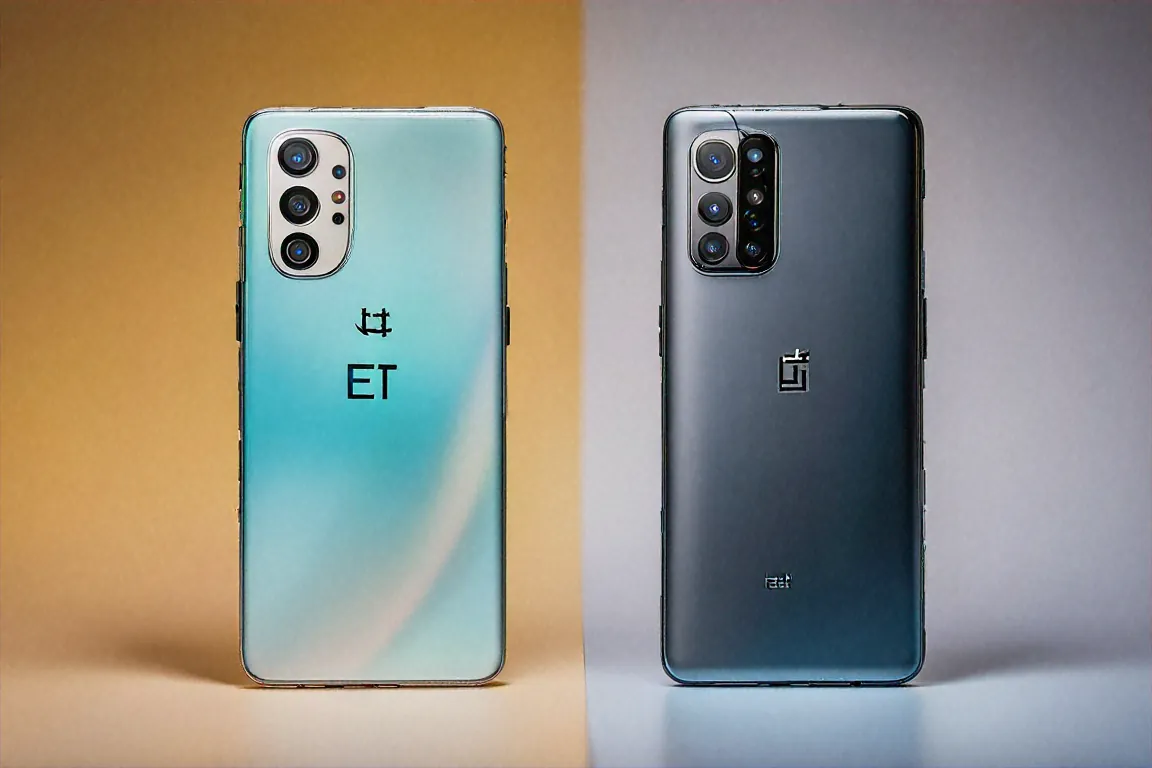
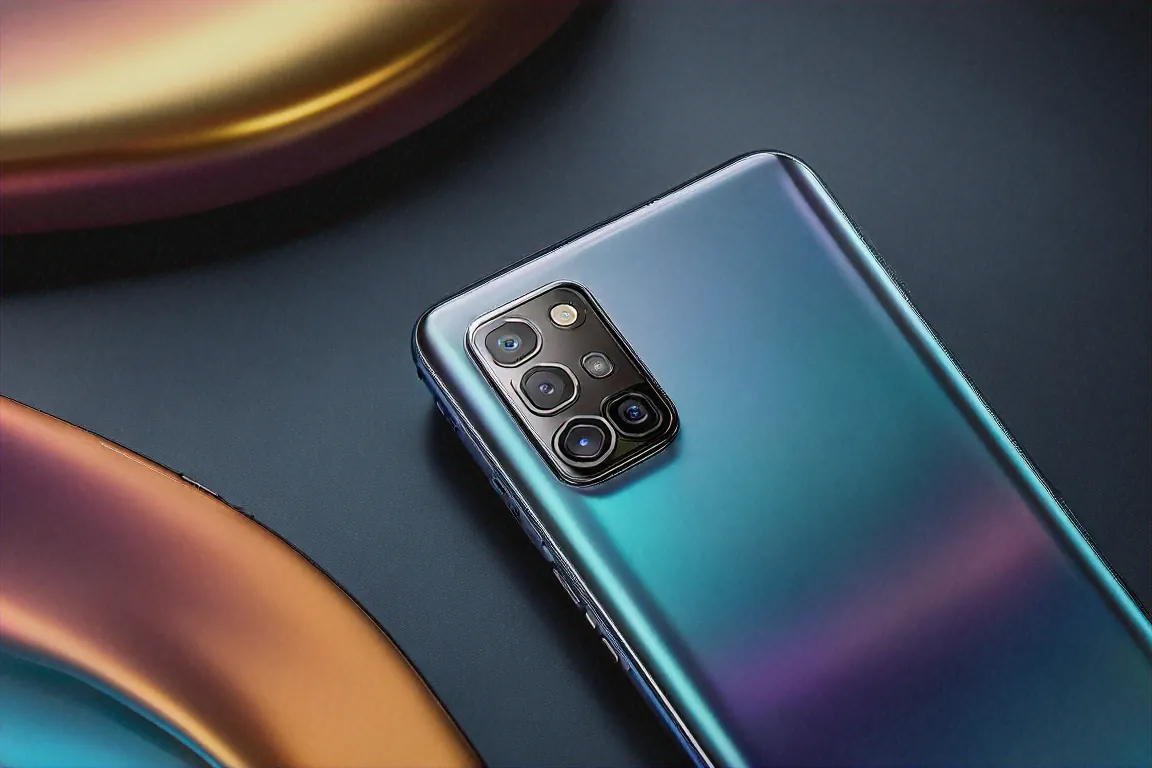
Let's talk about that camera island first because it's the defining visual feature of this phone and there's absolutely no ignoring it in person. Massive. Circular. Housing two 1-inch sensors alongside a third ultrawide. The protrusion from the back of the phone is significant enough that laying the phone flat on a table causes it to rock like a see-saw when you tap the screen — the camera module acts as an unintentional fulcrum. You'll want a case, not just for drop protection but to level out the back surface so the phone sits flat during desk use. Every phone with large camera sensors has this rocking problem to some degree, but the Find X7 Ultra takes it to another level entirely because of the sheer physical size of those dual 1-inch sensors and the optics required to support them.
With a case, the rocking is eliminated and the phone feels more balanced in hand as well. I've been using Oppo's official case during my testing period and it adds a few millimetres of thickness but dramatically improves the handling experience. Without a case, the camera bump makes the phone awkward to pick up from flat surfaces — your fingers have to navigate around the protruding module rather than smoothly scooping the phone up.
The titanium-aluminium alloy frame feels unlike anything else I've held recently, and I've held a lot of phones. It's not the cold, surgical-steel precision of Samsung flagships or the familiar warm aluminium of iPhones. There's a hardness and density to the material that communicates "this thing is built to outlast your contract period" without being crude or industrial about it. Tap the frame with your fingernail and you get a solid, muted ping rather than the hollow ring of aluminium. Anti-fingerprint coating on the back glass works remarkably well in practice — after a full day of handling, photographing, gripping, and generally using the phone intensively, only a faint smudge or two was visible in certain light angles. Most glass-backed phones look like a CSI fingerprint collection scene after an hour of bare-hand use. The Find X7 Ultra stays remarkably clean.
At 226 grams, it's undeniably heavy. No point denying or minimising that reality. Extended one-handed use will tire your hand and wrist within ten to fifteen minutes. Long phone calls without a headset become a mild upper-arm workout. Carrying it in a shirt pocket is possible but you're aware of its presence in a way you wouldn't be with a 180-gram phone. But — and this is an important but — the weight distribution is surprisingly balanced despite the massive camera module on one side. It doesn't feel top-heavy or lopsided in your grip, which is good engineering on Oppo's part that probably required careful internal component placement to achieve.
Titanium Grey and Volcanic Black are your colour options. Both are understated, mature, and professional. No flashy gradients, no gamer RGB aesthetics, no pastel trend-chasing. This phone looks serious, like a tool designed for a specific purpose by people who understood that purpose. I've been using the Titanium Grey and it's grown on me throughout the review period — in certain natural light it develops a warm, almost bronze undertone that photographs beautifully. There's an irony in a camera phone that's itself photogenic, and I appreciate the unintentional poetry of it.
IP68 rating rather than the standard IP68 found on most flagships — this means resistance not just to submersion but to high-pressure water jets and high temperatures. Practically, this means the phone survives everything the IP68 phones survive and then some. You could theoretically clean it with a pressure washer, though I wouldn't recommend testing that particular claim with a ₹80,000 device.
Display — Content Creator Grade, Calibrated for Photography
6.82 inches of AMOLED panel at 3168x1440 resolution. 120Hz adaptive refresh rate. 4500 nits peak brightness. Those are some of the best display specifications on any smartphone currently available in India, and the real-world viewing experience matches the impressive numbers on the spec sheet.
What sets this display apart from other excellent smartphone screens isn't just the raw specs though — it's the calibration philosophy and what that philosophy serves. Oppo has worked with Hasselblad to ensure that the screen's colour profile matches the camera's colour output as closely as possible. In practice, this means a photo you take with the Find X7 Ultra looks identical in the camera viewfinder during capture, in the gallery when you review it, and when you open it in a photo editor to make adjustments. The colour temperature, the saturation levels, the contrast curves — all consistent between what the camera captures and what the display shows you.
This might sound like a minor technical detail, but for anyone who's tried to edit photos on a phone where the display oversaturates colours, you'll know the frustration of editing an image to look great on your screen only to find it looks flat and desaturated when you share it or view it on another device. The Find X7 Ultra eliminates that guesswork. What you see on screen is what your photo actually looks like, and that colour accuracy between capture and display is a genuinely professional-grade feature that no other phone in India implements as well.
Outdoor visibility at 4500 nits is frankly ridiculous. I used this phone extensively in direct afternoon sunlight during a trip to Goa last week — shooting photos on the beach at noon, reviewing them in the gallery while standing in full sun, adjusting settings in the camera app without shade — and the screen remained perfectly readable throughout. Not "I can sort of see it if I squint and cup my hand over the screen" readable — fully, clearly, comfortably readable with no strain or difficulty whatsoever. For a phone designed for photography, outdoor screen visibility is critically important because you need to accurately evaluate your shots in the conditions where you're taking them, and the Find X7 Ultra delivers this without qualification.
HDR10+ and Dolby Vision support means streaming content renders beautifully with extended dynamic range, deep blacks, and accurate colour grading. The resolution at 3168x1440 is higher than most phone screens and the difference is subtly visible in fine text and detailed images — photo details in the gallery look slightly sharper than on 1080p phones when you zoom in. For a phone where photo reviewing is a primary use case, this extra resolution has practical value beyond just being a bigger number on the spec sheet.
The Cameras — Where Every Single Rupee of Your ₹79,999 Went
Two 1-inch sensors on a single smartphone. I need to sit with that statement for a moment because until very recently, getting even one 1-inch sensor on a phone was a headline feature that manufacturers built entire marketing campaigns around. Sony's Xperia 1 V had one. Samsung's Galaxy S23 Ultra had one. Each was presented as a major achievement. Oppo has put two of them in the same device — the 50MP Sony LYT-900 on the main camera and another 1-inch sensor behind the 100MP 3x periscope telephoto lens. In the context of mobile photography, this is roughly equivalent to bringing professional-grade equipment to what was previously a casual hobby space. The hardware is genuinely unprecedented.
Main camera performance in daylight is extraordinary, and I'm choosing that word deliberately rather than defaulting to safer terms like "very good" or "impressive." Detail retention at full 50MP resolution rivals what I've seen from dedicated point-and-shoot cameras in the ₹30,000-40,000 range. Dynamic range is massive — scenes with both bright highlights (direct sunlight on white buildings) and deep shadows (shaded alleys, tree canopies) are rendered with visible detail preserved across the entire tonal range without either end clipping. Skin tones look like actual human skin in actual light rather than the smoothed, filtered, idealised version most phone cameras produce. Fabric textures in clothing are visible. Individual leaves on trees are distinguishable at full zoom on the captured image. The Sony LYT-900 sensor is a beast of a component, and Oppo's image processing does it justice by staying out of the way and letting the hardware's natural capabilities shine rather than piling on aggressive computational processing.
Low-light photography is where the 1-inch sensor advantage becomes most dramatic and most physically grounded. A physically larger sensor has a larger individual pixel size, which means each pixel captures more photons in low light — that's physics, not marketing, and it translates directly to cleaner images with less electronic noise. Night shots from the Find X7 Ultra have noticeably less noise, more preserved detail in shadow areas, and better colour accuracy than any phone I've tested this year or last year. Handheld shots in near-darkness — dimly lit streets, candlelit restaurants, rooms with a single lamp — come out usable and often genuinely good.
Street photography at night in Mumbai's Crawford Market and Colaba areas produced shots that made my photographer friend — who carries a Sony A7 mirrorless camera everywhere and has strong opinions about image quality — pause and say "wait, seriously, that's from a phone?" He made me show him the EXIF data to confirm. That reaction, from someone who regularly dismisses phone cameras as toys, tells you more about the Find X7 Ultra's capability than any benchmark score or technical specification I could cite.
The 100MP 3x periscope telephoto with its own dedicated 1-inch sensor is where this phone truly, definitively separates from literally everything else available in India or arguably anywhere in the world. Most phone telephoto lenses use tiny 1/3-inch or 1/2-inch sensors that produce acceptable but unremarkable zoom shots — fine for casual use, disappointing when examined closely. The Find X7 Ultra's telephoto produces images that look like they came from a completely different category of device.
Portrait shots at 3x optical zoom have a natural background compression and bokeh that approximates — genuinely approximates — what a dedicated camera with a 75mm equivalent lens produces. The depth of field separation between subject and background comes from actual optical physics (the larger sensor creates shallower depth of field) rather than purely from software simulation, and you can see the difference. Background blur is smooth, gradual, and natural rather than the abrupt "sharp to blurry" transition of computational bokeh on smaller sensors. Details on the subject remain tack-sharp while the background melts into a creamy softness.
I've taken telephoto shots at 3x that I'd confidently print and frame at A4 size, and they'd hold up to close inspection. That's not something I can say about any other phone I've tested — ever. At 6x digital zoom (combining the 3x optical with 2x digital), results remain impressively clean and detailed for social media and screen viewing. Even at 10x digital, the output is usable for Instagram-size display, which speaks to the quality of the base 3x capture that the digital zoom is working from.
Hasselblad Natural Colour Solution deserves specific, individual praise because it fundamentally shapes how every photo from this phone looks and feels. The colour science is tuned for natural, film-like rendering rather than the punchy, oversaturated, social-media-optimised look that dominates the smartphone camera world in 2024. Greens look like actual greens — the green of real leaves and grass rather than the radioactive neon green that Samsung and Xiaomi phones sometimes produce. Sunsets have warm, gradual colour transitions rather than blown-out neon oranges. Skin tones across different complexions — and I tested this carefully with friends of varying skin tones — render authentically and consistently.
If you've ever used a Fujifilm camera and appreciated their legendary colour science and film simulations, the Hasselblad colour processing here aims for a similar philosophy — accurate, understated, beautiful. Photos that look like photographs rather than digital files. Photos that age well rather than looking dated when oversaturation trends change. It's a mature, confidence-based approach to colour that trusts the scene rather than trying to "improve" it.
The 50MP ultrawide completes the triple setup and rounds out a remarkably capable camera system. Wide dynamic range, minimal barrel distortion at the edges (clearly well-corrected in software), and colour consistency with the other two sensors that means switching between all three lenses during a single shooting session produces a cohesive set of images rather than three different colour interpretations of the same scene. The ultrawide is probably the least impressive of the three cameras in isolation, which says more about how exceptional the other two are than about any weakness in the ultrawide itself.
Video capability is strong and thoughtfully implemented. 4K at 60fps with excellent optical stabilisation produces smooth, professional-looking footage. Dolby Vision video capture provides HDR video with accurate colours and wide dynamic range. Most importantly for serious video creators, the Hasselblad colour grading remains consistent across all three lenses during video recording — switching between wide, ultra-wide, and telephoto during a single continuous video clip doesn't produce the jarring colour temperature and saturation shifts that plague many multi-camera phones. For content creators shooting travel vlogs, product reviews, or social media content, this cross-lens colour consistency saves significant time in post-production colour correction.
Performance and Battery — More Than Adequate for the Camera's Demands
The Snapdragon 8 Gen 3 handles everything this phone needs to do without complaint. Is it the Snapdragon 8 Gen 5? No — in synthetic GPU benchmarks, the Snapdragon maintains a measurable lead. Does this difference matter for the Find X7 Ultra's target buyer? For probably 95% of use cases with this phone, no. App performance is snappy, multitasking is smooth, and general responsiveness is excellent throughout the system.
Where the Snapdragon 8 Gen 3 earns its keep specifically in this phone is computational photography processing — the CPU-intensive work of combining multiple exposures for HDR, running noise reduction algorithms on night mode captures, processing the massive data output from two 1-inch sensors simultaneously, and rendering the AI-driven features of the Hasselblad camera software. Multi-frame stacking for night mode completes in under two seconds. Photo-to-photo capture speed is fast enough for burst shooting without perceivable delay. The camera app itself never lags or stutters even when switching between modes and lenses rapidly.
Gaming works fine for those who care — BGMI runs at high settings without thermal issues during my testing, Genshin Impact at medium-high is smooth — but I suspect nobody's buying an ₹80,000 camera-focused phone specifically for BGMI sessions. Gaming is a nice-to-have bonus rather than a core value proposition, and the Snapdragon 8 Gen 3's slightly lower GPU performance compared to the Snapdragon 8 Gen 5 is a non-issue for the buyer profile this phone targets.
Battery life from the 5000mAh cell is reassuring and well-matched to the phone's primary use case. A full day of mixed use — including heavy camera use, which drains battery faster than almost any other phone activity because it keeps the screen on, activates the ISP, powers the sensor, and runs computational photography algorithms simultaneously — reliably ends with 20-30% remaining by bedtime. Photography-intensive days where I'm shooting for hours at a stretch (street photography walks, food photography sessions, casual photojournalism) drain the battery faster, but even aggressive shooting sessions didn't kill it before evening.
On lighter days without much photography — just messaging, browsing, social media, streaming — the phone comfortably makes it through a full day with 35-40% remaining, which is excellent. The 5000mAh cell paired with the Snapdragon 8 Gen 3's reasonable power efficiency creates a battery experience you don't need to think about or manage, and that freedom from battery anxiety is underrated as a phone feature.
100W SUPERVOOC charging fills the massive battery from zero to full in roughly 35 minutes. That speed from a 5000mAh cell is remarkable — larger batteries should take longer to charge (more energy to transfer), and Oppo's charging technology has essentially eliminated that constraint. A quick 15-minute charge gives you roughly 50% battery, which is usually enough for the rest of a day. 50W wireless charging is a genuine bonus at this price, and the speed is fast enough to be practical for daily use rather than just a novelty. Not many phones at any price offer wireless charging this fast, and having it as an option adds convenience for desk and bedside charging scenarios.
Specifications
| Specification | Details |
|---|---|
| Processor | MediaTek Snapdragon 8 Gen 3 |
| RAM | 16GB LPDDR5X |
| Storage | 512GB UFS 4.0 |
| Display | 6.82" AMOLED, 3168x1440, 120Hz |
| Main Camera | 50MP 1-inch Sony LYT-900 Hasselblad |
| Telephoto | 100MP 3x periscope Hasselblad |
| Ultrawide | 50MP f/2.0 |
| Battery | 5000mAh |
| Charging | 100W SUPERVOOC wired, 50W wireless |
| OS | ColorOS 14, Android 14 |
| IP Rating | IP68 |
| Weight | 221g |
Pros & Cons
Pros
- Dual 1-inch Hasselblad sensors deliver genuinely unmatched mobile photography
- Premium titanium-aluminium build quality that feels like a luxury device
- 100W SUPERVOOC charging fills 5000mAh in 35 minutes
- Stunning AMOLED display calibrated for colour-accurate photo viewing
- Snapdragon 8 Gen 3 handles photography processing and daily tasks flawlessly
Cons
- ₹79,999 is a serious investment — competing Samsung and Apple phones start lower
- ColorOS includes pre-installed apps most users don't want
- Limited retail availability and fewer service centres than Samsung or Apple
- 226 grams is heavy for extended one-handed use
Software and Connectivity Details
ColorOS 14 on Android 14 is a polished experience that's gotten significantly better over the past two to three years. The animations are smooth, the settings menu is logically organised, and the overall visual design is clean and modern. It's not stock Android, and there are some pre-installed apps that should be optional rather than mandatory (a browser nobody asked for, a file manager that duplicates Google Files, a couple of utility apps of questionable value), but the bloat is less aggressive than what you'd find on phones from Xiaomi or Vivo, and most of the pre-installed apps can be uninstalled. Three years of OS updates plus four years of security patches — respectable, though not matching Samsung's four-year OS commitment or Google's seven-year Pixel support.
Camera-specific software features deserve their own mention because they're a significant part of the Find X7 Ultra's value proposition for its target buyer. Pro mode gives full manual control over every parameter — ISO from 50 to 6400, shutter speed from 1/8000s to 30 seconds, white balance presets and manual Kelvin adjustment, manual focus with peaking indicators, and RAW (DNG format) capture for maximum post-processing flexibility. If you know how to use manual camera controls, the Pro mode on this phone is genuinely the most complete and responsive implementation I've used on any smartphone.
Hasselblad portrait mode includes film simulation filters modelled on classic Hasselblad medium-format looks — and these aren't Instagram-style novelty filters. They're carefully crafted colour profiles that mimic specific Hasselblad film stocks, affecting colour rendering, contrast curves, and tonal characteristics in subtle but distinctive ways. The "Master" filter series produces results that genuinely evoke the feeling of classic Hasselblad medium-format photography, with rich midtones and controlled highlights. These are tools that photography enthusiasts will genuinely use, appreciate, and probably build an editing workflow around.
XPAN mode deserves special mention — it mimics the panoramic aspect ratio of Hasselblad's iconic XPAN film camera (a 65x24mm frame on 35mm film, producing a distinctive wide panoramic format), creating cinematic wide-angle shots that look like they were shot on specialised equipment. Street photography in XPAN mode produces images with a dramatic, cinematic quality that standard aspect ratios can't replicate. It's a niche feature that serves a specific aesthetic, and for those who appreciate it, it's uniquely compelling.
Twelve 5G bands handle all Indian carrier networks without gaps. Wi-Fi 7 delivers the fastest available wireless speeds for homes and offices with compatible routers. Bluetooth 5.4 with LE Audio support improves audio quality and reduces latency for compatible wireless earbuds and headphones. NFC for Google Pay works reliably. Multi-screen collaboration enables file sharing between Oppo phones, tablets, and laptops if you're in the Oppo ecosystem — useful for transferring photos from the phone to a larger screen for editing, irrelevant if your other devices are from different brands.
AI-powered on-device tools include document scanning with automatic perspective correction, real-time text translation in the camera viewfinder (useful for travelling abroad or reading signage in unfamiliar languages), and intelligent photo editing suggestions. These features work locally without requiring cloud uploads, which matters for privacy-conscious photographers who don't want their images leaving their device or being processed on external servers.
Who Should Actually Spend ₹79,999 on This Phone
Here's my specific, deliberately narrow recommendation — and it's narrower than most phone recommendations because the Oppo Find X7 Ultra is a specialist device rather than a generalist one. It excels at one thing to an extraordinary degree. Everything else it does ranges from good to excellent. But the camera is the reason this phone exists, and the camera should be the reason you buy it.
If you're a travel photographer who's tired of carrying a dedicated mirrorless or DSLR camera alongside your phone — if you want one device that shoots at near-camera quality during trips through Rajasthan's golden forts, Kerala's backwaters, Ladakh's impossibly blue skies, or Mumbai's chaotic-beautiful streets — a device that captures golden hour without blown highlights, that produces telephoto portraits sharp and detailed enough to frame, that renders colours with the honesty and warmth of film, and that still makes calls, runs WhatsApp, and navigates Google Maps when you're not shooting — the Oppo Find X7 Ultra is built specifically and precisely for you. That's the use case where this phone doesn't just compete but genuinely dominates everything else on the market without qualification.
For everyone else who doesn't fit that specific profile? If photography isn't in your top two priorities for a phone purchase, ₹79,999 can be spent better elsewhere. The Samsung Galaxy S26 Ultra offers a more complete all-rounder package with better software support, a wider service network, and the S Pen. The iPhone 16 Pro provides superior video recording, a better app ecosystem, longer software support, and significantly higher resale value in India. Both Samsung and Apple have wider availability, more service centres across the country, and higher brand recognition that translates to better resale.
But for the mobile photography enthusiast — the person who'll actually open Pro mode and manually adjust ISO and shutter speed, who'll appreciate Hasselblad colour science and understand why natural rendering matters more than oversaturated punch, who evaluates phones by camera quality before anything else, who'll use XPAN mode and Hasselblad film simulations with intent rather than as novelties — nothing currently sold in India produces better still photographs than the Oppo Find X7 Ultra. That's not personal opinion dressed up as analysis; it's what shows up in the photographs when you compare them side by side with outputs from every competing device. The photos speak for themselves.
Price in India
The Oppo Find X7 Ultra is priced at ₹79,999 for the 12GB/256GB variant, with a 16GB/512GB option available at ₹89,999 for those who want more storage for RAW files and high-resolution captures (which eat storage quickly — budget roughly 25-30MB per RAW image). Available through Oppo's official website and select premium retail stores across major metros. Availability has been limited since launch — the phone tends to go out of stock and reappear in batches every couple of weeks, so check stock regularly if you're interested and be prepared to move quickly when it appears. No major bank offers at the time of this review, though Oppo has hinted at bundled accessories (cases, wireless chargers) during upcoming festive season sales. Given the photography-focused buyer this phone targets, those bundled accessories could add genuine value to an already compelling package.



Comments (0)
Leave a Comment
No comments yet. Be the first to share your thoughts!