

The Ecosystem Trap: Why Your Phone Brand Wants to Own Your Wrist Too
Let's talk about something the tech industry doesn't love discussing. Ecosystem lock-in. Apple Watch only works with iPhone. Samsung Galaxy Watch works best with Samsung phones. Pixel Watch is optimised for Pixel. Amazfit doesn't care about your phone brand, but its software is so limited that it barely qualifies as a "smart" watch.
This is the context into which OnePlus drops the Watch 2 at Rs 24,999, and the pitch is interesting: full Wear OS 4 (so Google's app ecosystem, not a walled garden), combined with OnePlus-specific hardware tricks like 100W SUPERVOOC charging. It works with any Android phone but plays nicest with OnePlus devices. Not locked-in, but... gently nudged.
I've spent four weeks testing the Watch 2 while rotating between a OnePlus 13, a Samsung Galaxy S25, and a Pixel 9 Pro to see how the experience changes depending on your phone. The results were more nuanced than I expected.
Hardware First: OnePlus Built a Proper Watch This Time
The original OnePlus Watch was, let's be honest, mediocre. The Watch 2 was a massive improvement. The Watch 2 is the first OnePlus watch that feels like it belongs in the same conversation as Samsung and Google's offerings. Not above them, necessarily. But firmly in the conversation.
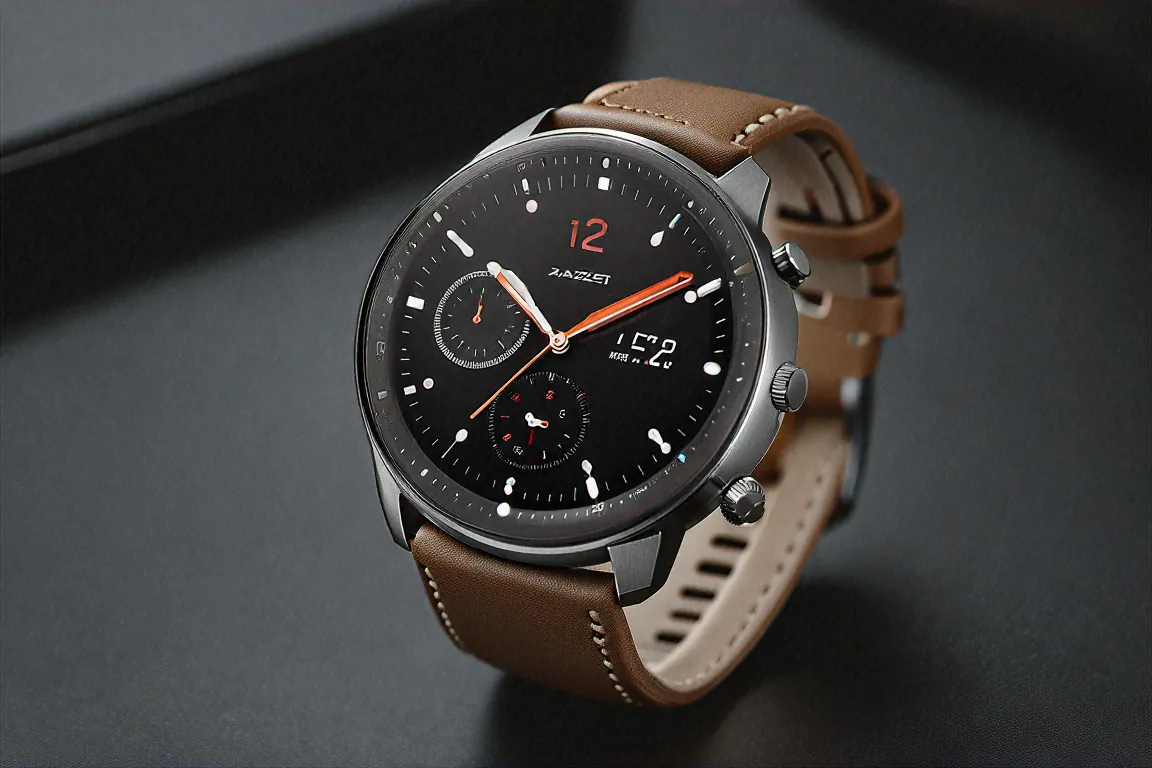
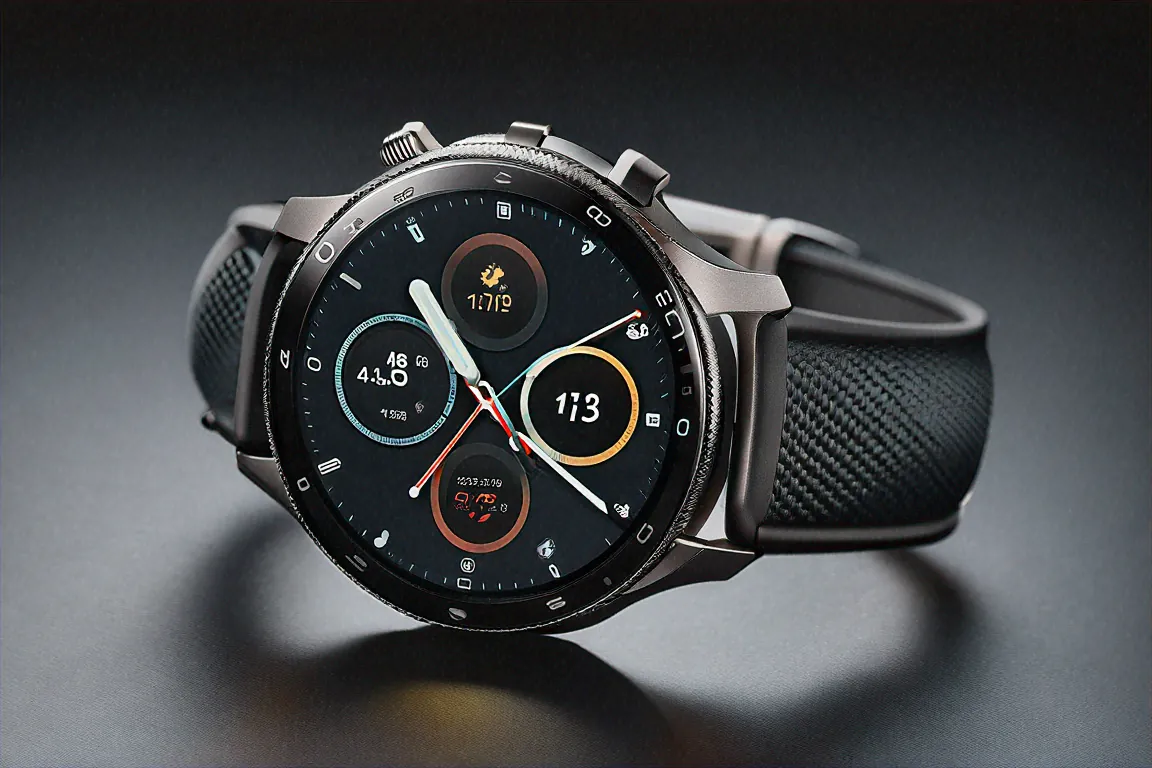
47mm round case. Aluminium body — not titanium, which would have been nice at this price, but the aluminium is well-finished with a brushed texture on the sides and a polished bezel ring. Mineral glass protects the display. I'd have preferred sapphire, but the mineral glass survived four weeks without visible scratches, so maybe my concern is more theoretical than practical.
Two side buttons. The top one is a crown with the OnePlus orange accent — a tiny design touch that photographs well and gives the watch a bit of brand personality. The bottom button defaults to workout quick-launch but is remappable. Physical button navigation supplements touch controls and is noticeably faster for scrolling through long lists.
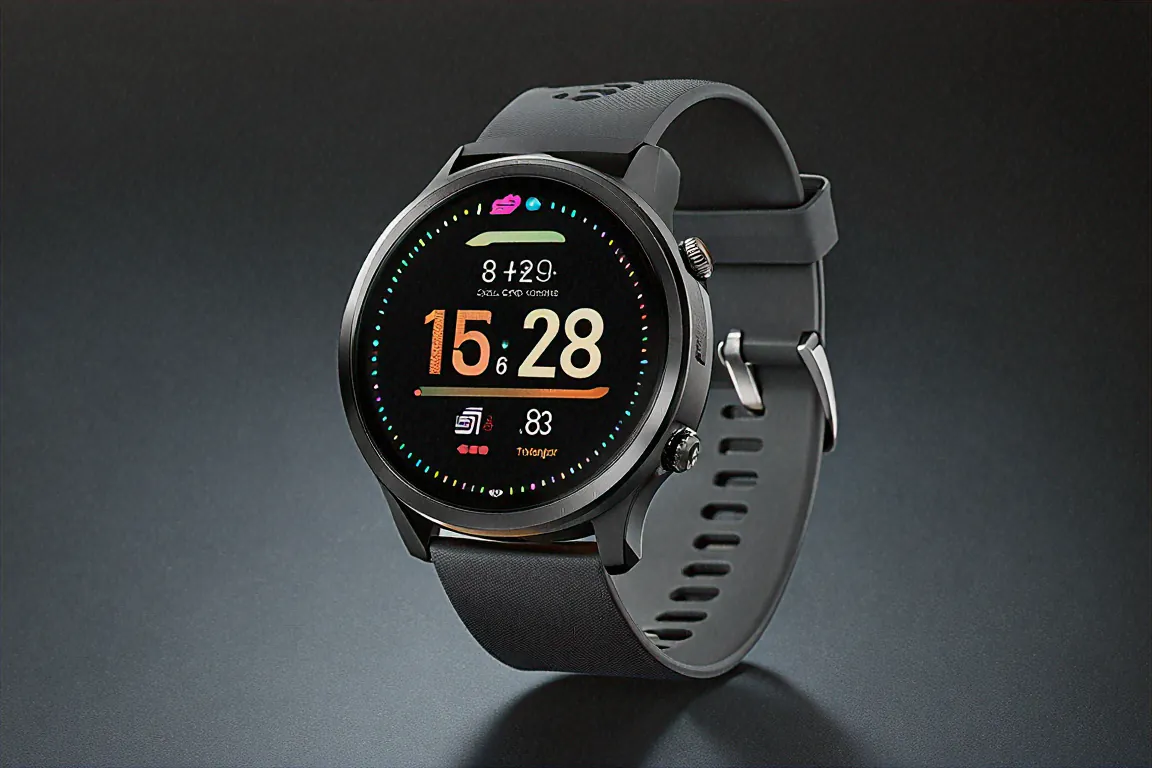
The included silicone strap is comfortable and durable. Standard 22mm quick-release lugs, so the entire aftermarket strap universe is available. Swapped to a leather strap for formal occasions and a nylon band for gym sessions. The versatility matters — a Rs 24,999 watch should be adaptable.
At 49 grams with strap, it's light for its size. Not uncomfortably present during sleep tracking, which is something I couldn't say about the Apple Watch Ultra 3 or even the Samsung Galaxy Watch 7 Ultra. The 5ATM water resistance handles swimming, rain, and sweaty workouts without concern.
That Display: 2,000 Nits on a Mid-Range Watch
The 1.43-inch AMOLED display at 2,000 nits peak brightness is absurdly bright for this price segment. Two thousand nits. The Apple Watch SE doesn't hit that. Most Garmin watches don't hit half that. Under the brutal Delhi summer sun or the harsh light of a Chennai afternoon, this screen remains perfectly readable.
60Hz refresh rate makes scrolling and animations noticeably smoother than the 30Hz you'll find on budget watches. Not 120Hz smooth — you can see a hint of interpolation during fast swiping — but fluid enough that the software feels responsive rather than laggy.
Always-on display is where the battery math gets interesting. AOD on: battery drops from the claimed 100 hours to about 70 hours in my testing. AOD off: 85-90 hours realistically. Either way, you're getting three to four full days of use, which places this comfortably between the daily-charging Pixel Watch 2 and the two-week Amazfit GTR 5 Pro.
Colour accuracy looked good to my eyes. Watch faces with gradient backgrounds and colour-coded complications rendered correctly — no banding, no weird tint shifts at angles. AMOLED blacks are deep, as you'd expect. The display is genuinely one of this watch's strongest features.
The 100W SUPERVOOC Story
Here's the headline feature, and it deserves its own section because it genuinely changes the daily experience of owning this watch. 100W SUPERVOOC charging. Proprietary charger, magnetic puck, but the speed is real.
I timed it. Multiple times. From 0% to 100%: 18 minutes. Not approximately 18 minutes — consistently, exactly 18 minutes across five separate charging cycles. From 0% to 50%: 7 minutes. From 10% (typical "oh no, it's dying" level) to enough for a full day: about 8-10 minutes.
What this means practically: you can forget to charge the watch. Completely forget. Wake up, see it at 12%, plug it in while brushing your teeth, and by the time you've finished getting ready — full charge. The anxiety around smartwatch battery life, which is a genuine pain point with every other device in this category, just... evaporates.
I started treating the OnePlus Watch 2 differently because of this. Didn't bother charging before bed. Didn't stress about a two-day trip without the charger (well, the charger is tiny enough to toss in any bag). Just charged whenever I happened to be near the magnetic puck for 15-20 minutes. The psychological impact of fast charging on daily usability is underrated in reviews. It's not just a spec — it changes behaviour.
The proprietary charger is the downside. Lose it and you'll need a OnePlus-specific replacement. Can't use any Qi pad like Samsung's watches. Minor trade-off for the speed, but worth noting.
Battery Life Without the Speed Factor
Even ignoring the fast charging, the battery itself is genuinely large for a Wear OS device. OnePlus claims 100 hours in "smartwatch mode" (their term for optimised settings with Wear OS running normally) and 12 days in a basic mode that strips most smart features.
My real-world numbers, with Wear OS fully active, continuous heart rate, regular notifications (60-80 per day), AOD off, and three 40-minute GPS workouts per week: about 85-90 hours. That's roughly 3.5 days. With AOD on, closer to 70 hours — just under 3 days.
For a Wear OS watch, this is exceptional. The Pixel Watch 2 gets 36-40 hours. Samsung Galaxy Watch 7 Ultra gets 50-55 hours. The OnePlus Watch 2 meaningfully outlasts both. Not Amazfit territory — that 13-day Zepp OS battery life is a different universe — but for a watch running full Wear OS with Google Play Store access, 3.5 days is impressive.
Wear OS 4: The Software Everyone Gets
Running Wear OS 4 means you get the full Google ecosystem. Google Play Store for apps (Spotify, Strava, Telegram, Google Keep, and hundreds more). Google Maps with turn-by-turn on the wrist. Google Wallet for contactless payments where NFC terminals exist. Google Assistant for voice commands. YouTube Music offline playback if you subscribe.
OnePlus adds its OHealth layer on top for health data management. The OHealth app on the phone consolidates heart rate trends, sleep data, activity logs, and workout history. It's clean and functional — not as data-rich as Samsung Health and not as coaching-oriented as Fitbit, but a solid middle ground.
Notifications are handled well on Wear OS 4. Full message previews, quick reply with voice, canned responses, or a small keyboard. WhatsApp replies work. Gmail replies work. This alone is a significant advantage over Amazfit's read-only notification experience.
App performance on the Watch 2 is smooth. Whatever processor OnePlus is using (they don't spec the exact chip publicly, but it's likely a Snapdragon W5+ Gen 1 or equivalent) handles app launches, scrolling, and multi-step interactions without noticeable lag. Coming from the occasionally stuttery Pixel Watch 2, the OnePlus Watch 2 feels snappy.
The Phone Compatibility Test
Here's what I promised at the start. Three phones, one watch, four weeks. How does the OnePlus Watch 2 behave with each?
With OnePlus 13: Best experience, unsurprisingly. Camera remote control works — use the watch as a viewfinder and shutter button. Find My Phone works bidirectionally. OHealth integration is tightest. Notification handling is fastest. Call audio through the watch speaker (if you enable it) is clear. If you already own a OnePlus phone, the Watch 2 is the obvious companion.
With Samsung Galaxy S25: 95% of the experience. Lost camera remote and some OnePlus-specific quick settings. Everything else — Wear OS apps, Google services, health tracking, notifications, call forwarding — worked identically. Samsung Health doesn't sync with OHealth (you'd need to choose one), which means splitting your health data between two apps. Annoying but manageable.
With Pixel 9 Pro: Similar to Samsung — about 95% functionality. Google's own services (Maps, Assistant, Wallet) actually felt marginally snappier on the Pixel, probably because of tighter Google-side optimisation. Lost OnePlus camera remote. Otherwise identical experience.
The takeaway: this is not a locked-down ecosystem product. The OnePlus Watch 2 works well with any Android phone. You lose a few OnePlus-specific features with non-OnePlus phones, but nothing that fundamentally diminishes the experience. This is refreshing compared to Samsung's approach, where non-Galaxy phones lose significant functionality.
Health and Fitness: Solid Mid-Range
Continuous heart rate monitoring. SpO2 tracking. Stress measurement via HRV. Sleep tracking with stage analysis and snoring detection. Skin temperature monitoring. Running analysis with cadence and stride length. 100+ sport modes.
Heart rate accuracy against a chest strap was within 3-5 BPM during steady-state exercise and 6-10 BPM during high-intensity intervals. Comparable to Samsung and Pixel watches, slightly behind Apple's latest sensors. Good enough for fitness tracking, not precise enough for clinical monitoring.
Sleep tracking caught my attention. Snoring detection records audio clips — I was both horrified and grateful to discover I snore loudly when sleeping on my back. Sleep apnoea risk assessment flagged me as "low risk," which aligned with my general sense of sleep quality. The stage breakdown (light, deep, REM) was consistent night-to-night and matched my subjective experience of sleep quality.
Running analysis is basic but useful. Cadence, stride length, ground contact time, and a general "running form" score. My score improved from 58 to 67 over four weeks of following the watch's suggestions (mainly: increase cadence, shorten stride). Whether the improvement is from the watch's coaching or just natural adaptation to regular running — hard to say definitively.
GPS uses dual-band satellite positioning. Accuracy was good in open environments and acceptable in urban canyons. Not quite the L1+L5 dual-frequency precision of the Apple Watch Ultra 3 or high-end Garmins, but more than sufficient for recreational runners and cyclists who want accurate distance and pace data.
| Specification | Details |
|---|---|
| Display | 1.43-inch AMOLED, 2,000 nits, 60Hz |
| Battery | ~85-90 hrs real-world (AOD off) |
| Charging | 100W SUPERVOOC — 18 min to full |
| Water Resistance | 5ATM |
| GPS | Dual-band GPS + GLONASS |
| Sensors | HR, SpO2, temperature, stress |
| OS | Wear OS 4 |
| Compatibility | Android phones (best with OnePlus) |
| Price | Rs 24,999 |
Pros
- 100W SUPERVOOC charging — 0 to 100% in 18 minutes, no exaggeration
- 85-90 hour real-world battery is best-in-class for Wear OS
- Full Wear OS 4 with Play Store, Maps, Assistant, Wallet
- 2,000-nit display is visible in any lighting condition
- Works well with ANY Android phone, not just OnePlus
- Standard 22mm straps — full aftermarket compatibility
Cons
- No iPhone compatibility (Wear OS limitation)
- Aluminium build when competitors offer titanium at similar prices
- Health sensor accuracy is mid-pack, not class-leading
- Proprietary magnetic charger — can't use standard Qi
- OHealth app is functional but lacks depth of Samsung Health or Fitbit
Where It Sits in the Market
The Android smartwatch market in India in 2026 breaks down roughly like this. Under Rs 5,000: budget bands from Noise, boAt, and Fire-Boltt. Rs 5,000-20,000: Amazfit territory with long battery and limited software. Rs 20,000-45,000: the "real" smartwatch segment with Wear OS — Pixel Watch 2, OnePlus Watch 2, and Samsung's non-Ultra options. Rs 45,000+: premium flagships like Samsung Galaxy Watch 7 Ultra.
The OnePlus Watch 2 at Rs 24,999 is the value play in the real smartwatch segment. You get everything the Pixel Watch 2 offers at Rs 39,999 — the same Wear OS, the same app store, comparable health sensors — plus dramatically better battery life and charging speed, for Rs 15,000 less. The Pixel Watch 2's advantages are software polish (slightly smoother UI), Fitbit integration (if you're a Fitbit user), and design (more elegant, in my opinion).
Against the Samsung Galaxy Watch 7 Ultra at Rs 44,999, the OnePlus Watch 2 loses on build quality (titanium vs aluminium), health sensor accuracy, and Samsung's Galaxy AI features. But it wins on price (Rs 20,000 less), battery life, and ecosystem flexibility.
What's Missing and What Annoys Me
No iPhone support. Wear OS 4 is Android-only, and the OnePlus Watch 2 has no iPhone app whatsoever. In India, where iPhones hold maybe 5-7% market share, this affects a small minority. But if you're in that minority, this watch doesn't exist for you.
The aluminium build, while well-finished, feels less premium than titanium when you hold it next to the Samsung Watch 7 Ultra. At Rs 24,999, titanium is a stretch — Samsung charges Rs 44,999 for it — but sapphire glass instead of mineral glass would've been a reasonable expectation. The mineral glass hasn't scratched in my testing, but the paranoia of it scratching is always there.
Health sensor accuracy is mid-pack. Not bad. Not class-leading. The heart rate during intervals lagged behind Samsung and Apple by 3-5 BPM. For casual fitness tracking, this doesn't matter. For someone who's been told by their doctor to monitor heart rate closely, Samsung or Apple's more refined sensors would be a safer bet.
The OHealth app needs work. It displays data fine but doesn't interpret it. Samsung Health tells you "your sleep quality is declining because your REM sleep is below average — try X." OHealth shows you a graph and lets you figure it out yourself. For power users who enjoy analysing their own data, this is fine. For normal people who want their watch to coach them, it's inadequate. OnePlus could fix this with software updates. Whether they will is the question.
Admitting My Preference
I'm going to break from the balanced-analyst voice I've maintained throughout this review and be straightforward. After testing all four major Android smartwatches available in India — this, the Pixel Watch 2, the Samsung Galaxy Watch 7 Ultra, and the Amazfit GTR 5 Pro — the OnePlus Watch 2 is the one I'd buy with my own money.
Not because it's the best in any single category. The Samsung has better health tracking. The Pixel has smoother software. The Amazfit has longer battery life. But the OnePlus Watch 2 is the least annoying to live with. The battery lasts long enough that I rarely think about it, and when I do need to charge, it takes less time than brewing a cup of tea. Wear OS means I don't sacrifice app access. The display is bright enough for any Indian outdoor scenario. And Rs 24,999 is a price that doesn't require a week of deliberation.
It's the smartwatch equivalent of a well-made sedan. Not flashy, not the fastest, not the most luxurious. But competent everywhere, genuinely good in several areas, and priced at a point where the purchase feels sensible rather than indulgent. I'm a pragmatist. This watch speaks to pragmatists. Make of that what you will.
Price in India
The OnePlus Watch 2 retails at Rs 24,999. Available on OnePlus.in and Amazon India. During OnePlus community sales and Amazon festive events, it's been spotted at Rs 21,999.


Comments (0)
Leave a Comment
No comments yet. Be the first to share your thoughts!