
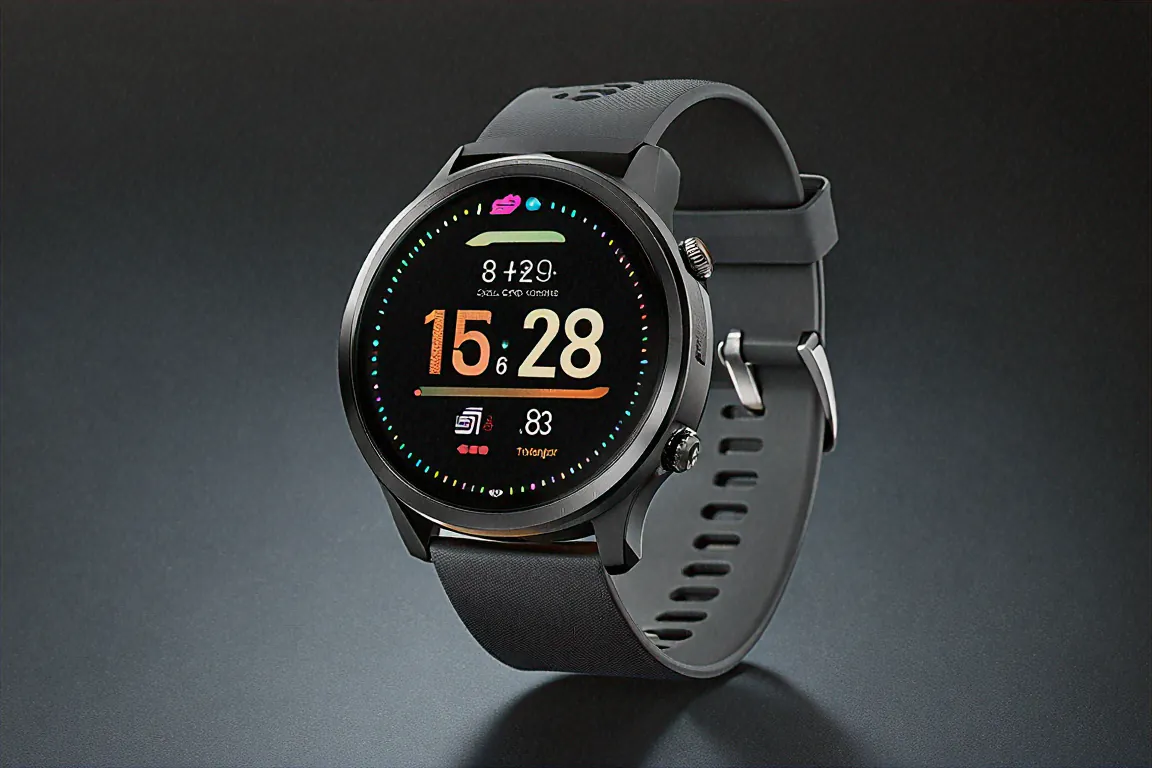
Can a Rs 4,999 Watch Actually Be Good? I Gave Myself Two Weeks to Find Out.
Here's the challenge I set for myself. Ditch the Samsung Galaxy Watch 7 Ultra for two full weeks. Wear nothing but the Noise ColorFit Pro 5, a watch that costs less than a Friday dinner at a decent restaurant in Bangalore. Use it for everything — workouts, sleep tracking, notifications, calls. Document every moment it impresses me and every moment it falls flat.
I was expecting this to be a hit piece. Honestly. I've spent years testing premium wearables, and the idea that something at this price could deliver a meaningful experience seemed laughable. The Noise ColorFit Pro 5 costs Rs 4,999. My Samsung costs nine times that. Surely the experience gap would be equally vast.
Spoiler: it wasn't. And that's the most interesting thing I've learned in months of reviewing gadgets.
What You Get in the Box
Basic stuff. The watch, a silicone strap (already attached), a magnetic charging cable, and a tiny instruction booklet that nobody reads. No fancy case. No premium unboxing experience. You're not paying for theatre at this price — you're paying for the watch, and every rupee goes toward the watch. Fair enough.
Build Quality: Where I Expected the Worst
Picked it up. Turned it over. Plastic back. "Here we go," I thought. The front is scratch-resistant glass — not sapphire, not even branded Gorilla Glass, just generic scratch-resistant mineral glass. The frame is polished aluminium, which at least doesn't look cheap. Multiple colourways available; I tested the black variant, which is the least flashy and most likely to pass for a more expensive device from three feet away.
The silicone strap is... fine. Comfortable enough for daily wear, doesn't irritate my skin, holds its clasp securely. It's not the butter-soft fluoroelastomer of an Apple Watch band, but it's perfectly adequate. A strap is a strap is a strap at this price point.
Two weeks of daily wear including two gym sessions, a couple of rain-soaked auto rickshaw commutes, and one incident where I absent-mindedly washed dishes with it on. IP68 rating held up. No water ingress. The aluminium frame picked up a tiny scratch on Day 8 from catching on a metal door handle, but it's only visible if you look for it.
My initial skepticism about build quality? Largely unfounded. This isn't a premium watch and it doesn't pretend to be. But it's competent. Feels solid on the wrist. Doesn't creak. Doesn't feel like it'll disintegrate if I gesture enthusiastically during a conversation.
That AMOLED Display Has No Business Being This Good at This Price
Okay. THIS is where the ColorFit Pro 5 earned my respect. A 1.96-inch AMOLED display at Rs 4,999. I remember when AMOLED at this price was unthinkable — you'd get a washed-out LCD with viewing angles that made it unreadable past 30 degrees. Not anymore.
The display is genuinely excellent. Crisp text, vibrant colours, deep blacks. 600 nits peak brightness isn't going to match the 3,000-nit flagships, but it's readable outdoors in most conditions. Direct harsh noon sunlight? You'll squint a bit. Morning runs at 7 AM? Perfectly clear. Evening glances at notifications? Gorgeous.
The always-on display mode shows a simplified clock face and basic stats. Battery impact is noticeable — takes about a day off the total battery life — but the option existing at this price is remarkable. Over 100 watch faces available through the NoiseFit app, ranging from sporty digital layouts to faces that mimic analogue luxury watches. Some are genuinely good-looking. Some are garish. The variety is appreciated regardless.
Text rendering is clean enough to read full WhatsApp messages without squinting. Notification cards display sender, subject lines, and enough preview text to decide whether you need to pull out your phone. For a budget watch, this screen delivers an experience that's maybe 80% of what my Samsung provides. Eighty percent at one-ninth the price. Let that math settle in.
Health Tracking: Expectation vs. Reality
This is where I expected the floor to drop out. Premium watches use advanced sensor arrays with multiple LEDs, sophisticated algorithms, and years of R&D. Budget watches use... budget sensors. Right?
Partly right. The ColorFit Pro 5 tracks continuous heart rate, SpO2, stress levels, and sleep. I wore it on one wrist and my Samsung on the other for three days of overlap testing.
Heart rate at rest: Within 3-5 BPM of the Samsung consistently. Close enough to identify trends, not accurate enough for medical monitoring. Which, to be fair, even the Samsung isn't certified for.
Heart rate during exercise: Wider variance. During a moderate-intensity treadmill run, the Noise watch read anywhere from 5-12 BPM different from the Samsung. Sometimes higher, sometimes lower. Not chaotic, but not precise. You'd get a general sense of "I'm in zone 3" versus "I'm in zone 4," but the exact number isn't trustworthy.
SpO2: Consistently read 1-2% lower than the Samsung and a fingertip pulse oximeter. Probably just sensor calibration differences. The trend is what matters here, and the trend was consistent.
Sleep tracking: Detected sleep and wake times within about 15 minutes of the Samsung's readings. Doesn't break down sleep stages (light, deep, REM) as granularly — it gives you a total sleep score and rough stage estimates. Enough to know whether you slept well or poorly. Not enough for obsessive sleep optimisation.
Stress monitoring: Uses heart rate variability to estimate stress. Seemed to correlate directionally with my subjective state — higher readings during tense work periods, lower during evening relaxation. But the resolution is low and I wouldn't base any decisions on it.
The 100+ sports modes sound impressive on paper. In practice, most are variations on "tracking your heart rate while doing a thing." There's no advanced running dynamics, no form analysis, no recovery metrics. You start a workout, it logs time, heart rate, and estimated calories. For someone transitioning from no tracking at all, this is great. For someone coming from a Garmin or Samsung, it's basic.
One critical absence: no GPS. The ColorFit Pro 5 relies entirely on your phone's GPS for location-based tracking. If you run without your phone, you get heart rate and time but no distance, no pace, no route map. For a lot of Indian users who jog in their apartment complex or on a treadmill, this doesn't matter. For road runners and cyclists, it's a dealbreaker.
Bluetooth Calling: Surprisingly Decent
This caught me off guard. The built-in mic and speaker handle phone calls through Bluetooth, and they're... actually usable. Voice clarity isn't fantastic — callers said I sounded "like you're in a slightly echoey room" — but for quick conversations under two minutes, it works. Picking up a call while cooking, checking in with a delivery guy, confirming a time with a friend. These micro-conversations work fine from the wrist.
Extended conversations? Pull out the phone. The speaker gets tinny after a couple of minutes and background noise bleeds in noticeably. But I don't think anyone's buying a Rs 4,999 watch expecting to take 30-minute conference calls from their wrist.
Call audio through the watch — i.e., hearing the other person — is quiet. Maximum volume is barely adequate in a noisy environment. Indoors, in a quiet room, it's fine. On a busy street? You'll miss half the words.
Battery Life: Seven Days Is Not Exaggeration
Noise claims seven days. With always-on display off, regular notification flow (50-70 per day), continuous heart rate monitoring, and no Bluetooth calling: I got six and a half days before hitting 10%. With AOD on, that dropped to about five days. With regular Bluetooth calling usage (3-4 short calls per day), closer to five and a half days without AOD.
Any way you slice it, this watch goes a full working week without charging. Coming from the Pixel Watch 3's 36 hours or even the Samsung's 54 hours, this felt luxurious. Charge on Sunday night, forget about it until Saturday. There's something psychologically freeing about just... not thinking about your watch's battery.
Charging itself takes about two hours from empty to full via the magnetic cable. Not fast, but given you're doing it once a week, who cares?
The NoiseFit App: Gets the Job Done
Available for both Android and iOS. Interface is clean enough. You can configure watch faces, view health data trends, manage notifications, and update firmware. The health dashboard shows daily, weekly, and monthly trends for heart rate, steps, sleep, and SpO2.
Compared to Samsung Health or Fitbit, the insights are surface-level. You get charts and numbers, but minimal interpretation. Samsung will tell you "Your deep sleep is 30% below average, try X and Y." NoiseFit will show you a bar chart and leave you to draw your own conclusions. For data-literate users, this is fine. For people who want coaching, it's insufficient.
Notification management is straightforward. Toggle which apps can send notifications to the watch, and they appear as cards you can read and dismiss. WhatsApp messages show full text. Gmail shows sender and subject. No quick-reply on iOS; Android gets canned response options. No voice-to-text reply from the watch.
| Specification | Details |
|---|---|
| Display | 1.96-inch AMOLED, 600 nits |
| Battery | Up to 7 days |
| Bluetooth | 5.3 with calling |
| Water Resistance | IP68 |
| Sports Modes | 100+ |
| Sensors | HR, SpO2, temperature, stress |
| GPS | None (uses phone GPS) |
| Compatibility | Android & iOS via NoiseFit app |
| Price | Rs 4,999 |
Day-by-Day Notes From My Two Weeks
Day 1: Setup was easy. Paired in under 2 minutes. Immediately missed the Samsung's rotating bezel navigation. Touch-only interface on the Noise is fine but less satisfying.
Day 3: First Bluetooth call from the watch. Colleague didn't realise I was on a watch until I told him. Pleasantly surprised.
Day 5: Gym session with the watch. Heart rate tracking kept up reasonably during weight training. Lost accuracy during HIIT intervals — reported 135 BPM when I was clearly gasping at what felt like 160+. Checked later against my Samsung's data from the previous week's similar workout. Yep, the Noise is under-reading during peak exertion.
Day 7: First full week. Battery at 14%. Haven't charged since setup. That's impressive regardless of price.
Day 9: Rain-soaked commute. Watch handled it without flinching. Water cleared off the screen quickly and touch response wasn't affected.
Day 11: Noticed I'd stopped missing the Samsung. Not because the Noise is better — it objectively isn't in almost every measurable way. But because the things I actually use a smartwatch for day-to-day — checking time, reading notifications, tracking steps, occasional calls — the Noise handles just fine.
Day 14: Challenge over. Switched back to the Samsung. Immediately noticed everything that's better about a Rs 44,999 watch: sharper display, smoother scrolling, richer health data, GPS, better notification handling. But also noticed that during those two weeks with the Noise, I hadn't felt deprived in the way I expected.
Pros
- 1.96-inch AMOLED at Rs 4,999 is genuinely remarkable
- Seven-day battery life means weekly charging
- Bluetooth calling works well enough for short conversations
- 100+ sports modes cover most common activities
- IP68 handled real-world water exposure without issues
- Build quality exceeds what Rs 4,999 used to buy
Cons
- No GPS — outdoor activity tracking depends on your phone
- Health sensor accuracy lags premium watches by meaningful margins
- Plastic back panel feels budget when you flip the watch over
- NoiseFit app provides data without interpretation or coaching
- Speaker volume insufficient for calls in noisy environments
Comparing the ColorFit Pro 5 Against Its Budget Rivals
At Rs 4,999, the competition is thick. Let me give you the quick breakdown based on my experience with all of these watches.
The Fire-Boltt Phoenix Ultra at around Rs 3,999 has a similar AMOLED display and Bluetooth calling, but the heart rate sensor was noticeably less accurate in my side-by-side testing — off by 8-15 BPM during exercise compared to the Noise's 5-12 BPM variance. Build quality felt cheaper too, with a plasticky frame that creaked when pressed. Battery life was comparable at around six days.
The boAt Wave Sigma at Rs 4,499 comes close. Good display, good battery, working Bluetooth calling. Where it falls short is the app experience — boAt's wearable app is less polished than NoiseFit, and firmware updates come slower. The watch face selection is smaller. On raw hardware specs, it's neck and neck. On the software side, Noise has the edge.
Amazfit's Bip 5 at around Rs 5,999 is interesting because it includes GPS — the one feature the ColorFit Pro 5 critically lacks. If outdoor running and cycling are your thing, the extra Rs 1,000 for GPS is worth every paisa. But the Bip 5's display, while decent, isn't as vibrant as the ColorFit Pro 5's AMOLED, and the Bip 5 doesn't have Bluetooth calling. Trade-offs everywhere at this price.
My verdict on the segment: the ColorFit Pro 5 wins for people who want the best display and Bluetooth calling under Rs 5,000. The Amazfit Bip 5 wins for outdoor fitness enthusiasts who need GPS. Everything else is a tier below these two.
A Note on Durability After Two Weeks
The aluminium frame held up well. The silicone strap showed no signs of wear — no discolouration, no stretch, no irritation. The display glass survived without scratches despite my lack of care (no screen protector applied). The charging pins on the back made solid contact with the magnetic charger every time — some budget watches have alignment issues that make charging frustrating, and I'm happy to report the ColorFit Pro 5 doesn't.
The one physical issue I noticed: the side button (used for power and back navigation) has a very slight wobble. It clicks fine, functions fine, and doesn't affect usability. But if you fiddle with it — as I tend to do absently during phone calls — you'll notice it's not as tight as the buttons on a Casio G-Shock. At Rs 4,999, I'm noting it rather than complaining about it.
What This Means for Smartwatch Buyers in India
The Noise ColorFit Pro 5 doesn't compete with premium smartwatches. It competes with not having a smartwatch at all. And against that benchmark, it's excellent. If you've never owned a wearable, if you're curious about step counting and heart rate tracking but can't justify Rs 20,000+, if you want Bluetooth calling convenience without spending five figures — this is the product that gets you in the door.
It's a first smartwatch, not a last smartwatch. You'll outgrow it if you get serious about fitness data. You'll want GPS when you start running outdoors. You'll want better health insights when the novelty of raw numbers wears off. But that might take a year or two, and by then there'll be a ColorFit Pro 7 or 8 at the same price doing more.
The thing that keeps rattling around my head is the diminishing returns curve. Going from no watch to the ColorFit Pro 5 is a massive quality-of-life upgrade. Going from the ColorFit Pro 5 to a Samsung Galaxy Watch 7 Ultra is a smaller upgrade for nine times the money. The first Rs 4,999 buys you 70% of the smartwatch experience. The next Rs 40,000 buys you the remaining 30%.
Whether that remaining 30% matters to you is
Price in India
The Noise ColorFit Pro 5 is priced at Rs 4,999. Available on Gonoise.com, Amazon India, and Flipkart. Frequently discounted to Rs 3,999 during sale events.



Comments (0)
Leave a Comment
No comments yet. Be the first to share your thoughts!