
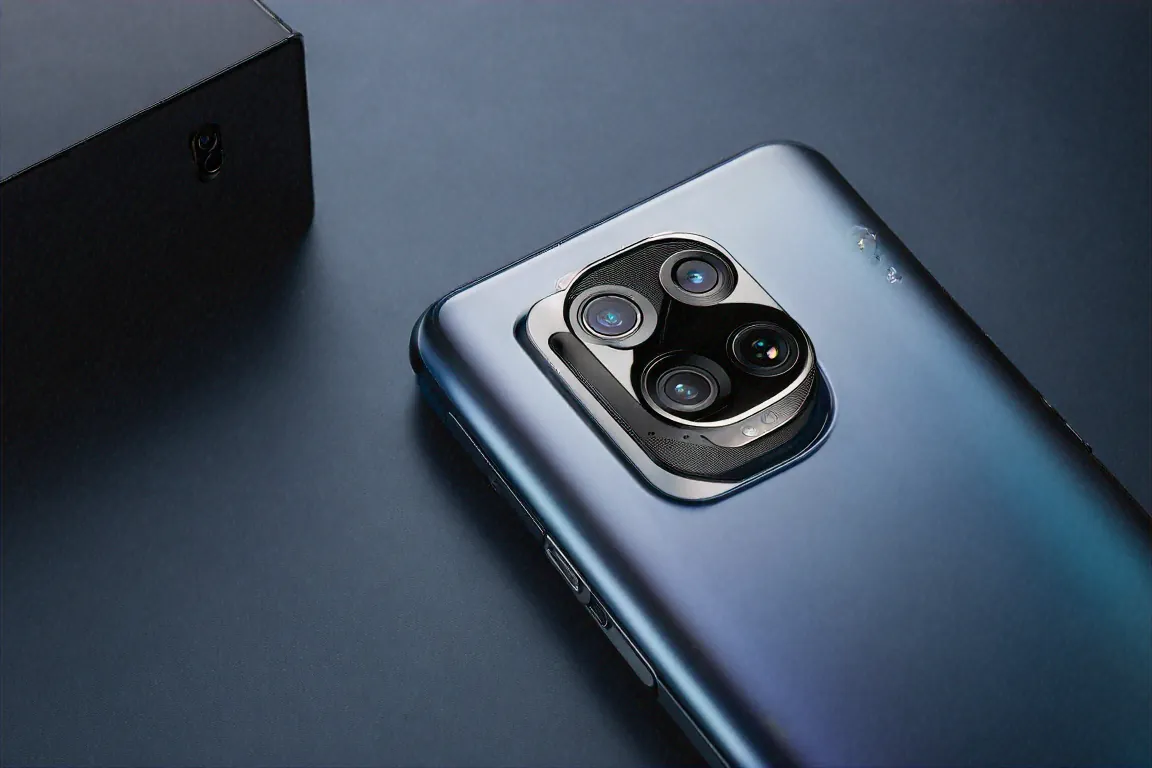
Roughly 73% of smartphones sold above Rs 40,000 in India during Q4 2025 were made by either Samsung or Apple. Xiaomi wants to change that number. The Xiaomi 14 at Rs 49,999 is their most aggressive attempt yet — a phone that packs a 1-inch Leica-tuned camera sensor, Snapdragon 8 Gen 3, and 90W charging into a package that costs less than what Samsung charges for a mid-range Galaxy A series phone with a fraction of the specs. Whether Xiaomi's reputation lets them actually compete at this level in India is a separate question. But on hardware alone, the 14 doesn't just compete. It probably wins.
What You're Getting For Rs 49,999
A quick inventory, because the spec sheet reads like something from a phone costing twice as much:
- Snapdragon 8 Gen 3 (3nm) — same as the Samsung S26 Ultra at Rs 1,34,999
- 50MP Sony LYT-900 main sensor — 1-inch type, with Leica Summilux branding
- 50MP 5x periscope telephoto and 50MP ultrawide
- 6.73-inch AMOLED display, 3200 nits peak brightness, 120Hz
- 4610mAh battery with 90W HyperCharge wired and 50W wireless
- IP68 dust and water resistance
- Glass back option
Read that list again. A 1-inch camera sensor with Leica glass, the fastest Android processor, IP68 rating, 90W charging, 50W wireless, and a 3000-nit display — all for under Rs 50,000. That's the pitch. It's a good pitch.
Build and Design
Xiaomi went with three options: Black (glass), White (glass), and Ceramic White. The ceramic variant is the one to get if you can find it in stock. Ceramic as a phone back material has a cold, dense feel that glass simply can't replicate — pick it up and it feels like a piece of polished stone. Heavy in a satisfying way rather than a burdensome one.
Frame is titanium alloy. Not Grade 5 aerospace titanium like Apple uses, but a titanium blend that adds rigidity without pushing the weight too high. At 215 grams, the Xiaomi 14 is lighter than both the Samsung S26 Ultra (229g) and the OnePlus 14 Pro (219g) while matching the Samsung's battery capacity.
A circular Leica-branded camera module dominates the upper portion of the back. It's large and conspicuous. Leica's red dot logo sits next to the lens array. Some people find branded camera modules ostentatious; I think it looks clean and purposeful. The camera bump isn't as tall as last year's model, which means less wobble when the phone's lying flat on a table.
Buttons have good tactile feedback. The SIM tray sits on the bottom edge alongside the USB-C port and speaker grille. Earpiece doubles as a second speaker for stereo audio that's surprisingly loud and clear for the price.
Display
CSOT Q9 AMOLED panel. 6.73 inches. 3200 x 1440 resolution. 120Hz refresh rate. 3200 nits peak brightness. Those are the numbers, and they're strong across the board.
In daily use, this display is gorgeous. Colours are accurate out of the box with a well-calibrated white point — no blue or yellow tint that you need to correct in settings. HDR10+ and Dolby Vision content on Netflix and Amazon Prime Video looks rich and detailed. Watching "Dune: Part Two" on this screen in a dark room was a borderline cinematic experience, which sounds like hyperbole until you actually try it.
Outdoor visibility at 3200 nits is excellent. Brighter than Samsung's S26 Ultra (2600 nits) and the Pixel 10 Pro (2400 nits). Under harsh sunlight the screen stays perfectly readable. The 120Hz refresh rate makes scrolling through apps feel fluid, though most of the time the adaptive system drops to lower rates to save battery.
Under-display fingerprint sensor is responsive and consistent. No complaints after two weeks of use. Face unlock is available as a secondary option — fast, but not as secure since it relies on the front camera rather than a depth sensor.
Camera System: Leica's Influence Is Real
The 50MP Sony LYT-900 is a 1-inch type sensor. Physically larger sensor means more light captured per pixel, which translates directly to better image quality — especially in low light where smaller sensors struggle with noise. It's the same class of sensor that was exclusive to Rs 80,000+ phones just a year ago.
Leica's involvement goes beyond branding. Two colour profiles are available: Leica Authentic (muted, slightly desaturated, film-like rendering) and Leica Vibrant (punchier colours closer to what Samsung or OnePlus produce). I found myself switching between them depending on the subject. Authentic for portraits and street photography where I wanted that Leica character. Vibrant for landscapes and food where extra colour pop works.
Midnight test shots in Bengaluru were where this camera genuinely surprised me. Around 11:30pm on a dimly lit residential street, the 1-inch sensor pulled in enough light to produce images that looked like they were taken during golden hour — except they clearly weren't, because the sky was black and streetlights were visible. Detail in shadows was clean. Noise was controlled. Dynamic range between a bright neon sign and a dark alleyway was handled remarkably well. These are shots that would challenge a dedicated mirrorless camera, and the phone handled them without any special modes or manual settings.
The Leica Summilux glass produces a characteristic rendering that portrait photographers will recognise. Skin has a three-dimensional quality, colours are warm without being saturated, and there's a subtle vignette in the Authentic mode that gives photos a timeless feel. Not everyone wants their phone camera to emulate a film camera from the 1960s, but those who do will find this deeply satisfying.
The 50MP 5x periscope telephoto handles zoom duties. Sharp at its native 5x magnification, usable at 10x with some detail loss, and acceptable at 20x for identifying distant objects but not for sharing on social media. Consistent colour matching between the main and telephoto lenses, which is something Xiaomi struggled with in previous generations.
A 50MP ultrawide rounds out the system. Wide field of view with controlled distortion. Good for group photos, architecture, and landscapes. Not the strongest ultrawide I've tested (OnePlus's has slightly less edge softness), but solid for the price.
Front camera is 32MP with an f/2.0 aperture. Decent for selfies and video calls. Skin smoothing is applied by default but can be dialled down to zero in settings, which is how I'd recommend using it.
Video recording from the rear cameras supports 4K at 60fps with good stabilisation. Footage is detailed and colours remain consistent between lenses during recording, which is a nice touch — some phones shift colour temperature when you switch between main and telephoto mid-recording, but the Xiaomi 14 handles it smoothly. Audio capture through the built-in stereo microphones is clean and picks up voice well even in moderately noisy environments. Not iPhone-level video, to be clear, but solid for someone who records the occasional travel clip or family moment.
Snapdragon 8 Gen 3 Performance
Same chip as the Samsung S26 Ultra. Same chip as the OnePlus 14 Pro. Paired here with 12GB of LPDDR5X RAM (16GB option available).
Performance is exactly what you'd expect from the fastest Android silicon available. Everything is instant. App launches, multitasking between a dozen open applications, heavy photo editing, 4K video export — none of it makes the phone hesitate. Gaming performance on BGMI at maximum graphics settings ran smoothly through hour-long sessions. Thermal management through Xiaomi's cooling system kept the back of the phone warm but never hot.
If you've read any of the other reviews in this series, you know the Snapdragon 8 Gen 3 story by now. It's fast. Very fast. The differentiator between phones using this chip comes down to thermal management and software optimisation, and Xiaomi's done a competent job on both.
Storage is UFS 4.0, which means app installation and file transfers are quick. Available in 256GB and 512GB variants. No microSD card slot, no expandable storage — plan accordingly.
I ran a few informal benchmark comparisons against the OnePlus 14 Pro (same Snapdragon 8 Gen 3, 16GB RAM) and the results were neck-and-neck across every test. App launch times identical. Gaming frame rates identical. The Xiaomi ran a degree or two warmer during sustained load, which might indicate slightly less aggressive thermal management, but the difference was small enough that it didn't affect real-world performance. Both phones handled everything I could throw at them without breaking a sweat.
One area where HyperOS does something interesting is memory extension — Xiaomi uses a portion of the UFS 4.0 storage as virtual RAM, expanding the effective memory beyond the physical 12GB. In practice, this means apps stay in memory longer before being killed. On a day when I had about 18 apps in recents, none of them reloaded when I returned to them. Whether that's the virtual RAM helping or just 12GB being sufficient is hard to say, but the experience was smooth regardless.
Battery and Charging
4610mAh. Same capacity as the Samsung S26 Ultra. Full day of heavy use consistently delivered 7 to 8 hours of screen-on time. Lighter use pushed toward 9. Nothing unusual for this battery size with this chipset — roughly in line with what Samsung delivers.
Charging is where Xiaomi has an edge. 90W HyperCharge fills the phone from empty to full in under 40 minutes. That's faster than Samsung's 65W (55 minutes) and significantly faster than Apple's 45W (about 70 minutes for a full charge). A 90W charger is included in the box.
Wireless charging at 50W is available. Fast enough that a 20-minute rest on a wireless pad adds a meaningful amount of charge. Also supports reverse wireless charging for topping up earbuds or a smartwatch, though the speed is slow enough that it's only practical for accessories with tiny batteries.
HyperOS: The Compromises
Here's where the value equation gets complicated. HyperOS, based on Android 14, is a mixed bag.
On the positive side: it's fast, animations are smooth, customisation options are extensive (themes, icon packs, always-on display styles, lock screen widgets), and the settings menu is logically organised. Xiaomi promises three years of Android OS updates and four years of security patches — not matching Google's seven but reasonable for the price.
On the negative side: bloatware. Xiaomi pre-installs a bunch of their own apps (Mi Browser, Mi Video, Mi Music, etc.) alongside some third-party apps that appeared during setup. Most can be uninstalled or disabled, but the fact that they're there at all on a Rs 49,999 phone feels annoying. Worse, some Xiaomi system apps display occasional advertisements — settings recommendations, notification promotions for Xiaomi products, suggested apps in the app drawer. These can be turned off by digging through several settings menus, but the fact that you need to disable ads on a phone you paid fifty thousand rupees for is a valid complaint.
If bloatware and occasional ads are dealbreakers, the OnePlus 14 Pro (OxygenOS) or Google Pixel 10 Pro (stock Android) offer cleaner software. If you're willing to spend 15 minutes disabling things after setup and then largely forget about it, HyperOS is perfectly fine day-to-day.
Connectivity and Extra Features
Twelve 5G bands cover all Indian telecom operators — Jio True 5G, Airtel 5G Plus, and others. Wi-Fi 7 for fast home network speeds. Bluetooth 5.4 with stable audio connections. NFC for Google Pay contactless payments.
An IR blaster sits on the top edge. Small detail, but useful. Downloaded a universal remote app and controlled my Samsung TV, Daikin AC, and a set-top box. One fewer remote cluttering the coffee table.
Cross-device features work with other Xiaomi products. Clipboard sharing with a Xiaomi laptop. Screen casting to a Xiaomi TV. Smart home control for Xiaomi IoT devices. If you're already in Xiaomi's ecosystem, this integration adds value. If you're not, it's irrelevant.
After-Sales Reality in India
Xiaomi's service network in India is extensive for budget phones but thinner for premium ones. In metro cities — Delhi, Mumbai, Bengaluru, Chennai, Hyderabad — finding an authorised service centre is straightforward. In tier-2 and tier-3 cities, the situation is less reliable. Samsung's service network remains the gold standard in India, and Xiaomi isn't close to matching it yet.
Something to factor into your decision, especially if you live outside a major metro. A phone that performs brilliantly doesn't help much if getting it serviced requires a trip to another city.
Call Quality and Everyday Usability
Since we're talking about a phone that costs Rs 49,999 and competes against devices nearly three times its price, it's worth covering the mundane stuff that reviews sometimes skip. Call quality on both Jio and Airtel 5G was clear and consistent — no drops during a week of regular calls. The earpiece speaker is loud enough for noisy environments like auto rides or crowded markets. Speakerphone quality is good too, with the stereo setup providing decent volume and clarity.
Haptic feedback is noticeably improved over last year's Xiaomi 14 Pro. Typing on the keyboard produces a tight, controlled vibration rather than the buzzy rattle that cheaper haptic motors create. It's not iPhone-level haptics (Apple's still ahead here), but it's close enough that you'd be satisfied. Notification vibrations are similarly crisp.
GPS accuracy was solid during my testing with Google Maps across Bengaluru's congested roads. Lock times were fast — usually under three seconds after opening the app. No phantom drifting or incorrect positioning that some phones experience in areas with tall buildings blocking satellite signals.
Face unlock using the front camera works quickly in good lighting and reasonably well in dim conditions, though it failed a couple of times in near-total darkness. The under-display fingerprint remains the more reliable option. Both can be active simultaneously, and the phone uses whichever method recognises you first.
Specifications
| Specification | Details |
|---|---|
| Processor | Snapdragon 8 Gen 3 (3nm) |
| RAM | 12GB / 16GB LPDDR5X |
| Storage | 256GB / 512GB UFS 4.0 |
| Display | 6.73-inch AMOLED, 3200x1440, 120Hz |
| Main Camera | 50MP 1-inch Sony LYT-900, Leica Summilux |
| Ultrawide | 50MP f/2.2 |
| Telephoto | 50MP 5x periscope f/2.5 |
| Front Camera | 32MP f/2.0 |
| Battery | 4610mAh |
| Charging | 90W HyperCharge wired, 50W wireless |
| OS | HyperOS, Android 14 |
| IP Rating | IP68 |
| Weight | 193g |
Pros and Cons
Pros
- 1-inch Leica-tuned sensor at Rs 49,999 is an absurd value proposition
- Snapdragon 8 Gen 3 — the same flagship chip in phones costing Rs 1,35,000
- 90W charging fills the 4610mAh battery in under 40 minutes
- 3000-nit 120Hz AMOLED display is one of the best in any price segment
- Glass back option gives a premium feel that glass can't match
Cons
- HyperOS includes bloatware and occasional ads that require manual disabling
- Service centre availability is weaker in smaller cities compared to Samsung
- After-sales reputation hasn't fully caught up to the premium hardware quality
- No stylus, no expandable storage
Price and Availability
Rs 49,999 for the 12GB/256GB variant. Available on Mi.com, Flipkart, and select Xiaomi retail stores.
The Bottom Line
At Rs 49,999, the Xiaomi 14 gives you a 1-inch Leica camera, Snapdragon 8 Gen 3, IP68 rating, 90W fast charging, and one of the brightest displays available on any phone at any price. Samsung charges Rs 1,34,999 for roughly equivalent hardware. Apple charges Rs 1,59,900. The spec-for-spec value here is hard to argue against.
What Xiaomi can't give you at this price is Samsung's retail presence, Apple's ecosystem integration, OnePlus's clean software, or Google's seven-year update commitment. Those things have value too, and they're the reason some people will pay more for competing phones despite getting similar or worse hardware.
But if camera quality and raw performance per rupee spent is what you care about, the Xiaomi 14 is the best phone under Rs 60,000 in India right now. Maybe the best phone under Rs 80,000. The hardware justifies a price far higher than what Xiaomi's asking.




Comments (1)
Leave a Comment