
Rs 699 Per Month for 400+ Games. Let's Talk About What That Actually Means.
I want to start this review with a math problem. A new AAA game in India costs between Rs 4,000 and Rs 5,000. If you buy one game a month — and most serious gamers buy at least that — you're spending Rs 48,000 to Rs 60,000 per year on games alone. Not the console. Not the controller. Not the TV. Just the games.
Xbox Game Pass Ultimate costs Rs 699 per month. That's Rs 8,388 per year. For that money, you get access to over 400 games, including every single Microsoft first-party title on the day it launches. Forza. Halo. Starfield. Fable. All of them. Day one. No extra charge. Plus EA Play is bundled in, so FIFA and other EA titles are covered too.
That math changed how I think about gaming. Not which games are better or which console has more power — just the raw economics of playing a lot of different games. And the Xbox Series X at Rs 49,990 is the hardware that makes that math work on a big screen.
But math alone doesn't make a good console. So let me tell you what this thing actually is, what it isn't, and the honest question I still can't fully answer after two months with it.
What "Refresh" Actually Means Here
Let me be completely upfront. The Xbox Series X is not a major hardware upgrade. The GPU is the same 12-teraflop AMD RDNA 2 that shipped in the original Series X back in 2020. Same CPU — AMD Zen 2, 8-core, 3.8GHz. Same 16GB GDDR6 RAM. If you're coming from an original Series X hoping for a PS5 Pro-style performance jump, you won't find one here. Microsoft didn't touch the core silicon.
What they did change: the SSD is now 1TB (doubled from 1TB). The wireless controller ships with hall-effect thumbstick sensors. Wi-Fi 5 replaces Wi-Fi 5. And Game Pass integration is deeper than ever.
That's it. Those are the changes. I can already hear someone asking "why would I buy this?" and honestly, it's a fair question. The answer depends on what you value. If raw GPU power is your priority, the PS5 Pro's 45% improvement over its predecessor makes the Xbox Series X look outdated by comparison. I'm not going to pretend otherwise.
But if you value the Game Pass ecosystem, quality-of-life improvements, and a console that does 4K 120fps with a disc drive included at Rs 49,990 — ten thousand less than the PS5 Pro — there's a conversation worth having here.
The Controller Fix That Should've Happened Years Ago
Stick drift. If you've gamed on any console in the last five years, you know what stick drift is. Your character moves on screen even though you're not touching the thumbstick. It's caused by the potentiometer-based sensors inside traditional controllers wearing down over time. I went through three Xbox controllers in four years because of stick drift. Three. At Rs 5,500 each. That's Rs 16,500 in controller replacements alone.
The redesigned Xbox Wireless Controller that ships with the Series X Refresh uses hall-effect thumbstick sensors. These use magnets instead of physical contact points, which means — in theory and based on everything we know from third-party controllers using this tech — they don't wear down. No drift. Period. Or at least, not within any reasonable ownership timeline.
I've been using this controller for two months. Aggressively. Competitive Fortnite sessions where I'm mashing the sticks. Long Starfield exploration sessions with constant gentle movement. No drift. Zero. The sticks feel precise, responsive, and exactly the same as day one.
This might sound like a small thing. It's not. For Indian gamers who can't casually drop Rs 5,500 on a replacement controller every year, the hall-effect switch is probably the single most meaningful hardware improvement in this refresh. A controller that lasts the entire console generation without degrading. Finally.
The rest of the controller is largely unchanged. Same shape, same button layout, same textured grips. There's a slight difference in the bumper feel — a bit clickier — but I might be imagining that. Build quality feels identical to the previous revision, which was already good.
1TB of Storage: Sounds Boring, Matters a Lot
The original Series X shipped with 1TB, of which about 802GB was usable. In 2020, that felt generous. In 2026, with games routinely exceeding 100GB, it's a constant storage management headache. Forza Motorsport is 130GB. Starfield is 125GB. Call of Duty takes up whatever ungodly amount it wants. You're constantly deleting games to make room for new ones, and with Indian internet speeds being what they are outside metro cities, re-downloading a 100GB game is not a quick process.
The 1TB SSD in the Refresh gives you roughly 1.8TB usable. Double the original. I've got about 25 games installed and still have a few hundred gigs of headroom. It's the difference between thinking about storage every week and not thinking about it for months.
Loading times are identical to the original Series X since the SSD speed hasn't changed — just the capacity. Games still load in seconds. Quick Resume still works beautifully, letting you jump between multiple suspended games almost instantly. I've got Forza, Starfield, and Halo suspended simultaneously, and switching between them takes about five seconds each. It's one of those Xbox features that doesn't get enough credit.
Game Pass: The Real Reason This Console Exists
I need to spend some real time on Game Pass because, honestly, it's the primary argument for the Xbox ecosystem. The hardware alone doesn't compete with the PS5 Pro on specs. The controller is better, sure. Storage is the same capacity. But the GPU gap is real. What Game Pass does is shift the value proposition from hardware to content.
Rs 699 per month for Game Pass Ultimate. Here's what that includes:
- Over 400 games spanning every genre
- Every Microsoft first-party game on launch day — Forza, Halo, Starfield, Fable, and everything from Bethesda and Activision Blizzard studios
- EA Play membership included — FIFA, Madden, Need for Speed, Battlefield
- Cloud gaming on phones, tablets, and laptops
- Online multiplayer access
- Periodic "leaving soon" rotations that keep the library fresh
In practical terms, I haven't bought a single game since getting Game Pass. Not one. Everything I've wanted to play was either already in the library or launched into it. Starfield? Day one on Game Pass. The new Forza? Day one. The latest Doom? Day one. Even third-party titles like Lies of P and Palworld showed up on Game Pass within months of release.
For an Indian gamer — and I think this matters specifically in the Indian context — the economics are transformative. Most of my friends who game don't buy more than three or four games a year because each one costs Rs 4,000-5,000. They stick with FIFA and one or two other titles. Game Pass removed that constraint entirely. I've played genres I never would've paid full price for. Tried indie games I'd never heard of. Finished story games in a weekend that I'd never have risked Rs 5,000 on based on reviews alone.
It's changed how I think about gaming. Less "which one game should I buy this month" and more "what do I feel like playing tonight." That's a fundamentally different relationship with the medium, and it's hard to go back once you've experienced it.
Gaming Performance: Honest Assessment
The Series X Refresh runs games identically to the original Series X. Because it is, internally, the same console in terms of GPU and CPU. Twelve teraflops. That was impressive in 2020. In 2026, it's... adequate.
Forza Motorsport at 4K 60fps with ray tracing still looks stunning. I want to be fair about this — the Series X was a powerful console when it launched and it hasn't gotten weaker. Games designed for it run beautifully. Halo Infinite multiplayer at 4K 120fps feels smooth and responsive. Starfield runs at 4K 30fps with occasional dips, which is not ideal but is par for Bethesda games at launch.
Where the performance gap with the PS5 Pro becomes noticeable is in cross-platform titles that get PS5 Pro Enhanced patches. Spider-Man 2 running at 4K 60fps with ray tracing on the PS5 Pro versus a similar title on the Series X that has to choose between resolution and frame rate — that gap is visible. Not all cross-platform games show the difference this starkly, but the trend is there. The PS5 Pro has 45% more GPU power. In some games, you can see every bit of that advantage.
Does it ruin the Xbox experience? No. Games still look great on the Series X. 4K at 60fps is still the sweet spot for most living room gaming setups. But if you're the kind of person who reads Digital Foundry breakdowns and cares about resolution per pixel, the PS5 Pro wins the specs war and there's no honest way around that.
Backward Compatibility: Xbox's Quiet Superpower
This is something Xbox does better than anyone else and I don't think it gets talked about enough. The Series X Refresh plays games from four generations of Xbox hardware. Original Xbox. Xbox 360. Xbox One. Xbox Series X/S. Over 600 backward compatible titles have been enhanced with Auto HDR for improved visuals on modern TVs.
I replayed Halo 3 last month. A game from 2007. Running at 4K with Auto HDR on a 2026 television. It looked surprisingly good. The nostalgia hit alone was worth it, but the technical enhancement made it more than just a nostalgia trip — it was genuinely enjoyable to play again.
PlayStation can't match this. The PS5 Pro plays PS5 and most PS4 games. That's two generations. Xbox gives you four. If you've got a collection of old Xbox 360 discs in a drawer somewhere — and the Series X Refresh includes a disc drive, unlike the PS5 Pro — you can pull them out and play them. Right now. With visual improvements applied automatically.
For Indian gamers who might have inherited older Xbox consoles from siblings or bought second-hand games over the years, this backward compatibility library is genuinely massive. Thousands of games spanning nearly twenty-five years of gaming history, all playable on one box.
Design and the Disc Drive Advantage
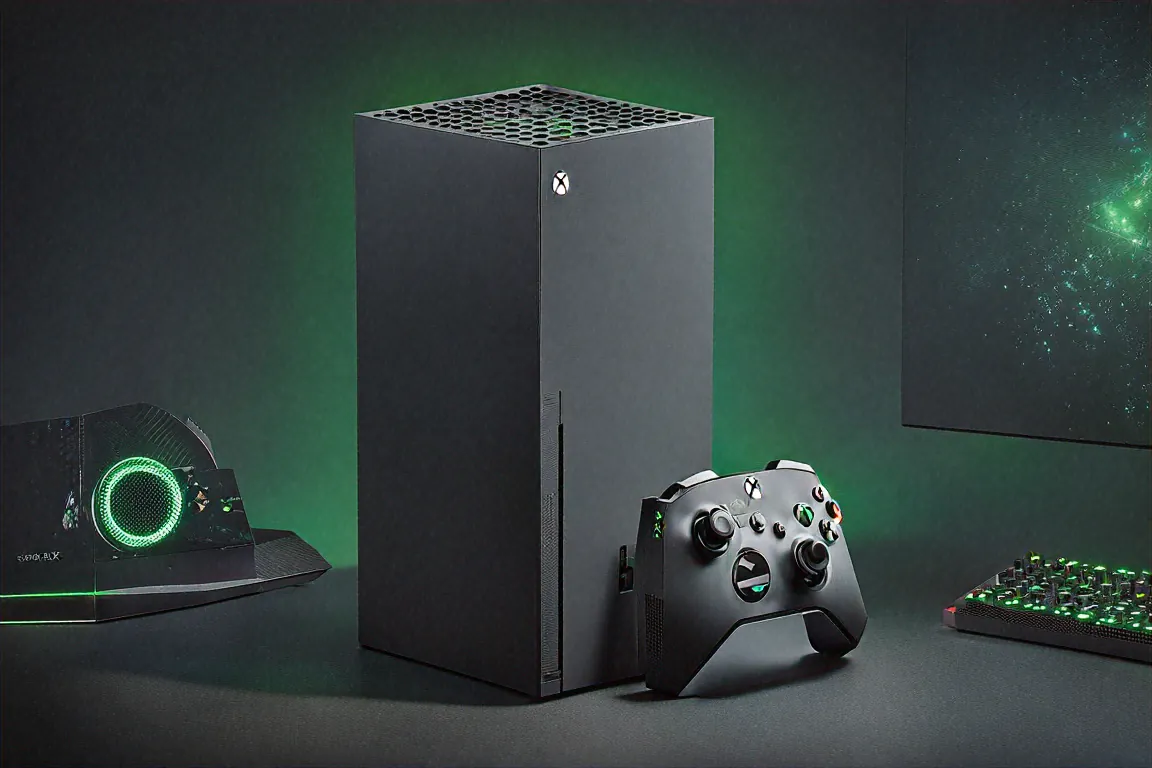
The Series X Refresh keeps the same monolithic black tower design. Matte black finish, green disc tray indicator, ventilated top. It's not pretty. It's also not trying to be. It looks like a piece of serious electronics equipment, which I suppose it is.
Available in Carbon Black and Robot White. I've got the black one. It sits next to my TV like a small obelisk and my wife has stopped commenting on how ugly it is, which I'm choosing to interpret as acceptance.
The disc drive is included. I want to emphasize this because the PS5 Pro at Rs 59,990 does not include one. The Series X Refresh at Rs 49,990 does. For Indian gamers who buy physical discs — either new from stores or second-hand from local traders and gaming communities — having a disc drive isn't a luxury, it's a requirement. My local gaming group has a WhatsApp chat where we trade and lend discs constantly. Couldn't do that with a digital-only console.
Wi-Fi 5 is a nice bump from Wi-Fi 5. My online gaming sessions feel marginally more stable, though the real-world difference for most Indian internet connections probably isn't dramatic. If you've got a Wi-Fi 5 router, you'll see benefit. If you're on a standard Wi-Fi 5 setup, which most Indian households still are, the improvement is minimal.
Specifications
| Specification | Details |
|---|---|
| GPU | 12 teraflop AMD RDNA 2 |
| CPU | AMD Zen 2 8-core, 3.8GHz |
| RAM | 16GB GDDR6 |
| SSD | 1TB NVMe |
| Resolution | 4K 120fps |
| Wi-Fi | Wi-Fi 5 |
| Disc Drive | Included |
| Controller | Hall-effect sensors |
Pros
- Hall-effect thumbstick sensors eliminate stick drift
- 1TB SSD — double storage capacity
- Game Pass Ultimate at Rs 699/month is exceptional value
- Optical disc drive included
- Best backward compatibility of any console — four generations
Cons
- No GPU upgrade over original Series X
- PS5 Pro has 45% more GPU power
- Fewer India-relevant exclusives vs PlayStation
- No significant visual upgrade over Series X
The Exclusives Question — And I Don't Have a Clean Answer
Here's where I have to be honest about something that bothers me about the Xbox ecosystem. And I say this as someone who genuinely loves Game Pass and uses this console daily.
PlayStation has Spider-Man. God of War. Horizon. The Last of Us. Gran Turismo. These are some of the highest-rated, most-played games of the last decade. They're system sellers for a reason. When someone asks "what can I play on PlayStation that I can't play anywhere else?" the answer is a list of genuinely incredible games.
Xbox has... Halo. Which hasn't had a universally praised entry since Halo 3 in my opinion. Forza, which is genuinely excellent. Starfield, which was divisive. Fable is coming and looks promising. The Activision Blizzard acquisition brought Call of Duty, but that's still multi-platform for now.
The exclusives gap is real. If you want to play the best single-player narrative games — the kind of experiences that win Game of the Year awards — PlayStation has more of them. That's just true. I can argue about value and economics all day, but when my friend shows me his God of War Ragnarok screenshots and I can't play that game on my Xbox, the exclusives argument hits home in a way that no amount of Game Pass math can fully counter.
Microsoft's strategy seems to be shifting toward multi-platform releases and Game Pass as the differentiator rather than exclusive titles. Whether that strategy works long-term for Indian gamers — who tend to be very brand-loyal and very influenced by what their friends are playing — is an open question. I've seen more PlayStation controllers in Indian gaming cafes and college hostels than Xbox ones. That matters for multiplayer, for community, for the social side of gaming that no spec sheet captures.
Can Game Pass economics overcome the exclusives disadvantage? I genuinely don't know. For me personally, the answer has been yes — I play a wider variety of games on Xbox than I ever did on PlayStation because the cost barrier is gone. But I'd be lying if I said I didn't feel a twinge every time a PlayStation exclusive launches and I can't play it. That feeling exists alongside my genuine appreciation for Game Pass. Both things are true at the same time.
Who Is This Console For?
Budget-conscious gamers who play a lot of different games. That's the core audience. If you're the kind of gamer who plays FIFA and literally nothing else, the Series X Refresh is overkill. Get a PS5 Digital or even a Series S. But if you play across genres — racing one week, RPG the next, a shooter with friends on weekends, the occasional indie that catches your eye — Game Pass at Rs 699/month turns the Series X into the most cost-effective gaming machine available.
Original Series X owners. If your controller has stick drift and your storage is full, the Refresh addresses both problems. Whether that's worth Rs 49,990 or whether you should just buy a third-party hall-effect controller and an expansion card is a personal call. Financially, the accessories route is cheaper. But you'd also get the 1TB SSD, Wi-Fi 5, and a fresh warranty.
Families. Game Pass works across the household. Set up family sharing and multiple people can play from the same subscription. For a household with two kids who both game, that's significantly cheaper than buying separate copies of every game.
People who value physical media. The included disc drive matters. In India, where used game markets are active and game trading communities thrive, being able to buy, sell, and lend physical discs is a real advantage that the disc-less PS5 Pro doesn't offer out of the box.
Two Months In — Where I've Landed
The Xbox Series X isn't the most powerful console you can buy. That's the PS5 Pro, and anyone telling you otherwise is not being straight with you. The GPU hasn't changed since 2020. In raw graphical fidelity, the PS5 Pro wins.
What the Series X Refresh is — and what it does better than anything else in the market — is deliver the most gaming for the least money. Rs 49,990 for the console. Rs 699/month for hundreds of games. A controller that won't break. A disc drive that's included. Four generations of backward compatibility. That's a value stack that's hard to argue against on paper, and even harder to argue against once you've lived with it.
The exclusives question remains unresolved. It's the one area where I can't make a clean case for Xbox over PlayStation. Maybe Microsoft's upcoming slate changes that. Maybe the Activision Blizzard acquisition starts bearing exclusive fruit. Maybe Fable is the system-seller Xbox needs. Or maybe the future of Xbox is Game Pass as a platform that exists across devices, and the console becomes just one way to access it.
I'm not going to pretend I know how that plays out. What I know is that right now, today, I've got 400+ games to play, a controller that doesn't drift, and I've spent Rs 699 this month on gaming instead of Rs 5,000. The rest is an open question, and I'm honestly okay sitting with that uncertainty for now.
Price in India
The Xbox Series X is priced at Rs 49,990 in India. Available on Xbox India's website, Amazon India, and Games The Shop. Game Pass Ultimate is Rs 699/month separately. Stock has been more consistent than the PS5 Pro, so you shouldn't have trouble finding one.


Comments (0)
Leave a Comment
No comments yet. Be the first to share your thoughts!