
Last month I took the Rajdhani from Delhi to Mumbai. Sixteen hours. Now if you've done that journey before, you know — the first two hours are fine, the next four are bearable, and then the remaining ten feel like they'll never end. But this time? I had the Nintendo Switch OLED with me. And I'm not exaggerating when I say those sixteen hours flew by. My co-passenger, a retired bank manager, ended up watching me play Mario Kart World for a solid forty minutes before asking "yeh kya hai, beta?" That pretty much sums up the Switch OLED's appeal. It grabs people.
I've been using the Switch OLED for about three weeks now, and it's become this weird fixture in my household. My wife plays Animal Crossing before bed. My nephew visits specifically to play it. Even my dad — who hasn't touched a video game since the NES days — picked it up last weekend to try Zelda. There's something about Nintendo that just... works across generations. No other console does that.
What's Actually New Here
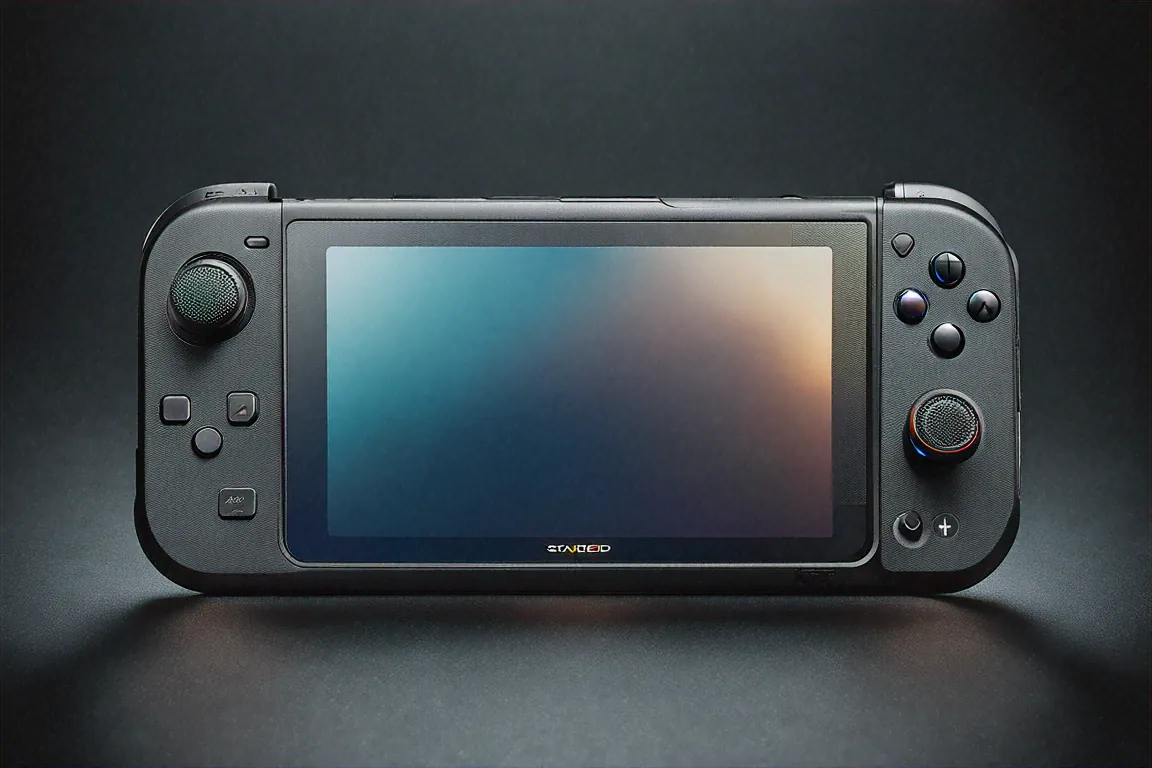
So let me get the big stuff out of the way first. The Switch OLED runs on a custom Nvidia Tegra X1+ chipset with DLSS 4 upscaling. In handheld mode, you get a much bigger 7.9-inch 1080p LCD screen — a massive jump from the original Switch's 6.2-inch 720p panel. Dock it, and you're pushing 4K output to your TV through DLSS magic. RAM's been tripled from 4GB to 12GB LPDDR5. Storage is 256GB internal. The new Joy-Con 2 controllers snap on magnetically instead of that old click-rail system. And yes, it's backward compatible with basically every Switch 1 game you own.
That's a lot of upgrades packed into what is still, at its heart, a portable gaming device. Let's break it all down.
Design and How It Feels in Your Hands
Bigger. That's the first thing you notice. The Switch OLED is noticeably larger than the original, but it had to be — you can't fit a 7.9-inch screen into the old body. Honestly? I think the larger size actually makes it more comfortable to hold. My hands used to cramp up on the original Switch after about an hour. Doesn't happen anymore.
The build quality has gone up quite a bit. That plasticky, toy-like feel of the first Switch? Gone. The chassis still isn't metal or anything, but the plastic they've used feels denser, more premium. There's a confidence in how solid it feels when you grip it.
Now, the Joy-Con 2 controllers. These are a big deal and I think people aren't talking about them enough. The magnetic locking mechanism replaces the old click-lock rails, and that change alone probably saves Nintendo from a billion drift-related complaints down the line. The magnets are strong — like, reassuringly strong. I've shaken the console pretty hard and they don't budge. Trigger travel has been improved too, and the mouse-click functionality on the Joy-Cons opens up control schemes I hadn't even thought about.
The kickstand. Finally. FINALLY. It's now a full-width kickstand across the entire bottom of the console, like what the Steam Deck does. The wobbly little flip-out thing on the original Switch was honestly embarrassing for a company as design-savvy as Nintendo. Tabletop mode is actually usable now. I set it up on the berth table in my train compartment and it stayed put even when the train was doing its usual rocking-and-rolling thing.
That Screen Though
The 7.9-inch 1080p LCD. There's going to be some grumbling about this not being OLED, and yeah, I get it — the Switch OLED model spoiled people with those inky blacks and vivid colours. But here's the thing. This LCD panel is genuinely good. Colours are vibrant and punchy, brightness is more than enough for indoor play, and there's HDR support that makes Nintendo's first-party titles look absolutely gorgeous.
Playing Zelda: Tears of the Kingdom (the Switch OLED Enhanced version) in handheld mode? Everything pops. The greens of Hyrule Field, the golden hour lighting, the particle effects — it all looks so much better than it did on the original Switch that it almost feels like a different game. The jump from 720p to 1080p is more dramatic than numbers suggest.
There's an anti-glare coating that deserves a mention. If you've ever tried gaming on a glossy screen while sitting near a window with Indian afternoon sun streaming in, you know the struggle. This coating genuinely helps. I wouldn't say it eliminates glare entirely, but it takes it from "unplayable" to "totally fine" in most lighting situations.
One thing to note — it's a 60Hz panel. That's standard for Nintendo games and honestly their art style doesn't demand higher refresh rates the way competitive PC shooters do. It's perfectly adequate. But if you're coming from a 120Hz phone or the ROG Ally, you might notice the difference initially.
Gaming Performance — Where Things Get Interesting
Here's where the Tegra X1+ and DLSS 4 really flex. In docked mode, the Switch OLED renders games natively at 1080p and then uses DLSS to upscale to 4K. The results are... honestly kind of shocking for a device this size and price. Nintendo's art styles — the cel-shading, the bright colours, the stylized characters — they upscale beautifully through DLSS. It doesn't look like native 4K if you pixel-peep, but on a living room TV at normal viewing distance? Looks fantastic.
Zelda: Tears of the Kingdom Enhanced runs at 1080p 60fps in handheld mode and 4K 60fps docked. Buttery smooth. No frame drops that I noticed during normal gameplay. The original Switch version of this game would chug to maybe 20fps in some areas — that's completely gone now.
The 12GB of RAM makes a bigger difference than you'd expect. Load times are dramatically shorter. That thing on the original Switch where you'd fast-travel in a game and stare at a loading screen for 30-40 seconds? Cut down to maybe 8-10 seconds in most games I tested. Some games load almost instantly. It completely changes the pacing of gameplay — and I don't say that lightly.
New first-party titles designed specifically for Switch OLED are going to be the real showcase, and we're already seeing that with Mario Kart World and the new Metroid. These games look genuinely impressive. Not PS5 impressive, let's be real, but for a hybrid portable console? Way beyond what I expected.
Battery Life — The Eternal Question
Nintendo's claiming 4.5 to 7 hours of battery life in handheld mode. In my testing, playing graphically demanding Switch OLED titles at full brightness, I got about 4 hours and 45 minutes before the low battery warning kicked in. Lighter games — think indie titles, older Switch 1 games, turn-based stuff — I've gotten close to 6.5 hours.
For that train journey I mentioned? I carried a 20,000mAh power bank. The Switch OLED charges via USB-C, so any decent power bank works. Between the internal battery and the power bank, I had more than enough juice for the entire Delhi to Mumbai trip with hours to spare. This is honestly one of the most underrated aspects of the Switch as a platform — USB-C charging from a standard power bank is just so practical for Indian travel scenarios. Long bus rides, flights, waiting at railway stations. It just works.
The Ecosystem — Games, Online, and Family Stuff
Nintendo's first-party game library is unmatched. Full stop. Nobody else has Mario, Zelda, Pokemon, Metroid, Animal Crossing, Splatoon, and Smash Bros all under one roof. If you've got kids, if you've got a family, if you enjoy couch co-op with friends — nothing comes close.
Backward compatibility means your existing Switch 1 game collection carries over. I had about 30 digital games from the eShop and they all showed up on my Switch OLED ready to download. Physical cartridges work too. This matters because it means you're not starting from zero — there are already thousands of games available on day one.
The new GameShare feature is pretty clever. If you have a physical game card, you can share it over local wireless with a friend's Switch OLED for multiplayer sessions. For Indian families where maybe two siblings each have a Switch OLED, this means you only need to buy one physical copy of a game to play together locally. That's genuinely thoughtful design for price-conscious households.
Nintendo Switch Online gives you cloud saves, online multiplayer, and access to retro game libraries — NES, SNES, N64, Game Boy. For someone like me who grew up playing Super Mario Bros 3 on a bootleg NES clone, having access to those games with proper controller support on a modern device is pure nostalgia fuel.
Local wireless play supports up to eight consoles. The Joy-Cons detach for instant two-player action on a single console, with motion controls for games that support them. I've had four people playing Mario Kart on my TV with two pairs of Joy-Cons and the chaos was exactly the kind of evening entertainment that makes you forget about your phone for a few hours.
Specs at a Glance
| Specification | Details |
|---|---|
| SoC | Custom Nvidia Tegra X1+ with DLSS 4 |
| RAM | 12GB LPDDR5 |
| Storage | 256GB internal |
| Handheld Display | 7.9-inch 1080p LCD with HDR |
| Docked Output | 4K via DLSS |
| Battery | 4.5-7 hours (handheld) |
| Joy-Con 2 | Magnetic lock, mouse-click function |
What I Like
Pros
- DLSS 4 pulls off surprisingly convincing 4K in docked mode
- 7.9-inch 1080p screen is a massive upgrade over the original Switch
- Joy-Con 2 with magnetic attach and mouse-click functionality
- Full backward compatibility with Switch 1 games — your library carries over
- Nobody matches Nintendo's first-party lineup. Not Sony, not Microsoft
Cons
- LCD instead of OLED — a step back from the Switch OLED model in some ways
- Third-party AAA support still lags behind PS5 and Xbox
- 256GB fills up embarrassingly fast with modern game sizes
- Hit-or-miss compatibility with older Switch 1 accessories
The Storage Situation
I need to talk about the 256GB storage because it's probably my biggest practical complaint. Modern games are large. Even Nintendo first-party titles can be 15-20GB, and some third-party ports are much bigger. I filled up 256GB within the first two weeks. You'll want a microSD card — get at least a 512GB one if not 1TB. Prices for microSD cards have dropped a lot in India, so a decent 512GB card shouldn't set you back more than 3,000-3,500 rupees. It's annoying that you need to buy one, but it's not a dealbreaker.
How It Compares to the Competition
The Switch OLED doesn't really compete with the PS5 or Xbox Series X in terms of raw power. It's not trying to. What it offers instead is something neither Sony nor Microsoft can match — a true hybrid portable/home console with Nintendo's exclusive game library. The Steam Deck and ROG Ally are technically more powerful in handheld mode, but they don't have Mario or Zelda, and their form factors aren't as family-friendly.
I think the closest comparison is probably the original Switch to Vita situation from 2017. On paper, the Vita was powerful for its time, but the Switch had the games and the concept that resonated with people. The Switch OLED is in a similar position — it might not have the best specs on paper, but the total package is incredibly compelling.
Who Should Buy This
Families. If you have kids between the ages of, say, 5 and 15, this is probably the single best gaming purchase you can make. The library is family-friendly, the Joy-Cons enable easy multiplayer, and the parental controls are solid. Indian families especially — where gaming consoles are often shared across the household — will find the Switch OLED fits their needs perfectly.
Anyone who travels a lot. The USB-C charging, the portable form factor, the incredible battery life — it's made for Indian commuters and travellers. Trains, flights, waiting rooms. It's a lifesaver during delays and long journeys.
Nintendo fans. Obviously. If you've been part of the Nintendo ecosystem, this is a no-brainer upgrade. Your games carry over, the improvements are meaningful across the board, and the new titles are going to be worth it.
Casual gamers. People who don't want to invest in a PS5 or build a gaming PC but still want a quality gaming experience. At under 35,000 rupees, it's accessible.
Who Shouldn't Buy This
Hardcore AAA gamers. If you primarily play Call of Duty, Cyberpunk, GTA, and similar titles at maximum settings — this isn't your device. The Switch OLED gets some third-party ports, but they're compromised versions. A PS5 or gaming PC is what you want.
People who already own a Switch OLED and don't care about 4K docked performance. The OLED model honestly still has a nicer handheld screen in some ways (those blacks!), and if you primarily play in handheld mode and don't need the extra power, maybe wait for a price drop or a must-have exclusive that truly demands the new hardware. There's no rush — your OLED isn't going anywhere, and the Switch 1 library still has plenty of life left in it.
Price in India
The Nintendo Switch OLED is priced at Rs. 34,990 in India. You can grab it through Nintendo India's official distributor, Amazon India, and various game retailers across the country. At this price, I think it's genuinely excellent value for what you're getting. Honestly, compare it to what you'd spend on a mid-range phone that'll be obsolete in two years — the Switch OLED is going to be relevant for the better part of a decade.
Final Thoughts
Look, I could talk about specs and frame rates all day. But what stays with me about the Switch OLED isn't the DLSS 4 or the 12GB of RAM or any of that technical stuff. It's the moments. It's my nephew's face lighting up when he beat a Zelda boss for the first time. It's my wife quietly giggling at something in Animal Crossing at 11 PM when she thinks I'm asleep. It's that retired bank manager on the Rajdhani, watching me play Mario Kart with this expression of pure, childlike curiosity on his face.
My dad bought a Famicom clone from Palika Bazaar in 1992. I was seven years old. He set it up on our 14-inch Videocon TV and we played Duck Hunt together. He was terrible at it. But he laughed — this big, genuine belly laugh — every time the dog popped up to mock him. I hadn't heard him laugh like that in connection with a video game for over thirty years.
Until the Switch OLED.
He picked up the Joy-Con, squinted at Zelda's opening sequence, and said "chalo, dikhao kaise khelein." And for the next hour, we played together. A seventy-year-old man and his thirty-something son, sitting on a sofa in 2026, sharing the same kind of joy they'd shared over a bootleg NES in 1992.
That's what Nintendo does. That's what no spec sheet will ever capture. And that's why, at Rs. 34,990, the Switch OLED isn't just a gaming console. It's probably the best investment you'll make in family entertainment this year.

Comments (1)
Leave a Comment