
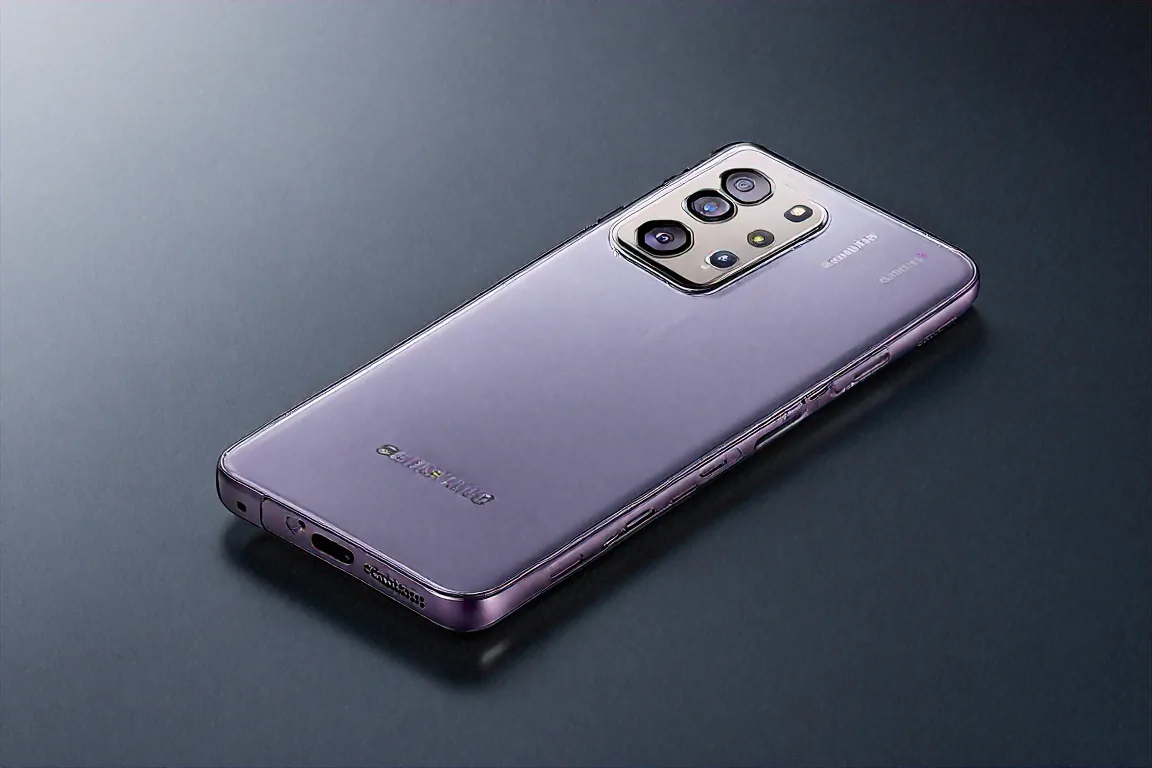
Okay so here's the thing about the Samsung Galaxy S24 FE — it's basically Samsung telling you that you don't need to spend a lakh to get the flagship experience. And honestly? They're not entirely wrong. Priced at ₹59,999 in India, this phone sits in a weird spot. Not quite budget, not quite ultra-premium. It's that middle child energy, and whether that works for you depends entirely on what you actually care about in a phone.
I've been using the S24 FE for about two weeks now, and I've got thoughts. Lots of them. Some good, some frustrating, and a few that might surprise you if you've already written this phone off as "just another FE." Because Samsung's done some genuinely smart things here, but they've also made decisions that had me scratching my head and wondering who exactly signed off on certain trade-offs at this price point.
Before we get into the details, a quick confession: I'm not a Samsung loyalist. My daily driver has been switching between OnePlus and Pixel devices for the past two years. So this review comes from the perspective of someone who doesn't have an emotional attachment to the Galaxy brand. Take from that what you will.
What Samsung's Pitching Here
- Exynos 2400e processor paired with 8GB RAM
- 6.7-inch AMOLED display running at 120Hz refresh rate
- 50MP triple camera setup on the rear
- 4700mAh battery with 65W fast charging support
- Samsung One UI 6.1 loaded with Galaxy AI goodies
- Full IP68 water resistance rating
How It Looks and Feels in Hand
Pick up the Galaxy S24 FE and you'd struggle to tell it apart from its pricier siblings. Samsung's borrowed heavily from the S24 flagship line — flat sides, razor-thin bezels, that distinctive camera module arrangement that screams "this is a Samsung." Smart move. Makes you feel like you're getting more than what you paid for, which is pretty much the entire FE value proposition in a nutshell.
Now here's where it gets real. The base variant? Plastic back. Yep, at sixty grand you're getting a polycarbonate rear panel. Samsung says it helps with weight management, and sure, at 205 grams it's lighter and more manageable than the S24 Ultra. But let's be honest — a phone at this price shouldn't feel like it might creak if you press too hard on the back. I noticed the flex during my first few days and it bugged me. The premium variant switches to glass, and that's the one I'd personally recommend if you can stretch a bit for the upgrade.
The metal frame is reassuring though. Gives the whole thing structural integrity that the back panel doesn't quite deliver on its own. Button placement is standard Samsung — volume rocker and power button on the right side, SIM tray on the left. Everything clicks with a satisfying tactile response. I've been using the Mint colourway and it genuinely turns heads. People at coffee shops have commented on it more than once. Coral and Navy are safe bets, Graphite is for the boring office crowd (no offense), but Mint? That's the one that makes this phone feel less like a spec-sheet device and more like something you actually chose because you liked it.
One thing I noticed during my time with it — pocket feel is great. 205 grams distributed across a 6.7-inch body means it doesn't feel top-heavy or awkward. You forget it's there, which is exactly what you want from a daily driver. Compared to the S24 Ultra's 233-gram heft, using the FE feels like a relief during long days of carrying the phone in shirt pockets. Samsung's managed the weight distribution cleverly — the battery and camera module are centred enough that there's no tendency for the phone to tip or rotate in your grip.
The Screen Situation
Samsung knows displays. They've been making panels for half the smartphone industry, and that expertise shows up loud and clear on the S24 FE. A 6.7-inch AMOLED with 120Hz adaptive refresh and 2000 nits peak brightness — for this price bracket, that's about as good as it gets.
Blacks are properly black. Not "sort of dark grey" black like you get on lesser OLEDs. Proper, ink-black, turn-off-the-pixel black. Colours pop without looking cartoonish, which is a balance many manufacturers fail to strike. I watched a bunch of HDR10+ content on Netflix and Prime Video during testing, and honestly, the streaming experience on this display is better than some TVs I've used. Seriously. Put on a nature documentary in Dolby Vision and the screen comes alive in a way that makes you forget you're watching on a phone.
Vision Booster trickles down from the flagship S24 line, and it makes a genuine difference when you're standing at a bus stop in Delhi trying to read a WhatsApp message at noon. Outdoor visibility is much improved over last year's FE — Samsung's adaptive tone mapping adjusts brightness and contrast in real-time based on ambient light, and the effect is immediately noticeable when stepping outside from an air-conditioned room. The under-display optical fingerprint sensor does its job without drama — fast enough that you don't think about it, which is the point. Registration was quick and I haven't had any false rejections during normal use, even with slightly damp fingers.
My only gripe? I wish they'd gone with 2K resolution instead of Full HD+. At 6.7 inches, you can occasionally spot the difference if you're looking closely at text, particularly when reading articles or ebooks where the sharpness of individual characters matters. Most people probably won't care, but for sixty thousand rupees, it feels like an intentional cost-cutting decision rather than a technical limitation. Samsung puts QHD+ on their flagship S24 — surely they could have squeezed it into the FE's bill of materials without blowing the budget. The 120Hz adaptive refresh works intelligently at least, dropping to lower rates during static content to save battery, which is something I've verified through developer mode frame rate monitoring.
Cameras — The Good, The Meh, and The Weak Link
Camera performance on the S24 FE is a mixed bag, and I want to be straight about that rather than just rattling off megapixel counts. There's a clear hierarchy here: one good camera, one acceptable camera, and one that shouldn't be at this price point in 2024.
The 50MP main sensor? Actually pretty great. Daylight photography produces consistently punchy, vibrant images that look fantastic on Instagram or WhatsApp status updates. Samsung's processing has always leaned towards making photos look "ready to share" — saturated but not offensively so, sharp without looking over-sharpened. Colours tend towards warm, which flatters skin tones and makes food photography look appetising without needing filters. If social media photography is your main use case, you'll be happy. I shot hundreds of photos over two weeks across different lighting conditions and the main camera maintained impressive consistency throughout.
Portrait mode deserves a specific mention because Samsung's gotten really good at edge detection. Hair strands, glasses, earphones — the algorithm handles tricky edges better than most phones I've tested recently. Background blur looks natural rather than computational, with a smooth gradation that mimics an actual lens's depth of field. I took some portraits of my nephew at a park in Andheri and the results looked professional enough that my sister asked which camera I'd used. That's the kind of real-world validation that matters more than any benchmark score.
The 12MP ultrawide does its job for group shots and architecture. Nothing spectacular, nothing terrible. It's there when you need it, and the output is acceptable. Dynamic range drops compared to the main sensor, and you'll notice colour temperature shifts between the main and ultrawide if you compare shots side by side, but that's expected at this tier. For capturing wide scenes during travel or fitting everyone into a group photo at a family function, it serves its purpose without complaint.
Now, the 8MP 3x telephoto. This is the weak link, and there's no way around it. An 8MP sensor in 2024 for a phone at this price is... well, it's stingy. Low-light telephoto shots are genuinely poor — noisy, soft, lacking detail. During my testing in Mumbai I tried shooting some street scenes at dusk using the telephoto and the results were disappointing — subjects that should have been sharp came out looking like watercolour paintings. Daytime zoom is serviceable, but the moment light drops even slightly, you'll want to switch back to the main sensor and crop instead. No periscope lens either, which means competitors like OnePlus offer better zoom at similar prices. Samsung's clearly saving the good telephoto hardware for the S24 and S24 Ultra, and this feels like the most cynical cost-cutting decision on the entire phone.
Night mode on the main camera redeems things somewhat. Samsung's AI processing heritage pays off here — handheld night shots look clean, with good noise reduction and colour preservation. Multi-frame stacking works well, and the processing time has gotten faster compared to older Samsung phones. Street lights don't blow out as badly as they used to, and shadow detail is retained even in genuinely dark scenes. Just don't expect miracles from the telephoto after sunset — that 8MP sensor simply can't compete once ambient light drops below a certain threshold.
Video recording is competent at 4K 60fps with optical stabilisation on the main sensor. Footage looks good in well-lit environments, and Samsung's stabilisation is among the better implementations I've used. Audio recording captures a decent stereo spread. For social media video content, YouTube shorts, and family video memories, the S24 FE handles the job without issues.
Performance — Where the Money Actually Goes
The Exynos 2400e. In a phone under sixty thousand. That's legitimately impressive, and it's probably the single strongest argument for buying the S24 FE over some of the Chinese alternatives that use older chips at similar prices.
Everything flies. App launches are near-instant. Multitasking between twelve or fifteen apps doesn't produce any stutter — even jumping between Chrome with multiple tabs, Instagram, WhatsApp, a game paused in the background, and a streaming app shows zero hesitation. I played BGMI at high settings for extended sessions and the phone handled it without breaking a sweat — thermals stayed reasonable, frame rates held steady, and the phone never became uncomfortably hot in my hands. From what I've seen, this is the same silicon powering phones that cost twice as much, and you can feel it in daily use. The 8GB RAM handles current multitasking loads well, though I'd have liked 12GB as the base given the price point — Samsung offering 8GB as the starting configuration at ₹59,999 feels like another area where they're protecting the margin between the FE and the flagship S24.
One UI 6.1 is where Samsung's software maturity really comes through. It's packed with features without feeling bloated, which is a fine line to walk. Galaxy AI features are genuinely useful — Circle to Search has become something I use multiple times a day without thinking about it, and it's particularly handy when browsing shopping apps or watching YouTube videos and wanting to identify products or places. Live Translate works well enough for basic conversations in Hindi-English scenarios, though it still stumbles with heavy dialect or slang. AI photo editing tools like the eraser, remaster, and generative fill are fun to mess around with and occasionally genuinely useful for fixing photos you'd otherwise delete. Indian language support in these AI features has gotten noticeably better recently — my mother was able to use the translation features between Tamil and English with reasonable accuracy, which wasn't the case six months ago.
Battery life from the 4700mAh cell is solid but not spectacular. A full day of moderate-to-heavy use is achievable, and I'd typically end the day with 15-20% remaining after around five and a half hours of screen-on time. Power users who game and stream for hours might need a top-up by evening — during particularly heavy days with gaming and navigation, I once hit 10% by 6 PM. The 65W charging helps here — zero to full in under sixty minutes is respectable. Not the fastest in this price range (some Chinese phones hit 100W+), but fast enough that a quick twenty-minute charge during lunch gets you roughly 40-45% back, which is usually enough to coast through the rest of the day. Wireless charging at 15W is slow but appreciated for overnight or desk charging scenarios — toss it on a Qi pad and forget about it.
Full Specifications Breakdown
| Specification | Details |
|---|---|
| Processor | Exynos 2400e (3nm) |
| RAM | 8GB |
| Storage | 128GB/256GB UFS 4.0 |
| Display | 6.7" AMOLED, 2400x1080, 120Hz |
| Main Camera | 50MP f/1.8 |
| Ultrawide | 12MP f/2.2 |
| Telephoto | 8MP 3x f/2.4 |
| Battery | 4700mAh |
| Charging | 25W wired, 15W wireless |
| OS | Android 14, One UI 6.1 |
| IP Rating | IP68 |
| Weight | 213g |
Pros & Cons
Pros
- Exynos 2400e in a more affordable Galaxy S package
- Bright 120Hz AMOLED display with excellent colour accuracy
- Samsung's industry-leading software support commitment
- 65W fast charging gets you back up quickly
- IP68 rated — take it to the beach without worry
Cons
- Camera system falls significantly behind the S24 Ultra
- No periscope telephoto — zoom performance suffers
- Pricier than similarly specced Chinese alternatives
- Plastic back on the base variant feels cheap at this price
Connectivity and the Software Story
Samsung's update commitment is probably the strongest in the Android world right now. Four years of major Android updates and five years of security patches means this phone stays current well into 2030. For comparison, most Chinese brands promise three years at best, and even that's sometimes unreliable — I've seen Realme and Xiaomi skip promised updates on older mid-range models. Samsung's track record on actually delivering updates on time has been consistently strong for the past three years, which matters when you're spending sixty grand on a device you'll probably keep for three to four years.
The S24 FE supports 13 5G bands, which covers every Indian operator you'd care about — Jio, Airtel, Vi, all sorted. I tested it across Jio and Airtel networks in Mumbai and didn't face any connectivity hiccups. Call quality over VoLTE and VoNR was clear and stable. Wi-Fi 6E handles multi-device households well — in my home with fifteen-plus connected devices, the S24 FE maintained stable connection speeds without the random disconnections some phones exhibit on congested networks. Bluetooth 5.3 kept my Galaxy Buds connected without any of those annoying audio dropouts some phones struggle with, and pairing was instant on the second connection onward.
NFC works for both Google Pay and Samsung Pay, giving you two options for contactless payments. Samsung Pay's MST technology (which mimics a magnetic stripe card) is being phased out, but NFC-based payments work at every modern POS terminal I've tried. Samsung's own ecosystem features are here in full force — DeX for desktop-mode productivity (plug into a monitor with a USB-C cable and you've got a basic computer setup that handles document editing, browsing, and video calls), Secure Folder for hiding sensitive apps and files behind a separate authentication layer, Samsung Health for fitness tracking with detailed sleep analysis and step counting. The integration with Samsung Galaxy Watch and Galaxy Buds is tighter than what you'd get with any third-party Android phone, and that ecosystem lock-in is a genuine reason some people stick with Samsung generation after generation.
What you don't get in the box: no charger. Just a USB-C cable and SIM ejector. Standard practice these days, but still annoying — especially for first-time buyers who might not have a compatible fast charger lying around. If you don't have a 65W compatible charger, budget an extra ₹1,500-2,000 for Samsung's official one or a good third-party option from Anker or Belkin. Using a slower charger means longer charge times, obviously, so the 65W brick is worth the additional investment.
How It Compares to the Competition
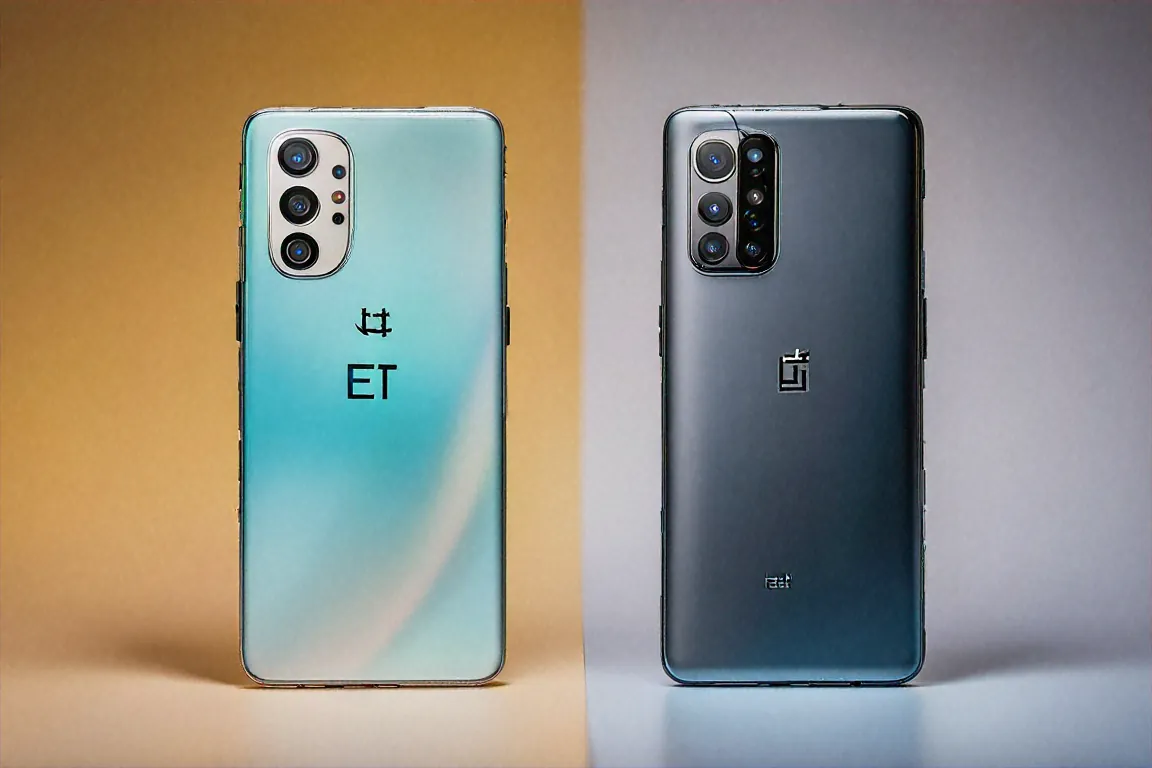
At ₹59,999, the S24 FE doesn't exist in a vacuum. The OnePlus 14 Pro sits right at the same price and offers arguably better cameras plus faster 100W charging. Camera enthusiasts will find more to like about the OnePlus at this price. If camera performance and charging speed are your priorities, the OnePlus probably wins on paper and in real-world testing from what I've seen across both devices.
But Samsung's advantages aren't always on spec sheets. The service network across India is unmatched — walk into almost any city or large town and there's a Samsung service centre within auto-rickshaw distance. Try finding an OnePlus or iQOO service centre in, say, Dehradun or Bhopal. Samsung's software support timeline is longer by at least a year. Resale value tends to hold better — check OLX or Cashify prices for two-year-old Samsung S-series phones versus OnePlus phones and you'll see the difference. And the Galaxy ecosystem — if you're already invested in Samsung watches, earbuds, tablets — makes the S24 FE the natural choice for keeping everything connected without friction.
Against the iQOO 14 Pro at ₹44,999, you're paying a ₹15,000 premium largely for the Samsung brand, better software support, wireless charging, and that ecosystem. Whether that premium is justified depends entirely on your priorities. If you want raw performance per rupee, iQOO wins handily. If you want peace of mind, a service centre in every major town, and a phone that'll be supported for years, Samsung wins. Neither choice is wrong — they're just different answers to different questions.
Who Should Actually Buy This
Here's my concrete recommendation after spending two weeks with this phone. The Samsung Galaxy S24 FE makes sense for a specific type of buyer — someone who values the Samsung ecosystem, trusts the brand's after-sales network, wants guaranteed long-term software updates, and doesn't mind paying a slight premium over Chinese alternatives for that peace of mind. It's a phone that does everything well enough without being the absolute best at anything.
If you're a Samsung loyalist currently using an S22 FE or older, this is a no-brainer upgrade. Everything from performance to display to cameras has improved significantly. Your existing Samsung accessories, Galaxy Watch, and Galaxy Buds will pair instantly. If you're using a Galaxy A-series phone and want to step up to the S-series experience without going full flagship pricing, the S24 FE delivers exactly that bridge between mid-range and premium.
But if you're purely spec-driven and every rupee matters? The OnePlus 14 Pro, iQOO 14 Pro, and Realme GT 7 Pro all offer competitive or better hardware at equal or lower prices. Samsung's asking you to pay for the brand, the service, and the software commitment. Some people are happy to pay that premium. Others aren't. Both positions are completely valid, and I wouldn't judge anyone for going either direction.
My honest take: at ₹59,999, I'd probably recommend the S24 FE to my parents or anyone who isn't going to obsess over camera zoom quality or charging speeds. For my gamer friends or photography enthusiasts, I'd point them towards alternatives that specialise in those areas. The S24 FE is a solid, dependable, well-rounded phone that does almost everything well without truly excelling at any one thing. And sometimes, that reliability is exactly what you need from a device you'll carry every single day for the next three to four years.
Price in India
The Samsung Galaxy S24 FE is priced at ₹59,999 in India for the 8GB/128GB variant. You can pick it up from Samsung.com, Amazon India, Flipkart, and any Samsung Experience Store near you. Keep an eye out for bank offers during sales — last month there were HDFC cashback deals that brought the effective price down to around ₹54,000, which is a much sweeter deal. The 12GB/256GB variant runs about ₹64,999 and is worth considering if you plan to keep the phone for multiple years, as the extra RAM and storage will age better.




Comments (0)
Leave a Comment
No comments yet. Be the first to share your thoughts!