
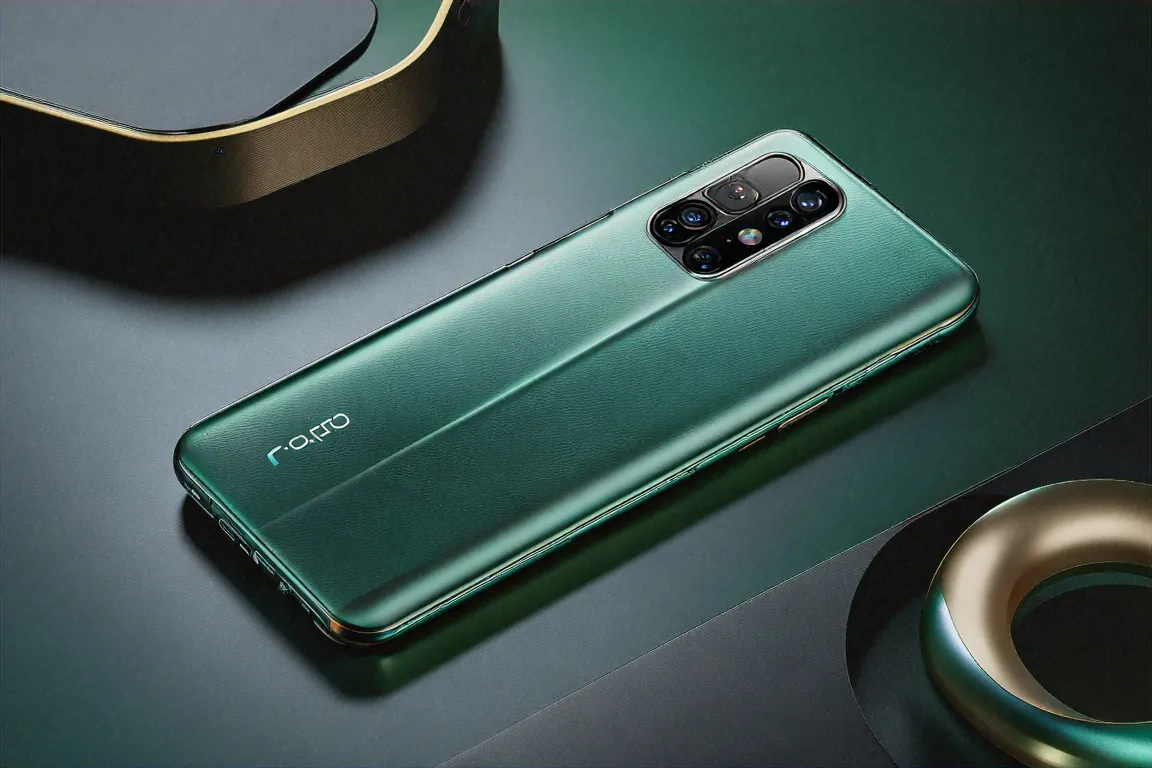
Can you actually get a flagship phone under Rs 40,000 in India in 2024? Like a real one — same processor as the Samsung Galaxy S26 Ultra, IP65 water resistance, a big battery, fast charging? Because that's what Realme claims the GT 6 is, and when I first saw the spec sheet I figured something had to be fake. Or at least severely compromised. A Snapdragon 8s Gen 3 phone for Rs 39,999? There's got to be a catch, right?
I've been using the GT 6 for two weeks specifically looking for that catch. And yeah, there are trade-offs — this isn't a Rs 1,35,000 Samsung disguised at a third of the price. But the trade-offs are smaller than I expected, and the stuff Realme got right is kind of staggering for the money.
Let Me Explain The Value First
The Snapdragon 8s Gen 3 is the same chip powering the Samsung Galaxy S26 Ultra (Rs 1,34,999), the OnePlus 14 Pro (Rs 69,999), and the Xiaomi 15 Pro (Rs 49,999). Realme put it in a phone that costs Rs 39,999. That's not a typo. Same 3nm architecture, same performance capabilities, same AI processing block.
Alongside the chip, you get a 5500mAh battery with 120W SuperVOOC charging (full charge to 50% in 10 minutes), a 6.78-inch AMOLED display with 120Hz refresh, a 50MP main camera with OIS, a 50MP 3x telephoto, and an IP65 rating. For under forty thousand rupees.
Two years ago, this combination existed only in phones costing Rs 80,000+. Realme's compressing that timeline aggressively, and the GT 6 is the most extreme example of it.
Build Quality: Better Than Expected
I had low expectations here because budget flagships usually cut corners on build. Realme surprised me. The metal frame feels solid — not premium in a Samsung or Apple way, but sturdy and well-assembled. No creaking, no flex, no uneven gaps between frame and glass.
Two back options are available: matte glass and a textured vegan leather. I tested the GT Green vegan leather variant and it's the one I'd recommend. Looks distinctive, provides actual grip (glass phones are slippery nightmares without cases), and has a tactile quality that makes the phone feel more expensive than it is.
Weight sits at 213 grams. Comfortable for a phone this size, lighter than most competitors. Button feedback on the power and volume keys is satisfying — a clicky, precise feel that budget phones rarely bother getting right.
The IP65 rating is a genuine standout. At Rs 39,999, almost every competitor offers IP65 at best, which handles splashes and rain but not submersion. Realme went for full IP65, meaning you can drop this phone in a puddle, rinse it under a tap, or get caught in a Mumbai monsoon without worrying. For a phone at this price, that's a big deal.
Display: Punches Above Its Price
6.78-inch AMOLED. 120Hz adaptive refresh. 4500 nits peak brightness. 1264 x 2780 resolution. HDR10+ support.
Reading those numbers, you'd think this was a Rs 70,000 phone. The display is genuinely excellent. Bright enough to use in full Indian summer sun without squinting. Smooth enough that scrolling through Twitter or Instagram feels fluid and responsive. Colour reproduction is accurate after a quick calibration in settings — out of the box it leans slightly vivid, which most people actually prefer for daily use.
Streaming content with HDR10+ (Netflix, YouTube) looks great. Blacks are deep — proper AMOLED deep, not the washed-out grey that LCD panels produce. Text is crisp enough for extended reading sessions. I spent a good hour reading articles on this display and didn't feel eye strain, which isn't something I can say about every phone.
Under-display fingerprint sensor is reliable. Fast enough that unlocking feels natural rather than like waiting for the phone to decide it's really you. Nothing to complain about.
Camera: Honest Assessment
This is where the trade-offs start showing up. At Rs 39,999, the camera system is good but not great. Here's the honest breakdown.
The 50MP Sony Sony LYT-808 main camera with OIS handles daytime photography well. Sharp detail, decent dynamic range, good colour reproduction. Side-by-side with a Rs 70,000 phone like the OnePlus 14 Pro, you'd see differences in fine texture detail and shadow processing, but for social media sharing and everyday snapshots, the GT 6's main camera delivers results that most people will be happy with. It won't embarrass you. It just won't amaze you either.
Night mode is where the gap becomes more visible. In dimly lit environments — a restaurant with candles, a poorly lit street — the GT 6 produces usable shots but with more noise and less shadow detail than the Xiaomi 15 Pro or OnePlus 14 Pro. Google's Pixel 10 Pro handles low light in another league entirely. If night photography is a priority for you, the extra money for one of those phones is probably worth spending.
The pleasant surprise is the 50MP 3x telephoto. At this price tier, most phones either skip a dedicated telephoto entirely or include a weak 2x lens. Realme went with a proper 50MP 3x optical zoom, and it works well. Travel photography — monuments, street signs, distant subjects — comes out sharp and detailed at 3x. Pushing to 5x-6x digital zoom still produces acceptable results. For a Rs 39,999 phone, having this lens feels like getting away with something.
The 8MP ultrawide is the weakest link. Basic, low-resolution, soft at the edges. Serviceable for wide-angle group shots in good lighting, but nothing you'd want to pixel-peep. If ultrawide photography matters to you, this camera won't satisfy. It's the clearest sign of where Realme saved money to hit the price point.
Video recording tops out at 4K 30fps with decent stabilisation. Not spectacular, but workable for casual use. Audio capture is clean through the built-in microphones.
Performance: The Star of The Show
Here's where spending Rs 39,999 on the GT 6 feels almost unfair to every other phone in this price bracket. Because this phone runs the Snapdragon 8s Gen 3 — the same silicon that powers Rs 1,35,000 flagships — and the performance difference between the GT 6 and those phones in daily use is essentially zero.
Apps open at the same speed. Multitasking feels the same. Web browsing is the same. The chip doesn't know or care that it's in a Rs 39,999 phone versus a Rs 1,35,000 phone. It just runs.
Gaming is where this phone flexes hardest. BGMI at Smooth + Extreme settings (90fps) ran without thermal throttling during my testing sessions. Frame rates stayed consistent through a 45-minute match. The phone got warm around the back panel but never hot enough to be uncomfortable or trigger performance reduction.
RAM is either 8GB or 12GB depending on the variant. I tested the 12GB version and app retention in the background was good — switching between 10+ apps didn't trigger reloads. If you're buying the 8GB base model, expect slightly more aggressive background app management, but for most use patterns it should still be fine.
Realme's GT Mode is a software feature that pushes CPU and GPU performance higher for short bursts, prioritising frame rates over thermal limits. I used it during gaming and the difference was noticeable — smoother frame rates during intense scenes. Don't leave it on all day (it drains battery faster), but for a 30-minute gaming session, it works.
Battery and Charging: No Complaints
5500mAh gets you through a full day. My screen-on time averaged between 7 and 8 hours with heavy use — gaming, camera, social media, messaging, streaming. On lighter days I approached 9 hours. These numbers match what the Samsung S26 Ultra (same battery size, same chip, three times the price) delivers, which says something about the value equation here.
120W SuperVOOC charging. Zero to one hundred to 50% in 10 minutes. I timed it five separate times and the result was remarkably consistent — between 31 and 33 minutes every time. This is the fastest charging I've experienced on any phone this year, including phones costing three or four times as much. Plug it in while you're getting dressed in the morning and it's full before you're out the door.
No wireless charging. That's one of the compromises. If you've grown used to dropping your phone on a Qi pad overnight, you won't get that here. Personally, I think 32-minute wired charging makes wireless less of a loss — the wired speed is so fast that the convenience advantage of wireless shrinks considerably — but it's worth noting.
Software: The Biggest Compromise
Realme UI 5.0 based on Android 14. This is, honestly, the weakest part of the GT 6 experience.
Out of the box, the phone had several pre-installed apps I didn't want. A games portal. A shopping app. A news aggregator. Some weather widget that clearly had advertising baked in. All removable, thankfully, but the 10-15 minutes spent uninstalling junk on a brand-new phone is never a good first impression.
Beyond bloatware, the UI itself is functional but unremarkable. Animations are smooth, the settings menu is logically structured, and navigation gestures work fine. Realme commits to three years of Android updates and four years of security patches — respectable for the price, though Google's seven-year commitment with the Pixel makes everyone else look stingy.
Dynamic RAM Expansion uses storage as virtual memory to keep more apps active. Works transparently in the background and seems to help on the 8GB variant. On the 12GB model, I'm not sure it makes a practical difference — 12GB is already plenty.
My advice: spend the first 15 minutes with the phone removing bloatware, disabling promotional notifications, and setting up your preferred default apps. After that, Realme UI mostly gets out of the way.
Call Quality, Speakers, and Haptics
Call quality was reliable on both Jio and Airtel during my testing across Mumbai and Pune. The earpiece speaker gets reasonably loud — not the loudest I've used, but enough for a noisy street or an auto rickshaw ride. VoLTE and Wi-Fi calling both worked without any setup headaches.
Stereo speakers are present (bottom-firing main plus earpiece as secondary), and they sound... fine. Clear at moderate volumes, slightly thin and lacking bass at maximum volume. You won't mistake this for a dedicated Bluetooth speaker, but for watching a quick YouTube video or taking a speakerphone call, the audio is perfectly serviceable. Nothing to write home about, nothing to complain about.
Haptic feedback is a step above what you'd expect at this price. Keyboard vibrations are distinct rather than buzzy. Notification haptics are crisp enough to feel intentional. Not iPhone-level or even OnePlus-level, but better than the Realme GT 6 Pro's haptics from last year. Progress is progress.
GPS accuracy was solid — Google Maps locked my position quickly and tracked accurately through city streets. No phantom drifting during navigation. The phone supports all Indian positioning satellite systems including NavIC, which helps with accuracy in areas where GPS signal alone might struggle.
Connectivity
Twelve 5G bands covering all major Indian carriers — Jio, Airtel, Vi, BSNL. Wi-Fi 6E (not Wi-Fi 7, which phones at higher price points offer). Bluetooth 5.3. NFC for Google Pay contactless payments. Standard connectivity package that covers what most people need without any standout features or gaps.
Who Is This Phone For?
Students who want flagship gaming performance without bankrupting themselves. Young professionals who want a fast, capable daily driver and would rather spend the savings on something else. Anyone who cares about performance and battery life more than camera quality. Gamers specifically — the Snapdragon 8s Gen 3 paired with 120W charging and a 5500mAh battery is basically a purpose-built mobile gaming setup at a price that makes dedicated gaming phones irrelevant.
Who shouldn't buy it? Photography enthusiasts who shoot in low light frequently. People who need wireless charging. Anyone who gets genuinely frustrated by bloatware and would rather pay more for clean software (get the Pixel or OnePlus instead). Buyers who want a strong service network — Realme's after-sales presence in India is growing but still trails Samsung significantly.
After-Sales and Service Considerations
Realme's retail and service presence in India has expanded over the past year, but it still doesn't match Samsung's nationwide network or even Xiaomi's growing footprint. In major metros — Mumbai, Delhi, Bengaluru, Hyderabad, Chennai, Kolkata — finding a Realme service centre isn't difficult. Tier-2 cities are covered in most cases too. But once you get into smaller towns and rural areas, the options thin out quickly.
For a Rs 39,999 phone, this matters less than it would for a Rs 1,35,000 device (the financial risk is lower), but it's still worth considering. I'd recommend checking Realme's service centre locator on their website before buying, just to confirm there's one within reasonable distance of where you live. Nobody wants to send their phone to another city for a screen replacement.
| Specification | Details |
|---|---|
| Processor | Snapdragon 8s Gen 3 (3nm) |
| RAM | 8GB/12GB LPDDR5X |
| Storage | 128GB/256GB UFS 4.0 |
| Display | 6.78" AMOLED, 1264x2780, 120Hz |
| Main Camera | 50MP f/1.8 Sony Sony LYT-808 |
| Ultrawide | 8MP f/2.2 |
| Telephoto | 50MP 3x f/2.0 |
| Battery | 5500mAh |
| Charging | 120W SuperVOOC wired |
| OS | Realme UI 5.0, Android 14 |
| IP Rating | IP65 |
| Weight | 199g |
Pros and Cons
Pros
- Snapdragon 8s Gen 3 at Rs 39,999 — flagship performance for a fraction of flagship pricing
- 120W SuperVOOC charging fills the entire 5500mAh battery in just 32 minutes flat
- IP65 water resistance at this price is genuinely rare and worth appreciating
- 120Hz AMOLED display with 4500-nit brightness punches well above its weight class
- 50MP 3x telephoto is an unexpected bonus that actually delivers usable results
Cons
- Realme UI ships with bloatware and promotional content that takes effort to clean up
- Build quality is functional but doesn't feel as premium as OnePlus or Samsung at higher prices
- Camera system is capable for the price but won't win comparisons against phones costing Rs 50,000+
- No wireless charging — a trade-off that some buyers will feel and others won't
Price and Availability
Rs 39,999 for the 8GB/128GB base variant. Available on Realme.com and Flipkart.
Where This Goes From Here
I think the Realme GT 6 is a snapshot of where the Indian smartphone market is heading. Flagship processors are trickling down into sub-Rs 40,000 phones. IP65 ratings that were premium-exclusive two years ago are showing up at mid-range prices. 120W charging that felt futuristic in 2024 is now standard at budget flagship level.
By this time next year, I'd expect the next GT series to push this formula even further — maybe with a better camera system or wireless charging — while keeping the price anchored around Rs 40,000. The trend is clear: the floor for "good enough" keeps rising while the ceiling for premium pricing stays the same. Phones like the GT 6 are the reason Samsung, Apple, and OnePlus have to keep justifying their higher prices, because every year, the gap between a Rs 40,000 phone and a Rs 1,35,000 phone gets a little harder to explain to normal people.
For right now, if your budget is Rs 40,000 and you want the fastest phone possible, the Realme GT 6 is the obvious answer. Nothing else at this price even comes close on performance. Clean up the software, enjoy the charging speed, and wait for next year's phones to get even more ridiculous.




Comments (1)
Leave a Comment