
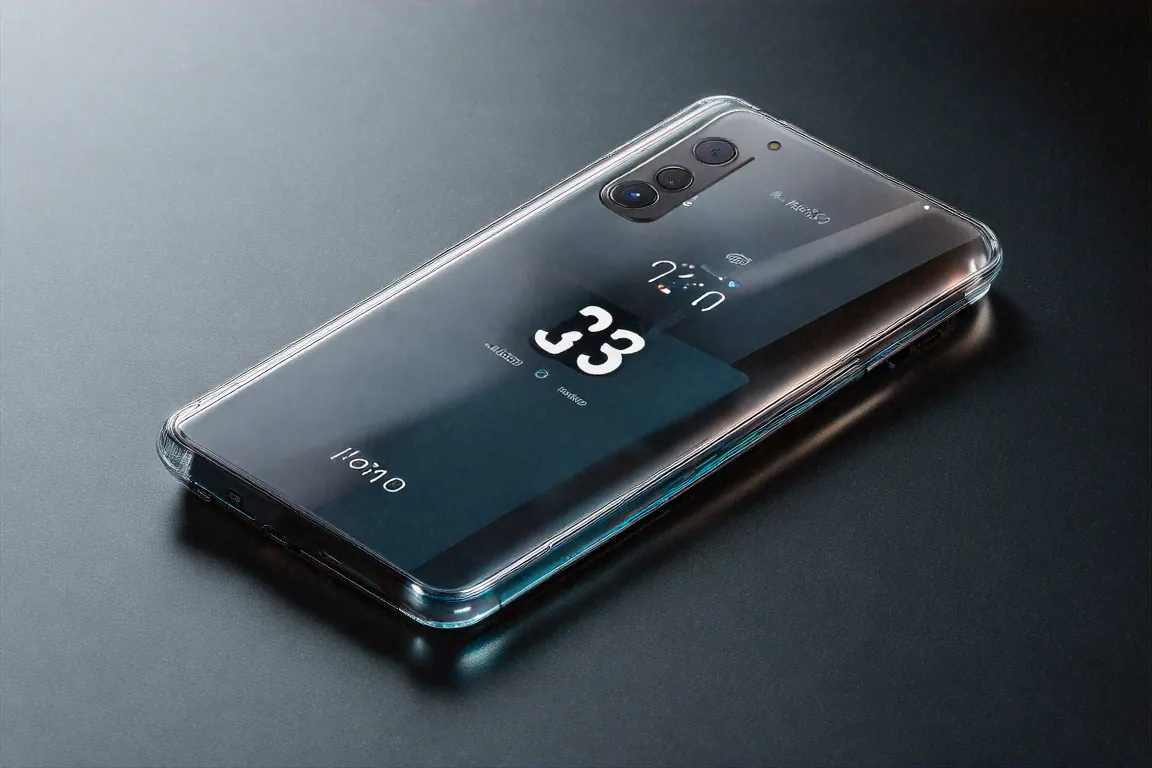
— and that's exactly the problem with most phone reviews. They tell you a phone is "unique" and then describe a rectangular slab that looks identical to every other rectangular slab released that quarter. So when I say the Nothing Phone 2a Plus is actually, genuinely, physically different from every other phone you can buy in India right now, I need you to understand I'm not being promotional. I'm being literal. There is a transparent back with 33 individually controllable LED segments arranged in a geometric pattern, and when someone calls you, the phone lights up like a small art installation. You either think that's brilliant or stupid. There isn't much middle ground. I've landed on "brilliant, but I understand the other side."
Rs 44,999. MediaTek Dimensity 7350 Pro. Nothing OS 2.6 on Android 14 — the cleanest skin any manufacturer puts on Android. IP54. A 5000mAh battery. Those are the practical specs behind the LED show. The Phone 2a Plus isn't just a conversation piece. It's a proper flagship that happens to glow.
The Glyph Thing
Might as well start here since it's what everyone asks about. The Glyph Interface is now in its third version, with 33 LED segments spread across the back of the phone in Nothing's signature geometric arrangement. Each segment can be individually controlled — assigned to specific contacts, apps, or notification types. A strip along the bottom can act as a progress bar for timers, Uber arrivals, or music playback. Specific patterns correspond to different callers, so you can know who's calling without looking at the screen.
Genuinely useful? Sometimes. When my phone's face-down on a desk (which is how I place it 90% of the time), the Glyph lights tell me instantly if a notification is worth flipping the phone over for. Red pattern flashing? That's my wife. White pulse? Slack message. Brief flash and gone? Probably a news alert I'll ignore. It replaces the action of picking up the phone and checking the screen, which happens dozens of times a day.
Gimmicky? Also sometimes. The "Essential Notifications" feature that pulses light in sync with Google Maps directions was theoretically cool but I never once found it more useful than the audio navigation I was already listening to. The music visualiser mode where LEDs react to whatever song is playing looks fun at a party for about three minutes before you forget it exists.
I think the Glyph Interface sits in a weird space — it's genuinely useful enough that I'd miss it on another phone, but I'd struggle to call it a purchase-deciding feature on its own. It's more like... the thing that makes the Nothing Phone 2a Plus memorable after all the spec sheets blur together.
Transparent Design
The back is Gorilla Glass Victus 2 but transparent, letting you see a portion of the phone's internals. Not the actual motherboard or anything sensitive — Nothing designed a custom decorative board beneath the glass that's arranged to look appealing. You can see the battery, some carefully laid-out components, and the wireless charging coil (wait, there's no wireless charging here — more on that later). The Glyph LEDs weave around these visible components.
After two weeks, I still found myself flipping the phone over to look at the back. Visitors, friends, colleagues — everyone asks about it. "What phone is that?" is a question I heard at least a dozen times. For some people, that social aspect matters. For others, it's irrelevant. Just reporting what happened.
Aluminium frame. Solid build. Tight tolerances. Satisfying button feedback. At 212 grams, it's one of the lighter phones in the flagship segment this year. The overall feel is premium — not Samsung S26 Ultra premium, but closer than the price suggests.
Nothing OS 2.6: The Real Selling Point
I've reviewed phones from Samsung, OnePlus, Xiaomi, Realme, Vivo, and Google in this series. Every one of them has software compromises — bloatware, duplicate apps, promotional notifications, aggressive RAM management, or just visual clutter. Nothing OS 2.6 has none of these.
None. Zero. The phone boots up clean. No third-party apps installed. No Nothing-branded duplicates of Google apps. No ads anywhere in the interface. The notification shade is clean. Settings are logically organised. Animations are smooth and consistent. The monochrome-inspired design language — white, black, and dots — gives the UI a visual coherence that no other Android skin matches.
If you've ever used stock Android on a Pixel and liked it, NothingOS is that experience with better visual design. The widgets are prettier. The lock screen customisation is more interesting. The weather app, the recorder, the calculator — all designed with a consistent dot-matrix aesthetic that feels considered rather than default.
In terms of actual daily use, NothingOS is responsive. Apps launch fast. Gesture navigation is smooth. RAM management is sensible — it doesn't aggressively kill background apps like some skins do. I went two weeks without encountering a single bug, which sounds unremarkable but is genuinely unusual when testing a phone from a relatively young company.
Nothing promises three years of OS updates and four years of security patches. Standard for the price. Not matching Google's seven years, but three years of a software experience this clean is arguably more valuable than seven years of Funtouch OS.
Display
6.67-inch AMOLED. 2412 x 1080 resolution. 120Hz refresh rate. 2000 nits peak brightness.
Let me be upfront: this is a Full HD+ panel, not Quad HD+. At Rs 44,999, I'd have liked to see the higher resolution that phones like the Xiaomi 15 Pro and OnePlus 14 Pro offer. In practice though, at 6.67 inches, Full HD+ looks perfectly sharp for daily use. I couldn't distinguish individual pixels at normal viewing distances. You'd need to hold the phone abnormally close and squint to notice the resolution limitation.
Brightness at 2000 nits is lower than most competitors. The Samsung S26 Ultra hits 2600 nits, the OnePlus 14 Pro reaches 4500 nits. Outdoor readability on the Nothing Phone 2a Plus is adequate — I could use it in direct sunlight without major issues — but it's clearly not the best screen in its price range. On overcast days and indoors, the display looks great. Vibrant colours, deep blacks, smooth motion at 120Hz.
Nothing's tuned the display to avoid oversaturation while keeping colours punchy enough to look good. It's a subtle balance and they've nailed it. The under-display fingerprint sensor is consistently fast. No reliability complaints.
Camera System
Triple camera setup: 50MP Sony IMX906 main with OIS, 50MP ultrawide, and a 32MP 2x telephoto.
I'll start with the main camera because it's the strongest lens in the system. The Sony IMX906 is a well-known sensor at this point — Samsung, OnePlus, and others have used it in various phones. Nothing's processing is tuned toward natural colour reproduction. No aggressive saturation. No over-sharpening. Skin tones look like actual skin. Grass looks like actual grass, not the neon green that some phones produce.
Daytime shots are genuinely excellent. Good detail, balanced exposure, accurate white balance. Dynamic range is wide enough that most high-contrast scenes (sky versus building shadow, for example) are handled without needing HDR processing to be visible. I compared daytime shots against the Xiaomi 15 Pro and the difference was surprisingly small — maybe 10-15% less fine detail in the Nothing's shots, noticeable only when zooming to 100% on a monitor.
Night mode has improved substantially from the Phone 2. Well-lit streets at night produce clean, usable images. Dimly lit environments — a candlelit dinner, a dark park — show more noise than the Pixel 10 Pro or Samsung S26 Ultra, but the results are still shareable. For a Rs 44,999 phone, the low-light performance is respectable.
The 50MP ultrawide is one of the better ultrawides at this price. Sharp across most of the frame, decent colour matching with the main camera, minimal barrel distortion. Group shots and landscapes come out well. I'd rank it above the Realme GT 7 Pro's 8MP ultrawide by a wide margin.
The 32MP 2x telephoto is useful for portrait photography and mild zoom. Not a 3x or 5x like some competitors, so you're getting less reach. But 2x is enough for head-and-shoulders portraits with natural background separation, and the 32MP resolution means cropping in retains decent detail. It's a practical lens rather than an impressive one.
Video stabilisation is smooth and reliable across all three cameras. 4K recording at 30fps is the max. Audio capture through the microphones is clean with good voice isolation.
One thing Nothing does well in the camera app: simplicity. The interface is clean and uncluttered. Modes are clearly labelled. Switching between lenses is instant with a single tap. There's no overwhelming array of AI modes, beauty filters, or gimmick features cluttering the viewfinder. You open the camera, point it at something, and shoot. For people tired of Samsung's camera app (which has roughly fourteen different modes and sub-menus), Nothing's approach is refreshing. Less capable in absolute terms, but more pleasant to actually use.
Compared to the OnePlus 14 Pro and Xiaomi 15 Pro at slightly higher prices, the Nothing Phone 2a Plus's camera system is a step behind. The Hasselblad processing and Leica sensor, respectively, produce more distinctive, higher-fidelity images. Against the Realme GT 7 Pro at a lower price, the Nothing wins comfortably — especially the ultrawide and overall processing.
MediaTek Dimensity 7350 Pro Performance
Same chip as every other flagship reviewed this year. By now the story is familiar: everything is fast, nothing stutters, gaming runs at high settings, multitasking is smooth. What differentiates the Nothing Phone 2a Plus's performance experience is the software overhead — or rather, the lack of it.
NothingOS is so lean that more RAM is available for apps. On the 12GB variant I tested, I consistently saw 4-5GB of free RAM even with a dozen apps in the background. On Samsung or Xiaomi phones with the same 12GB, you'll typically see 2-3GB free because the system services consume more. More free RAM means more apps stay alive in memory, which means less reloading when you switch between apps.
Gaming performance is excellent. BGMI at high settings was smooth throughout. Genshin Impact at medium-high ran without noticeable frame drops. The phone warmed up during extended sessions but stayed within comfortable territory. No throttling detected during a 40-minute stress test.
Storage is UFS 2.2 in either 128GB or 256GB options. App installation and file transfers are fast. Not UFS 4.1 like some pricier competitors, but the real-world speed difference between 4.0 and 4.1 is minimal for daily use.
Battery and Charging
5000mAh paired with an efficient MediaTek Dimensity 7350 Pro and a lightweight OS. The battery math works out well here.
Screen-on time during my testing: 7 to 9 hours depending on usage intensity. Heavy days (gaming, lots of camera use, GPS navigation) got around 7 hours. Light to moderate days (messaging, browsing, streaming) pushed toward 9. Getting through a full day was never a concern. On a couple of light days, I reached bedtime with 35%+ remaining.
Charging is 50W wired. Full charge from empty takes just under 50 minutes. Not the fastest — Realme does it in 32 minutes, OnePlus in 34 — but quick enough that you can charge while having a cup of tea and leave with a full battery.
No wireless charging. At Rs 44,999 this is a notable omission, given that the OnePlus 14 Pro offers 50W wireless at Rs 69,999 and even Xiaomi includes it at Rs 49,999. If wireless charging matters to you, it's a clear gap.
What's Missing
A few things the Nothing Phone 2a Plus doesn't have, for the sake of being thorough:
- No wireless charging (mentioned above)
- No Quad HD+ display resolution (Full HD+ only)
- Camera system trails OnePlus and Xiaomi at slightly higher prices
- Nothing's service network in India is limited — no widespread service centres like Samsung
- Peak display brightness (2000 nits) is lower than competitors
These are real trade-offs, not nitpicks. Whether they matter depends on your priorities. If clean software and distinctive design rank higher than camera quality and display resolution, the calculus works in Nothing's favour. If you're buying primarily for photography, the OnePlus 14 Pro or Xiaomi 15 Pro are better investments.
Speakers, Call Quality, and Haptics
Stereo speakers with the main driver on the bottom edge and the earpiece handling the top channel. Sound quality is decent — clear vocals, reasonable volume, a slight lack of bass at higher volumes. Comparable to most phones in this price range, though Samsung and Apple both sound better if you're directly comparing. For quick video watching or speakerphone calls, perfectly adequate.
Call quality was consistent across Jio and Airtel during my testing. Nothing to report here in terms of issues — calls sounded clear, earpiece volume was sufficient, and VoLTE worked without setup hassles. Wi-Fi calling kicked in automatically when I was in my apartment's interior rooms where cellular signal drops to one bar.
Haptic feedback is surprisingly good. Nothing clearly invested in a quality vibration motor — keyboard taps feel tight and precise, not the loose buzzing that cheaper phones produce. Notification vibrations are distinct. It's one of those small details that contributes to the overall "this phone feels more expensive than it is" impression that the Phone 2a Plus consistently delivers.
Who Nothing Thinks Their Customer Is
Based on everything I've seen, Nothing is targeting the person who's tired of phones being boring. The designer who'd rather have a transparent phone with LEDs than another black glass rectangle. The Android purist who wants clean software without paying Pixel prices. The buyer who reads spec sheets but also cares about whether the product brings them some small amount of joy when they use it.
Whether that audience is large enough in India to sustain Nothing as a company is a separate business question. But as a product philosophy, I respect it. Most phones optimise for specs. Nothing optimises for character.
| Specification | Details |
|---|---|
| Processor | MediaTek Dimensity 7350 Pro (3nm) |
| RAM | 8GB/12GB LPDDR5 |
| Storage | 128GB/256GB UFS 2.2 |
| Display | 6.7" AMOLED, 2412x1080, 120Hz |
| Main Camera | 50MP f/1.88 Sony IMX906 |
| Ultrawide | 50MP f/2.2 |
| Telephoto | 32MP 2x optical |
| Front Camera | 50MP f/2.2 |
| Battery | 5000mAh |
| Charging | 50W wired |
| OS | Nothing OS 2.6, Android 14 |
| IP Rating | IP54 |
| Weight | 190g |
Pros and Cons
Pros
- Glyph Interface with 33 LED zones is genuinely useful for face-down notification glancing
- Nothing OS 2.6 is the cleanest, most bloat-free Android skin available — no ads, no duplicates, no junk
- MediaTek Dimensity 7350 Pro at Rs 44,999 with excellent RAM management thanks to light software
- AMOLED display is well-tuned with vibrant colours that aren't oversaturated
- Strong build quality with a transparent design that looks and feels distinctive
Cons
- Glyph Interface is polarising — people who don't care about LEDs get no value from it
- Camera trails OnePlus 14 Pro and Xiaomi 15 Pro at slightly higher price points
- No wireless charging at Rs 44,999 is a visible gap in the spec sheet
- Limited service network across India — metro cities are covered, smaller cities not so much
Price and Where to Find It
Rs 44,999 for the 8GB/128GB variant. Available on Flipkart and Nothing's official India website. The 12GB/256GB model costs more but is the variant I'd recommend — the extra RAM makes a noticeable difference in app retention.
One Last Thing
A friend visited last week and I had three phones on my desk — the Samsung S26 Ultra, the Xiaomi 15 Pro, and the Nothing Phone 2a Plus. He picked up the Nothing without hesitation. Turned it over. Watched the Glyph lights. Said "this is cool" in a tone that wasn't analytical or tech-reviewer-ish. Just honest appreciation for something that looked different.
I ran a benchmark on the Samsung later that evening. Higher score, obviously. Better camera, bigger battery, brighter screen, more expensive by Rs 90,000. Better phone by any metric you'd put on a spreadsheet.
He asked me the next day where to buy the Nothing.




Comments (0)
Leave a Comment
No comments yet. Be the first to share your thoughts!