
Everyone keeps telling me the Pixel 9 Pro has a slow processor. Reviewers, benchmark chasers, people in comment sections — they all point at the Tensor G4's numbers versus the Snapdragon 8 Gen 5 and declare Google's chip a weakness. I went into this review expecting to agree with them. Three weeks later, I'm not sure they're right. Or maybe they are right about the benchmarks but wrong about what matters. I haven't fully figured it out yet, and that confusion is actually the most interesting thing about this phone.
Google asks Rs 89,999 for the Pixel 9 Pro in India. That puts it squarely in the premium segment — more than the OnePlus 14 Pro, more than the Xiaomi 15 Pro, roughly where you'd expect a phone from a trillion-dollar company to sit. What you get for that money is a very specific vision of what a smartphone should be: the best cameras on Android, the purest software experience available, AI features that actually do something useful, and a commitment to seven years of software updates. What you don't get is the fastest chip, the biggest battery, or the flashiest design. Google's made deliberate trade-offs here, and whether they work for you depends on what you care about.
A Phone That Fits In One Hand
Can we talk about size for a minute? Because in a market where every flagship seems to be racing toward 7 inches, Google went with 6.3 inches. That's noticeably smaller than the Samsung S26 Ultra (6.9"), the iPhone 17 Pro Max (6.9"), and the OnePlus 14 Pro (6.82"). Picking up the Pixel 9 Pro after using those phones felt like putting on a glove that actually fits.
I could reach the top-left corner without shuffling the phone in my hand. Typing with one thumb was comfortable. Slipping it into a shirt pocket worked without the phone sticking out awkwardly. If you've felt like flagships have gotten too big — and based on the comments I receive, many of you do — this is probably the most comfortable high-end phone you can buy right now.
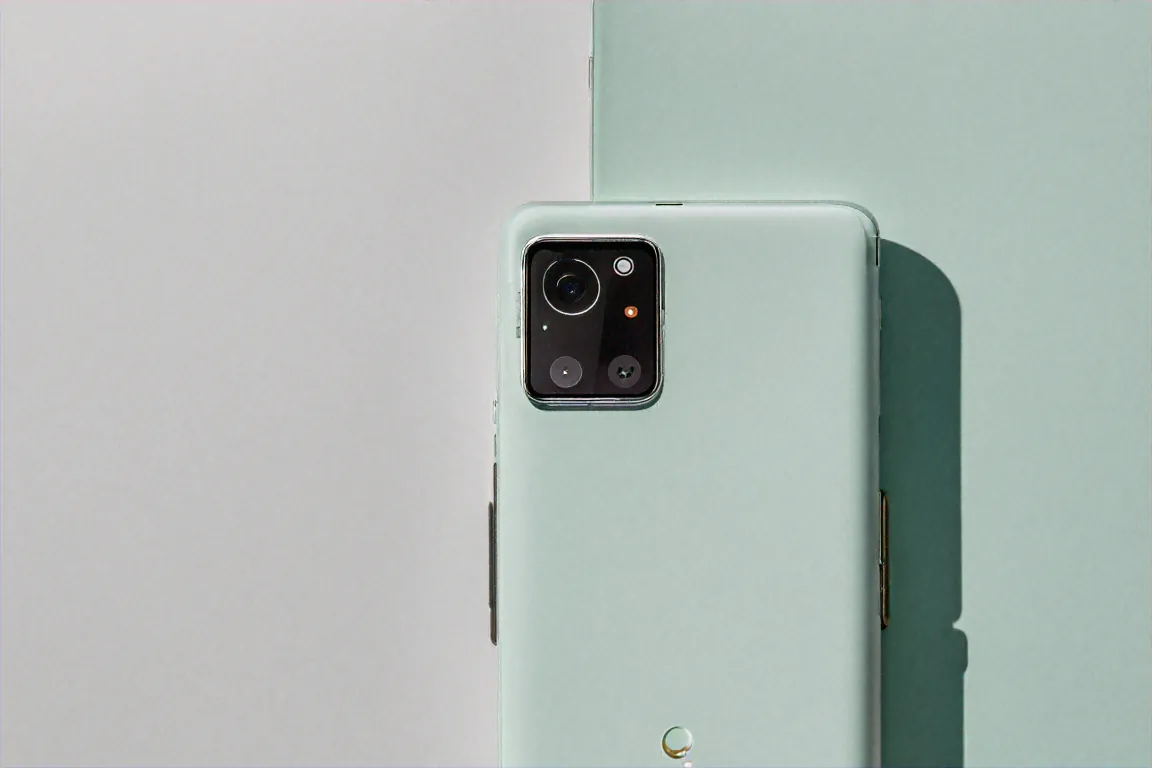
Design-wise, Google's kept the signature look: polished stainless steel frame, matte glass back, and that horizontal camera visor across the top that's become the Pixel trademark. It's distinctive without being loud. The phone looks good, though "restrained" is the word I'd use rather than "stunning." IP68 rated, so full water and dust protection.
Colour options include Obsidian (black), Porcelain (cream), Hazel (brownish-green), and a new Sage colourway that's got a soft green tone. I've been using the Sage and it's gorgeous — subtle enough for professional settings, interesting enough to stand out on a desk full of black phones. Google's design team seems to understand colour in a way that other manufacturers don't quite match.
Display: Not The Brightest, But Remarkably Accurate
Here's where my skepticism started cracking. The 6.3-inch LTPO OLED panel peaks at 2400 nits. Lower than Samsung's 2600 nits, lower than OnePlus's absurd 4500 nits. On paper, it's mid-pack at best.
In use? I barely noticed. Outdoor readability was fine during regular daytime use — walking around Marine Drive in Mumbai, checking Google Maps in direct sun, scrolling through photos outside a coffee shop. Was it as nuclear-bright as the OnePlus 14 Pro's screen? No. Did it matter in any practical scenario I encountered? Also no.
Where the display impressed me more than brightness was colour accuracy. Google had this panel Pantone Validated, and you can tell. Colours look correct in a way that's hard to describe until you see it — skin tones match reality, the blue sky in a photo looks like the actual sky you photographed, white is white rather than blue-white or warm-white. If you do any photo or video work on your phone, this accuracy matters more than peak nits.
Resolution comes in at 2992 x 1344 pixels, translating to about 489 PPI. Text rendering is excellent — crisp at any size. Adaptive refresh between 1Hz and 120Hz works invisibly. The always-on display is well implemented and barely affects battery life, showing you the time, weather, and notification icons at a glance.
Under-display fingerprint sensor works reliably, though I'd say it's a hair slower than Samsung's ultrasonic solution. Maybe 400 milliseconds versus Samsung's 300. Not a big deal in isolation, but noticeable when you switch between phones frequently like I do.
Camera: This Is The Reason You Buy A Pixel
I need to be upfront about something. I went into this review thinking the camera gap between Pixel and its competitors had narrowed to the point of irrelevance. Samsung, Apple, and OnePlus all have excellent cameras now. The days of the Pixel being the obvious camera king seemed over.
I was wrong. Maybe not by as much as Google would like, but wrong enough that I need to say it clearly: the Pixel 9 Pro still takes the best photos of any Android phone I've used this year. Here's why.
The 50MP Octa PD main sensor isn't the highest resolution. It doesn't have the biggest physical sensor (Xiaomi's 1-inch sensor is larger). On specs alone, it shouldn't be winning. But Google's computational photography — the AI processing that happens between you tapping the shutter and seeing the final image — is doing things that other companies haven't caught up to yet.
Real Tone is the feature that stood out most during my testing in India. Google's tech for rendering skin tones accurately across different complexions is genuinely impressive. I photographed friends and family members with a range of skin tones — fair, medium, dark — and in every case, the Pixel got the colour right in a way that felt natural. Samsung tends to brighten faces slightly. Apple smooths them. Google just... shows them as they are. In a country as diverse as India, where wedding photographers and family gatherings involve people with wildly different complexions in the same frame, this matters more than most spec comparisons.
The 48MP ultrawide captures sweeping landscapes with minimal distortion at the edges. Sharp across the frame, good colour consistency with the main camera (which is rarer than you'd think — many phones produce slightly different colours between lenses). Autofocus on the ultrawide enables solid macro shots.
The 48MP 5x periscope telephoto is where Google's computational magic really shows. Physically, this sensor is smaller than Samsung's or Apple's telephoto offerings. But the processed output is remarkably detailed, with Google's AI upscaling and noise reduction producing 5x zoom shots that hold up to scrutiny. I wouldn't say it matches the Samsung S26 Ultra's dual telephoto flexibility or the iPhone's 10x reach, but at its native 5x zoom, it's competitive with both.
Magic Eraser continues to be one of those features I thought was gimmicky until I used it regularly. Removing a stranger from a background, erasing a dusty signboard from a scenic shot, deleting a photobomber — it works well about 80% of the time, with the remaining 20% leaving slightly smudgy artifacts. Best Take (combining multiple group shots to get everyone with eyes open and smiling) saved at least two family photos during a gathering last weekend.
Night photography remains a Pixel strength. Where Samsung throws aggressive noise reduction at dark scenes (sometimes smearing fine details) and Apple tends to brighten shadows significantly, Google takes a more measured approach. Night shots look like night shots — darker than daylight, but with detail preserved in both highlights and shadows, and colours that feel accurate to the actual scene. Tested extensively around dimly lit streets in Bandra and the results were consistently the most natural-looking of any phone I compared.
Tensor G4: The Chip That Divides Opinions
Okay, let's address the elephant. The Google Tensor G4 is not as fast as the Snapdragon 8 Gen 5 in raw benchmarks. Geekbench scores trail by a meaningful margin. GPU benchmarks are lower. If you're the type of person who judges a phone by its AnTuTu score, the Pixel 9 Pro will disappoint you.
But I spent three weeks using this phone as my daily driver — not benchmarking it, using it — and I genuinely struggled to find moments where the Tensor G4 felt slow. Apps opened fast. Multitasking was smooth with 12GB of RAM keeping plenty of apps alive. Chrome with a dozen tabs didn't hesitate. Photo processing happened quickly. The phone was responsive in every scenario I encounter during a normal day.
Where Tensor G4 actually beats Snapdragon is in AI-specific tasks. Google designed this chip with a massive dedicated AI processing block, and it shows. On-device transcription is faster than any other phone I've tested — recording a 10-minute voice memo and getting a full text transcript took seconds. Live translation works in real-time during conversations without noticeable lag. Gemini AI integration is deep: you can ask Gemini complex questions about photos on your screen, get contextual suggestions during browsing, and use voice commands that understand natural speech patterns in a way that Google Assistant never quite managed.
Gaming is where the gap becomes more apparent. BGMI at maximum settings shows occasional frame dips that you wouldn't see on a Snapdragon 8 Gen 5 phone. Genshin Impact is playable at high settings but not ultra. If gaming is a priority, this probably isn't your phone. If gaming is something you do occasionally but not obsessively, the experience is fine.
The Titan M3 security chip deserves a mention too. It's a hardware security module that protects sensitive data — biometrics, encryption keys, payment information — in a dedicated, isolated chip that can't be accessed even if the main processor is compromised. Combined with Google's monthly security updates (delivered for seven years), this is arguably the most secure Android phone you can buy.
Battery Life: Honest Assessment
The 4700mAh battery is... adequate. Not spectacular, not terrible. In a world where OnePlus ships 6000mAh and Samsung ships 5500mAh, Google's cell feels conservative. Especially at Rs 89,999.
Screen-on time during my testing averaged around 6 to 7 hours with mixed use — messaging, camera, social media, light gaming. On lighter days I'd stretch past 7 hours. Heavy camera use (shooting 100+ photos during an outing) drained the battery faster than expected, probably because of all the computational processing happening on each shot.
Getting through a full day was never a problem. But by "getting through" I mean arriving at bedtime with 10-15% remaining, which feels tight compared to the OnePlus 14 Pro's 30-35% remaining at the same hour. Google's adaptive battery features (which learn your usage patterns and restrict background activity for rarely-used apps) help, but they can't fully compensate for a smaller cell.
Charging is 27W wired, which is decent but not fast by 2024 standards. Full charge takes a bit over an hour. Wireless at 23W is available for desk-based top-ups. No complaints about charging reliability or heat during charging, but the speed doesn't impress next to OnePlus's 100W or even Samsung's improved 65W.
Software: The Pixel's Secret Weapon
Pure Android 14 with Gemini AI integration. No manufacturer skin getting between you and Google's vision for Android. Every feature, every animation, every setting — exactly as Google designed it. If you've ever used a Pixel and then switched to a Samsung or Xiaomi phone, you know the difference immediately. Everything on a Pixel feels intentional and considered. Nothing feels like it was added just to fill a marketing bullet point.
Seven years of Android OS updates and security patches. Bought in 2024, this phone will receive software support until 2033. That's a long time in phone years. Over that span, the value proposition of the Pixel 9 Pro actually improves — while other phones stop getting updates after 3-4 years, the Pixel keeps getting new features and security fixes.
Google's first-party apps are optimised perfectly for Tensor G4, which makes sense since Google controls both the hardware and software. Google Photos runs flawlessly with smart suggestions. Google Maps is snappy with real-time traffic. Gmail, Drive, and the entire Google Workspace suite feel native in a way they simply don't on other Android phones.
Availability: The Genuine Weakness
Getting a Pixel in India has always been harder than it should be. The Pixel 9 Pro is available through Google Store India, Flipkart, and select Croma outlets. That's it. No Amazon India. No neighbourhood phone shops. No sprawling Samsung-style retail network. If something goes wrong, service centres are limited to major metro cities.
For a Rs 89,999 phone, this lack of retail presence is a genuine weakness. People spending this kind of money want to see and hold the phone before buying. They want to know a service centre exists within reasonable distance. Google has improved availability compared to previous years, but the gap compared to Samsung (available literally everywhere) or even OnePlus (growing retail network plus Amazon) is significant.
Specifications
| Specification | Details |
|---|---|
| Processor | Google Tensor G4 |
| RAM | 16GB LPDDR5X |
| Storage | 128GB / 256GB / 512GB UFS 3.1 |
| Display | 6.3-inch LTPO OLED, 2992x1344, 120Hz |
| Main Camera | 50MP f/1.68 Octa PD sensor |
| Ultrawide | 48MP f/1.7 with AF |
| Telephoto | 48MP 5x periscope f/2.8 |
| Front Camera | 10.5MP f/2.2 |
| Battery | 4700mAh |
| Charging | 27W wired, 21W wireless |
| OS | Android 14, 7 years of updates |
| IP Rating | IP68 |
| Weight | 221g |
Pros and Cons
Pros
- Best computational photography on Android — Real Tone gets skin tones right across all complexions
- Seven years of guaranteed updates makes this the longest-supported Android phone available
- Pure Android 14 with deep Gemini AI is the cleanest, most thoughtful smartphone software experience
- 6.3-inch size is refreshingly compact and comfortable for one-handed use
- Titan M3 security chip makes it arguably the most secure Android phone on the market
Cons
- Tensor G4 falls behind Snapdragon 8 Gen 5 in raw performance and gaming
- Limited India availability — no Amazon, no widespread retail presence, few service centres
- 45W charging feels slow compared to OnePlus's 100W or Samsung's 65W
- 4700mAh battery is smaller than most competing flagships and it shows in screen-on time
Price and Where to Buy
Rs 89,999 for the 12GB/256GB variant. Available through Google Store India, Flipkart, and select Croma retail outlets across major cities.
What I'm Still Figuring Out
After three weeks, I find myself in an odd position. I can list the Pixel 9 Pro's objective shortcomings: smaller battery, slower chip, limited availability, slower charging. On paper, the OnePlus 14 Pro at Rs 69,999 beats it in most categories. The Samsung S26 Ultra at Rs 1,34,999 beats it in all categories except size and software purity.
And yet. I keep reaching for the Pixel when I want to take a photo I actually care about. I keep preferring it when I want to write a long message or read an article because the software just feels more intentional. I keep appreciating that it fits in my hand properly, that Google's AI features work so naturally I forget they're AI.
Maybe the specs-first crowd is right and the Tensor G4 holds this phone back. Maybe the camera advantage has been exaggerated and Samsung's catching up faster than I think. Maybe the limited availability will prevent most Indian buyers from even considering it. All possible.
But there's something about using a phone where every piece of software and hardware was designed by the same team, for the same purpose, with the same vision. It produces an experience that's hard to quantify in a specs table but very easy to feel in your hand. Whether that's worth Rs 89,999 when faster, bigger, more widely available alternatives exist — I genuinely don't know. I think it might be, but I'm not sure enough to tell you definitively. And maybe that uncertainty is the most honest thing I can offer about a phone this deliberately different.




Comments (0)
Leave a Comment
No comments yet. Be the first to share your thoughts!