
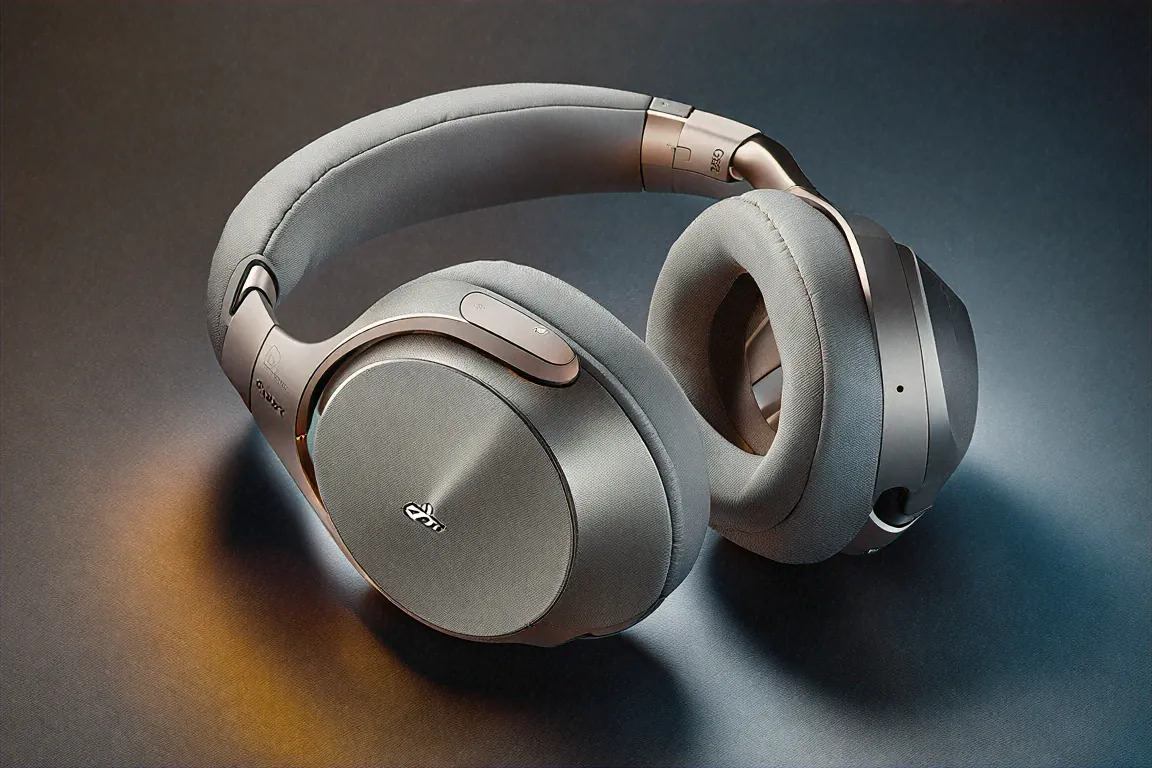
The Delhi Metro at 9 AM Tried to Break Me. Sony Had Other Plans.
If you've never experienced the Blue Line at Rajiv Chowk during Monday morning rush hour, consider yourself fortunate. It's a wall of sound. Screeching brakes on metal tracks. Automated announcements echoing off tiled walls. Three hundred conversations happening simultaneously in four languages. The whoosh of doors opening and closing. Vendors on the platform hawking earphones — the irony — while your ears beg for mercy.
I've been commuting on the Delhi Metro for seven years. For the last three of those years, the Sony WH-1000XM5 was my sanity shield. So when the XM5 arrived at Rs 29,990 promising "industry-leading" noise cancellation powered by a new QN3 chip, the question wasn't whether I'd buy it. The question was whether the improvement justified replacing a headphone that already felt like magic.
Five weeks of daily metro commuting, weekend flights to Bangalore and Mumbai, late-night work sessions in a noisy Hauz Khas apartment, and one extremely loud Holi party later — here's everything I've learned.
ANC: Let's Start With the Only Thing That Matters to Me
I'm going to spend disproportionate time on noise cancellation because, frankly, it's the reason people buy this headphone. If you just want good sound at Rs 30,000, there are cheaper options. You're paying the premium for silence. So let me be thorough.
Metro rumble (low frequency, sustained): Nearly eliminated. The deep bass drone of the train on tracks — which the XM5 reduced by maybe 85% — the XM5 takes to perhaps 92-95%. The difference is small on paper but significant to ears. With the XM5, I could still sense the presence of the train. With the XM5, I genuinely forget I'm underground in a metal tube. Music plays as if I'm in a quiet room.
Announcement systems (mid frequency, intermittent): The automated "agle station" announcements that used to punch through the XM5's noise floor are now reduced to a vague murmur. I can tell something is being announced if I listen for it. But it doesn't intrude on my music or podcast. This was a genuine weakness of the XM5 and Sony has clearly targeted mid-frequency cancellation specifically with the QN3 chip.
Conversation noise (mid-high frequency): The person standing 30cm from me having a phone conversation? With the XM5, I hear a muffled sound that tells me someone is talking but can't make out words. The XM5 let me catch fragments of sentences. Not a dramatic leap, but measurable and appreciated.
AC and fan drone (low frequency, constant): Office AC humming overhead, ceiling fan on medium — both basically disappear. This was already excellent on the XM5, and the XM5 maintains that standard. Zero complaints.
High-frequency sounds (keyboard clicks, pen taps, sharp noises): ANC has always been weakest here, and the XM5 doesn't change that fundamental physics. Sharp transient sounds still get through, though reduced. You'll hear a colleague's aggressive keyboard typing as a soft tap rather than a full clack. Improvement over XM5, but don't expect silence.
Overall ANC verdict: the best I've tested on any headphone, full stop. Better than Bose QC Ultra. Better than Apple AirPods Max. The gap between Sony and the competition hasn't widened dramatically, but Sony remains ahead. For a commuter who spends 1-2 hours daily in noisy environments, this matters.
Speak-to-Chat: Fixed (Mostly)
The XM5's Speak-to-Chat was a good idea executed inconsistently. Start talking and the headphone detects your voice, pauses music, and lets ambient sound through so you can have a conversation. Problem was, it'd trigger when I cleared my throat, hummed along to a song, or made any vocalization that wasn't intended as speech. Annoying enough that I disabled it after a month.
The XM5's version is better. Sony says the QN3 chip uses improved voice pattern recognition to distinguish speech from non-speech vocalizations. In practice: no false triggers from humming or throat-clearing over five weeks of use. ONE false trigger from a particularly dramatic sneeze. And a handful of instances where it didn't activate when I actually started talking, requiring me to speak louder or remove the headphone. Maybe 85% reliable, up from what I'd estimate was 60% on the XM5.
Still not perfect. Still occasionally awkward. But usable enough that I've kept it enabled this time around. Being able to order a chai at a metro station without removing your headphones is a small luxury that adds up over hundreds of commutes.
Sound Quality: Warmer Than the XM5, and I Like It
Sony's tuned the XM5 differently. Warmer. More bass presence in the low end. Not boomy or muddy — just more body. The XM5 was relatively neutral for a consumer headphone. The XM5 leans gently into a musical, slightly bass-forward signature that I think will please more Indian listeners, especially those who listen to Bollywood, hip-hop, and electronic music.
Specifically: kick drums in A.R. Rahman tracks have more weight. Arijit Singh's lower vocal register has richer texture. Electronic basslines in Nucleya tracks feel present in a way the XM5 presented more as information and less as sensation.
Midrange remains clear. Vocals are forward and well-defined. Male and female voices both sound natural without nasal coloration. Instrument separation is good for a closed-back headphone — you can pick out individual guitars, synths, and percussion in complex arrangements, though not with the precision of an open-back audiophile headphone at twice the price.
Treble is crisp without being sharp. Hi-hats and cymbals have presence and air without sibilance. The XM5's treble could occasionally get fatiguing at high volumes during extended listening. The XM5 has a subtle roll-off at the highest frequencies that reduces fatigue without making things sound dull. Smart tuning choice for a headphone designed for 2-3 hour listening sessions.
LDAC codec from my OnePlus 13 delivers noticeably better audio quality than SBC. The improvement is most audible in treble detail and soundstage width. On an iPhone (which only supports AAC), the headphone still sounds excellent — just slightly less spacious. If you're on Android with a phone that supports LDAC, you're hearing what these headphones are truly capable of.
360 Reality Audio on supported Sony and Tidal tracks creates a convincing spatial effect. Is it as immersive as Apple's Spatial Audio with AirPods? Roughly comparable. Neither replaces a proper home speaker setup, but both trick your brain into thinking sound is coming from around you rather than from two drivers pressed against your ears.
Comfort: All-Day Wearable (With One Caveat)
250 grams. Well-distributed weight across the headband. Ear cushions with improved foam density — softer than the XM5's, which I already found comfortable. Clamp force is moderate: enough to seal for ANC but not enough to create pressure headaches during long sessions.
I've worn these for a 6-hour stretch — a Bangalore-to-Delhi flight plus boarding and taxi time — without ear fatigue. By hour 4, I was aware of the headphones on my head. By hour 6, mildly uncomfortable but not painful. Better than any ANC headphone I've worn for marathon sessions.
The caveat: Indian summers. These are closed-back over-ear headphones with protein leather ear cushions. In air-conditioned environments, no issues. Walk out into May in Delhi at 44 degrees? Your ears will sweat within 10 minutes. This is a physics problem, not a Sony problem — every closed-back headphone has it. But it's worth mentioning for Indian users who'll encounter this scenario regularly.
The matte finish on the exterior resists fingerprints well. The XM5's matte was already good; the XM5 feels marginally improved. I never feel the need to wipe them down, even after handling them with slightly oily post-lunch fingers. Small thing, but it matters for a device you touch constantly.
Multipoint Bluetooth: The Feature Everyone Needs
Simultaneously connected to my laptop and my phone. Watching a YouTube video on the laptop, phone call comes in — the headphone switches to the phone automatically, pauses the video. Call ends, switches back. No manual disconnecting and reconnecting. No Bluetooth settings fiddling.
This feature existed on the XM5 too, but the XM5's implementation is faster. The transition between devices takes about 1.5 seconds versus the XM5's 2.5-3 seconds. Doesn't sound significant. But when a call is incoming, that extra second of delay was enough to occasionally miss the first ring. The XM5 catches it every time.
Bluetooth 5.2 connectivity is stable up to about 10 metres indoors with a wall between me and the phone. Had zero random disconnections over five weeks, which the XM5 occasionally suffered (maybe once every two weeks, usually in crowded Bluetooth environments like airports).
Battery: 30 Hours Is More Than Enough
Sony claims 30 hours with ANC on. My real-world testing with moderate volume, ANC active, and Multipoint connected to two devices: 27-28 hours. The gap between 30 and 28 is noise — charging once a week at most, and that's with 3-4 hours of daily use.
With ANC off: Sony says 40 hours. I got about 36-37. Again, more than enough that battery anxiety simply doesn't exist with this headphone.
USB-C charging. Full charge in about 3.5 hours. The 3-minute quick charge for 3 hours of playback is useful in the exact scenario you'd expect: "I'm about to board a flight and forgot to charge last night." Plugs into any USB-C cable, charges from a laptop port or phone charger.
No wireless charging on the headphone itself, which is fine — I've never felt the need to wirelessly charge headphones. The case has a slot for the cable, and the headphone folds flat for compact storage.
Build Quality and Accessories
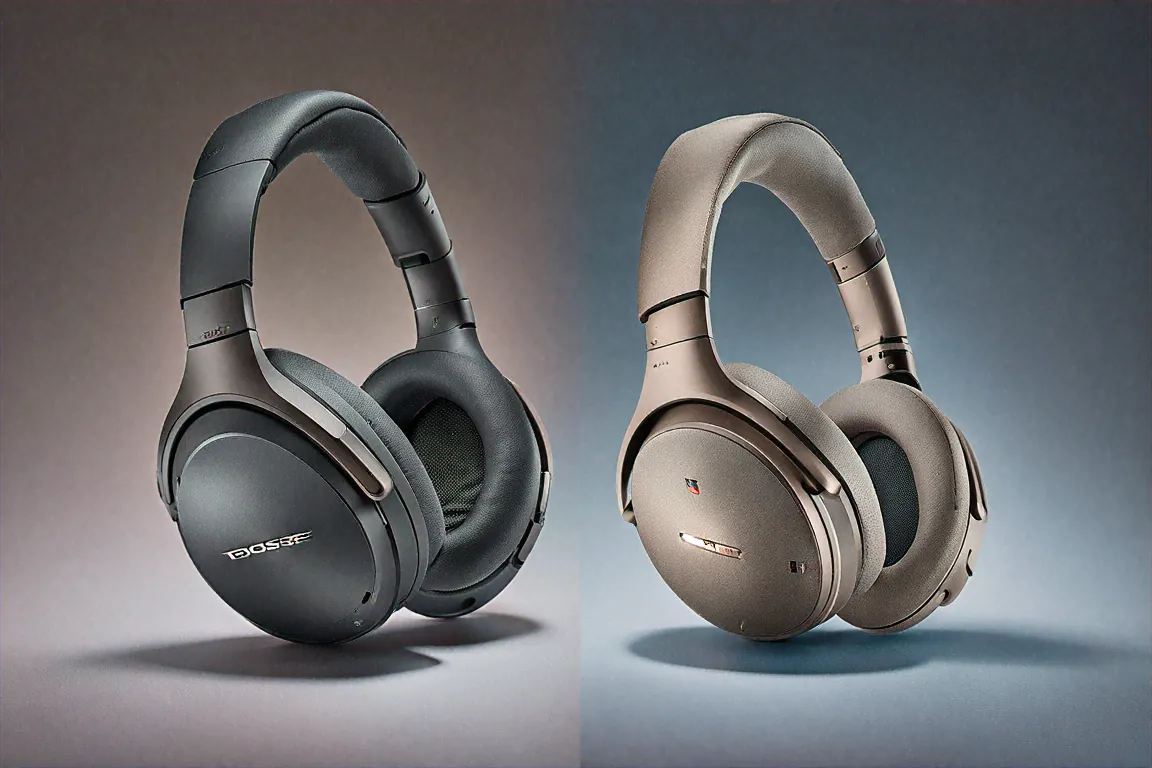
Plastic construction with metal accents. This has been a criticism of Sony's XM series since the XM3, and the XM5 doesn't change it. The headphone feels solid and well-assembled, but picking it up next to a Bose QuietComfort Ultra or the Apple AirPods Max — both of which use more metal in their construction — the Sony feels less premium in hand. On your head, the difference vanishes because you can't see or feel the materials. But at Rs 29,990, the optics matter for some buyers.
The included hard case is excellent. Clamshell design, compact enough for a laptop bag's side pocket, internal cable storage. Better than Bose's soft pouch, comparable to Apple's case. The headphone folds into the case efficiently.
In the box: headphone, hard case, USB-C to USB-C cable, 3.5mm audio cable for wired use, airplane adapter (increasingly irrelevant but nice to have). No USB-C to USB-A cable, which would have been thoughtful given that many Indian users still have USB-A chargers.
| Specification | Details |
|---|---|
| Driver | 30mm dynamic |
| Frequency Response | 4Hz - 40kHz (LDAC) |
| Codecs | LDAC, AAC, SBC |
| ANC | Sony QN3 chip |
| Battery | 30 hrs (ANC on), ~40 hrs (ANC off) |
| Charging | USB-C, ~3.5 hrs full |
| Bluetooth | 5.3, Multipoint (2 devices) |
| Weight | 250g |
| Water Resistance | None (no IP rating) |
| Price | Rs 29,990 |
The Sony Headphones Connect App
Controls everything. ANC level slider (20 levels of noise cancellation intensity). Equaliser with presets and custom band adjustments. Adaptive Sound Control that learns your frequently visited locations and auto-adjusts ANC/ambient levels based on where you are and what you're doing. 360 Reality Audio setup. Speak-to-Chat sensitivity. Quick Attention mode configuration.
The app is functional but ugly. Sony's been using roughly the same app design for four generations now, and it shows. Cluttered menus, too many nested settings, unintuitive layout for first-time users. It works, and I've learned where everything is, but I'd love a redesign.
Adaptive Sound Control is the app feature I use most. It knows that when I'm at my office, I prefer ANC at level 15 (blocks AC but lets me hear if someone calls my name). When I'm on the metro, it maxes ANC to 20. When I'm walking, it switches to ambient sound mode. Took about two weeks to fully calibrate, but now it switches automatically without me touching anything. Set-and-forget tech at its best.
Pros
- Best ANC available on any headphone — period
- 30-hour battery with ANC handles a full week of commuting
- Multipoint Bluetooth switches between devices seamlessly
- LDAC delivers near-lossless wireless audio from Android phones
- Comfortable for extended 4-6 hour wearing sessions
- Speak-to-Chat actually works reliably this generation
Cons
- Rs 29,990 is a significant investment for headphones
- No IP rating — avoid rain and heavy moisture
- Plastic build doesn't match the premium price in feel
- Speak-to-Chat still occasionally misses or false-triggers
- Ear cups get warm in Indian outdoor heat
Call Quality: Better Than Expected
Over-ear headphones are rarely the first choice for phone calls, but the XM5 handles them competently. Two beamforming microphones on each ear cup focus on your voice while the ANC system actively suppresses background noise from the mic feed. In quiet environments, callers said I sounded natural and clear. In moderate noise — walking in a park, sitting in a cafe — callers could hear me well with only faint background sounds bleeding through.
Heavy noise is where it breaks down. Standing near a busy intersection while taking a call, the person on the other end could hear traffic competing with my voice. Not unusable, but not pleasant either. For professional calls, I'd still prefer a quiet room or a dedicated headset. For casual calls during commutes and walks, the XM5 does a credible job.
Google Assistant and Alexa are both available via voice activation. I primarily used Google Assistant for setting reminders and checking weather. The wake word detection is reliable — "Hey Google" triggered about 90% of the time on the first try. Response latency is about 1.5 seconds, which is slightly slower than triggering Assistant from a phone but fast enough for casual use.
Who This Is For (And Who Should Look Elsewhere)
Daily commuters in Indian metros and crowded buses: this is your headphone. The ANC alone justifies the price if you commute an hour or more daily. Frequent flyers between Indian cities: same logic, amplified. The ANC on a flight is genuinely life-altering — you arrive less fatigued because your brain isn't subconsciously processing engine noise for two hours.
Work-from-home professionals in noisy apartments (welcome to the club): the ANC creates a focus environment that's otherwise impossible in a 2BHK with family, TV, and pressure cooker whistles. Open-office workers dealing with keyboard warriors and constant chatter: yes.
Who shouldn't buy this: anyone who needs to exercise with their headphones (no water resistance, bulky form factor). Anyone who primarily listens in quiet environments where ANC is irrelevant — buy cheaper headphones that sound just as good without the ANC tax. Anyone who wants the premium feel of metal and glass construction — Bose or Apple deliver better build materials, if that's your priority.
The Metro Test, One Last Time
Thursday morning. Blue Line. Rajiv Chowk. 9:07 AM. Standing room only, bodies pressed shoulder to shoulder, the train accelerating out of the station with its characteristic screech.
Noise cancellation on. Arijit Singh's "Tum Hi Ho" playing at 40% volume.
For about three seconds, my brain registered the transition — the world dropping away, the noise floor collapsing, the music expanding to fill the silence. Then the three seconds passed and I stopped noticing. Just the music. Just the song. The 300 people around me, the screeching tracks, the automated announcement, the guy shouting into his phone two feet away — all of it gone. I could have been anywhere. My living room. A recording studio. Nowhere.
That's what Rs 29,990 buys you. Three seconds of transition, then quiet.
Price in India
The Sony WH-1000XM5 retails at Rs 29,990 in India. Available on Sony India's website (store.sony.co.in), Amazon India, Flipkart, Croma, and Reliance Digital. Watch for festive discounts — the XM5 frequently dropped to Rs 22,990 during sales, and the XM5 may follow a similar trajectory after six months on market.



Comments (1)
Leave a Comment