
Wait, This Costs HOW Much? Only ₹37,999?
I saw the price and re-checked it three times. Then I checked the spec sheet. Then I checked the price again. Snapdragon 8 Gen 3, 12 GB RAM, 3K display at 144 Hz, 67W fast charging — all for under forty thousand rupees. There had to be a catch. Some massive compromise buried in the fine print that would explain how OnePlus was selling a flagship-spec tablet for less than half what Samsung and Apple charge.
I've been using the OnePlus Pad 2 for three weeks now. I've been looking for that catch. I'm still looking.
The Numbers Don't Make Sense (In a Good Way)
Let me put this in perspective. The Samsung Galaxy Tab S10 Ultra costs ₹1,08,999. The iPad Pro M4 starts at ₹1,12,900. The OnePlus Pad 2 at ₹37,999 is roughly a third of either price. And yet the performance gap isn't anywhere close to three-to-one. In raw processing power, the Snapdragon 8 Gen 3 in this thing trades blows with last year's flagships. It charges faster than the Samsung tab. The display refresh rate is actually higher.
Obviously there are differences that justify those premium prices — the iPad's tandem OLED, Samsung's DeX mode and dual S Pen, the ecosystem advantages. I'm not pretending the OnePlus Pad 2 is better than those tablets. But the value equation here is bonkers. Absolutely, genuinely bonkers.
Build and Feel — Not Budget at All
The aluminium back with a brushed finish feels... well, it feels like a ₹80,000 tablet. I handed it to a friend without telling him the price and he guessed "seventy thousand?" He was off by almost double. The edges are clean, the finish is matte without being slippery, and the overall construction feels solid in a way that budget Android tablets historically haven't.
At 6.7 mm thin and 585 grams, it sits in comfortable territory. Lighter than the Tab S10 Ultra by over 130 grams, which you absolutely feel during extended handheld use. I read ebooks on this for an hour before bed most nights and my hands don't complain. Try that with Samsung's 718-gram beast.
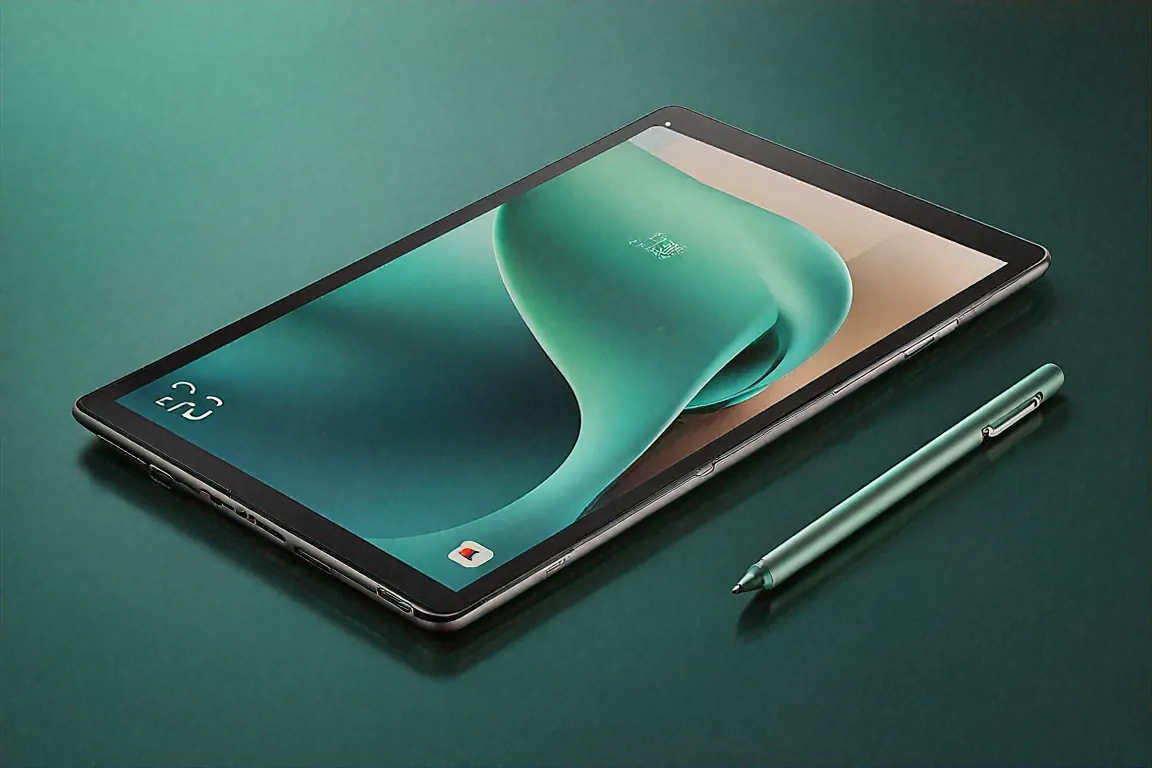
Colour options are Nimbus Grey and Glacier Blue. I went with the blue because life's too short for grey tablets, and the colour is more of a subtle teal than a bright blue — very tasteful. The camera bump is minimal and the tablet sits almost flat on a desk.
There's a magnetic attachment system for the OnePlus Stylo 2 stylus, which charges wirelessly when attached. Neat implementation. One problem though — the stylus isn't included. ₹37,999 for the tablet, then another ₹5,999 or so for the pen. Still way cheaper than Apple's ₹11,900 Pencil, but it would've been a killer move to include it. OnePlus, if you're reading this — next time, just throw it in the box. Please.
The Display Is the Star
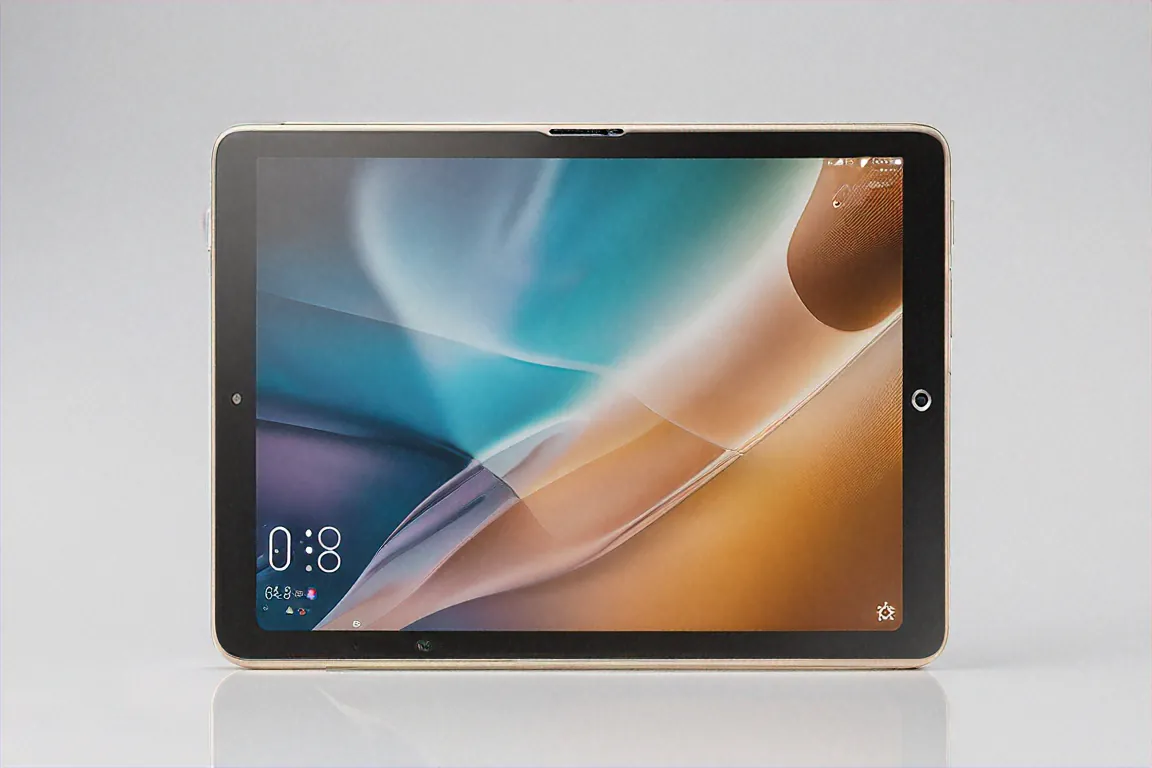
A 12.1-inch panel running at 3000 by 2120 resolution with a 7:5 aspect ratio. That aspect ratio is interesting because most tablets go with 4:3 or 16:10. The 7:5 ratio gives you something that's almost square, which turns out to be brilliant for productivity. Spreadsheets don't feel cramped. Documents show more text per page. Split-screen multitasking gives each app a usable portion of the display. Smart choice by OnePlus here.
It's an LTPO panel, which means the refresh rate adapts dynamically from as low as 1 Hz to save battery up to 144 Hz when you need smoothness. And 144 Hz on a tablet is... honestly, it's overkill for most things, but scrolling through long web pages and social media feeds feels like butter. Once you've experienced it, 60 Hz screens look like slideshows.
Brightness is adequate for indoor use. Outdoor visibility in direct sunlight is okay but not great — you'll want shade for comfortable reading on a sunny afternoon. There's an anti-glare coating that helps with reflections though, which is a thoughtful addition.
Colour accuracy is respectable. The natural mode is well-calibrated for content consumption and light photo work. The vivid mode punches up saturation for those who prefer their colours with a bit of extra kick. Neither mode is as accurate as the iPad Pro's display, but at a third of the price, I'd be unreasonable to expect it.
Snapdragon 8 Gen 3 — Last Year's Flagship Is Still Fast
Yes, Samsung's Tab S10 Ultra has the newer Snapdragon 8 Gen 4. And yes, the 8 Gen 3 is technically "last generation." But does it matter in practice? Not even a little bit. I haven't found a single thing on this tablet that feels slow.
CapCut video editing with 4K clips — smooth. Four apps in split screen — no reloads, no stuttering. Genshin Impact at high settings — playable and enjoyable with only minor frame drops during the most chaotic scenes. The 12 GB of LPDDR5X RAM keeps apps alive in the background for ages. I switched away from Chrome, used three other apps, came back forty minutes later, and my tabs were all still loaded. No refresh.
Benchmarks put the Snapdragon 8 Gen 3 in a range that would've been top-tier flagship territory twelve months ago. For a ₹37,999 device, this amount of processing power is frankly ridiculous. Most tasks on a tablet — web browsing, document editing, streaming, note-taking, light gaming — don't need anywhere near this much horsepower. It's like putting a sports car engine in a delivery van. Technically unnecessary. Practically delightful.
OxygenOS Tablet — Clean and Functional
OnePlus built a dedicated tablet version of OxygenOS on top of Android 15, and it's refreshingly clean. No Samsung-level bloatware. No weird duplicate apps. You get the Google suite, OnePlus's own apps, and that's mostly it. The home screen layout adapts well to the larger display with a sensible widget grid.
The multitasking implementation is good. Swipe from the side to open split screen, long-press an app to throw it into a floating window, or use the taskbar at the bottom for quick app switching. It's intuitive after about ten minutes of use. What you don't get is anything like Samsung DeX — there's no full desktop mode that transforms the interface when you connect a keyboard. That's a notable gap for productivity users.
The elephant in the room with any Android tablet is app optimisation. Most Android apps were designed for phone screens. On a 12.1-inch tablet, some apps just blow up to phone-size with massive empty space, and it looks terrible. Instagram, for instance. Some banking apps. Random utility apps. It's getting better — slowly — but it's still a reality of Android tablets that iPadOS handles better with its dedicated tablet app ecosystem.
OnePlus promises two years of Android updates and three years of security patches. That's... fine, I suppose. Not great compared to Samsung's four plus five commitment, and definitely not matching Apple's five-plus years. For a ₹37,999 device I can live with it, but it would be nice to see OnePlus push this to at least three years of OS updates.
67W SUPERVOOC — The Fastest Charging in a Tablet
Here's one area where the OnePlus Pad 2 doesn't just match the premium competition — it beats them outright. The 67W SUPERVOOC charging takes this from zero to full in about 75 minutes. Samsung's Tab S10 Ultra takes 90 minutes with 45W. The iPad Pro takes roughly 120 minutes.
The 9,510 mAh battery delivers excellent endurance. I consistently get 10 to 12 hours of mixed use — browsing, streaming, some note-taking, light gaming. Video playback on loop stretches to 12 to 15 hours depending on brightness. For a typical day of university classes or office meetings, you'll end the day with plenty left in the tank.
OnePlus includes the 67W charger in the box. Thank you, OnePlus. Thank you for not making me buy it separately. Small courtesies matter.
Speakers — Surprisingly Good
Quad speakers with Dolby Atmos support. For the price, these are genuinely impressive. They get loud enough for a bedroom or small living room, with reasonable stereo separation in horizontal orientation. Bass is thin — no tablet does bass well — but vocals are clear and highs are crisp. I watched several episodes of The Family Man on this without headphones and didn't feel like I was missing much.
The real win is that all four speakers fire in the right directions when the tablet is held sideways. Some tablets get this wrong, with speakers firing backwards or downwards. OnePlus got it right.
Camera — It Exists
There's a rear camera and a front camera. They take photos and video. The front camera handles video calls adequately — 8 MP, decent quality in well-lit rooms, struggles a bit in dim lighting but nothing that would embarrass you on a work call. The rear camera... look, if you're taking photos with a 12-inch tablet, we need to have a different conversation. It's fine for scanning documents, photographing notes on a whiteboard, maybe a quick snap of something you need to reference later. That's about the level of ambition I'd recommend.
Connectivity and Everyday Use
Wi-Fi 6 keeps streaming smooth and downloads fast. I ran speed tests and consistently got close to the full bandwidth my connection offers. Bluetooth 5.3 pairs reliably with wireless earbuds, keyboards, and game controllers. There's an optional 5G variant for people who need connectivity on the go, though it adds to the price.
The MicroSD card slot is a genuine bonus that neither Apple nor Samsung offers on their premium tablets. Pop in a 256 GB or 512 GB card and you've got extra storage for movies, music, and documents without paying the manufacturer's inflated storage tier prices. For students and travellers who want to load up offline content before a long train journey or flight, this is a practical feature that saves real money.
Day-to-day, the OnePlus Pad 2 has become my go-to device for browsing the web on the sofa, reading PDFs and ebooks before bed, watching YouTube during breakfast, and taking notes during online meetings. It's not trying to be my laptop. It's not pretending to be a workstation. It knows what it is — a really good tablet at a really good price — and it does those tablet things with enough speed and visual quality that I reach for it before my phone or laptop most evenings.
The Stylus and Keyboard Situation
The OnePlus Stylo 2 is sold separately, which stings a little at this price point. When you do buy it, the experience is competent — good latency, decent pressure sensitivity, comfortable to hold. It's not Apple Pencil Pro level and it's not Samsung S Pen level, but for taking handwritten notes and marking up documents, it does the job without any frustrating lag or missed strokes.
The keyboard case is also sold separately and turns the Pad 2 into something resembling a Chromebook. The keys are a bit shallow but responsive, and the trackpad is small but functional. If you're a student who needs a device for notes, research, and essay writing, the Pad 2 with the keyboard case is a compelling setup for significantly less than a laptop.
Specifications
| Specification | Details |
|---|---|
| Processor | Snapdragon 8 Gen 3 |
| RAM | 8 GB / 12 GB LPDDR5X |
| Storage | 128 GB / 256 GB UFS 3.1 |
| Display | 12.1" LTPO, 3000x2120, 144 Hz, 7:5 ratio |
| Battery | 9,510 mAh, 67W SUPERVOOC |
| Weight | 585 g |
| Speakers | Quad speakers, Dolby Atmos |
| OS | OxygenOS Tablet, Android 15 |
| Connectivity | Wi-Fi 6, Bluetooth 5.3, optional 5G |
| Stylus | OnePlus Stylo 2 (sold separately) |
| Colours | Nimbus Grey, Glacier Blue |
| Expansion | MicroSD card slot |
Pros
- Snapdragon 8 Gen 3 flagship performance at ₹37,999 is incredible value
- 3K 144 Hz LTPO display looks and feels premium
- 67W SUPERVOOC charges faster than any competing tablet
- Clean OxygenOS with minimal bloatware
- 585 g weight is comfortable for extended handheld use
- MicroSD expansion for extra storage
Cons
- Android tablet app optimisation remains inconsistent
- No desktop mode equivalent to Samsung DeX
- Only two years of guaranteed Android updates
- Stylus sold separately
- Outdoor brightness could be better
Comparing to the Competition
At ₹37,999, the OnePlus Pad 2 sits in an interesting no-man's land. Below it, you've got budget Android tablets from Xiaomi and Realme that cost half as much but offer half the performance. Above it, there's the Samsung Galaxy Tab S9 FE+ at around ₹50,000 to ₹55,000 — which adds the S Pen in the box and Samsung's superior software ecosystem, but with a weaker processor and slower charging.
The iPad 10th generation at roughly ₹44,900 is the closest Apple competitor, and it's a genuine alternative if you value app optimisation and long-term software support. But the iPad 10th gen has an older A14 chip that's significantly slower, a 60 Hz display that feels dated after using the OnePlus's 144 Hz, and charges at a painfully slow 20W. The spec-for-spec comparison isn't even close — the OnePlus Pad 2 wins on hardware by a mile. What the iPad wins on is the software ecosystem, and whether that trade-off matters depends entirely on what you plan to do with the device.
For pure Android tablet competitors at this price, there honestly isn't much. The Xiaomi Pad 6 Pro is older and slower. The Samsung Tab S9 FE is smaller and less powerful. The OnePlus Pad 2 has the best silicon, the best display refresh rate, and the fastest charging of any tablet under ₹45,000 in India. That's not opinion — those are measurable specs that you can verify on any comparison site.
Who's This Actually For
Students. This tablet is a student's dream at this price. Notes in class, textbook PDFs, research papers, YouTube lectures, group video calls, entertainment on weekends — the OnePlus Pad 2 handles all of it without breaking a sweat or breaking your parents' bank account. Add the keyboard case and stylus and your total is still under ₹50,000, which is less than the iPad Pro base model alone.
It's also great for families who want a shared entertainment device — streaming, casual gaming, video calls with relatives, kids' educational apps. The 12.1-inch screen is big enough to share, and the build quality is sturdy enough to survive being passed around the house.
For professionals who need serious productivity features — desktop mode, enterprise security, professional stylus accuracy — you'll probably want to step up to the Samsung or Apple options. The OnePlus Pad 2 does productivity fine, but it doesn't do it with the same polish as DeX or Stage Manager.
And Then There's That Lingering Thought...
I keep coming back to the price. ₹37,999. Every time I pick up this tablet and it does something well — loads a game fast, displays a movie beautifully, charges from empty to full during a lunch break — I remember what it costs and I'm a little bit amazed all over again.
Is it perfect? No. The update commitment is short. The app ecosystem on Android tablets still has gaps. There's no desktop mode. But at this price, perfection isn't the benchmark. Value is. And on value alone, I'm not sure any tablet on the Indian market right now comes close.
I think about the students who would've had to buy a ₹25,000 phone and a ₹15,000 laptop to cover the same ground this single device covers. Or the families who would've stretched for a budget iPad that delivers half the performance. The OnePlus Pad 2 kind of changes that equation.
Or maybe I'm overthinking it. Maybe it's just a really good tablet at a really good price and that's all it needs to be. Maybe that's...
Yeah. It's that.
Price in India
The OnePlus Pad 2 starts at ₹37,999 in India for the 8 GB / 128 GB variant. The 12 GB / 256 GB model costs a bit more. Available on OnePlus.in, Amazon India, and Flipkart. The OnePlus Stylo 2 and keyboard case are sold separately.




Comments (1)
Leave a Comment