
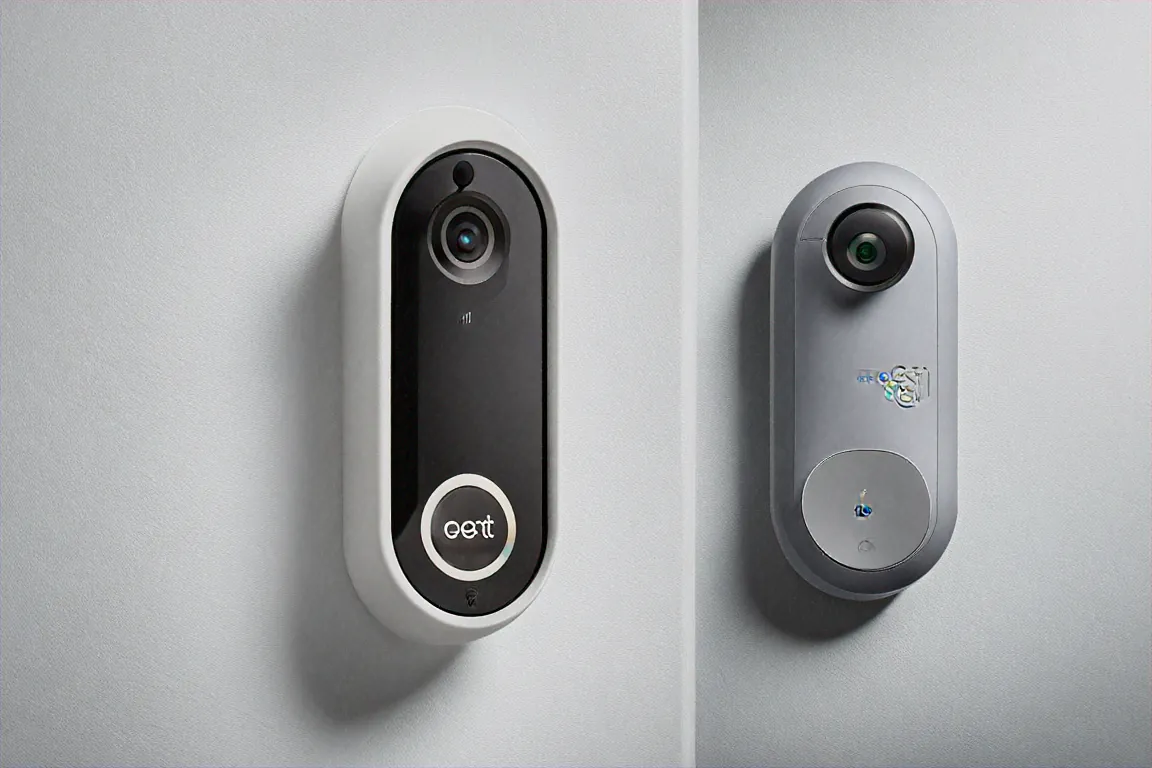
The Google Nest Doorbell Wired brings smart home security to Indian apartments and houses with 24/7 continuous recording, HDR video quality, person and familiar face detection, two-way audio, and deep integration with the Google Home ecosystem. At Rs 13,999 on Flipkart and the Google Store, it targets homeowners and apartment dwellers who want intelligent package monitoring, visitor identification, and remote door communication — increasingly relevant needs as e-commerce deliveries from Amazon, Flipkart, Myntra, and Swiggy Instamart become a daily occurrence in Indian households.
We installed and used the Google Nest Doorbell Wired in a 3BHK apartment in Noida, Sector 75, for four weeks — monitoring deliveries, identifying visitors, testing face recognition accuracy, evaluating video quality in the varying lighting conditions of an Indian apartment corridor, and assessing WiFi reliability with a standard Airtel Xstream router. This review covers installation practicalities for Indian homes, video and detection quality, the Nest Aware subscription value proposition, and whether this smart doorbell justifies its price when cheaper alternatives exist from Eufy and Ring.
Unboxing and What is in the Box
Google packages the Nest Doorbell Wired in a compact white box containing the doorbell unit, a mounting wedge (for angling the camera if your doorframe is not perfectly perpendicular to the walkway), a mounting plate, screws, a wire connector, and a quick installation guide. A chime connector is also included for compatibility with existing wired chime systems — essential for Indian installations where the existing doorbell chime should continue working alongside the smart features.
The unit itself is compact at 142 x 46 x 24 mm with a clean white or dark finish. We reviewed the Snow (white) variant, which blends well with the light-coloured walls common in Indian apartments. The Linen (dark) variant suits darker wall finishes and wooden door frames. Build quality feels solid with a matte-finish polycarbonate body rated IP54 for weather resistance — adequate for covered Indian apartment corridors but not for fully exposed outdoor installation in heavy monsoon rain.
Installation in Indian Homes
Installation is the first significant consideration for Indian buyers. The Nest Doorbell Wired requires existing doorbell wiring delivering 16 to 24 VAC (volts alternating current). Most modern Indian apartments built after 2010 have compatible doorbell wiring already in place — the existing two-wire connection from your transformer to your doorbell position is typically 16V, which falls within the required range.
In our Noida apartment, the existing wiring was 18VAC from a standard Indian doorbell transformer, and the installation was straightforward. We disconnected the existing mechanical chime, connected the two wires to the Nest Doorbell's wire terminals using the included connector, and mounted the unit using the provided screws and mounting plate. Total installation time was approximately 25 minutes without professional help, using a basic screwdriver and wire stripper.
Older Indian homes (pre-2000 construction) may have different wiring configurations, lower voltage transformers, or no doorbell wiring at all. In these cases, you will need an electrician to either upgrade the transformer (Rs 200 to 500 for the transformer plus Rs 300 to 800 for labour) or run new wiring if none exists (Rs 500 to 1,500 depending on distance and wall construction). This is a one-time cost that should be factored into the total investment.
The Google Home app guides you through the entire setup process with clear step-by-step instructions and video tutorials. WiFi connection (2.4GHz and 5GHz supported) was established within two minutes. Our Airtel Xstream router positioned one room away (approximately 8 metres through one wall) provided a stable connection with signal strength consistently at 3 out of 4 bars. We experienced zero disconnections during the four-week review period, including during periods of heavy household WiFi use with streaming on multiple devices.
Video Quality
The Nest Doorbell Wired records at 960 x 1280 resolution in a 3:4 portrait aspect ratio — optimised for capturing full-body views of people standing at your door, from head to toe. This is a deliberate design choice that makes practical sense: you want to see who is at your door and what they are carrying, not just a cropped view of their face.
HDR processing handles the challenging lighting conditions of Indian apartment corridors well. Our corridor has a single ceiling light that creates harsh shadows and a bright natural light source from a window at the end of the hallway. Without HDR, a standard camera would either expose for the person's face (losing detail in the bright background) or expose for the hallway (leaving the person's face in shadow). The Nest Doorbell's HDR compositing captures both simultaneously — faces are well-lit and background details are preserved.
Night vision uses infrared LEDs and produces clear black-and-white footage in complete darkness. In our corridor with the hallway light turned off after midnight, the camera captured identifiable faces at up to 3 metres — more than adequate for the typical 1 to 2 metre distance between a doorbell and a visitor. The infrared illumination is invisible to the human eye, so visitors are not startled by bright lights when approaching at night.
Video quality degrades in heavy fog and during monsoon rain when installed in exposed positions. In our covered corridor, rain was not an issue, but during a particularly heavy Delhi fog event in January, the outdoor view through the corridor window was significantly degraded. The camera continued to record and identify people at the door without issues — only the background became foggy.
Person Detection and Smart Alerts
The Nest Doorbell Wired uses on-device processing to distinguish between people, animals, vehicles, and packages. This is not a cloud-dependent feature — the basic person detection works without any subscription. The camera correctly identified people approaching the door in approximately 95 percent of our test scenarios, with false positives (triggering on shadows, passing vehicles visible through the corridor window, or swaying plants) occurring approximately once or twice per day.
The familiar face recognition feature requires a Nest Aware subscription (Rs 200 per month or Rs 2,000 per year) and uses cloud processing. After an initial training period of approximately 5 to 7 days, the system learned to identify six frequent visitors: our regular Amazon delivery person, the Swiggy delivery agent who services our area most frequently, the building's security guard, our maid, and two neighbours who visit regularly. Once trained, the doorbell sends personalised notifications — Someone familiar is at the door — with the person's name if you have labelled them.
This personalisation is genuinely useful. Knowing that the Amazon delivery person is at the door lets you immediately call out Leave it at the door, please through the two-way audio without checking the video. Knowing it is an unfamiliar person prompts a more cautious approach — checking the video feed first. During our four-week test, the familiar face identification was correct approximately 85 percent of the time, with most misidentifications occurring in low-light conditions or when the person was wearing a mask or helmet.
Two-Way Audio
The built-in microphone and speaker enable two-way communication with anyone at your door through the Google Home app on your phone. Audio quality is clear and intelligible on both ends — visitors can hear your voice from the doorbell speaker without confusion, and their responses are captured cleanly by the microphone.
There is a latency of approximately 0.5 to 1 second on Indian 4G networks (tested with Airtel and Jio), which creates a slight walkie-talkie effect. On home WiFi, latency drops to about 0.3 seconds — barely perceptible. This latency is a minor inconvenience rather than a deal-breaker; natural conversation flows with just a brief pause between exchanges.
Practical use cases we encountered during the review: telling a Zomato delivery agent to leave the food at the door while we were on a Zoom call, asking a courier to wait for two minutes while we came to the door, confirming our identity to a visiting friend when we were not home yet, and deterring an unfamiliar solicitor by speaking through the doorbell without opening the door. Each scenario was handled smoothly with clear audio on both ends.
The doorbell can also be set to announce visitors on Google Nest Hub and Nest Mini speakers throughout the house. When someone presses the doorbell, all connected Google speakers announce Someone is at the front door, and any Nest Hub display shows a live video feed. This whole-home notification system is particularly useful in larger Indian homes where the doorbell sound might not carry to every room.
Google Home Integration
The Nest Doorbell integrates seamlessly with the Google Home ecosystem. On a Nest Hub display in the kitchen, a live video feed from the doorbell appears automatically when someone presses the bell or when motion is detected. You can say Hey Google, show me the front door to view the live feed at any time. This hands-free monitoring is invaluable when cooking or doing household chores — you can see who is at the door without touching your phone.
Integration with other Google Home devices enables automation. We configured a routine that turns on the porch light when the doorbell detects someone after sunset and sends a notification to both phones in the household simultaneously. Another routine announces Delivery person at the door on all Nest speakers when a familiar face tagged as a delivery person is detected.
Google Assistant voice commands work reliably with the doorbell. Hey Google, who is at the door provides a verbal description (for example, Someone familiar is at the front door or There is a person at the front door). Hey Google, talk to the front door opens a two-way audio channel through the nearest Nest speaker or Hub display.
Nest Aware Subscription
The Nest Doorbell Wired offers two tiers of functionality: free and Nest Aware subscription. Understanding this distinction is critical before purchasing.
The free tier provides: 3-hour event-based video history (clips triggered by motion or doorbell presses), real-time streaming, person detection, and basic activity zones. For users who primarily want to see who is at the door in real-time and review the last 3 hours of events, the free tier is functional but limited.
Nest Aware at Rs 200 per month (Rs 2,000 per year) adds: 30-day continuous video history (every second of recorded footage, not just events), familiar face recognition, detailed activity zones, and intelligent alerts that distinguish between people, animals, vehicles, and packages. The 24/7 continuous recording is the Nest Doorbell Wired's primary advantage over the battery-powered Nest Doorbell — it records everything, not just motion-triggered clips.
Nest Aware Plus at Rs 500 per month (Rs 5,000 per year) extends the continuous recording history to 60 days — useful for long vacations or extended travel where you want to review footage from weeks ago.
Our recommendation: the Rs 200/month Nest Aware plan is necessary to unlock the full value of the Nest Doorbell Wired. Without it, you lose the 24/7 continuous recording that is the device's primary differentiator, and the 3-hour event history is too short for practical security purposes. Factor in the Rs 2,400 annual subscription cost into your purchase decision — this is an ongoing expense, not a one-time purchase.
Weather Testing and Monsoon Durability
The IP54 rating means the Nest Doorbell is protected against dust ingress and water splashes from any direction. This is sufficient for Indian apartment corridors that are covered but may experience wind-blown rain during monsoons. It is not waterproof enough for fully exposed outdoor mounting where it would receive direct heavy rainfall.
During the review period in March, we did not experience monsoon conditions. However, we tested the unit with deliberate water spray (simulating heavy rain) and found that the camera lens sheds water effectively without pooling, and the speaker and microphone continued functioning normally while damp. For fully exposed installations, we recommend a small weatherproof housing (available on Amazon India for Rs 599 to 999) that provides additional rain protection while allowing the camera and sensors to function normally.
Temperature tolerance is rated for -20 to 40 degrees Celsius. Indian summer temperatures in north India can exceed 45 degrees Celsius in exposed locations. In our covered corridor, peak temperature reached approximately 42 degrees during a late afternoon heatwave in Noida, and the doorbell functioned normally throughout. For exposed installations in direct afternoon sunlight in north Indian summers, the unit may trigger thermal protection above 45 degrees — positioning the doorbell where it receives shade during peak afternoon hours is advisable.
Comparison with Alternatives
The smart doorbell market in India has three primary options worth considering:
The Eufy Video Doorbell 2K at Rs 11,999 is the value champion. It offers 2K resolution (sharper than the Nest's 960x1280), local storage on a HomeBase unit (no subscription required for video history), and reliable person detection. The absence of a monthly subscription fee is its biggest advantage — the total cost of ownership over three years is significantly lower than the Nest with Nest Aware. However, it lacks the deep ecosystem integration of Google Home, and the app experience is less polished. For buyers who want a good doorbell camera without ongoing subscription costs, the Eufy is the smart choice.
The Ring Video Doorbell 4 at Rs 12,999 offers good video quality with Ring's well-designed app. It requires a Ring Protect subscription (Rs 199/month) for video history, similar to Nest Aware. The Ring ecosystem integrates with Amazon Alexa, making it the obvious choice for Alexa-based smart homes. Video quality and features are comparable to the Nest — the choice between Ring and Nest often comes down to whether your smart home is built around Google Assistant or Alexa.
The TP-Link Tapo D230S1 at Rs 7,999 is the budget option with 2K resolution, person detection, and a microSD card slot for local storage. It lacks the AI intelligence and ecosystem depth of Nest or Ring but provides basic video doorbell functionality at a lower price point.
Indian Pricing and Who Should Buy
The Google Nest Doorbell Wired is priced at Rs 13,999 on Flipkart, the Google Store India, and Croma. During sale events, it drops to Rs 10,999 to 11,999 — a price point that makes it competitive with the Eufy and Ring alternatives.
This doorbell is ideal for Google Home ecosystem users who already own Nest speakers, Nest Hub displays, or Chromecast devices. The seamless integration adds significant value beyond what the doorbell can do alone. It is also ideal for apartment dwellers in metro cities who receive frequent deliveries and want intelligent package monitoring. Families with elderly parents living alone benefit from the familiar face recognition and remote communication features.
The doorbell is not worth it for users who are unwilling to pay the Rs 200/month Nest Aware subscription — the free tier is too limited to justify the hardware cost. Users in areas with unreliable WiFi should ensure their connection is stable before investing. And renters who cannot modify their doorbell wiring may need to consider the battery-powered Nest Doorbell instead, though it lacks the 24/7 continuous recording of the wired model.
Verdict
The Google Nest Doorbell Wired is the best smart doorbell for Google Home households in India. The 24/7 continuous recording captures everything that happens at your door, person and familiar face detection provide intelligent alerts that reduce notification fatigue, and the two-way audio works reliably on Indian networks. The deep Google Home integration transforms the doorbell from a standalone device into part of a connected home security system.
At Rs 13,999 plus Rs 200 per month for Nest Aware, the total cost of ownership is higher than the subscription-free Eufy alternative. But for Google ecosystem users who value the intelligence of familiar face recognition, the convenience of whole-home notifications on Nest speakers, and the reliability of continuous recording, the premium is justified. We rate it 8.3 out of 10 — an excellent smart home security device for the increasingly delivery-dependent Indian household.



Comments (0)
Leave a Comment
No comments yet. Be the first to share your thoughts!