
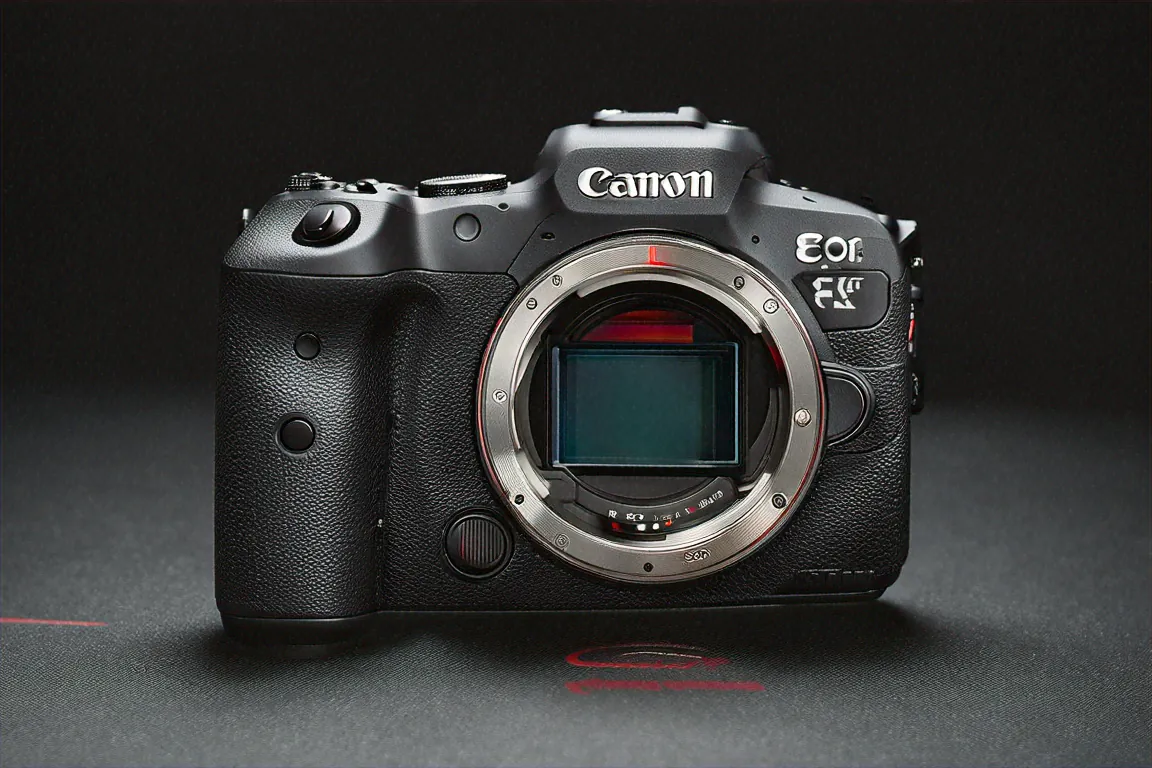
I almost lost a wedding gig because of autofocus. Let me explain. Last November, a friend's cousin asked me to shoot their reception in Jaipur. Semi-professional thing — I've been doing paid photography work on weekends for about four years now, mostly portraits and events, occasionally wildlife when I can get away to Ranthambore or Bharatpur. I was using the original Canon EOS R7 at the time, which is a solid camera. Great, even. But during the sangeet ceremony, in that chaotic mix of dim lighting, moving dancers, and multicolored LED decorations, the autofocus kept hunting. Just enough missed shots to make me nervous. Just enough soft frames in a burst that the keeper rate dropped below where I was comfortable.
So when Canon announced the Canon EOS R7 with Dual Pixel CMOS AF II — the same AF system from their full-frame bodies — I paid attention. Bought it in January. Three months of shooting later, I can tell you it's a fundamentally different experience from the original R7 in the moments that matter most.
But it's not a perfect camera. No camera is. And at Rs. 1,29,990 for just the body, there are real questions about whether an APS-C body at this price makes sense when full-frame options aren't that far away. Let me walk through all of it.
What's Under the Hood
The R7 uses the same 32.5MP APS-C BSI (backside-illuminated) CMOS sensor as the original, but with improved readout speeds and better low-light performance — Canon's claiming about a one-stop improvement at high ISO. The autofocus system has been upgraded to Dual Pixel CMOS AF II with 100% frame coverage and subject tracking for humans, animals, vehicles, and aircraft. Continuous shooting hits 40fps with the mechanical shutter and 50fps with the electronic shutter. In-body image stabilization provides 7 stops of compensation. Video goes up to 8K oversampled at 25fps from the full sensor width, plus 4K at 60fps.
Weather sealing is professional-grade with magnesium alloy construction on the top and front plates. Dual card slots — SD card Type B and SD UHS-II. Battery is the LP-E6NH giving roughly 600 shots per charge through the EVF.
Build Quality and Handling
Canon knows how to build a camera body. The R7 feels like a shrunken R5 in the hand — same confidence-inspiring solidity, same deep comfortable grip, same logical button placement. At 612 grams with battery, it's heavier than some competitors, but that weight translates to a feeling of substance. Nothing creaks. Nothing flexes. Pick it up and you know you're holding a serious tool.
The grip depth is something I really appreciate as someone who shoots handheld for hours at events. My ring finger and pinky have somewhere to go. The original R7 had a good grip too, but the Mark II has slightly extended the lower portion and it makes a difference during marathon shooting sessions. At my last wedding — a six-hour affair in Udaipur — my hand felt fine at the end. Tired, sure, but not cramped.
Button layout is customizable and ergonomic. The rear dial, joystick, and AF-ON button fall naturally under your thumb. Top LCD panel shows your settings at a glance. The 3-inch vari-angle touchscreen tilts and flips for low-angle, high-angle, and selfie shooting — though I rarely use the selfie position, it's handy for waist-level candids at events where you don't want to raise the camera to your eye and make people self-conscious.
That OLED electronic viewfinder at 3.69 million dots is bright and detailed. Not quite as immersive as the R5 Mark II's viewfinder, but for an APS-C body it's excellent. Refresh rate is smooth enough that panning feels natural. Blackout during burst shooting is minimal — I can track subjects through a 40fps burst without losing them.
Autofocus — The Reason This Camera Exists
Let me tell you about Ranthambore. I went in February, specifically to test this camera's AF system in real-world wildlife conditions. Zone 6, morning safari, golden light filtering through the forest canopy. A Bengal tiger emerged from the underbrush about 80 metres away, walking along a dry riverbed. I raised the camera, half-pressed the shutter, and the AF locked onto the tiger's eye immediately. Green box. Confirmed.
Then the tiger started moving. Walking, then trotting, then briefly running as it chased something unseen. Dappled light through the trees — patches of bright sun and deep shadow flickering across the subject constantly. This is the scenario that kills autofocus systems. Contrast changes wildly. The subject moves unpredictably. Background clutter is everywhere.
Dual Pixel CMOS AF II tracked that tiger through 400+ frames at 40fps. My keeper rate? I'd estimate north of 85%. On the original R7, in similar conditions last year, I was getting maybe 60-65% keepers. That 20% improvement doesn't sound like much in abstract numbers, but when it means the difference between getting THE shot — the one where the tiger's eyes are tack sharp, perfectly lit, mid-stride — and missing it? That's everything.
Animal Eye AF is spectacular. It finds eyes — bird eyes, tiger eyes, dog eyes, even reptile eyes in some conditions — and holds onto them with a tenacity that feels almost obsessive. Bird-in-flight tracking has improved dramatically too. I tested it at Sultanpur Bird Sanctuary on a grey overcast day against a cluttered tree-line background, tracking painted storks and spot-billed pelicans in flight. The camera locked on and stayed locked. Even when a bird banked sharply and other birds crossed through the frame, the AF didn't get confused. It stayed on my chosen subject.
Human eye detection for portraits and events is equally reliable. During that wedding gig in Udaipur, shooting the bride's entry in dim mandap lighting with a fast-moving subject, the R7 tracked her face and eyes with zero hesitation. The old AF-hunting-in-dim-light problem that plagued me with the original R7? I wouldn't say it's completely gone — really dark scenes still slow the AF down — but it's been reduced to a level where I trust the system. That trust changes how you shoot. You stop worrying about focus and start thinking about composition, timing, emotion. That's where the creative magic happens.
Image Quality
The 32.5MP sensor with improved BSI architecture gives you files with excellent detail and dynamic range. At base ISO, the images are crisp with good colour accuracy straight out of camera. Canon's colour science has always been a strength, and the R7 continues that tradition — skin tones look natural and pleasing without heavy editing. Blues and greens are rich. Reds don't clip as easily as some competitors.
High ISO performance shows the one-stop improvement Canon promised. ISO 3200 is essentially clean. ISO 6400 has very manageable noise — I'd use it without hesitation for event work. ISO 12800 is usable with noise reduction in post. Beyond that you're making compromises, but for an APS-C sensor this is impressive. The original R7 started showing noticeable noise at ISO 3200 in shadow areas. The Mark II pushes that boundary to about ISO 6400.
The 1.6x crop factor is a double-edged sword. For wildlife photographers, it's a gift — Canon's RF 100-500mm becomes an effective 160-800mm. That's an enormous reach without a teleconverter. My Ranthambore shots were taken with the RF 100-400mm, giving me 160-640mm equivalent reach. Enough to fill the frame with a tiger at 80 metres. For scenery and wide-angle work, though, the crop factor means your wide lenses aren't as wide. A 16mm lens gives you 25.6mm equivalent. Not terrible, but full-frame shooters get more flexibility here.
Video Capabilities
The 8K oversampled 25fps video from the full sensor width is technically impressive — it's the best video quality available in any APS-C camera right now. The oversampling means even 4K output from 8K capture has exceptional detail and minimal moire. For documentary work, corporate videos, or anyone who needs maximum quality, it's a genuine differentiator.
For practical everyday video work, 4K at 60fps is probably what most people will use. It looks great. Canon Log 3 gives you solid dynamic range for grading in post. Focus tracking during video is smooth and reliable — the Dual Pixel AF shines here, pulling focus between subjects gracefully without the jittery hunting that cheaper cameras exhibit.
7-stop IBIS helps enormously for handheld video. Walking shots that would've been unusable without a gimbal come out reasonably smooth. Not gimbal-smooth, but acceptable for documentary and travel content. Combined with lens-based IS on stabilized RF lenses, the system gives you up to 8.5 stops of combined stabilization.
Battery and Card Slots
The LP-E6NH battery is rated at approximately 600 shots per charge using the EVF. In my real-world experience at events, I'm swapping batteries after about 500-550 shots, which accounts for reviewing images on the rear screen and using other power-hungry features. Carrying two spare batteries to a wedding is standard practice — three if it's a particularly long event.
USB-C charging from a power bank works, which is handy in the field. During wildlife safaris I keep a power bank in my camera bag and top up during lunch breaks between morning and evening drives. One thing I noticed — charging while shooting isn't ideal as it generates extra heat in the body, but for topping up between sessions it's a practical solution. On a two-day Ranthambore trip with four safari drives, two LP-E6NH batteries and a power bank kept me shooting comfortably without any anxiety about running out of juice. That peace of mind matters when you've paid good money for safari permits and a tiger could appear at any moment.
Dual card slots — SD card Type B and SD UHS-II — provide both speed and versatility. SD card handles the fast write speeds needed for 40fps RAW bursts. The SD slot serves as overflow or backup. I typically shoot RAW to SD card and JPEG to SD, so I've always got a backup copy of everything. For paid work, this redundancy is non-negotiable.
Full Specifications
| Specification | Details |
|---|---|
| Sensor | 32.5MP APS-C BSI CMOS |
| AF System | Dual Pixel CMOS AF II, 100% coverage |
| Continuous Shooting | 40fps (mechanical), 50fps (electronic) |
| Video | 8K 25fps oversampled, 4K 60fps |
| IBIS | 7-stop |
| EVF | 3.69 million dot OLED |
| Battery | ~600 shots (LP-E6NH) |
| Weather Sealing | Professional grade, magnesium alloy |
Pros
- Dual Pixel CMOS AF II is genuinely best-in-class for subject tracking
- 40fps continuous shooting makes sports and wildlife a breeze
- 8K oversampled video — reference quality for an APS-C body
- 7-stop IBIS for steady handheld shots in tough conditions
- Professional-grade weather sealing handles monsoons and dust without flinching
Cons
- Rs. 1,29,990 body-only is steep for an APS-C system
- Full-frame will always outperform APS-C in extreme low light — physics doesn't change
- RF-S lens selection is still limited compared to the full-frame RF lineup
- 612g body weight adds up during all-day shoots, especially with heavy telephoto lenses
Connectivity and Workflow
Wi-Fi 5 and Bluetooth 5.2 enable fast image transfer to your phone through Canon Camera Connect. The app provides wireless remote control with live view — useful for tripod wildlife setups where you don't want to be near the camera. Geotagging through your connected phone embeds location data. USB-C supports tethered shooting for studio work, which some portrait photographers I know rely on heavily.
Canon's free Digital Photo Professional software handles RAW processing with full lens profile support. It's not Lightroom, but for basic adjustments it's perfectly capable and doesn't cost you a monthly subscription. The RF and EF-S mount compatibility — via Canon's adapter for EF/EF-S lenses — means you've got access to decades of Canon glass. I still use my old EF 70-200mm f/2.8L II on the R7 via adapter and it works flawlessly.
Weather Sealing — Worth Mentioning for Indian Conditions
I shot an outdoor event during pre-monsoon rain in Pune last month. Not a drizzle — actual rain, heavy enough that guests were scrambling for cover. I kept shooting. The R7 didn't care. Water beading off the magnesium alloy top plate, dripping down the lens hood, and the camera kept firing at 40fps without a hiccup. For Indian photographers who work outdoors — weddings, wildlife, sports — weather sealing isn't a luxury. It's a necessity. This camera delivers it.
Dusty conditions at Ranthambore's open-top jeep safaris? No issues either. The sealed joints and buttons kept everything out. After four days of safari dust, a quick wipe with a microfiber cloth and the camera looked new.
Price in India
The Canon EOS R7 body is priced at Rs. 1,29,990 in India. Available on Canon India's website, Amazon India, Flipkart, and camera retailers like Vijay Sales. If you're looking at a kit, the RF-S 18-150mm kit lens adds around Rs. 25,000-30,000 to that price. Not a bad starter combo, though serious wildlife shooters will want to invest in the RF 100-400mm or RF 100-500mm separately.
Should You Buy It? It Depends.
Here's my honest take, broken into scenarios.
If you're a wildlife photographer who shoots in Indian national parks and sanctuaries — yes. Buy it. The APS-C crop factor gives you reach, the AF tracking is phenomenal, the 40fps burst rate captures peak action, and the weather sealing handles anything Indian conditions throw at it. This is the best APS-C wildlife camera you can buy right now, and the 1.6x crop advantage over full-frame is real and meaningful when you're trying to fill the frame with a distant subject.
If you're a semi-professional event photographer doing weddings, portraits, and corporate events — it's a strong choice, but think carefully. The AF is brilliant and the IBIS helps in dim venues. But at Rs. 1,29,990, you're approaching Canon EOS R6 Mark III territory, which gives you full-frame low-light performance that an APS-C sensor simply can't match. For event work where high ISO performance is often more important than reach, the full-frame body might be the smarter investment.
If you're an enthusiast stepping up from a crop sensor DSLR or entry-level mirrorless — this is an incredible camera, but it might be more than you need. The original R7 (if still available at a discount) or the R10 might give you 80% of this performance at a significantly lower price. Unless you specifically need the improved AF and 40fps burst, consider whether the Mark II premium is justified for your shooting style.
If you're trying to decide between this and going full-frame — that's the big question, and only you can answer it based on what you shoot most. Wildlife and sports? Stay APS-C, get the reach advantage. Portraits, events, scenery, and general photography? Full-frame is probably the better long-term investment.
The Canon EOS R7 is a specialized tool that excels in specific scenarios. It's not a do-everything camera — no camera at any price truly is. But in its wheelhouse — fast action, wildlife tracking, sports, and outdoor work in challenging conditions — it's as good as anything I've used at any price point. That's a strong statement from an APS-C body, and Canon should be proud of what they've built here. For the right photographer with the right needs, this camera doesn't just compete with full-frame — in some ways it genuinely outperforms it.



Comments (1)
Leave a Comment